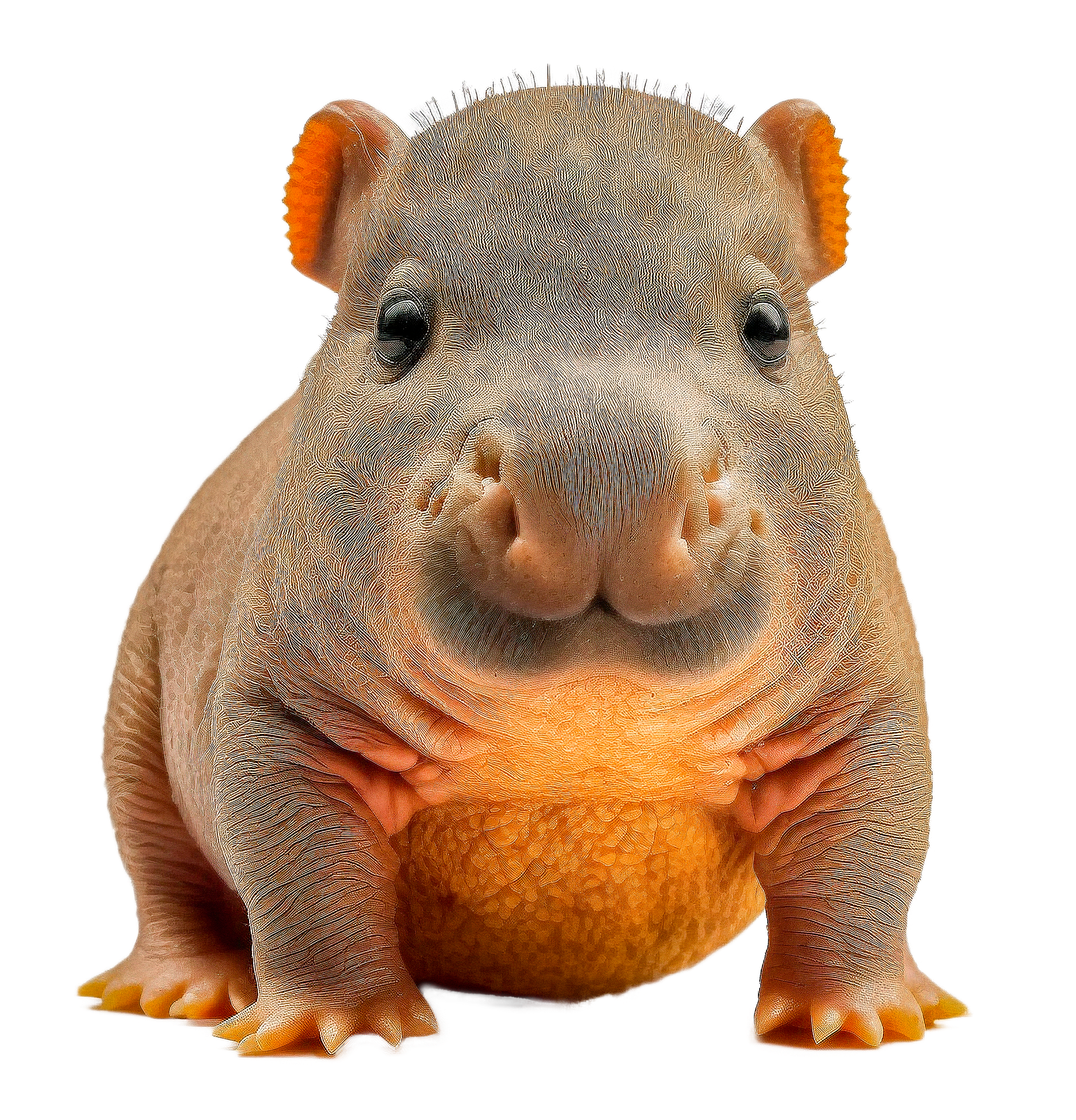
What kind of animal is a pygmy hippopotamus? We will explain its characteristics, ecology, and habitat. As its name suggests, it is a very small hippopotamus, and is a cute animal that is also called a little hippopotamus or mini hippopotamus. However, unfortunately, it is an animal designated as an endangered species.


- What is a pygmy hippopotamus? Basic stats
- What are the roots and origins of the pygmy hippopotamus?
- Habitat
- What are its characteristics? What kind of creature is it?
- What is their personality like?
- What is their ecology?
- About Pygmy Hippopotamus Cubs
- Is the pygmy hippopotamus an endangered species?
- Can the pygmy hippopotamus be kept as a pet?
- Zoos Housing the Species (Japan & Worldwide)
- Recommended articles
What is a pygmy hippopotamus? Basic stats
The pygmy hippopotamus is a cetacean that belongs to the Hippopotamidae family. It is also called the little hippopotamus or mini hippopotamus. Its English name is Pygmy hippopotamus, its scientific name is Choeropsis liberiensis, and its kanji is dwarf hippopotamus. Its body length is 150-175cm, its weight is 180-275kg, and its shoulder height is 75-100cm. The list of information is as follows.
| Japanese(和名) | コビトカバ |
| English(英名) | Pygmy hippopotamus |
| scientific name(学名) | Choeropsis liberiensis |
| classification(分類) | Mammalia、Artiodactylca、 Hippopotamidae、Choeropsis 哺乳綱、偶蹄目、カバ科、コビトカバ属 |
| IUCN Status(保全状況) | ENDANGERED |
| Length(体長) | 150-175cm |
| Weight(体重) | 180-275kg |
Taxonomy of the pygmy hippopotamus
- 界 (Kingdom): 動物界 (Animalia)
- 門 (Phylum): 脊索動物門 (Chordata)
- 綱 (Class): 哺乳綱 (Mammalia)
- 目 (Order): 偶蹄目 (Artiodactyla)
- 科 (Family): カバ科 (Hippopotamidae)
- 属 (Genus): Choeropsis または一部では Hexaprotodon
- 種 (Species): Choeropsis liberiensis
What are the roots and origins of the pygmy hippopotamus?
The pygmy hippopotamus (Choeropsis liberiensis) is a small species of hippopotamus currently inhabiting the forests and wetlands of West Africa. Its primary range centers on Liberia but extends into Sierra Leone, Guinea, and Côte d’Ivoire.
🌍 What were the ancestors of hippos?
The hippopotamus family (Hippopotamidae) is actually an ancient African lineage.
Fossil records indicate that the earliest members of the family date back approximately 21 million years (to the early Miocene epoch).
And perhaps surprisingly,
Hippos 🦛 ←→ Whales and Dolphins 🐋🐬
share a very close evolutionary relationship.
In modern phylogenetics, the Hippopotamidae and Cetacea (whales and dolphins) are considered sister groups. In other words, rather than being closely related to pigs, hippos are the extant land mammals most closely related to whales and dolphins in evolutionary terms.
🦛 When did the pygmy hippo lineage diverge?
This is still a subject of ongoing research.
At one time, there was a theory that pygmy hippos and common hippos diverged more than 10 million years ago.
However, a 2023 study utilizing nuclear DNA
estimated the divergence at approximately 4.04 million years ago,
while another analysis suggested around 2.4 million years ago—
indicating a more recent split. Researchers themselves acknowledge the need for further verification combining fossil and genetic studies.
🌳 Why did they become smaller?
While common hippos grew large and adapted to a lifestyle centered around waterways, pygmy hippos evolved to live within the dense forests of West Africa.
Consequently, it is believed they followed a distinct evolutionary path:
Large, water-centric hippos
↓
A smaller lineage adapted to forest environments
↓
🦛 Modern pygmy hippos
Pygmy hippos are much smaller than common hippos, weighing approximately 160–270 kg. Furthermore, unlike the common hippopotamus, it does not rely heavily on an aquatic lifestyle and is adapted to roaming through forests.
Habitat
The pygmy hippopotamus lives in West Africa, in countries such as Guinea, Côte d’Ivoire, and Sierra Leone.
- Natural Distribution
Region: West Africa
Liberia
Sierra Leone
Guinea
Côte d’Ivoire
Elevation: Lowland tropical rainforests and wetlands
- Habitat Characteristics
Prefers wetlands within forests and along rivers
Not completely dependent on rivers or lakes, living in moist areas of jungles
Relationship with Water:
Small and more adapted to terrestrial life than hippos
Uses streams and puddles for bathing and regulating body temperature
Nocturnal, often resting in the shade of bushes or fallen trees during the day
- Impacts of Human Activities
Habitat reduction due to deforestation and agricultural development
Poaching is also a contributing factor to population decline
What are its characteristics? What kind of creature is it?
Pygmy hippos are basically nocturnal, active from dusk to late at night. They have a small, rounded head, no protruding eyes, and webbed feet between the two toes on their front legs. They are good swimmers and can spend long periods of time in the water, but they also prefer to live on land. Like hippos, they are not covered in fur, so they protect themselves from drying out by bathing in water and mud. Pygmy hippos like to live in the forest.
- Appearance and Physical Characteristics
Body Length: Approximately 1.5-1.75 m
Shoulder Height: Approximately 75-100 cm
Weight: Approximately 180-275 kg for both males and females
Body Color: Dark Brown to Black-Brown
Skin: Thick and smooth, prevents drying in humid environments
Head: Small and round, with eyes and ears located high on the head
Nose: Short and smaller than that of a hippopotamus
Limbs: Stout, adapted for moving through forests and wading in water
- Ecological Characteristics
Sylvan and Nocturnal: Rests in the shade of bushes or fallen trees during the day and is active at night
Diet: Herbivorous
Eats leaves, fruits, grass, roots, etc.
Athletics: Smaller than a hippopotamus, it can move agilely through forests
Relationship to Water: Uses streams and puddles for bathing and regulating body temperature
- Behavior/Personality
Gentle but timid
They tend to live alone or in pairs, not in groups
They quickly hide in the bush when they sense a human or predator.
- Characteristic Impression
They are thought of as a small, forest-dwelling hippopotamus with smooth, dark brown skin, a nocturnal, stealthy animal.
They are better adapted to life on land than hippos and are adept at walking through the forest.

What is their personality like?
Pygmy hippos sometimes live in family groups consisting of pairs or their young, but they can also live alone.
- Basic Personality
Timid and cautious
If they sense a predator or human, they will quickly hide in bushes or near water.
Gentle Personality
Not aggressive, they tend to avoid conflict.
Mainly solitary or pair-based.
They do not form groups and tend to be territorial.
- Sociality
Soliton or pair-based.
Males defend their own territories.
Females are active within their territories while raising their young.
Communication is limited.
They communicate with their peers and young through nose and body movements and low vocalizations.
- Behavioral Characteristics
Nocturnal, they rest quietly in bushes during the day.
Curious, but cautious.
Approach new objects and environments cautiously.
Bathe in water and mud to regulate body temperature and protect their skin.
What is their ecology?
Pygmy hippos are herbivorous, eating grass, rhizomes, leaves, fruit, etc. They reproduce viviparously. They are monogamous and have a gestation period of 180-210 days. They can give birth to one young at a time, and their lifespan is 10 to 20 years.
- Behavior
Nocturnal: Active primarily at night, resting in the shade of bushes or fallen trees during the day
Mainly forest-dwelling, terrestrial
Does not depend on rivers or water sources; instead, lives in forest swamps and streams
Live alone or in pairs
Does not form groups; acts territorially
- Diet
Herbivorous
Main diet:
Leaves, shoots, grasses, and fruits
Supplementary intake of twigs and roots
Moves through the forest in search of food
Bathes in water and mud to protect skin and regulate body temperature
- Reproduction
Estrous/Breeding: Breeding is possible year-round, not dependent on a specific season
Gestation period: Approximately 6-7 months
Litter size: Usually one cub
Rearing:
Mothers primarily nurse and protect cubs
Cubs observe their mothers’ behavior and learn food gathering and transportation techniques
Sexual maturity:
Females: 3-4 years old
Males: 4-5 years old
- Social Structure
Live alone or in pairs
Males defend their territories and focus on females and their young
Limited contact with other individuals to avoid conflict
- Adaptation and Survival Strategies
Agility to move quickly through forests
Nocturnal behavior to avoid predators (large cats, canines)
This terrestrial hippopotamus is able to live in forests without relying on water or wetlands.
Do they have any natural enemies?
The natural enemies of the pygmy hippopotamus are leopards and humans.

About Pygmy Hippopotamus Cubs
This article provides an easy-to-understand summary of pygmy hippopotamus (Choeropsis liberiensis) cubs, from birth to growth.
- Characteristics at Birth
Gestation Period: Approximately 6-7 months
Litter Size: Usually one pup (twins are extremely rare)
Birth Weight: Approximately 4-6 kg
Body Length: Approximately 40-50 cm
Appearance:
More rounded and stocky than adults
Skin is smooth and slightly light brown in color
Large eyes, giving them an overall “stuffed animal-like” appearance
- Behavior Immediately After Birth
Able to stand and walk within a few hours of birth
Stay close to their mother and spend their time quietly in the jungle
If they sense danger, they will quickly hide behind their mother or in the bushes
- Changes in Nursing and Diet
Nursing Period: Approximately 6-8 months
Breast milk is their main source of nutrition
From a few months after birth:
Begins nibbling on leaves and fruit
Learns food selection by observing their mother’s behavior
- Growth and Learning
Cubs follow their mothers as they:
Travel routes through the forest
Location of water sources
Dangerous areas and safe hiding places
They play less, but by walking around, they develop leg strength and stamina.
- Socialization and Independence
Primarily a mother-child lifestyle
They do not live in groups, so they have little contact with other individuals.
Independence period: Approximately 2-3 years of age
Until then, they live within their mother’s territory.
- Personality of Cub
Very timid and quiet
Curious, but quickly returns to their mother
They acquire the ability to avoid danger early on.
Is the pygmy hippopotamus an endangered species?
The pygmy hippopotamus is an endangered species. It is listed in Appendix I of the Convention on International Trade in Endangered Species of Wild Fauna and Flora (CITES), so international trade is strictly restricted. The pygmy hippopotamus is a rare animal with a small population, and is considered one of the three most rare animals in the world along with the giant panda and okapi. For this reason, the destruction of habitats due to development, water pollution, and overhunting are progressing, which can be said to be critical. It is already extinct in Nigeria.
Current Situation and Background
The International Union for Conservation of Nature (IUCN) has listed the pygmy hippopotamus as Endangered (EN) (highest level of threat).
The estimated wild population is very small, confined to West Africa (primarily Liberia, Sierra Leone, Guinea, and Côte d’Ivoire).
It is believed that the population continues to decline due to deforestation and hunting (e.g., for consumption).
Main Threats
Deforestation and Land Development
Wild Capture and Hunting
Habitat Fragmentation Leading to Decline in Genetic Diversity
These threats have a significant impact on wild pygmy hippos.
Can the pygmy hippopotamus be kept as a pet?
As mentioned above, the pygmy hippopotamus is designated as an endangered species and is also listed in the Convention on International Trade in Endangered Species of Wild Fauna and Flora (CITES), so international trade is strictly restricted. Therefore, it is extremely difficult to keep it as a pet.
① Is it legally possible?
❌ Almost impossible
The pygmy hippopotamus is an IUCN Endangered Species (EN)
Listed in Appendix I of the Convention on International Trade in Endangered Species of Wild Fauna and Flora (CITES)
→ International trade for commercial purposes is prohibited
In Japan:
Extremely strict import permits
Exceptional approvals are granted only at zoos and research institutions
Individuals are not permitted to import or purchase them as pets
② Feasibility of keeping them
❌ Impossible for an average household
Although the pygmy hippopotamus is small…
Weight: Approximately 200 kg
Large herbivores with strong jaws and fangs
Nocturnal and highly active
Dedicated:
Large site
Water source (constantly clean water)
High humidity
Veterinary care
➡️ These require zoo-level facilities
③ Personality Issues
Generally docile, but
very dangerous if startled
Due to their timidity:
They become aggressive when stressed
Risk of lunging and biting
Not fully domesticated
④ From an animal welfare and ethics perspective
Wild populations are small
Breeding is difficult
Keeping them as pets is strongly discouraged from conservation perspectives
Current captivity is limited to:
Zoos
Rescue facilities
Breeding programs
Zoos Housing the Species (Japan & Worldwide)
In Japan, they are kept at seven facilities. According to official announcements from Ueno Zoo, as of April 2026, there are 16 individuals across these seven facilities nationwide.
🇯🇵 Japan
| Facility | Location | Number of Individuals |
|---|---|---|
| Ueno Zoological Gardens | Tokyo | 4 |
| Higashiyama Zoo and Botanical Gardens | Aichi | 2 |
| Ishikawa Zoo | Ishikawa | 3 |
| Nifrel | Osaka | 2 |
| Kobe Animal Kingdom | Hyogo | 3 |
| Adventure World | Wakayama | 1 |
| Okinawa Zoo & Museum | Okinawa | 1 |
*The number of individuals fluctuates due to transfers and breeding. Transfers for breeding purposes are also taking place; for instance, in 2026, “Motomoto” is scheduled to return to Nifrel from Ueno Zoo.
Notably, two offspring were born at Ueno Zoo in 2025, and public viewing of the babies began in June 2026.
🌍 Worldwide
Pygmy hippos are kept in zoos overseas as well; however, they are a species that undergoes frequent transfers between facilities as part of breeding programs—even more so than in Japan.
Prominent facilities include:
🇺🇸 San Diego Zoo
🇺🇸 Cincinnati Zoo
🇺🇸 St. Louis Zoo
🇺🇸 Bronx Zoo
🇬🇧 London Zoo
🇧🇪 Antwerp Zoo
🇩🇪 Berlin Zoo
🇩🇪 Leipzig Zoo
🇨🇭 Basel Zoo
🇫🇷 ZooParc de Beauval
They are kept and bred at these and other zoos across Europe and the United States.
Recommended articles

コメント