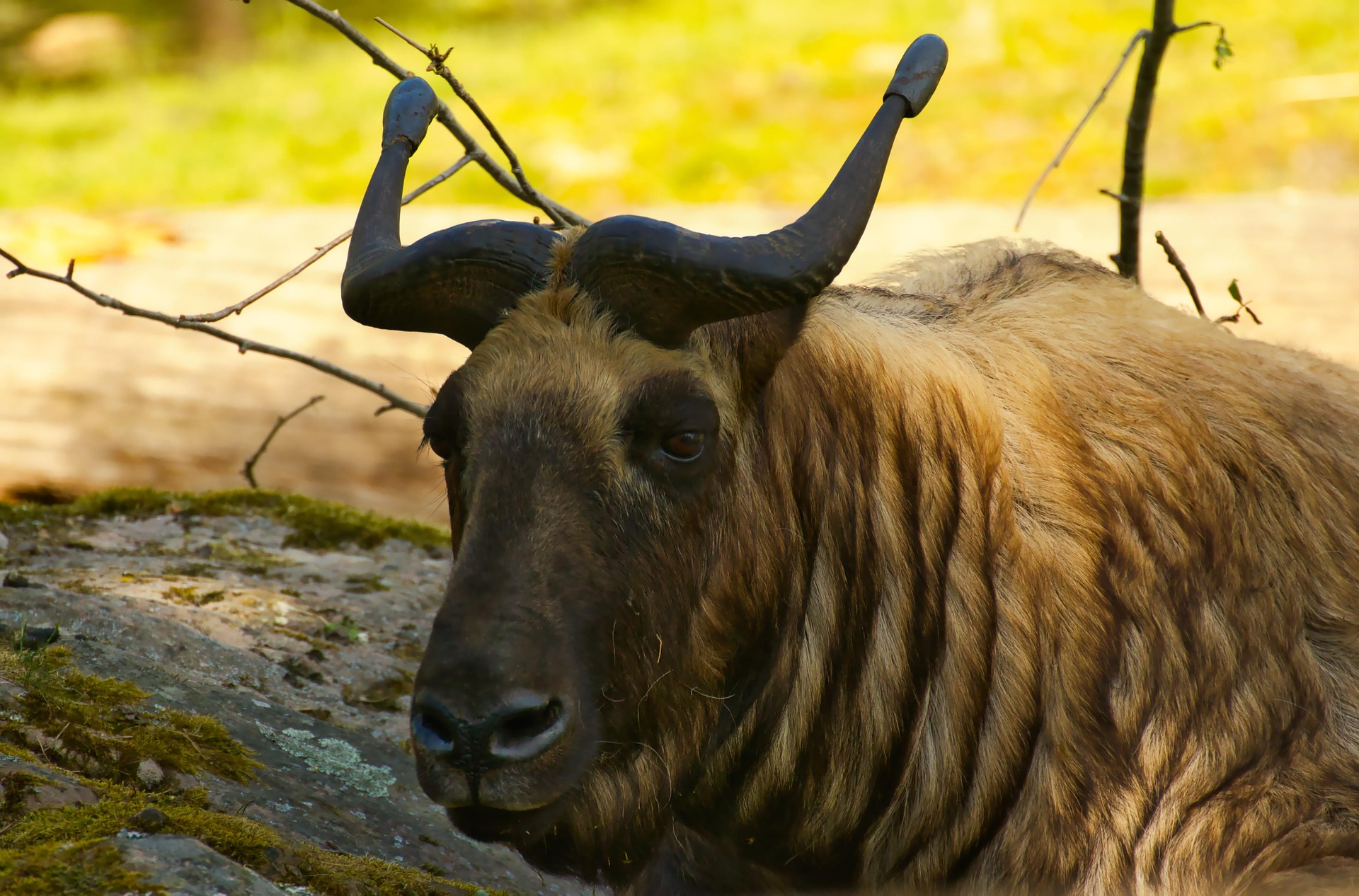
What kind of animal is the Golden Takin? We will explain its characteristics, ecology, and habitat. It is one of the internationally protected animals that is at risk of extinction, and is in a critical situation that may lead to extinction in the future. It is a member of the bovidae family and has a very powerful body.


- What is the Golden Takin? Basic Stats
- What are the roots and origins of the Golden Takin?
- Habitat
- What are its characteristics? What kind of creature is it?
- What is their personality like?
- What is their ecology like?
- About Golden Takin Cubs
- Is the Golden Takin an endangered species?
- Can you keep a Golden Takin as a pet?
- Zoos Housing the Species (Japan & Worldwide)
- Recommended articles
What is the Golden Takin? Basic Stats
The Golden Takin is an animal of the order Artiodactyla, family Bovidae, and genus Takin. Its English name is Golden Takin, and its scientific name is Budorcas taxicolor bedfordi. Its body length is 170-220cm, its weight is 230-300kg, and its tail length is 15-20cm. The list of information is as follows.
| Japanese(和名) | ゴールデンターキン |
| English(英名) | Golden Takin |
| scientific name(学名) | Budorcas taxicolor bedfordi |
| classification(分類) | Mammalia、Artiodactyla、 Bovidae、Budorcas 哺乳綱、偶蹄目、ウシ科、ターキン属 |
| IUCN Status(保全状況) | VULNERABLE |
| Length(体長) | 170~220cm |
| Weight(体重) | 230~300kg |
Taxonomy of the Golden Takin
| 階級 | 分類 |
|---|---|
| 界 (Kingdom) | 動物界 (Animalia) |
| 門 (Phylum) | 脊索動物門 (Chordata) |
| 亜門 (Subphylum) | 脊椎動物亜門 (Vertebrata) |
| 綱 (Class) | 哺乳綱 (Mammalia) |
| 目 (Order) | 偶蹄目 (Artiodactyla) |
| 亜目 (Suborder) | ウシ亜目 (Ruminantia) |
| 科 (Family) | ウシ科 (Bovidae) |
| 亜科 (Subfamily) | ウシ亜科 (Bovidae: Caprinaeに分類する場合もあり) |
| 属 (Genus) | ブドルカス属 (Budorcas) |
| 種 (Species) | ターキン (Budorcas taxicolor) |
| 亜種 (Subspecies) | ゴールデンターキン (Budorcas taxicolor bedfordi) |
What are the roots and origins of the Golden Takin?
The Golden Takin is a group of takins scientifically classified as Budorcas taxicolor bedfordi. While there is ongoing academic debate regarding the specific classification of the takin species itself, the NCBI treats the Golden Takin as a subspecies of the takin (Budorcas taxicolor).
🧬 From what kind of animal did it evolve?
Evolutionarily, its lineage is positioned as follows:
Even-toed ungulates (Artiodactyla/Cetartiodactyla)
↓
Ruminants
↓
Bovidae (Bovids)
↓
Caprinae (Goat-antelopes)
↓
Budorcas (Takin genus)
↓
🟡 Golden Takin
It is particularly interesting that the takin belongs to a lineage closely related to sheep and goats.
In the past, due to striking similarities in physique and coat, they were sometimes thought to be closely related to the muskox.
However, studies involving mitochondrial DNA suggest that the shared characteristics between takins and muskoxen are likely the result of convergent evolution—adapting to similar environments—rather than traits directly inherited from a common ancestor.
🏔️ Origins and Habitat
The takin lineage is deeply connected to the mountainous regions stretching from the eastern Himalayas to western and central China.
Their current distribution spans:
China
India
Bhutan
Myanmar
…and the areas surrounding the Himalayas, the Hengduan Mountains, and the Qinling Mountains.
The Golden Takin, specifically, is known as the population inhabiting the Qinling Mountains in Shaanxi Province, China.
🟡 Why is it called “Golden”?
Its most distinctive feature is, of course, its golden-to-cream-colored coat.
In adult males especially, the fur on the neck and chest can turn a deep, rich golden hue.
While takins are generally large, thick-coated mountain ruminants, this distinctive coat color is a standout characteristic of the Golden Takin. 🔬 And the classification is quite interesting.
A large-scale genomic study conducted in 2022 examined 75 wild takin and proposed that there are two major, evolutionarily distinct groups:
Himalayan takin
Chinese takin
This re-evaluated the traditional classification—which recognized four subspecies—based on genetic data.
In this study, the Golden takin (formerly B. t. bedfordi) is categorized within the Chinese takin group. In other words, rather than simply being a “color variant” of the takin, it can be viewed as a distinct population that diverged due to geographical isolation and evolutionary processes.
Habitat
The Golden Takin is found in Bhutan and China.
- Geographic Distribution
Mainly found in southwestern China
Mountainous regions of Sichuan, Tibet, and Yunnan
Mainly found in alpine regions at altitudes between 1,000 and 4,500 meters
- Preferred Environment
A mixture of mountain grasslands and forests
In summer, they move to high-altitude grasslands to feed
In winter, they descend to low-altitude forests or slopes to avoid the cold
An environment where they can eat tree and shrub leaves and grass is essential
- Use of Herds
Forage while moving in groups
They maintain visibility in open areas and are on guard against predators (e.g., leopards and wolves)
- Seasonal Migration
Summer: Forages on high-altitude mountain grasslands
Winter: Moves to low-altitude forests
This migration is a lifestyle strategy adapted to food and climatic conditions.
What are its characteristics? What kind of creature is it?
Both males and females have a sturdy appearance, short limbs but large hooves, and both males and females have horns that can reach a length of 60 cm. Their entire bodies are yellow or golden white with an orange tinge, and their fur is very thick to avoid the cold at high altitudes. Their skin secretes an oily substance that protects them from rain. Golden takins live in rocky highlands and forested areas in valleys.
- Body Size and Weight
Body Length: Approximately 1.8-2.2 m
Height: Approximately 1.2 m (shoulder height)
Weight:
Male: 300-400 kg
Female: 250-300 kg
A sturdy, muscular build adapted to mountain habitats
- Appearance
Coat Color: Golden to yellowish-brown, the most vibrant of all takins
Horns: Both males and females have thick, sturdy, upward-curving horns
Their faces and necks are well-muscled, adapted for movement and defense in rugged mountainous terrain
Their hooves are wide, providing excellent traction on rocky terrain and snow
- Personality and Behavior
Social herbivores that live in groups
Highly cautious, they will flee in groups if they detect predators (such as leopards, wolves, or canines)
Seasonally migratory, descending in altitude in winter and feeding on high-altitude grasslands in summer

What is their personality like?
Golden takins live in large groups of about 100. They are very social animals. Mature and old males sometimes live alone.
- Highly Social
Social herbivores that live in groups
They forage and rest while moving in groups
There is order and hierarchy within the group, with males playing a key role in protecting the group.
- Highly Vigilance
Highly sensitive to predators (leopards, wolves, canines, etc.)
The group stays alert and coordinates, fleeing together when it senses danger.
They take advantage of the excellent visibility in open grasslands and mountainous areas to detect danger.
- Territoriality and Aggression
Males in the group are highly territorial, using their horns to intimidate or fight other males when they approach.
Females are relatively gentle and prioritize cooperative behavior within the group.
They have a sturdy physique and the ability to use their horns for defense and attack.
- Cautious and Adaptable
They move carefully, even in rocky and snowy mountainous areas.
They can change altitude depending on the season and environment.
They behave flexibly, keeping track of food, water sources, and the presence of predators.
What is their ecology like?
Golden takins are active vegetarians in the early morning and evening, and their food consists of plants and hard tree bark. When food becomes scarce, they may move to forest valleys. The breeding season is from June to July, and the gestation period is 200 days, and they can give birth to one baby at a time. It takes 2 years for them to reach sexual maturity. Their lifespan in the wild is 16-18 years.
- Living Environment
Live in the mountainous region (1,000-4,500 m above sea level) of southwestern China.
Spend summers in highland grasslands and winters in lowland forests and slopes.
Prefer areas rich in trees, shrubs, and grasses.
- Herd and Social Structure
Primary group life.
Harem-type, consisting of one male with multiple females and offspring.
Pack order is determined by the male’s dominance and horn size.
Traveling in groups allows them to balance predator vigilance with foraging efficiency.
- Activity Pattern
Diurnal (active during the day).
Forage, rest, and move in a coordinated manner.
Highly alert to danger, they quickly flee as a group when they spot a predator.
- Diet
Exclusively herbivorous.
Grass, leaves, young shoots, shrub leaves, etc.
Find food in high mountain areas.
Water is obtained from grass and nearby water sources.
- Breeding and Rearing
Breeding season is usually in the spring and summer, with births occurring frequently.
Gestation period: Approximately 7 months
Litter size: Usually 1-2 pups
Cubs grow up under the protection of their mother and pack.
Do they have any natural predators?
Predators include bears, wolves, and leopards.

About Golden Takin Cubs
This article provides detailed information about Golden Takin (Budorcas taxicolor bedfordi) cubs.
- Birth and Body Size
Gestation Period: Approximately 7 Months
Litter Size: Usually 1-2 Pups
Birth Weight: Approximately 10-15 kg
Coat Color: Yellowish-brown to Pale Golden, Slightly Lighter than the Bright Coat of Adults
Horns are small at birth and gradually grow over the course of several months
- Development and Growth
They stay safe near their mother for the first few weeks after birth
Weaning: They begin eating grass and leaves at 3-4 months of age
Physique and horns gradually approach adult size over the course of 1-2 years
From an early age, they observe the movements of their mother and the pack, learning foraging and escape behaviors
- Relationship with Parents
Mothers are primarily responsible for childcare
Nursing, protection, and danger detection
The entire pack indirectly protects the young
Males are primarily responsible for territorial defense and are not involved in child rearing
- Behavior
Learns foraging while traveling with the herd
Plays with siblings, developing athletic ability and social skills
Learns anti-predator behavior from their mother
- Danger and Survival Rate
Cubs are vulnerable to predators (leopards, wolves, etc.)
Protecting the herd is key to survival
Learning escape behavior and alertness early in life is directly linked to survival
Is the Golden Takin an endangered species?
The Golden Takin is designated as an endangered species. Poaching for meat is the biggest threat, and conservation efforts are underway.
- IUCN (International Union for Conservation of Nature) Assessment
Species as a whole (Takin): Vulnerable (VU)
The golden takin has a particularly restricted distribution among the takin subspecies, and is therefore considered to be at higher risk locally.
- Major Threats
Habitat Destruction
Habitat loss due to deforestation and agricultural development
Human activities (road construction, tourism, etc.) are affecting even high mountain areas
Poaching
Illegal hunting for fur, horns, and meat
Environmental Change
Decrease in grasslands and water sources due to climate change
Predation
Cubs are targeted by predators such as leopards and wolves
- Conservation Status
Their habitats are protected in nature reserves and national parks within China
Habitat protection and anti-poaching measures are key to reducing the risk of extinction
Some individuals are kept in zoos and conservation facilities
Can you keep a Golden Takin as a pet?
As the Golden Takin is designated as an endangered species, it cannot be kept by the general public. Zoos and other places will introduce it at the top of their homepage, so let’s take a look at the males and females.
- In theory, they can be kept as pets, but…
Takins are large herbivores, weighing 300-400 kg for males and 250-300 kg for females.
They are group animals, and keeping them alone can be stressful.
Personality:
They are generally gentle, but have a strong sense of hierarchy and territoriality within the group.
They are large and strong, and if their enclosure is insufficient, they may escape or become involved in an accident.
- Environment Requirements
Large area
They require ample space for the group to exercise.
An environment similar to their natural environment, such as trees, rocky areas, and grasslands, is preferable.
Water Source
Regular water supply is essential.
Diet
They have a herbivorous diet consisting mainly of grasses, leaves, and young shrub shoots.
They also require a nutritionally balanced diet.
- Legal Restrictions
Takins are designated as a VU species, and wild capture and captivity are strictly regulated.
In Japan, import restrictions apply under the Wildlife Protection Act and the CITES Convention.
Keeping them without permission is a violation of the law.
Zoos Housing the Species (Japan & Worldwide)
🇯🇵 Japan
Zoo Status: Tama Zoological Park (Tokyo) – 6 individuals; a male calf was born on June 11, 2026. Yokohama Zoological Gardens “Zoorasia” (Kanagawa) – Housed and on display. Fuji Safari Park (Shizuoka) – A female named “Fuku” was transferred from Tama in March 2026 for breeding purposes. One other facility in Japan has been confirmed to house them.
Tama Zoological Park is particularly significant; they successfully bred the species in June 2026 for the first time in seven years, bringing their total population to six individuals (4 males, 2 females).
Golden takins are also housed at Yokohama Zoological Gardens “Zoorasia.”
🌎 Worldwide
Golden takins are relatively rare in captivity globally.
Notable facilities where they can be found include:
🇨🇿 Zoo Liberec (Czech Republic)
🇩🇪 Zoo Dresden (Germany)
🇩🇪 Tierpark Berlin (Germany)
🇵🇱 Poznań New Zoo (Poland)
🇵🇱 Wrocław Zoo (Poland)
🇧🇪 Pairi Daiza (Belgium)
🇨🇿 Zoopark Chomutov (Czech Republic)
🇭🇺 Budapest Zoo (Hungary)
🇷🇺 Novosibirsk Zoo (Russia)
🇨🇳 Beijing Zoo (China)
🇨🇳 Shanghai Zoo (China)
🇨🇳 Suzhou Zoo (China)
🇨🇳 Dalian Forest Zoo (China)
🇨🇳 Shanghai Wild Animal Park
In Europe, ex-situ conservation and breeding programs for takins are underway, and the golden takin is included in the EAZA Ex-situ Programme (EEP).
Recommended articles

コメント