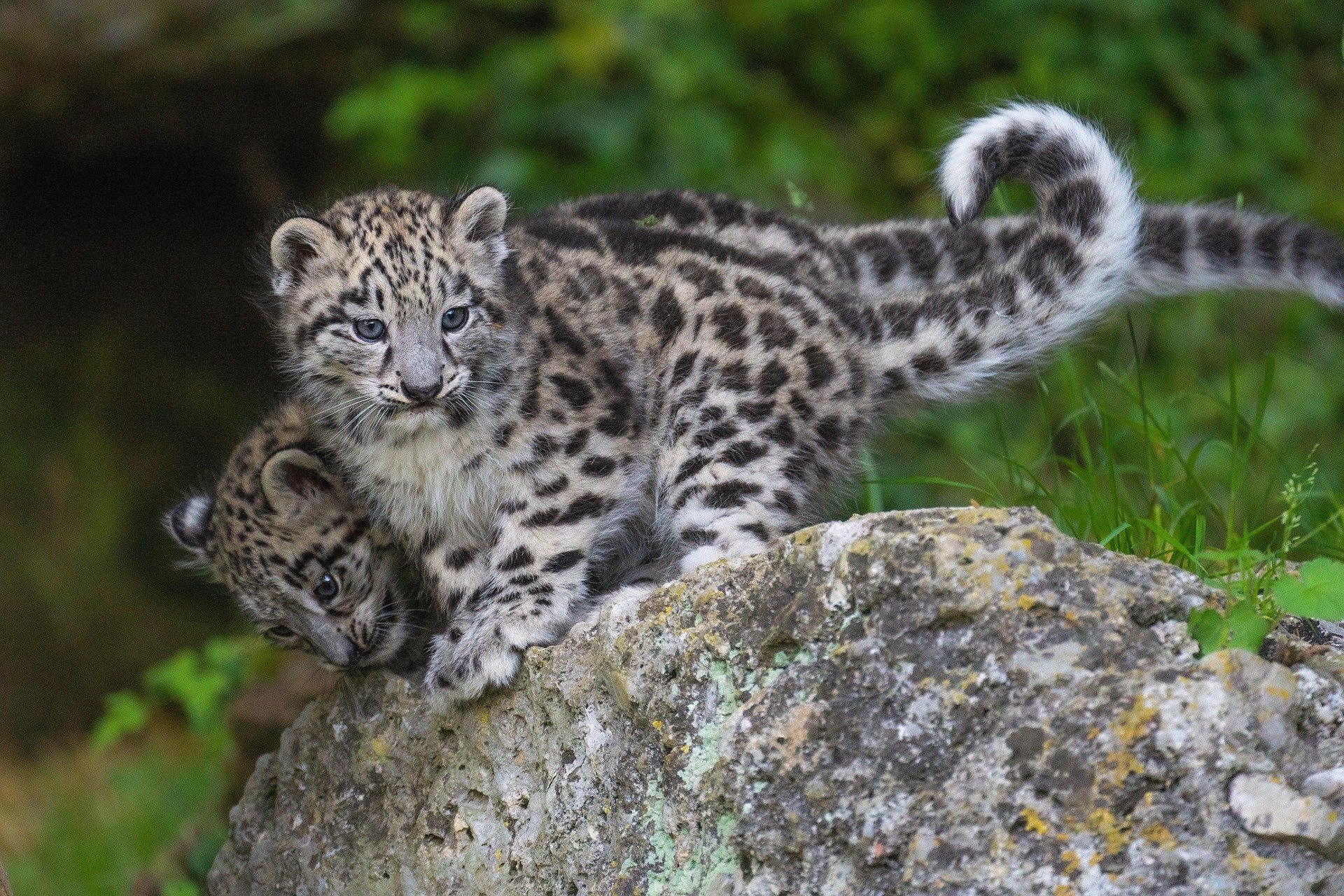
What kind of animal is the snow leopard? We will explain its characteristics, ecology, and habitat. The snow leopard, which has adapted to various environments and is distributed over a wide area, is actually only found in Asia. It is found mainly in Central Asia, including India, and in South Asia. It is also found in Russia, where Lake Baikal is located, and China.


- What is a snow leopard? Basic stats
- What are the roots and origins of the snow leopard?
- Habitat
- What are their characteristics? What kind of creature are they?
- What is their personality like?
- What is their ecology?
- About Molting
- About Their Vocalizations
- Seasonal Activities
- About Snow Leopard Cubs
- Is the snow leopard an endangered species?
- Can snow leopards be kept as pets?
- Zoos Housing Snow Leopards (Japan & Worldwide)
- Recommended articles
What is a snow leopard? Basic stats
Snow leopards are carnivores classified in the Felidae family of the Mammalia order, Carnivora, and Panthera genus. Their English name is Snow Leopard, their scientific name is Uncia uncia or Panthera uncia, and their kanji is 雪虹. Their body length is 100-140cm, and their weight is 20-50kg. A list of information is below.
| Japanese(和名) | ユキヒョウ |
| English(英名) | Snow Leopard Ounce Irbis |
| scientific name(学名) | Uncia uncia Panthera uncia |
| classification(分類) | Mammalia、Carnivora、 Felidae、Panthera 哺乳綱、食肉目、ネコ科、ヒョウ属 |
| IUCN Status(保全状況) | VULNERABLE |
| Length(体長) | 100-140cm |
| Weight(体重) | 20-50kg |
Snow leopard taxonomy
- 界 (Kingdom): 動物界 (Animalia)
- 門 (Phylum): 脊索動物門 (Chordata)
- 綱 (Class): 哺乳綱 (Mammalia)
- 目 (Order): 食肉目 (Carnivora)
- 科 (Family): ネコ科 (Felidae)
- 属 (Genus): ヒョウ属 (Panthera)
- ※かつては Uncia 属に分類されることもあったが、分子系統学により現在は Panthera 属に統合
- 種 (Species): ユキヒョウ (Panthera uncia)
What are the roots and origins of the snow leopard?
The snow leopard (Panthera uncia) is not simply a “leopard adapted to cold climates.” It is an animal specialized for the high-altitude environments of Central Asia, having diverged from a very ancient lineage of big cats (the genus Panthera).
Where did their ancestors come from?
Current research suggests that the ancestral lineage of big cats—including the snow leopard—most likely originated in Asia.
Fossils discovered in the Zanda Basin of the western Tibetan Plateau are particularly significant.
These fossils belong to an extinct big cat species named Panthera blytheae, found in geological strata dating back approximately 5.5 to 4.5 million years. Based on morphological and phylogenetic analyses, it is considered an early Panthera lineage closely related to the snow leopard.
In other words, the evolutionary history is thought to look like this:
Ancient Asian Panthera lineage
↓
Lineage close to the snow leopard
↓
Modern snow leopard
Surprisingly close to the tiger
The genus Panthera currently comprises five species:
🐯 Tiger
🦁 Lion
🐆 Leopard
🐆 Jaguar
🏔️ Snow leopard
Genomic studies indicate that tigers and snow leopards belong to relatively closely related lineages, with the divergence between the two estimated to have occurred approximately 3.5 million years ago.
Roughly speaking, the relationship looks like this:
Common Panthera ancestor
├─ Tiger/Snow leopard lineage
│ ├─ 🐯 Tiger
│ └─ 🐆 Snow leopard
└─ Lion/Leopard/Jaguar lineage
However, the actual evolutionary history is more complex than this diagram suggests, as instances of past inter-lineage hybridization and incomplete lineage sorting have been confirmed within the genus Panthera.
Why did they become “animals of the snow”?
Vast mountainous regions characterize Central Asia, where the ancestral lineage of the snow leopard lived. It is believed that, within this context,
populations adapted to high-altitude, cold, and arid environments
gradually evolved into the snow leopard.
Modern snow leopards exhibit
very thick fur,
a long tail,
large paws,
short ears,
large nasal cavities,
and powerful legs capable of traversing mountainous terrain—
features that demonstrate their adaptation to high-altitude environments.
The long tail, in particular, is a crucial feature; it not only helps them maintain balance on rugged, rocky terrain but also serves to protect against the cold.
Habitat
Snow leopards are found in Nepal, India, China, Pakistan, Afghanistan, Tajikistan, Uzbekistan, Kazakhstan, Kyrgyzstan, etc.
- Habitat Overview
Snow leopards are found primarily in the high mountain regions of Central Asia. They prefer high, cold, and rocky mountainous areas.
Altitude Range: Approximately 3,000-5,500 meters
They may migrate to lower elevations in winter (sometimes down to around 2,000 meters).
- Distribution (by Country/Region)
Snow leopards live in the mountainous regions of approximately 12 countries:
Region: Typical Mountain Ranges and Plateaus
China: Tibetan Plateau, Tian Shan
Mongolia: Mountains north of the Gobi Desert
Nepal: Himalayas
India: Himachal Pradesh, Jammu and Kashmir
Bhutan: High Mountain Regions
Pakistan: Karakoram Mountains
Kazakhstan, Kyrgyzstan, Tajikistan, Uzbekistan: Tian Shan, Pamir
Afghanistan: Hindu Kush Mountains
Russia (Southern Siberia): Altai Mountains
- Habitat Characteristics
Rocky areas and cliffs provide ideal hiding and hunting grounds.
Adapted to high-altitude, cold, snowy regions.
Typically live on slopes where grasslands and forests intersect.
Primarily choose areas that overlap with the habitats of their prey (ibex, marmots, deer, etc.).
What are their characteristics? What kind of creature are they?
Snow leopards have pale gray, yellowish gray, or even slightly bluish gray fur, and a white belly. Their ears are small and their eyes are located at the top, making it easy for them to search for prey while hiding in the shade of rocks. They live in rocky areas, grasslands, and low-growing coniferous forests at altitudes of 600 to 6,000 meters. They tend to move to higher altitudes in summer and lower altitudes in winter. The soles of their feet are covered with fur to protect them from the cold.
- Appearance and Physical Characteristics
Body Length: Approximately 100-130 cm (excluding tail)
Tail Length: Approximately 80-100 cm (almost the same length as body)
The tail is important for balance and also serves as a “muff” to protect the face from the cold.
Weight: Males: 45-55 kg, Females: 35-40 kg
Fur Color: Grayish-white to pale yellowish-brown fur with black or dark brown spots and rosettes
Ears: Small and round
Eyes: Yellow to greenish; nocturnal, able to hunt in the dark
Feet: Widely hairy, providing grip on snow
Claws: Sharp, adapted for catching prey and climbing rocky terrain
- Behavior/Personality
Generally solitary
Strongly territorial, marking their territory with markings and claw marks
Highly nocturnal (often resting in the shade of rocks during the day)
Roams freely through high mountainous areas and has excellent climbing abilities
Hunts patiently, using stealth to approach prey
- Diet
Carnivorous, primarily preying on mammals
Ibex, marmots, deer, wild goats, etc.
Also preys on small birds and rabbits when necessary
They often hunt alone, sometimes securing several days’ worth of food in a single hunt
- Adaptations/Special Abilities
Thick fur adapted to extreme cold
Conserves body heat by sleeping with their tails tucked under their hind legs
Ability to climb snowy mountains and rocky terrain with their thick paws and claws
Excellent camouflage abilities (their body color blends in with rocks and snow)
Detects prey with excellent eyesight, hearing, and smell

What is their personality like?
Snow leopards are nocturnal and rest in their nests during the day. They are not very social and tend to act alone.
Snow Leopard Personality and Behavior
Prefers Solitary Activities
They generally act alone.
Females stay with their cubs only during the breeding season, but are otherwise solitary.
Highly Cautious
They are timid around humans and other predators, and rarely appear in public.
Encounters with them are so rare that they are sometimes called “phantom cats.”
Patient and Cautious
When hunting, they wait quietly to avoid being noticed by their prey, approaching only once before striking.
This caution is the key to surviving in the harsh alpine environment.
Highly Territorial
They mark their territory with scent and claw marks, and rarely interact with other snow leopards.
They will fight if necessary to protect their territory.
Playful and Curious (Young Individuals)
Cubs and young individuals may play on rocky areas or climb trees and rocks.
However, as they grow older, hunting and survival become their top priorities, and they play less.
What is their ecology?
Snow leopards are carnivores and live by preying on rodents, birds, etc. The breeding season is from December to March, and males and females act together. The gestation period is about three months, and they can give birth to 1-3 cubs at a time. They start eating solid food at two months old and then breastfeed for three months. They live for over 10 years, with some even reaching 20 years.
- Behavior Pattern
Solitude: Lives almost exclusively alone, with females only accompanying their young during child-rearing.
Activity Period: Primarily nocturnal
Hunts at night
Often rests in rock shelters or caves during the day
Migration Distance: Travels widely within its territory
Territory size varies from individual to individual, ranging from 12 to 50 km²
Adjusts movement range depending on food, water, and the season
- Diet
Completely carnivorous
Main Prey:
Medium-sized mammals such as goats and deer (such as ibex and blue sheep)
Also preys on small mammals (marmots, rabbits) and birds
Hunting Characteristics:
Approach patiently and stealthily
Surprises and captures at short distances
May secure several days’ worth of food in a single hunt
- Breeding
Estrus Season: Winter (January-March)
Gestation Period: Approximately 90-100 days
Birthing Season: Spring (April-June)
Number of Births: Two to three cubs are common.
Rearing:
Females raise their young alone.
Baby cubs become independent at about 1.5 years old.
They learn hunting skills from their mothers.
- Habitat
Body adapted for high mountain and rocky terrain:
Thick fur protects them from the cold.
Long tails provide balance and cover their faces for protection.
Wide legs allow them to walk easily on snow.
They may move up or down in altitude depending on the distribution of prey.
In winter, they may descend in altitude in search of food.
- Social Structure
Solitary and highly territorial.
Males may enter female territories, but males avoid contact with each other.
They mark their territory with pheromones and claw marks.
Do they have any natural enemies?
The biggest threat to snow leopards is humans. Because they are so large in the wild, they can be attacked.

About Molting
Snow leopards are animals that exhibit a dramatic difference between their summer and winter coats. Because they inhabit cold, high-altitude regions, they adjust the volume and density of their fur according to the season.
❄️ Winter Coat
From autumn through winter, the fur grows progressively longer and denser.
The fur becomes very long
The undercoat thickens
Fur becomes especially lush around the neck, chest, and belly
The tail becomes covered in thick fur
Long fur grows on the soles of the feet as well
This thick winter coat helps them retain body heat, even during freezing nights in the high mountains.
Their tail is a particularly distinctive feature. The snow leopard’s long, thick tail not only helps with balance on rocky terrain but can also be wrapped around the body like a blanket for warmth when resting.
🌱 Spring Molt
As temperatures rise in the spring, the transition from winter coat to summer coat begins.
The dense winter undercoat sheds, giving the animal a sleeker appearance.
A noticeable reduction in winter coat volume occurs particularly in areas such as:
Neck, chest, and belly → Flanks and back
However, since wild snow leopards inhabit cold, high-altitude environments, they do not lose their fur all at once.
☀️ Summer Coat
In summer, the fur is shorter than in winter, resulting in a generally sleeker appearance.
Even so, they still possess a much thicker coat compared to typical large cats.
A key point for snow leopards is that, because temperatures remain low at high altitudes even in summer, their coat does not become truly “thin.”
🍂 Autumn Molt
In autumn, the transition back to the winter coat begins.
Summer coat
↓
Fur lengthens
↓
Undercoat increases
↓
Neck, chest, belly, and tail become fuller
↓
❄️ Winter coat
This is the progression of the change.
About Their Vocalizations
Snow leopards are known for being unable to produce the kind of loud roars associated with lions or tigers.
🔊 Key Vocalizations
Snow leopards use a variety of vocalizations depending on the situation.
Growling: Used when alert or issuing a threat
Hissing: Used for strong warnings or intimidation
Low growl: Used to make another animal keep its distance
Churring or purring sounds: Used during calm moments or for communication
Meowing or squeaking sounds: Used for communication between individuals
Mating calls: Used to locate a potential mate from a distance
🐯 Why Can’t They Roar?
Among large felids, species such as lions, tigers, and jaguars are capable of loud roaring.
In contrast, snow leopards have a different throat and vocal cord structure, making it impossible for them to roar like a lion.
Instead, they produce quite distinctive vocalizations.
During the breeding season, in particular, they may emit calls that carry over long distances across the mountainous terrain to locate a mate.
Seasonal Activities
Snow leopards alter their behavior patterns in response to seasonal changes in prey movement, snow cover, and temperature. While they are generally solitary and active both day and night, they tend to synchronize their activity with the times when their prey is on the move.
🌱 Spring
A season when activity levels gradually increase following the harsh winter environment.
Molting from winter coat to summer coat begins
Moving across snow in high-altitude areas where snow remains
Pursuing prey such as wild sheep and goats
Shifting home range in accordance with prey movement
Entering the breeding season, leading to increased contact between males and females
Spring is a crucial time for breeding-related activities.
☀️ Summer
A relatively comfortable time in the high mountains.
Sometimes moving to very high-altitude regions
Tracking goats, sheep, and other prey
Tendency to be active during cooler times, such as morning and evening
Resting on rocky outcrops or slopes
Females caring for their young
Reduced snow cover allows for a wider range of movement compared to winter.
🍂 Autumn
A critical season for preparing for winter.
Molting into winter coat begins
Pursuing prey in preparation for winter
Moving in sync with the seasonal migration of prey
Exploring and moving between areas to be used in winter
Activity times shifting as temperatures drop
Autumn is a time when prey movement and snow leopard behavior are closely linked.
❄️ Winter
The harshest season for snow leopards, though they do not hibernate.
Enduring the cold with a thick winter coat
Remaining active even in deep snow
Traversing snowy mountains while pursuing prey
Resting on rocky outcrops or slopes
Hunting aligned with the times when prey is active
In winter, snow restricts the movement routes of prey, making hunting strategies that utilize the terrain particularly important.
About Snow Leopard Cubs
This article provides a detailed summary of snow leopard cubs’ developmental stages and characteristics from birth to independence.
- Birth, Weight, and Appearance
Birthing: Spring (April-June)
Litter Size: Typically 2-3 cubs per litter
Weight: Approximately 500-1,000 g immediately after birth
Body Length: Approximately 25-30 cm
Fur Color: Newborns have soft, grayish fur with indistinct markings
Eyes: Open at 7-10 days
- Cubs’ Behavior and Development
1-2 Months Old:
Spend time in mother’s den (rock cave or cavern)
Nursed by mother
Fur markings gradually become more distinct
2-3 Months Old:
Eyes fully open and begin playing outside the den
Observe mother’s behavior and imitate hunting
Begin practicing walking, jumping, and rock climbing
- Learning Hunting Skills
6 Months to 1 Year:
Accompany mother on hunts
Attempt to capture small prey
Learn hunting skills, endurance, and stealth techniques
1 Year to 18 Months:
Preparing for Independence
Become skilled at hunting and begin practicing independent behavior
- Independence
Age of Independence: Approximately 18 months to 2 years
After independence, youngsters leave their mother’s territory and search for their own territory
Immediately after independence, they are cautious and wary due to the fierce competition for survival
- Personality and Characteristics of Young Animals
Highly curious and playful
Dependent on their mother, they have a high learning ability and quickly master hunting and survival techniques
Motor skills on rocks and snow develop rapidly as they grow
Is the snow leopard an endangered species?
The snow leopard is an endangered species. It is listed in Appendix I of the Convention on International Trade in Endangered Species of Wild Fauna and Flora (CITES), so international trade is strictly restricted. Overhunting is progressing because their fur is used and their bones are used for medicine. Snow leopards are also exterminated as pests because they attack and eat livestock. As of 2015, there are only 3,000 remaining, which is a critical situation. As a result, a conservation project has been launched.
- Endangered Species Status
Classification according to the IUCN Red List (International Union for Conservation of Nature):
Vulnerable (VU) = Endangered (Vulnerable)
Estimated Population: Approximately 4,000-6,500 (wild individuals)
The population is declining, and depending on the habitat, it is at high risk of extinction.
- Main Causes of Decline
Habitat Destruction and Fragmentation
Changes in the natural environment due to road construction, mining development, and livestock grazing
A decline in wild goats and deer, which are prey, leads to a decrease in food supply.
Poaching and Illegal Trade
Poaching for fur and bones
The fur trade is particularly problematic in China and Central Asia
Competition with livestock and retaliatory shooting
If they attack livestock, herders will exterminate them
Climate Change
High-altitude habitats are shrinking due to changes in snowy and alpine environments
- Conservation Efforts
International Conservation
Trade Restrictions (Appendix I) under CITES (Convention on International Trade in Endangered Species of Wild Fauna and Flora)
IUCN Monitoring of Snow Leopards
Regional Conservation
Establishment of Protected Areas in China, Mongolia, Nepal, India, and Other Countries
Wildlife Camera Surveys
Citizen Cooperation
Reducing Conflicts with Snow Leopards through Livestock Grazing Management and Compensation Systems
Can snow leopards be kept as pets?
As mentioned above, snow leopards are designated as endangered species and are listed in the Convention on International Trade in Endangered Species of Wild Fauna and Flora (CITES), so international trade is strictly restricted. Therefore, it is extremely difficult to keep them as pets. Let’s look at the zoo’s official site map and enjoy the zoo’s zoo.
- Legal Issues
Snow leopards are endangered (IUCN: Vulnerable)
International trade is prohibited under Appendix I of the Convention on International Trade in Endangered Species of Wild Fauna and Flora (CITES).
In Japan, keeping and importing them is prohibited without special permission under the Wildlife Protection Act and the Species Conservation Act.
Illegal keeping is subject to imprisonment and fines.
- Difficulties in Keeping Snow Leopards
Snow leopards are large cats, weighing around 50 kg.
They require a high level of exercise, a large territory, and excellent climbing ability.
They have strong wild instincts, making them virtually impossible to tame.
Their sharp fangs and claws make them extremely dangerous.
If they are not provided with an appropriate environment, they are at high risk of death from stress or disease.
- Examples of Keeping Snow Leopards
They are kept in zoos and conservation facilities.
As part of ecological exhibits and breeding programs.
There are almost no cases of them being kept as pets in homes, and even if they were, keeping them would pose significant conservation and ethical issues.
- Safe Choice
To experience the charm of snow leopards:
Observe them at zoos and animal shelters
Learn from documentaries and nature videos
If you’re considering keeping one at home, a realistic option would be a pet feline similar to a snow leopard, such as a Bengal cat or a serval (a hybrid of a small wild cat and a snow leopard).
Zoos Housing Snow Leopards (Japan & Worldwide)
Snow leopards are not commonly kept in captivity worldwide; consequently, zoos coordinate the transfer of individuals and manage bloodlines specifically for breeding purposes. In Japan, breeding efforts are conducted under the management plan of JAZA (Japanese Association of Zoos and Aquariums).
🇯🇵 Japan
As of 2026, there are six zoos in Japan where snow leopards can be seen.
| Zoo | Prefecture | Notes |
|---|---|---|
| Asahiyama Zoo | Hokkaido | Male “Kobo” transferred from Tama in 2026 for breeding |
| Maruyama Zoo | Hokkaido | Participates in the domestic breeding program |
| Omoriyama Zoo | Akita | Houses snow leopards |
| Tama Zoological Park | Tokyo | Key facility for domestic breeding and bloodline management |
| Ishikawa Zoo | Ishikawa | Exhibits snow leopards |
| Higashiyama Zoo and Botanical Gardens | Aichi | Facility in the Chubu region |
Tama Zoological Park, in particular, is a crucial facility involved in managing the domestic snow leopard bloodline. In February 2026, a male named “Kobo” was transferred to Asahiyama Zoo under a breeding loan arrangement aimed at reproduction.
🌍 Worldwide
Snow leopards are also kept in zoos across North America, Europe, and Asia.
Notable facilities include:
🇺🇸 United States
San Diego Zoo
Denver Zoo
Bronx Zoo
Smithsonian National Zoo
Miller Park Zoo
Albuquerque Biological Park
…and others.
In the United States, population management is conducted through the AZA’s Species Survival Plan (SSP), and snow leopards are included in these international breeding and population management programs.
🇪🇺 Europe
In Europe, population management and breeding programs for rare animals—including snow leopards—are carried out through the EAZA network. Over 400 zoos and aquariums across Europe and beyond participate in EAZA. Notable facilities where they are kept include:
Nordens Ark (Sweden)
London Zoo (UK)
Berlin Zoo (Germany)
Zurich Zoo (Switzerland)
Prague Zoo (Czech Republic)
…and others.
Recommended articles
コメント