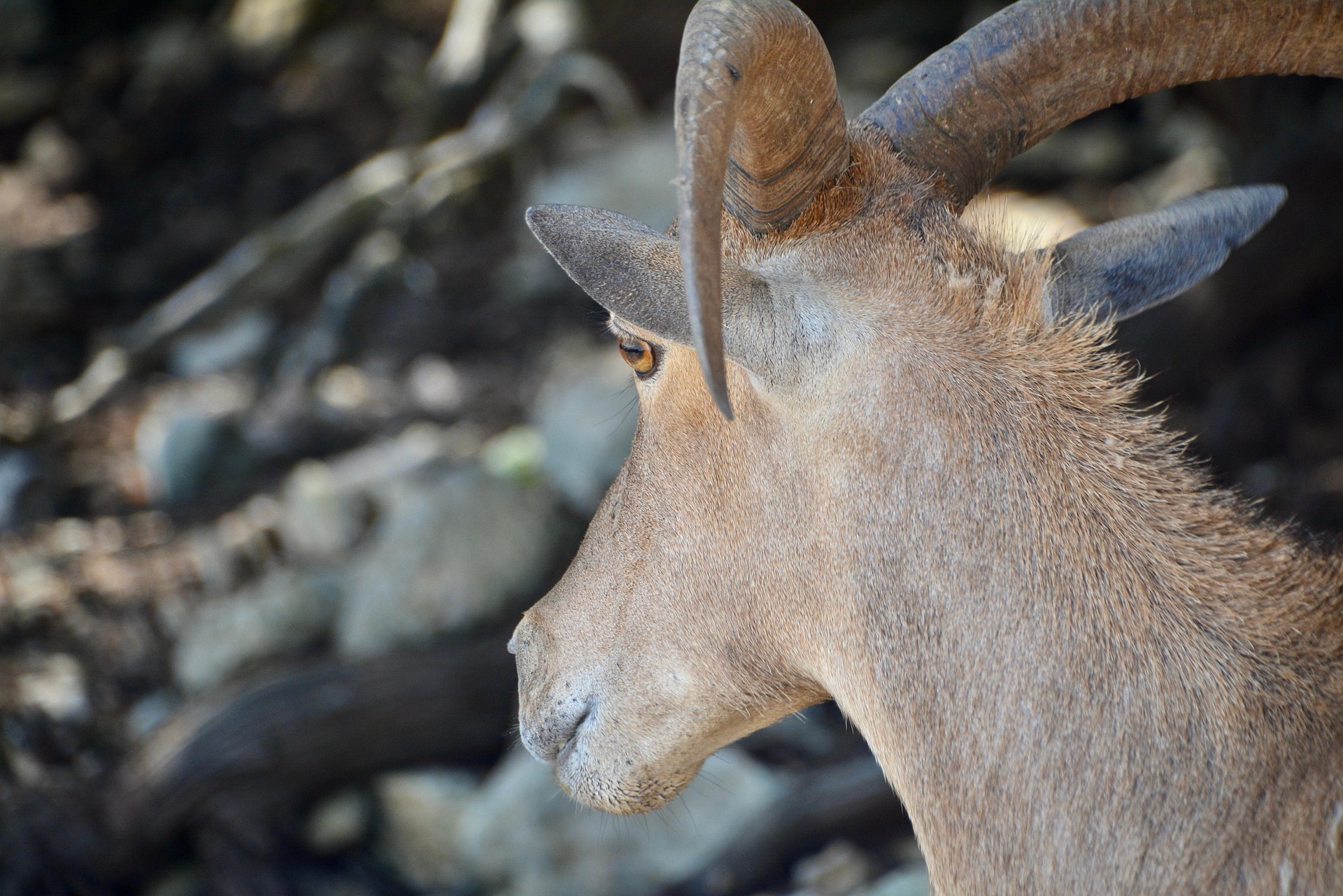
What kind of animal is the Barbary sheep, a sheep found in northern Africa? We will explain its characteristics, ecology, and habitat. Its most distinctive feature is that it has no beard or subcutaneous gland, making it a very unusual animal that looks like both a sheep and a goat. This animal is designated as an endangered species and is in a critical situation.


- What is a Burberry Sheep? Basic Stats
- What are the roots and origins of the Barbary sheep?
- Habitat
- What are their characteristics? What kind of creature are they?
- What is their personality like?
- What is their ecology?
- About Barbary Sheep Cubs
- Are Barbary sheep an endangered species?
- Can Barbary sheep be kept as pets?
- Zoos Housing the Species (Japan & Worldwide)
- Recommended articles
What is a Burberry Sheep? Basic Stats
Barbary sheep are cloven-hoofed mammals classified in the Bovidae family of the Mammalia class. Their English names are Barbary Sheep or Aoudad. Their scientific name is Ammotragus lervia. They are 130-190cm long, weigh 50-140kg, and have a tail length of 15-25cm. The list of information is as follows:
| Japanese(和名) | バーバリシープ |
| English(英名) | Barbary Sheep Aoudad |
| scientific name(学名) | Ammotragus lervia |
| classification(分類) | Mammalia、Artiodactyla、 Bovidae、Ammotragus 哺乳綱、ウシ目、ウシ科、バーバリシープ属 |
| IUCN Status(保全状況) | VULNERABLE |
| Length(体長) | 130~190cm |
| Weight(体重) | 50~140kg |
Barbary sheep taxonomy
- 界 (Kingdom): 動物界 (Animalia)
- 門 (Phylum): 脊索動物門 (Chordata)
- 綱 (Class): 哺乳綱 (Mammalia)
- 目 (Order): 偶蹄目 (Artiodactyla)
- 科 (Family): ウシ科 (Bovidae)
- 亜科 (Subfamily): ヤギ亜科 (Caprinae)
- 属 (Genus): バーバリーシープ属 (Ammotragus)
- この属にはバーバリーシープ1種のみ(単型属)
- 種 (Species): バーバリーシープ (Ammotragus lervia)
What are the roots and origins of the Barbary sheep?
The roots of the Barbary sheep (also known as the Aoudad) are well-established.
Its scientific name is Ammotragus lervia. Although the name includes “sheep,” it is actually an animal quite distinct from ordinary domestic sheep.
🌍 Origin: North Africa
Its native range spans the mountainous and arid regions of North Africa, covering:
🇲🇦 Morocco
🇩🇿 Algeria
🇹🇳 Tunisia
🇱🇾 Libya
🇪🇬 Egypt
🇲🇷 Mauritania
🇲🇱 Mali
🇳🇪 Niger
🇹🇩 Chad
🇸🇩 Sudan
They have adapted specifically to rocky terrains, such as the Atlas Mountains.
🐏 Not an ancestor of domestic sheep
This is an interesting point.
Taxonomically, it is classified as follows:
Mammalia → Artiodactyla → Bovidae → Caprinae → Caprini → Ammotragus
In other words:
Barbary sheep ≠ Domestic sheep (Ovis)
Genetically, it is considered to belong to an independent lineage of goat-antelopes that is relatively close to the Capra (goat) lineage. The FAO also categorizes Ammotragus as a type of “goat-like sheep” or “sheep-like goat.”
Furthermore, molecular evolution studies estimate that the divergence between Ammotragus and Capra occurred approximately 5.7 million years ago.
🧬 An ancient lineage
The Barbary sheep is the only extant species within the genus Ammotragus.
There is significant genetic differentiation within the North African population; studies have confirmed a major mitochondrial DNA lineage split between the Mediterranean side and the Sahara side.
Recognized subspecies include:
Atlas Mountains type
↓
Sahara type
↓
Libya type
↓
Egypt type
↓
Sudan type
↓
Niger type
However, research into these subspecies classifications is still ongoing.
🌎 Why are they found all over the world?
While feral populations currently exist in places like Spain and the southwestern United States, these are not part of their natural distribution.
They originated from animals introduced to Europe and the Americas by humans that subsequently went feral. DNA research suggests that the U.S. populations likely stem from multiple introductions originating from various regions in North Africa.
In short:
🐏 The best way to understand the Barbary sheep is as “an ancient, distinct lineage of goat-antelopes—native to North Africa—that closely resembles a sheep.”
Habitat
Barbary sheep are found in the wild in northern Africa, including Morocco, Libya, Egypt and Sudan.
- Natural Distribution
Origin: North Africa
Major Countries/Regions:
Algeria
Tunisia
Morocco
Libya
Western Egypt
Habitat Characteristics:
Mountainous and rocky areas
Rocky areas around dry deserts
Altitude: Approximately 200-2,600 meters above sea level
- Artificially Introduced Areas
North America (Southwestern United States, Texas, California, etc.)
Europe (Spain, etc.)
Habitat: Dry, rocky areas and hills, where it has become established as a naturalized species
- Habitat Characteristics
Adapted to arid and semi-desert areas
Body shape allows it to move easily over rocky areas, cliffs, and steep slopes
Herbivorous, feeding on grasses and shrubs, it can survive in water-scarce environments
It has the ability to quickly climb rocky areas and cliffs to escape predators
What are their characteristics? What kind of creature are they?
Barbary sheep are covered with short, stiff hair that continues to grow on their chest and forelegs. Their tails are flat, and their backs are reddish brown or gray-brown in color. Both males and females have horns that curve outward and downward from the rear. Their ears are small and slender. They prefer to live in desert areas below 950m above sea level. They spend the day in rock caves or rock shades to avoid the heat, and go out to feed in the early morning or evening.
- Appearance and Physical Characteristics
Body Length: Males 110-140 cm, Females 95-125 cm
Shoulder Height: Approximately 70-100 cm
Weight: Males 45-100 kg, Females 35-60 kg
Coat Color: Reddish-brown to Yellowish-brown
Slightly darker in winter, becoming lighter from the chest to the belly
Horns:
Both males and females have horns, but males have larger ones.
Their horns are curved backward and reach a length of 50-100 cm.
Mane: Males have a long mane-like hair growing on their neck and chest.
- Ecological Characteristics
Herbivory: Feeds on grasses, leaves, shrubs, and fruit.
Adapted to Arid Environments: Can survive on limited water.
When water is unavailable, they obtain moisture from grasses and leaves.
Athletic Ability:
Easily climbs rocky areas and steep slopes.
Adapted to escape predators and predators.
- Behavior/Personality
They live in groups (typically around 10-20 individuals).
Males sometimes lead groups.
Mature males may live alone or in small groups.
They are usually active during the day (diurnal).
They are highly cautious and will retreat to rocky areas if they sense danger.
- Distinctive Appearance
They have a “rocky mountain goat” vibe.
They are sturdy and muscular, perfectly adapted to rocky and dry areas.
They appear to be somewhere between a goat and a sheep, with large, impressive horns.

What is their personality like?
Barbary sheep are highly social animals and live in groups consisting of one male and 3-6 females. However, during the breeding season, males fight with each other over females. Not only do they butt their horns together, but they also fight by entangling them, which can be quite a fierce battle.
- Herd Personality
Herbivores that primarily live in groups
They often live in groups of 10-20 individuals
There is social order within the group
Mature males sometimes lead the group
Females have relatively stable relationships within the group
- Vigilance and Defensiveness
Highly cautious
Flees to rocky areas or cliffs when sensing danger
Wary of predators (lions, jackals, leopards, etc.)
Males sometimes fight with each other over territory or control of the group
Highly agile, they will run up rocky areas if they sense danger
- Social and Personality Characteristics
Cooperative within the group
Forming a group reduces the risk from predators
Individually cautious, wary, and timid
They can become tame in captivity, but in the wild they generally avoid contact
- Differences between Males and Females
Males:
More aggressive and territorial
May compete for dominance within the group
Females:
Tend to be more social and cooperative with the group
Stronger protective instincts while raising their young
What is their ecology?
Barbary sheep live on grass, leaves, fruit, etc. and reproduce viviparously. The gestation period is 150 days, and they can give birth to one baby at a time. They reach sexual maturity at 18 months of age, and have a lifespan of 15 to 25 years.
- Behavior
Diurnal (active during the day)
Living in groups
Packs typically contain around 10-20 individuals.
Mature males may lead packs or act alone.
They have excellent climbing abilities on rocky terrain and cliffs, making them easy to escape in times of danger.
- Diet
Exclusively herbivorous
Main foods:
Grass, leaves, shrubs, fruits, and bark
Adapted to dry areas, they can obtain moisture from plants even when water is scarce.
They remain alert and observe their surroundings while eating.
- Breeding
Estrus: Autumn (September-November)
Gestation: Approximately 160-165 days
Birthing: Spring (March-May)
Little children: 1-2 (rarely 3)
Cubs grow up under the protection of their mother and pack.
Maturity:
Females: Sexually mature at around 2 years of age
Males: Sexually mature at around 3 years of age
- Social Structure
Packs may be divided into male, female, or mixed groups.
Packs have a hierarchy and roles.
Mature males have dominance over the pack.
Females are cooperative and primarily responsible for maintaining the pack, primarily raising their young.
Communication within the pack:
Dominance is shown through body posture and the use of horns.
They also share warnings and warnings of danger.
- Adaptation and Survival Strategies
Strong legs and climbing ability for rocky and arid terrain.
Efficient water intake, adapted to harsh, dry environments.
Pack-based behavior protects against predators.
Do they have any natural enemies?
Natural enemies of Barbary sheep include caracals and leopards.

About Barbary Sheep Cubs
This article provides a detailed overview of Barbary Sheep (Ammotragus lervia) cubs, focusing on their developmental stages and characteristics from birth to independence.
- Birth, Weight, and Appearance
Birthing: Spring (March-May)
Litter Size: 1-2 (rarely 3)
Weight: Approximately 2-4 kg immediately after birth
Body Length: Approximately 30-40 cm
Coat Color: Light tan, lacking adult-like horns
Vision and Hearing: Vision is nearly open immediately after birth, but movement is dependent on the mother
- Cubs’ Growth and Behavior
First few weeks: Spend time with mother
Drink breast milk and find safety in burrows and rocky areas
1-2 months: Establish familiarity with the herd and walk short distances
Begin practicing climbing small rocks and slopes
3-6 months: Learn how to eat and avoid danger by observing the mother’s movements
Also begin practicing eating grass and leaves during this period
- Acquiring Hunting and Foraging Skills
As herbivores, they do not “hunt,” but they learn the skills of foraging for and eating plants from their mothers.
They also indirectly acquire water intake and survival skills in arid areas from their mothers.
- Learning Sociality
They learn social rules by observing the hierarchy and behavior within the pack.
For example, how males use their horns and intimidate each other.
Cooperative behavior with females and their mothers.
Cubs develop strength and agility through play.
- Independence
Age of independence: Approximately 1-1.5 years
After independence, they find their own pack and territory.
They live under the protection of the pack until they reach their full physical size.
Are Barbary sheep an endangered species?
Barbary sheep are an endangered species. They are listed in Appendix II of the Convention on International Trade in Endangered Species of Wild Fauna and Flora (CITES), so international trade is strictly restricted. Their population has drastically decreased in their native habitat due to their use for food and fur and skin. Furthermore, in Africa, their population has decreased further due to overhunting for sport hunting. They are said to have become extinct in Egypt in the 1970s.
- Classification as an Endangered Species
Assessment by the IUCN Red List (International Union for Conservation of Nature):
Vulnerable (VU) = Endangered (Vulnerable)
Wild populations are declining, and while the exact number is unknown, it is estimated to be between several thousand and 10,000.
- Main Causes of Decline
Habitat Destruction and Fragmentation
The mountainous and arid regions of North Africa are declining due to agricultural land conversion, urbanization, and road construction.
Hunting and Poaching
Hunting for meat, horns, and fur was common in the past.
Poaching remains a threat in some areas.
Competition with Livestock
Due to their herbivorous lifestyle, they may compete with livestock for food.
Effects of Arid Lands and Climate Change
Water shortages and vegetation decline are making their habitat more difficult.
- Conservation Efforts
Internationally Protected:
Listed on Appendix II of CITES (Convention on International Trade in Endangered Species of Wild Fauna and Flora)
Commercial trade is restricted
Locally Protected:
Designated national parks and protected areas in Morocco, Algeria, Tunisia, and other countries
Captive Breeding:
Populations are maintained through breeding programs in zoos and conservation facilities.
Can Barbary sheep be kept as pets?
As mentioned above, Barbary sheep are designated as an endangered species and are listed in the Convention on International Trade in Endangered Species of Wild Fauna and Flora (CITES), so international trade is strictly restricted. Therefore, it is extremely difficult to keep them as pets.
- Legal Issues
Barbary sheep are an endangered species (IUCN: Vulnerable)
International trade is restricted under Appendix II of the Convention on International Trade in Endangered Species of Wild Fauna and Flora (CITES).
Although they are not designated as “Specified Invasive Alien Species” in Japan, they are subject to restrictions under the Wildlife Protection Act and the Animal Welfare Act.
Unauthorized import and keeping are likely illegal.
- Difficulties in Keeping
They are large herbivores, with adult males weighing up to 100 kg.
They require rocky areas and large spaces, making them impossible to keep in an average household.
They are social animals that live in groups, so being alone can be stressful.
They have sharp horns and can be aggressive, making them dangerous.
- Breeding Examples
They are kept and bred in zoos and conservation facilities.
They are rarely kept in homes, and even if they are, there are significant ethical and safety issues.
- Safe Alternatives
If you want to enjoy herbivorous animals at home, domestic animals like small goats and sheep are a realistic option.
Learn about the ecology and charm of Barbary sheep:
Observe at zoos and sanctuaries
Learn through nature observation documentaries and videos
Zoos Housing the Species (Japan & Worldwide)
🇯🇵 Zoos in Japan
The following facilities house the species. Please note that the situation regarding current exhibits may vary from past records.
Zoo / Location / Status
Ueno Zoo / Tokyo / Currently housed
Gunma Safari Park / Gunma / Currently housed
Tobu Zoo / Saitama / Currently housed
Oshima Park Zoo / Tokyo (Izu Oshima) / Currently housed
Suzaka City Zoo / Nagano / Currently housed
Nihondaira Zoo / Shizuoka / Currently housed (breeding record exists)
Fuji Safari Park / Shizuoka / Currently housed
Akiyoshidai Safari Land / Yamaguchi / Currently housed
Fukuoka City Zoo / Fukuoka / Currently housed
African Safari / Oita / Currently housed
Hirakawa Zoological Park / Kagoshima / Not currently on display
There is a list of domestic facilities available that includes 11 zoos in Japan housing the species.
Additionally, Hirakawa Zoological Park explicitly states on its official website that the animal is “not currently on display.”
⭐ What about Tokyo?
Ueno Zoo is an option. It is listed in zoo databases—including international ones—as a facility that houses Barbary sheep.
🌍 Major Zoos Worldwide
Barbary sheep are kept in a relatively large number of zoos outside of Japan. 🇩🇪 Germany
Berlin Zoological Garden
Tiergarten Nürnberg
Tierpark Hagenbeck
Wilhelma Stuttgart
NaturZoo Rheine
Zoologischer Garten Halle
Tierpark Dessau
🇦🇹 Austria
Tiergarten Schönbrunn
Wildpark Altenfelden
🇨🇿 Czech Republic
Prague Zoo
Zoo Brno
Dvůr Králové Zoo
🇵🇱 Poland
Warsaw Zoo
Kraków Zoo
Silesian Zoological Garden
🇪🇸 Spain
Madrid Zoo Aquarium
Safari Aitana
🇫🇷 France
Parc Zoologique de Lunaret
Zoo de la Citadelle de Besançon
Zoo de l’Orangerie
🇨🇦 Canada
Toronto Zoo
Riverview Park & Zoo
🇺🇸 USA
Catoctin Wildlife Preserve and Zoo, etc.
🇦🇺 Australia
Taronga Zoo
🇰🇷 South Korea
Seoul Grand Park Zoo
Everland Zootopia
Samjung The Park
🇨🇳 China
Beijing Zoo
🇹🇭 Thailand
Chiang Mai Zoo
Chiang Mai Night Safari
Khao Kheow Open Zoo
The global zoo database lists a large number of animal facilities, with a particular focus on Europe.
Recommended articles
コメント