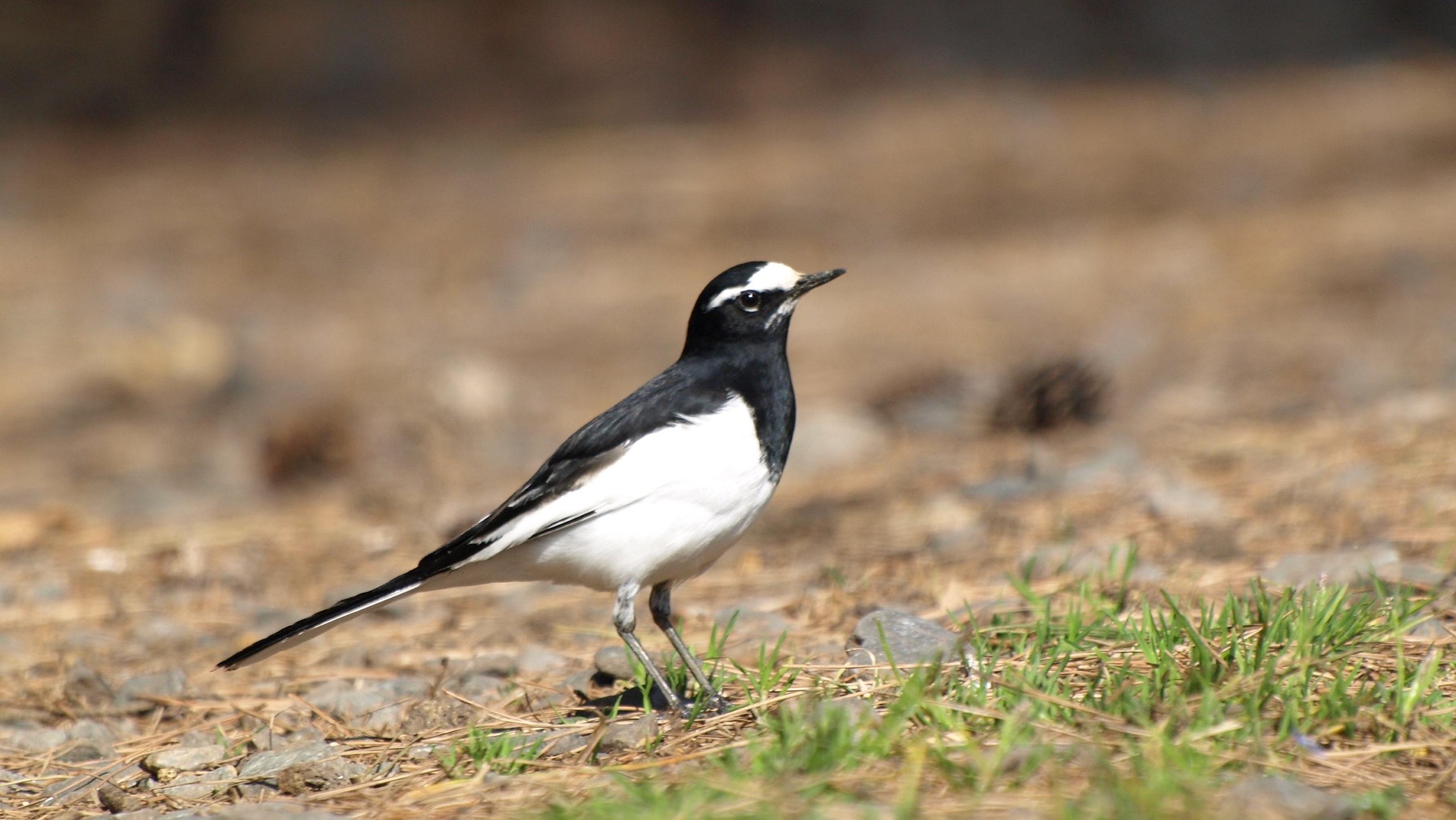
What kind of bird is the Japanese Wagtail? We will explain its characteristics, ecology, and habitat. This bird is very famous in Japan, and can also be seen on the Korean Peninsula. In Japan, it is a resident bird and can be seen almost all year round, so why not start by observing it?


- What is a Sekirei? Basic Stats
- What are the roots and origins of the Japanese Wagtail?
- Habitat
- What are its characteristics? What kind of creature is it?
- What is its ecology?
- About Japanese Wagtail Hatchlings
- Is the Japanese Wagtail an endangered species?
- Can you keep a Japanese Wagtail as a pet?
- Zoos Housing the Species (Japan & Worldwide)
- Recommended articles
What is a Sekirei? Basic Stats
The Japanese Wagtail is a species of bird classified in the Wagtail genus of the passerine order and family Motacillaidae. Its scientific name is Motacilla grandis, its English name is Japanese Wagtail, and its kanji name is Sekuro Wagtail. Its total length is 17-21cm, its wingspan is 28-30cm, and its weight is 25-30g. A list of information is as follows:
| Japanese(和名) | セグロセキレイ |
| English(英名) | Japanese Wagtail |
| scientific name(学名) | Motacilla grandis |
| classification(分類) | Aves、 Passeriformes、 Motacillidae、Motacilla 鳥綱、スズメ目、セキレイ科、セキレイ属 |
| IUCN Status(保全状況) | LEAST CONCERN |
| Length(体長) | 17~21cm |
| Weight(体重) | 25~30g |
Taxonomy (phylogenetic classification)
The Japanese Wagtail is classified as follows:
| 階級 | 分類 |
|---|---|
| 界 | 動物界 (Animalia) |
| 門 | 脊索動物門 (Chordata) |
| 綱 | 鳥綱 (Aves) |
| 目 | スズメ目 (Passeriformes) |
| 科 | セキレイ科 (Motacillidae) |
| 属 | セキレイ属 (Motacilla) |
| 種 | ハクセキレイ (Motacilla alba) |
What are the roots and origins of the Japanese Wagtail?
The Japanese Wagtail (Motacilla grandis) is a fascinating bird. While it is currently a wagtail species with a high degree of endemism—found primarily in Japan—it did not simply “suddenly appear” in the country. Instead, the prevailing view is that a lineage descended from continental wagtails became isolated on the Japanese archipelago and evolved independently.
🌏 1. Where did the original ancestors come from?
The genus Motacilla (to which the Japanese Wagtail belongs) is estimated to have originated approximately 4.5 million years ago.
Studies utilizing molecular clock analysis suggest that the ancestors of the Motacilla genus likely originated in a region encompassing the Eastern Palearctic (East Asia) or Southwest Asia.
In broad terms, the evolutionary path looks like this:
Ancestors of early wagtails
↓
Emergence of the genus Motacilla (approx. 4.5 million years ago)
↓
Dispersal across Eurasia
↓
Differentiation of black-and-white wagtail species
↓
Expansion into East Asia
↓
Isolation and independent evolution on the Japanese archipelago
↓
Japanese Wagtail
🇯🇵 2. The story behind it becoming a “Japanese endemic species” is interesting
For a long time, the Japanese Wagtail was treated as a species endemic to Japan.
At one time, the leading theory was:
Continental White Wagtails (Motacilla alba) migrated to the Japanese archipelago, became geographically isolated, and evolved into Japanese Wagtails.
In fact, research from the 1980s argued that the Japanese Wagtail might have diverged from the White Wagtail relatively recently due to geographic isolation.
However, contemporary genomic research is revealing a much more complex evolutionary history.
🧬 3. Recent research suggests it cannot be simply said that “only the White Wagtail is the ancestor”
The Japanese Wagtail forms part of the group known as “black-and-white wagtails,” alongside species such as the White Wagtail, the African Pied Wagtail, the Large Pied Wagtail (M. maderaspatensis) of India, and the Mekong Wagtail. Of particular interest are the
Japanese Wagtail (Motacilla grandis)
and the
White-browed Wagtail (Motacilla maderaspatensis).
The two species look quite similar, leading to long-standing speculation that they might share a common ancestor.
However, recent whole-genome analysis has revealed that a resemblance in appearance does not necessarily mean they are sister species.
The phylogenetic relationships of the Japanese Wagtail may involve phenomena such as the retention of ancestral genetic traits (incomplete lineage sorting) or past hybridization and gene flow (introgression).
🇯🇵 4. A “River-dwelling Wagtail”
That Evolved Independently in the Japanese Archipelago
The Japanese Wagtail is a bird with particularly strong ties to:
rivers
mountain streams
gravelly areas
open environments near water
In Japan, it is widely distributed from Hokkaido to Kyushu and breeds along rivers and similar waterways.
Interestingly, breeding populations have also been confirmed in South Korea. Therefore, rather than viewing it strictly as a bird unique to Japan, it is more accurate to consider it part of an East Asian lineage centered on the Japanese archipelago but also distributed across the Korean Peninsula.
Habitat
The Japanese Wagtail is a species endemic to Japan. As a resident bird, it can be seen almost throughout the country (Hokkaido, Honshu, Shikoku, and Kyushu) throughout the year. Breeding observations have also been recorded in Korea and the Primorsky Krai of Russia.
- Habitat in Japan
A small wild bird commonly found nationwide
Environmental Characteristics:
Waterside areas such as rivers, ponds, lakes, and irrigation channels
Adapted to human settlements such as fields, parks, and roadsides
Resident/Winter Bird:
Found year-round south of Honshu (resident bird)
Migrates south in winter in Hokkaido and high-altitude areas (winter bird)
- Global Distribution
Wide Distribution: Europe, Asia, and North Africa
Subspecies Differences:
European type: Strong black-and-white contrast
East Asian type (Japanese Wagtail): Grayish-black back, blackish head
Live mainly near water and flat areas such as rivers, wetlands, and open farmland
- Habitat Characteristics
Mainly near water: Abundant food sources such as fish and insects
Open areas: Wide visibility, making it easy to spot predators and prey
Adapted to human settlements: Often seen near parks, roads, and residential areas

What are its characteristics? What kind of creature is it?
The Japanese Wagtail is black from the head to the back, and has a white stripe above the eye. It can be difficult to distinguish it from the White Wagtail, but you can tell them apart because there are black areas from the eyes to the cheeks, shoulders, and back. It is a bird that lives near water, and prefers rivers and lakes from plains to low mountain areas.
- Physical Characteristics
Body Length: 16-19 cm (similar to the White Wagtail)
Body Color:
Back is grayish-black, head is blackish
The underbelly is white, creating a clear contrast
The black and white pattern on the face is distinctive
Tail: Long, wags up and down when walking or flying
Legs/Feet: Slender, adapted for walking on the ground
Beak: Thin and short, adapted for catching insects and small animals
- Behavior/Ecology
Tail-Wagging Behavior: The most distinctive feature is the tail wags up and down when walking
Flight:
Light and agile
Capable of long-distance travel (some subspecies migrate in winter)
Feeding:
Preys on insects and small animals on the ground or near water
Searches for food by walking in short, precise steps
- Call
High-pitched “chi-chi” or “ts-ts”
Can be heard along rivers and in open areas of farmland
- Sociality
Solo or small flocks
Many individuals can be seen year-round as resident birds
In winter, they may be seen mixing with migratory individuals
- Appearance
The contrast between the gray-black back and the white belly is striking.
Their adorable gait, wagging tails as they walk, makes them easy to observe.
They are typically seen walking briskly along rivers and the waterside of fields.
What is its ecology?
The Japanese Wagtail is mainly insectivorous, and also eats plant seeds. It is an oviparous breeding method. It breeds once a year, and usually lays 4-6 eggs between March and July. The incubation period is three to four months. The chicks leave the nest in about 14 days, so they are very quick to become independent. It is said that it lives for less than 10 years.
- Habitat
Flat areas, mainly near water, such as rivers, ponds, fields, and irrigation channels.
Often seen in urban parks and near human settlements.
Prefers sunny, open areas.
- Behavior
Tail wagging:
Walking while constantly wagging their tails up and down.
Conspicuous behavior when searching for food on the ground.
Flight:
Nimble, swift short-distance flights.
Migratory individuals can travel long distances.
Searching for food:
Forages for insects, small crustaceans, earthworms, etc. on the ground or near water.
Parents bring food to their chicks near the nest.
- Breeding
Breeding Season: April–July
Nests:
They may build nests on the ground, in stone walls, or in crevices between buildings.
Nest materials include grass, mud, and feathers.
Eggs:
4–6 eggs, sometimes pale and spotted.
Both parents incubate and feed them.
Chicks:
They fledge 10–14 days after hatching.
They continue to grow with food from their parents.
- Diet
Mainly insectivores:
Ants, flies, grasshoppers, beetles, etc.
Other:
Earthworms, small crustaceans, and aquatic insects.
They are known for their walking behavior on the ground or near water while searching for food.
- Sociality
They live alone or in small groups.
Migratory and resident birds are mixed in during the winter.
They are highly cautious and will quickly flee when humans approach.
Does it have any natural enemies?
The Japanese Wagtail’s natural enemies are crows and hawks.

About Japanese Wagtail Hatchlings
This article provides information about Japanese Wagtail chicks. Japanese Wagtails are small birds that are relatively easy to observe, and their young are known to quickly adapt to life on the ground.
- Eggs and Hatching
Number of Eggs: Usually 4-6
Egg Color: Pale blue-green or gray, sometimes spotted
Incubation Period: Approximately 11-14 days
Incubation: The female primarily incubates the eggs, while the male brings food.
- Chick Appearance
Immediately after Hatching:
Almost no feathers, covered in down.
Eyes are still closed.
Bak is short and soft.
Development:
Eyes open within a few days, and feathers begin to grow.
Once the chicks have fully grown, they gradually begin to perform movements such as tail wagging.
- Life in the Nest
Nest Location: Ground, stone walls, gaps in buildings, branches of shrubs, etc.
Parent Care:
Parents bring food and feed them by mouth.
Parents are also responsible for maintaining the chicks’ body temperature.
Safety:
Even though the nest is close to the ground, it is hidden and protected from predators.
- Diet and Growth
Initial Feeding: Small insects and earthworms are fed by mouth.
Start of Independence:
Once their feathers have grown in and they are ready to leave the nest, they begin practicing short-distance flight.
They continue to be fed by their parents for a few days to a week after leaving the nest.
Independence:
They become fully independent from their parents at about 2-3 weeks of age and begin to catch food on their own.
- Interesting Points
Even young ones may exhibit tail-wagging behavior.
Because they are born in nests close to the ground, they develop the ability to walk on land early.
Their development revolves around their parents bringing them food and practicing leaving the nest.
Is the Japanese Wagtail an endangered species?
The Japanese Wagtail is classified as a species of least concern, and is not endangered. It is kept in zoos and other places, and events are held, so check out the information and take part.
- International Conservation Status (IUCN)
Scientific Name: Motacilla alba lugens (East Asian subspecies)
IUCN Red List: LC (Least Concern)
Widely distributed worldwide, with stable populations
Risk of extinction is assessed as low
- Status in Japan
Widely distributed throughout Japan as a resident or winter bird
Commonly found near human settlements, such as rivers, fields, and parks
Populations are stable and show no signs of decline
Not listed as endangered on Japan’s Red List
- Threats
Habitat changes (waterside development and river improvement)
Decrease in prey species due to pesticides and deteriorating water quality
Reduced habitat availability due to urbanization
However, since the Japanese Wagtail can adapt to human settlements and open areas, it is relatively resistant to these impacts.
Can you keep a Japanese Wagtail as a pet?
The Japanese Wagtail is managed by the Ministry of the Environment under the Wildlife Protection and Management Act, and feeding it is prohibited.
- Wild Birds
The Japanese Wagtail is a small bird that lives in its natural environment as a resident or winter bird.
It has adapted to walking on the ground or near water while wagging its tail.
It cannot get enough exercise in an artificial environment or a small cage, which causes stress.
- Difficulty in Raising
Factor: Reasons for Difficulty
Environment: It has adapted to a life of hunting insects near water or open areas, so it would be difficult to exercise in a cage.
Diet: Its main diet is insects and earthworms, so it needs to be properly fed daily.
Stress: It is sensitive to humans and small environments, and often becomes ill.
Breeding: Because it builds nests on the ground, in shrubs, or on stone walls, breeding at home is nearly impossible. - Legal Restrictions
In Japan, wild birds of the Wagtail family are protected under the Wild Bird and Animal Protection Act.
Capturing or raising them without permission is illegal.
They can only be kept in research or conservation facilities with permission from the prefecture.
Zoos Housing the Species (Japan & Worldwide)
🇯🇵 Japan
Data on animals kept by current JAZA (Japanese Association of Zoos and Aquariums) member institutions lists the Japanese Wagtail (Motacilla grandis).
The species is registered as a managed animal in JAZA’s “Find an Animal” database.
However, it is not possible to pinpoint exactly which JAZA-affiliated facilities currently house the species or how many individuals are kept there. Therefore, we refrain from stating definitively that any specific zoo is currently exhibiting them.
It should be noted that records of the Japanese Wagtail within zoo grounds often refer to wild birds that have flown in naturally, rather than captive individuals. For example, while there are past survey records from the Institute for Nature Study (affiliated with the National Museum of Nature and Science), these do not represent captive exhibits.
🌍 Worldwide
Regarding zoos outside Japan, there are no facilities where current captivity can be confirmed with certainty.
This is not necessarily because the Japanese Wagtail itself is rare, but rather because it is a rather unusual choice for zoo exhibition compared to species like the White Wagtail (Motacilla alba).
The Japanese Wagtail is a bird primarily found in Japan; Ministry of the Environment banding surveys have recorded 3,218 individuals being banded and released within the country.
Recommended articles

コメント