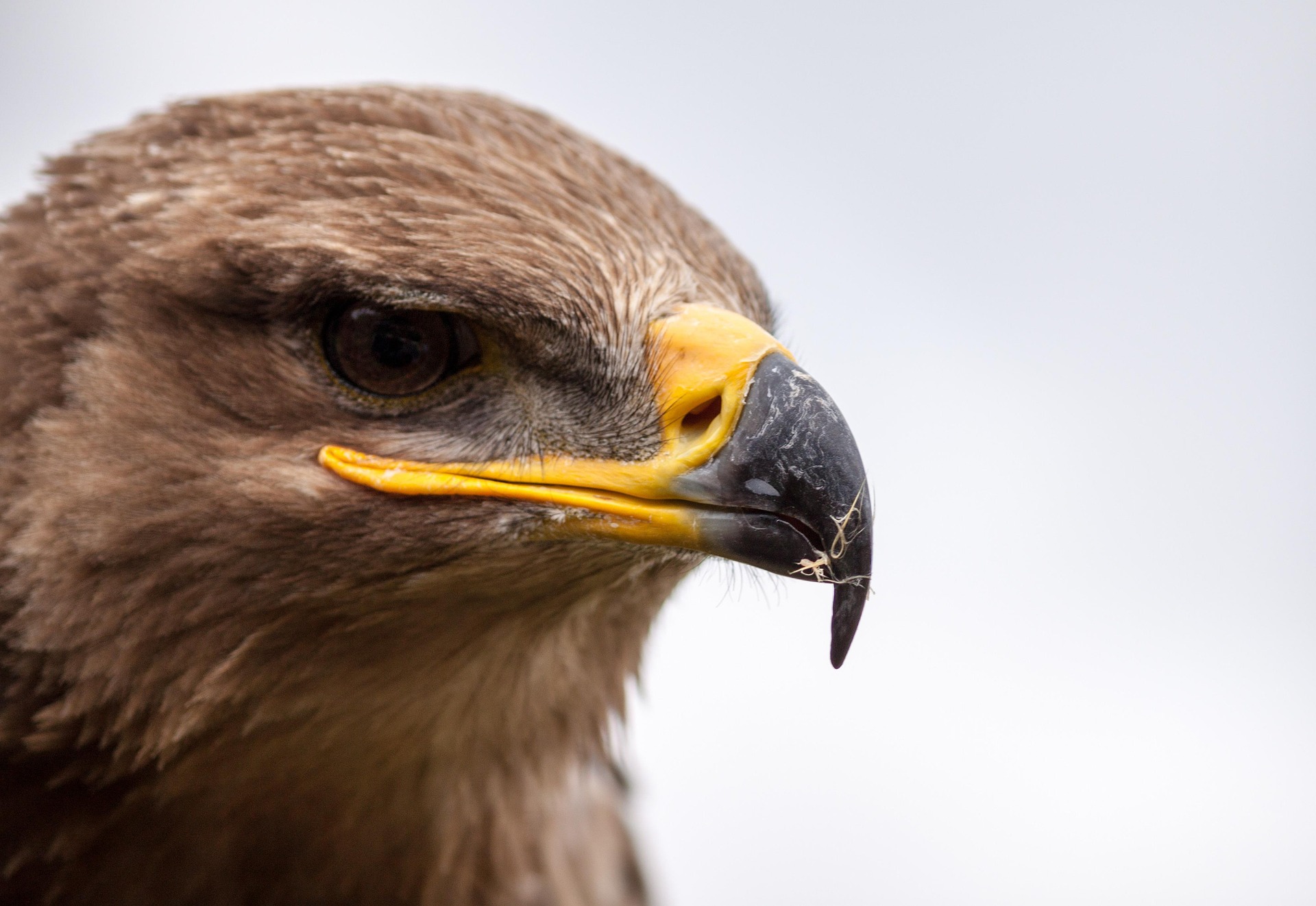
What kind of bird is the African tawny eagle? Learn about its characteristics, ecology, and habitat. Known for preying on other birds of prey and eating carrion, this eagle is high on the food chain, but it is actually an endangered species.


- What is the African Tawny Eagle? Basic Stats
- What are the roots and origins of the African Tawny Eagle?
- Habitat
- What are its characteristics? What kind of creature is it?
- What is its ecology?
- About the African tawny eagle chick
- Is the African tawny eagle an endangered species?
- Can you keep an African tawny eagle as a pet?
- Zoos Housing the Species (Japan & Global)
- Recommended articles
What is the African Tawny Eagle? Basic Stats
The African steppe eagle is a bird classified in the order Accipitridae, family Accipitridae, genus Aquila. The steppe eagle is also the national bird of Egypt. Its scientific name is Aquila nipalensis, its English name is Steppe eagle, and its Japanese name is Grassland Eagle. Its total length is 52-60cm, its weight is 1.6-2.4kg, and its wingspan is 165-185cm. The list of information is as follows.
| Japanese(和名) | アフリカソウゲンワシ |
| English(英名) | Steppe eagle |
| scientific name(学名) | Aquila nipalensis |
| classification(分類) | Aves、 Falconiformes、 Accipitridae、Aquila 鳥綱、タカ目、タカ科、イヌワシ属 |
| IUCN Status(保全状況) | ENDANGERED |
| Length(体長) | 52~60cm |
| Weight(体重) | 1.6~2.4kg |
Basic classification
| 分類階級 | 名称 |
|---|---|
| 界 | 動物界 Animalia |
| 門 | 脊索動物門 Chordata |
| 綱 | 鳥綱 Aves |
| 目 | タカ目 Accipitriformes |
| 科 | タカ科 Accipitridae |
| 属 | Aquila |
| 種 | アフリカソウゲンワシ Aquila spilogaster |
What are the roots and origins of the African Tawny Eagle?
First, let us clarify the terminology: the “African Tawny Eagle” discussed here refers to the African populations of the species generally known as the Tawny Eagle (Aquila rapax). The scientific name Aquila rapax remains the valid name for the species.
🧬 Evolutionary Position
Birds (Aves)
↓
Accipitriformes (Hawks, eagles, and allies)
↓
Accipitridae (Hawks, eagles, and kites)
↓
Aquilinae (Booted eagles)
↓
Aquila (True eagles)
↓
Tawny Eagle
Aquila rapax
In other words, rather than being closely related to the Bald Eagle or Steller’s Sea Eagle, it belongs to the genus Aquila—the group that includes the Golden Eagle. The genus Aquila falls within the “booted eagle” group (eagles with legs feathered down to the toes).
🌍 Where did it evolve from?
The modern Tawny Eagle is not endemic solely to Africa.
Its distribution spans:
Africa
↓
From North Africa to sub-Saharan Africa
↓
The Middle East
↓
South Asia
Therefore, the name “African Tawny Eagle” might lead one to incorrectly assume it evolved exclusively in Africa.
The genus Aquila itself is a lineage of large eagles distributed across Africa and Eurasia; the Tawny Eagle can be viewed as a lineage within this group that adapted to dry, open environments.
🦅 Its relationship with the Steppe Eagle is fascinating
The Steppe Eagle (Aquila nipalensis) plays a crucial role in the taxonomic history of the Tawny Eagle.
In the past, some classification systems treated the two as the same species or as subspecies of one another.
However, as morphological and genetic differences became clear, they are now treated as distinct species:
Tawny Eagle — Aquila rapax
Steppe Eagle — Aquila nipalensis
🌾 Why is it called the “Sōgen-washi” (Grassland Eagle)? The modern Steppe Eagle primarily inhabits areas such as:
savannas
dry grasslands
semi-deserts
steppes
open shrublands
In other words, rather than being an eagle that flies through forests, it is adapted to a lifestyle of scanning vast, open landscapes from the air.
Its diet is highly flexible; it is an extremely opportunistic feeder that not only hunts but also consumes carrion and prey caught by other animals.
🧬 African populations
Under current classification, multiple subspecies of the Steppe Eagle are recognized in Africa, most notably:
Aquila rapax rapax
Aquila rapax belisarius
A. r. rapax is distributed from southern East Africa through Southern Africa, while A. r. belisarius ranges from North Africa across to West and East Africa.
🗺️ Broad evolutionary origins
Ancestral Aquila eagles
↓
Diversification across Africa and Eurasia
↓
Differentiation of large Aquila eagles
↓
Steppe Eagle lineage
↓
Adaptation to dry grasslands and savannas
↓
Range expansion into Africa, the Middle East, and South Asia
↓
Modern Aquila rapax
However, because the fossil record directly indicating where and when the ancestor of Aquila rapax originated is limited, we are not yet at the stage where we can definitively state—as is possible with some mammals—that it “originated in [region] [number] million years ago.”
Habitat
The African steppe eagle is found in East and South Africa, as well as the Arabian Peninsula and India.
Habitat Overview
■ Distribution
The African Tawny Eagle is widely distributed across sub-Saharan Africa.
Main Distribution Areas:
West Africa (Senegal, Ghana, etc.)
East Africa (Kenya, Tanzania, Ethiopia)
Central Africa
Southern Africa (Botswana, Zimbabwe, South Africa)
Endemic to Africa, it is not found naturally on other continents.
Preferred Habitat
As its name suggests, it prefers open areas, wooded areas, and rocky areas, primarily “tawny” grasslands.
Main Habitat
Savannah Grasslands
Sparse Forests
Shrub Forests
Semi-arid Regions
Hillary and Rocky Regions
They rarely venture deep into dense jungles or tropical rainforests.
Suitable Nesting Locations
The following habitat conditions are particularly important:
Tall trees (such as acacias)
Cliffs or rock ledges
Locations with a wide view of the surrounding area
They choose locations that make it easy to find prey and defend their nests from predators.
⛰️ Habitat Altitude
Living from sea level to approximately 2,000 meters above sea level
They are particularly common in lowland to mid-altitude savanna areas.

What are its characteristics? What kind of creature is it?
Its feathers come in a variety of colors, including brown, dark brown, brownish brown, yellowish brown, and reddish brown. The mouth and nose are yellow, and the tip of the beak is black. The legs are the same brown as the body, with orange toes. African steppe eagles often live in forests, savannas, and dry areas.
Basic Characteristics (Size and Body Shape)
Body Length: 55-65cm
Wingspan: 130-150cm
Body Type: Lean, muscular, and lean
Sex Differences: Females are slightly larger (as is common among birds of prey)
While not as large as the golden eagle, this eagle is a hunter-type eagle with excellent speed and maneuverability.
Physical Characteristics
● Body Color
Back and Upper Surfaces of Wings: Dark Brown to Blackish Brown
Belly: White to Light Colored with Black Spots
These “spots” are the origin of the scientific name spilogaster (spotted belly)
● Face and Head
Sharp eyes, like a hunter, that never misses its prey
Beak: Black with a strongly hooked tip
● Wings and Tail
Slightly elongated wings, well-shaped for gliding and diving
Medium-length tail, good at changing direction
Physical Strength
Very powerful legs and claws
Capable of capturing small mammals and birds with a single blow
Excellent Eyesight
Can detect prey from hundreds of meters above
High Flying Ability
Adaptable to gliding, diving, and low-altitude flight
What is its ecology?
Steppe eagles eat small mammals and reptiles, as well as birds and carrion, but they don’t like hunting very much. They are scavengers that eat carrion, and can often be seen flocking around carrion. They are oviparous, laying 1-4 eggs between spring and summer. They stay with a partner for the rest of their lives. Their lifespan is said to be about 10 years.
1. Behavior and Lifestyle
● Basic Style
Diurnal (active during the day)
Solo or in pairs
Highly territorial
● Territory
Territory can span several tens of kilometers
Circling in the sky to intimidate intruders
Especially exclusive to other eagles of the same species
Highly sedentary throughout the year, rarely migrating.
2. Hunting and Diet (Predatory Biology)
● Main Prey
Small mammals (hares, squirrels, rodents)
Small to medium-sized birds
Reptiles (lizards, snakes)
Occasionally large insects
● Hunting Method
Lying in ambush on tall trees or rocks
Swimming down upon spotting prey from above
Sometimes pursuing prey at low altitudes just above the ground
Their greatest characteristic is their speed from spotting to catching.
3. Flight Characteristics
Long-duration gliding using thermals (upward-facing air currents)
When hunting, they suddenly accelerate explosively.
Their wings are designed for maneuverability and have excellent turning ability.
4. Breeding Habits
● Breeding Season
Although breeding varies by region, it is most common during the dry season to early rainy season.
● Nest Building
They build large nests in tall trees (such as acacias) or cliffs.
They repair their nests annually and use them for many years.
● Egg Laying and Chick Rearing
Egg Laying: 1-2
Incubation Period: Approximately 43-45 days
Chicks fledge after approximately 70-80 days.
Growth differences between siblings are common, and weaker chicks may be culled (a natural phenomenon).
5. Parental Duties
Female: Mainly incubates and raises chicks
Male: Responsible for hunting and bringing food
Pair bonds are strong and maintain long-term pair relationships
⏳ 6. Lifespan
Wild: Approximately 15-20 years
Captive: Over 20 years under favorable conditions
Do they have any natural enemies?
African steppe eagles have no significant natural enemies.

About the African tawny eagle chick
1. Chicks Immediately After Hatching
● State at Hatching
Their bodies are covered in white down (powder)
Their eyes are open, but their eyesight is poor
They cannot regulate their own body temperature
During this period, the mother (female) is almost always there to keep them warm.
2. Sibling Relationships and “Survival of the Fittest”
● Eggs and Number of Hatches
Number of Eggs Laid: 1-2
In Many Cases, Chicks Hatch Several Days Apart
● Sibling Competition
Chicks that hatch first have a physical advantage
When food is scarce
Stronger chicks may attack and eliminate weaker chicks
(This is not uncommon in nature.)
This is thought to be an evolutionary strategy to ensure the offspring survive.
3. Feeding and Breeding
● Food Contents
Parent Caught
Small Mammals
Birds
Reptiles
Meat is Shredded and Preyed on to Chicks
● Parental Roles
Male: Mainly Responsible for Hunting
Female: Feeding and Protecting Chicks
In the nest, chicks repeat the following behavior: “Opening their mouths wide and making noise → Getting food.”
4. Growth and Feather Changes
Growth Stage Condition
0-2 Weeks Old: White down, barely mobile
3-5 Weeks Old: Feather shaft begins to grow
6-8 Weeks Old: Full set of juvenile feathers
9-11 Weeks Old: Just before leaving the nest, they practice flapping their wings.
They can be seen repeatedly practicing flapping their wings on the nest.
️ 5. Fledging and After
● Fledging Period
They leave the nest at approximately 70-80 days of age.
● After Fledging
They cannot immediately master hunting skills.
They learn to fly and hunt while being fed by their parents for several weeks to several months.
Is the African tawny eagle an endangered species?
Unfortunately, the African tawny eagle is designated as an endangered species. It is also listed in Appendix II of the Convention on International Trade in Endangered Species of Wild Fauna and Flora (CITES), which restricts international trade. Intentional poisoning of animals by poachers has become a problem, and more and more people are mixing poison into carrion, which causes the eagle to die. As a result, the population of eagles and hawks has rapidly decreased, especially in Africa.
Current Conservation Status (IUCN)
IUCN Red List: Least Concern (LC)
→ Currently, this species is not classified as “highly threatened” on the Red List.
Population Decline
However, recent studies have reported significant population declines across sub-Saharan raptors, and it has been suggested that the African tawny eagle may be no exception.
One study reported a decline of approximately 90% over the past few decades.
Can you keep an African tawny eagle as a pet?
The African tawny eagle is designated as an endangered species, and it is extremely difficult for ordinary people to keep it as a pet. Visit a zoo or similar facility and have someone show you around. It is safe to just look at it. There are many photos of the species on the Internet.
❌ 1. Legal: In principle, they cannot be kept as pets.
International Regulations
The African Tawny Eagle is a wild bird, and
Eagles in general are strictly protected internationally.
Major Legal Restrictions
Convention on International Trade in Endangered Species of Wild Fauna and Flora (CITES)
Trade and import/export of many eagles are strictly restricted.
Wildlife Protection Laws of Each Country
Captivity, breeding, and trade are generally prohibited.
In Japan
Under the Wildlife Protection and Management Act,
Captivity and breeding are illegal without a permit.
Permits for keeping them as personal pets are almost never granted.
In other words,
It is safe to assume that they cannot be “legally kept as pets.”
2. Biological Reasons: Not Suitable for Captivity
● Extremely Wide Range
In the wild, they have territories of several tens of km².
Long gliding flights are required.
→ In an average home or small facility, they will suffer from lack of exercise and severe stress.
● Strong predatory instincts and danger
Top-class predators with sharp claws and beaks
Even if they become accustomed to humans, there is a high risk of accidents
→ Keeping them at home is dangerous.
● Delicate ecology
Fed on fresh meat (ideally whole prey)
Sensitive to environmental changes
Prone to stress and illness
Zoos Housing the Species (Japan & Global)
🇯🇵 Japan
Tennoji Zoo (Osaka Prefecture) ✅ Confirmed. There is a record of one Aquila rapax (Tawny Eagle) being kept there, and it is also listed in the facility’s 2025 species list.
Tennoji Zoo can be considered a prime example of a Japanese facility where the Tawny Eagle can currently be seen. ZooTrack also lists Aquila rapax for this location.
Note that this species is quite rare in Japan; even when labeled as “Tawny Eagle” (Sōgen-washi), one must be cautious of potential confusion with the Steppe Eagle (Aquila nipalensis), which was previously classified under the same name.
🌍 Global
Zootierliste confirms multiple facilities currently housing Aquila rapax. Records exist particularly in Europe, including facilities specializing in birds of prey.
🇧🇪 Belgium
Antwerp Zoo
Monde Sauvage Zoo
🇩🇰 Denmark
Ree Park Safari
🇩🇪 Germany
Zoologischer Garten Berlin
Adlerwarte Berlebeck
Zoo Dortmund
Tierpark Hagenbeck
Harzfalkenhof
Greifvogelpark Menter
Falkenhof Schloss Rosenburg
Zootierliste confirms records for zoos and bird-of-prey facilities such as those in Berlin, Dortmund, and Hagenbeck.
🇫🇷 France
Les Aigles du Léman
Plus multiple other facilities listed on Zootierliste.
🇬🇧 UK
In addition to A. rapax, there are records of the subspecies A. r. vindhiana.
Paradise Park
Chester Zoo
Cotswold Falconry Centre
Libertys Raptor and Reptile Centre
The Hawk Conservancy
However, since some of these are registered as the Indian Tawny Eagle (A. r. vindhiana), it is more accurate not to equate them directly with the African A. r. rapax.
🇺🇸 USA
World Bird Sanctuary (Missouri)
This facility records the bird as an East African Tawny Eagle (Aquila rapax rapax). 🇮🇳 India
Assam State Zoo
In India, it is primarily recorded as the Indian Tawny Eagle (Aquila rapax vindhiana).
🇰🇿 Kazakhstan
Almaty Zoo
Here, too, it is listed in Zootierliste as A. r. vindhiana.
Recommended articles



コメント