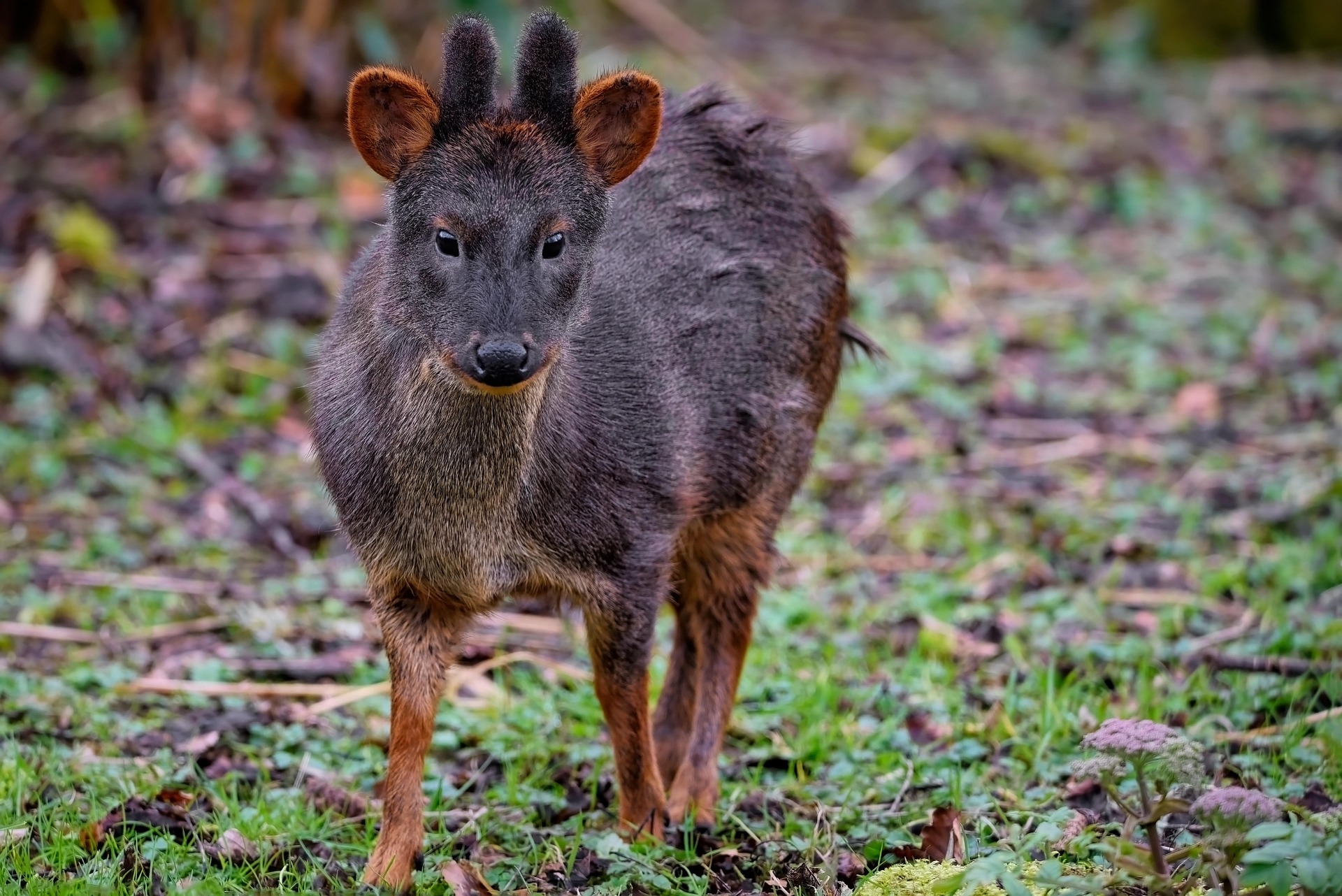
What kind of animal is the Pudu, the smallest deer in the world? We will explain its characteristics, ecology, and habitat. There are two confirmed species of Pudu: Pudu puda (Southern Pudu) and Pudu mephistophiles (Northern Pudu). However, they are designated as an endangered species.







- What is a Pudu? Basic Stats
- What are the roots and origins of the Pudu?
- Habitat
- What are its characteristics? What kind of creature is it?
- What is their personality like?
- What is their ecology like?
- About Pudu Cubs
- Is the pudu an endangered species?
- Can you keep a pudu as a pet?
- Zoos Housing the Species (Japan & Worldwide)
- Recommended articles
What is a Pudu? Basic Stats
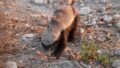
The Pudu is an even-toed ungulate that belongs to the Cervidae family. Its English name is pudú, and its scientific name is Pudu puda. Its body length is 70-85cm, its tail length is 3-5cm, and its weight is 6.5-13.5kg. The list of information is as follows:
| Japanese(和名) | プーズー |
| English(英名) | pudú |
| scientific name(学名) | Pudu puda |
| classification(分類) | Mammalia、Artiodactyla、 Cervidae、Pudu 哺乳綱、偶蹄目、ウシ科、プーズー属 |
| IUCN Status(保全状況) | NEAR THREATENED |
| Length(体長) | 70~85cm |
| Weight(体重) | 6.5~13.5kg |
Pudu Taxonomy (Zoological Classification)
界:動物界 (Animalia)
門:脊索動物門 (Chordata)
綱:哺乳綱 (Mammalia)
目:偶蹄目 (Artiodactyla)
科:シカ科 (Cervidae)
属:プーズー属 (Pudu)
種:
- 南プーズー(Pudu puda)
- 北プーズー(Pudu mephistophiles)
What are the roots and origins of the Pudu?
The Pudu (genus Pudu) is one of the world’s smallest deer species, inhabiting Chile, Argentina, and the Andes region. Two extant species are primarily recognized: the Southern Pudu and the Northern Pudu. They stand only about 25 to 40 cm tall at the shoulder.
🌎 Where did they originate?
In fact, the precise region and time period of the Pudu’s origin have not yet been determined.
Research suggests that the Pudu belongs to the tribe Odocoileini within the deer family (Cervidae) and diverged from a lineage of deer that had spread across the Americas. Their ancestors are believed to be linked to the Odocoileini lineage that existed on the American continent around the Miocene-Pliocene boundary (approximately 5 to 7 million years ago).
However, exactly where in South America the Pudu first emerged remains unknown. Even in research papers, the spatial and temporal origins of the Pudu are considered unresolved.
🦌 How did they arrive in South America?
A key point is that the Pudu is not an ancient deer species native only to South America from the very beginning.
Deer expanded into North America during their evolutionary history; later, the formation of the Isthmus of Panama connected the North and South American landmasses, allowing many mammals—including deer—to migrate into South America.
Once in South America, various deer lineages diverged. Fossil records confirm the past existence of multiple extinct deer genera in the region.
One of these lineages—which evolved to become smaller and adapted to forest environments—is believed to have given rise to the modern Pudu.
🧬 Why did they become “small deer”?
The Pudu’s most distinctive feature is, without a doubt, its small size.
Living amidst dense forest undergrowth, a small, agile body likely offered advantages over a massive one.
Additionally, the Pudu possesses very small antlers with minimal branching. Deer antlers themselves appeared in the fossil record approximately 19 million years ago and subsequently evolved into various forms; in the pudu, they have become specialized into small, pointed antlers.
Habitat
The Pudu is native to Chile in South America.
- Geographic Distribution
Pudus are South American deer, with habitats that vary slightly depending on the species.
Southern Pudu (Pudu puda)
Distribution: Southern Chile to Southern Argentina
Chile: Forests south of Antofagasta
Argentina: Humid forests of northern Patagonia
Northern Pudu (Pudu mephistophiles)
Distribution: Southern Colombia to Ecuador, and the western side of the Andes in Peru
Altitude: Alpine forests and bamboo groves at 2,000-4,000 m
Key Points: Southern Pudus are adapted to lowland to mid-altitude forests, while Northern Pudus are adapted to highland mountain forests and bamboo groves.
- Habitat
Prefers forests: Dense evergreen forests, bamboo groves, and humid forests
Areas with abundant hiding places are important: for protection from predators
Tend to prefer areas near water sources
Live in the forest understory and avoid open grasslands and areas with high human activity
- Ecology
Because they are timid and cautious, they live in deep forests, hidden from human sight.
They prefer environments where it is easy to escape predators (such as pumas, jaguars, and wild dogs).
They live in areas where food (shrubs, grass, fruit, etc.) is abundant.
What are its characteristics? What kind of creature is it?
The pudu’s whole body is covered with hard fur, reddish brown in summer and gray brown in winter. Its limbs are thick but its hooves are short. Males have horns about 10 cm long. The horns fall off in July and grow back. Pudus are found in the Andes region of Chile and Argentina. Pudus prefer forests and secondary forests from plains to mountains, and they like places with a lot of grass.
- Physical Characteristics
Size: Body length approximately 80-120 cm, height approximately 30-45 cm
Weight: 6-13 kg (varies by species and individual)
Body Type: Small, rounded, and stocky
Coat Color: Brown to reddish-brown, providing camouflage in the forest
Horns: Males may have small horns, but northern pudus have almost no horns
Key Point: Their small size makes them easy to hide in dense forests
- Personality and Behavior
Timid and cautious
Highly sensitive to predators and humans
Solo or paired
Low sociality
Quiet and reserved
Rarely vocal, they live quietly in the forest understory
- Diet
Herbivorous, eating mainly shrubs, grasses, leaves, and fruit
Forages for food in the forest understory, preferring soft plants and fruit
- Notable Features
Known as the smallest deer in the world
Living in the dense forest understory, they are highly discreet and defensive
Despite their small size, they are able to move quickly, making it easy to escape predators

What is their personality like?
Pudus usually live alone and are not very social animals. Pudus are active both day and night, and spend a lot of time foraging. They are docile and cautious by nature, so they are fairly territorial animals.
- Timid and cautious
Highly sensitive to predators and humans
Moves quietly in the forest understory, quickly responding to noises and movements
Quietly flees when it senses danger
Key point: To survive in the wild, they are constantly alert to their surroundings
- Gentle and reserved
Little aggressive, avoiding conflict
Avoids conflicts with other animals as much as possible
Low sociality, primarily solitary or paired
- Cautious and observant
Keeps a close eye on their surroundings and dangers
Moves quietly, silently searching for food
Adapts to hiding, using forest brush and rocks for shelter
- Modestly curious
Pudus are generally safety-first
When it comes to new things, they observe and judge first rather than approaching them
What is their ecology like?
Pudus live by eating plant-based foods such as leaves, roots, shoots, flowers, and fallen fruit. They breed from November to January, and females can give birth to 1-2 pups at a time. They reach full growth at about 3 months of age and reach sexual maturity in 8 to 12 months. Their lifespan is 10 years.
- Behavior
Mainly diurnal and crepuscular
Because they prioritize safety, they may be less active during the bright daylight hours
Solo activity is the norm
Males and females move separately except during mating season
Range of Activity
Southern Pudu: Moves within low- to mid-altitude forests
Northern Pudu: Moves through alpine forests and bamboo groves
- Habitat/Residence
Living in the forest understory and dense undergrowth
Uses shrubs and bamboo thickets as hiding places
Hides from predators by hiding in the shade of trees and rocks
- Diet
Completely herbivorous
Eats grasses, shrub leaves, fruits, and buds
Searches for food in dense forests, selecting soft, nutritious plants
Do they have any natural predators?
Pudus’ natural predators include cougars, foxes, and large birds of prey.

About Pudu Cubs
This section provides detailed information about Pudu cubs. They are smaller than adult cubs, and their behavior and ecology are slightly different.
- Birth and Development
Gestation Period: Approximately 7-8 months
Litter Size: 1-2 pups are common
Birth Weight: Approximately 1-2 kg
Birth Size: Approximately 30-40 cm in length
Key Points: Very small, they grow up under the protection of their mother in the forest understory.
- Appearance
Hair is soft, brown to reddish-brown.
Large eyes, rounded faces, and very cute.
Claws and horns are underdeveloped, so they cannot be relied upon for hunting or defense.
- Behavior
Dependent on their mother for survival.
Hides in burrows or bushes when sensing danger.
Food selection is also learned from their mother.
Learns vigilance and hiding skills through play.
Hiding in bushes, responding to noise, etc.
As they grow, they gradually explore the forest.
- Time to Maturity
Hatchlings become independent in about one year.
During this time, they learn how to find food and escape predators.
They develop the same timid and cautious personality as adults.
- Distinctive Features
Even young ones are highly cautious and stay close to their mothers for safety.
They learn survival skills in the forest understory through play and imitation.
Despite their small size, they begin the same lifestyle patterns as adults after becoming independent.
Is the pudu an endangered species?
The pudu is designated as an endangered species. Poaching for meat is the biggest threat, and conservation efforts are underway.
- International Assessment (IUCN Red List)
Southern Pudu (Pudu puda)
Ranking: Near Threatened
Description: Populations are declining, primarily due to habitat destruction caused by deforestation and human activities.
Relatively stable within protected areas, but vulnerable throughout its range.
Northern Pudu (Pudu mephistophiles)
Ranking: Least Concern
Distributed in high-altitude forests, its range is relatively stable.
- Population and Distribution Status
Southern Pudu populations are declining in the forests of southern Chile and southern Argentina.
Northern Pudu populations are relatively stable in the high-altitude forests of the Andes.
Both species are experiencing localized declines.
- Threats
Deforestation: Habitat loss due to agricultural development and urbanization.
Hunting: Impact of illegal capture for pets and food.
Natural Predators: Predators such as pumas and jaguars (within their natural range).
Can you keep a pudu as a pet?
Because the pudu is designated as an endangered species, the general public cannot keep them as pets. They are listed at the top of the page at zoos and other places, so take a look at males and females. They are the smallest deer in the world, and in Japan, babies at the Children’s Zoo and Saitama …
- Personality and Behavioral Issues
Very timid and cautious
Sensitive to humans and noises, easily stressed
Nervous and sensitive to environmental changes
Poorly maintained habitat can lead to poor health
Low aggressiveness, but excessive contact can cause stress
Key point: Due to their timid nature, they are not suitable as pets
- Environmental Issues
They live hidden in the forest understory, so they require ample hiding places and a forest-like environment.
They require high levels of exercise and exploration, and a small cage cannot maintain their health.
They become stressed without lush shrubs or hiding places.
- Legal and Regulatory Issues
Pudus are protected wildlife in many countries.
In Japan, they are likely subject to the Wildlife Protection Act and Alien Animal Regulations, making them virtually impossible to keep as pets.
Keeping them in zoos and research institutions is possible only with special permission.
- Diet and Health Management Issues
They are primarily herbivorous, eating forest plants.
It is extremely difficult to replicate their wild diet.
They are prone to becoming ill due to nutritional deficiencies and environmental stress.
Zoos Housing the Species (Japan & Worldwide)
The Pudu is a very rare deer in zoos. Currently, confirmed captive populations consist primarily of the Southern Pudu (Pudu puda); there are no confirmed individuals of the Northern Pudu (Pudu mephistophiles—recently reclassified as Pudella mephistophiles) currently held in zoos.
🇯🇵 Japan
Saitama Children’s Zoo (Saitama Prefecture): Southern Pudu (Pudu puda)
Saitama Children’s Zoo explicitly states on its official website that it houses and exhibits the Southern Pudu (Pudu puda). They can be viewed in the “Penguin Hills – Pudu” area.
Based on the research conducted for this overview, Saitama Children’s Zoo is the only facility in Japan where current husbandry has been clearly confirmed through official information.
🌎 Worldwide
Internationally, Southern Pudus are kept in zoos, particularly across Europe and the United States. While current databases list approximately 20 to 30 zoos worldwide, data update schedules vary by facility; therefore, the list below should be viewed as a selection of representative examples with confirmed current records.
🇩🇪 Germany
Berlin Zoo
Cologne Zoo
Wuppertal Zoo
Dortmund Zoo
Halle Zoo
Leipzig Zoo
🇳🇱 Netherlands
Rotterdam Zoo
Apenheul Primate Park
🇬🇧 United Kingdom
Chester Zoo
Edinburgh Zoo
Hamerton Zoo
Banham Zoo
Paignton Zoo
🇧🇪 Belgium
Pairi Daiza
🇫🇷 France
Paris Zoological Park
Les Terres de Nataé
🇺🇸 United States
San Diego Zoo Safari Park
Queens Zoo
Prospect Park Zoo
Global husbandry records indicate that Pudu puda is housed in at least 28 zoos across eight countries. However, these figures may include past records or reflect time lags in data updates.
コメント