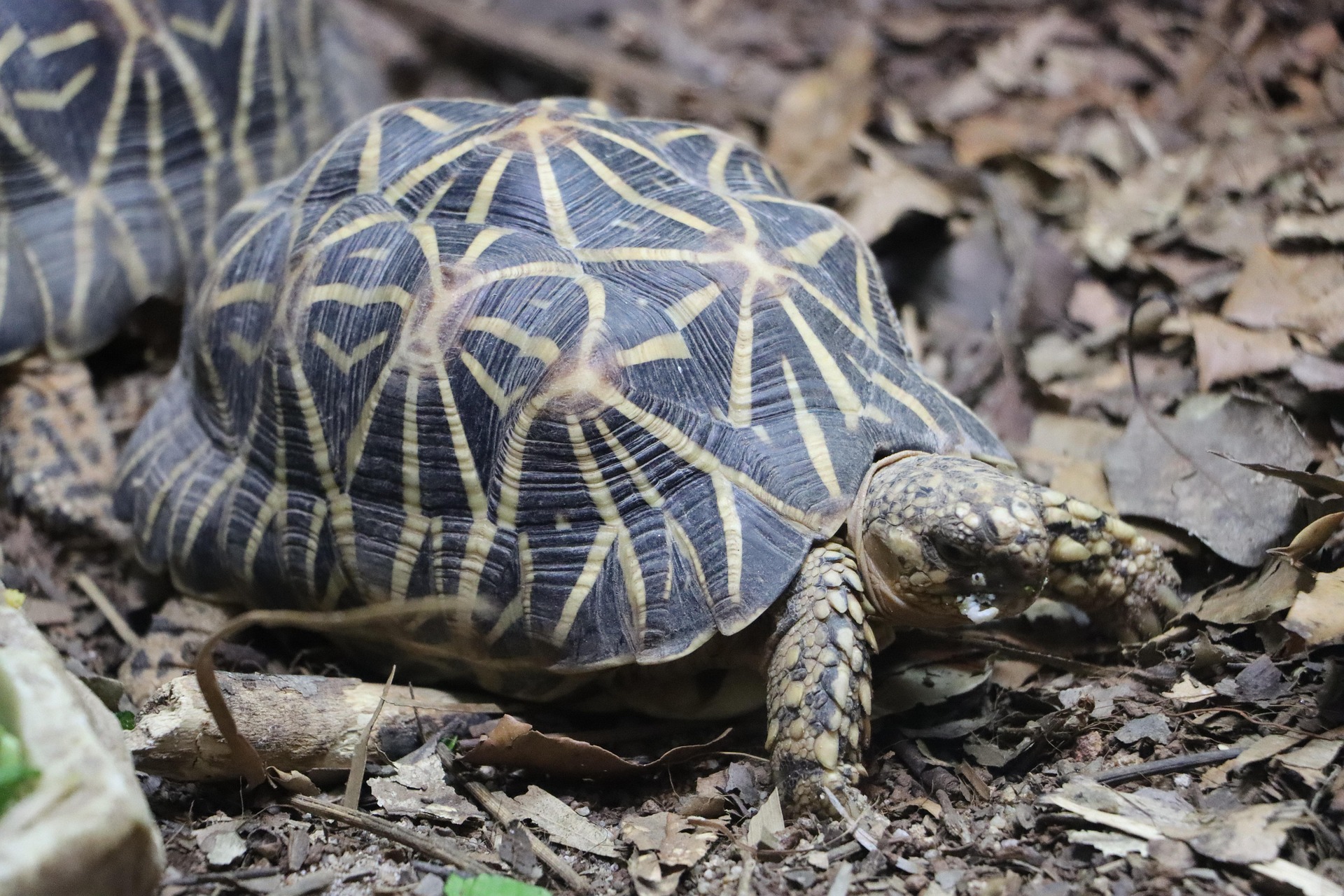
What kind of animal is the Burmese star turtle? We will explain its characteristics, personality, ecology, and habitat. It is a member of the turtle family that can be seen in large numbers in Myanmar and other places. It is considered one of the most beautiful turtles, with a beautiful shell, but it is designated as an endangered species.


- What is a Burmese Star Tortoise? Basic Stats
- What are the roots and origins of the Burmese Star Tortoise?
- Habitat
- What are their characteristics? What kind of creature are they?
- What is their personality like?
- What is their ecology like?
- About Burmese Star Tortoise Hatchlings
- Is the Burmese star tortoise an endangered species?
- Can the Burmese star tortoise be kept as a pet?
- Zoos Housing the Species (Japan & Worldwide)
- Recommended articles
What is a Burmese Star Tortoise? Basic Stats
The Burmese star tortoise is classified as a turtle in the order Testudins, family Testudinidae, and genus Testudinosa. Its scientific name is Geochelone platynota, and its English name is Burmese starrd tortoise. Its carapace length is 26cm. The list of information is as follows. Currently, it is often introduced and sold together with other creatures in the same category, such as Hermann’s tortoise, African spurred tortoise, and Greek tortoise.
| Japanese(和名) | ビルマホシガメ |
| English(英名) | Burmese starrd tortoise |
| scientific name(学名) | Geochelone platynota |
| classification(分類) | Reptilia、 Testudines、 Testudinidae、Geochelone 爬虫綱、カメ目、リクガメ科、リクガメ属 |
| IUCN Status(保全状況) | CRITICALLY ENDANGERED |
| Length(体長) | 26cm |
| Weight(体重) | 5kg |
Taxonomy of Burmese star tortoises
| 分類階級 | 学名・情報 |
|---|---|
| 界 (Kingdom) | 動物界 (Animalia) |
| 門 (Phylum) | 脊索動物門 (Chordata) |
| 綱 (Class) | 爬虫綱 (Reptilia) |
| 目 (Order) | カメ目 (Testudines) |
| 科 (Family) | リクガメ科 (Testudinidae) |
| 属 (Genus) | Geochelone (旧分類では Manouria とされることもあり) |
| 種 (Species) | Geochelone platynota |
| 和名 | ビルマホシガメ |
What are the roots and origins of the Burmese Star Tortoise?
🌏 Place of Origin
Its current distribution is in central Myanmar.
Key habitats include:
The Central Dry Zone
The area around Mandalay
Bago Region
Magway Region
The dry grasslands and scrublands of central Myanmar
Although it closely resembles the Indian Star Tortoise (Geochelone elegans) found in India and Sri Lanka, it is a distinct species.
🧬 So, where did it evolve from?
This is the interesting part.
The Burmese Star Tortoise is a star tortoise species very closely related to the Indian Star Tortoise.
Its rough evolutionary lineage looks like this:
Testudinidae (Tortoise family)
↓
Large Asian tortoises
↓
Genus Geochelone
↓
Indian Star Tortoise lineage
↓
Common ancestor of the Indian and Burmese Star Tortoises
↓
🟢 Burmese Star Tortoise
🟢 Indian Star Tortoise
In other words, rather than simply “suddenly appearing in Myanmar,” it is best understood as having evolved independently—following geographical isolation—from an ancient tortoise lineage that was distributed across the region spanning the Indian subcontinent to Southeast Asia.
🇮🇳 ↔ 🇲🇲 Relationship with the Indian Star Tortoise
Indian Star Tortoise
Geochelone elegans
Burmese Star Tortoise
Geochelone platynota
Because these two species are so closely related, they look quite similar.
However, they are now clearly treated as distinct species:
Indian Star Tortoise = Lineage centered around India and Pakistan
Burmese Star Tortoise = Lineage centered in Myanmar
🏜️ Why did a unique star tortoise emerge in Myanmar?
Geography and environment are the key factors.
Central Myanmar features vast dry regions, creating a unique environment distinct from the surrounding forest zones. An evolutionary history can be hypothesized as follows: the ancestors of star tortoises were distributed across a wide area in the distant past; changes in climate and topography occurred; regional populations became isolated; genetic divergence took place over a long period; and the Burmese star tortoise lineage was established.
Habitat
Burmese star tortoises are found in Myanmar and throughout Southeast Asia.
Region
Distributed primarily in northern Myanmar (formerly Burma).
Some records have been found in eastern India and northern Thailand, but most individuals are native to Myanmar.
Found mostly in mountainous and hilly areas.
Environment
Forest: A mix of evergreen and deciduous trees.
Humid Climate: Prefers areas with distinct rainy and dry seasons.
Altitude: Most commonly observed at altitudes between 500 and 1,200 meters.
They feed on leaves and bask in areas of forest with abundant leaf litter and undergrowth.
Ecological Features
During the night and hot daytime hours, they rest under fallen leaves or in the shade of fallen trees.
During the rainy season, the moist ground increases activity, making it easier to find grass and fruit to feed on.
They may bask in open areas of the forest, but avoid prolonged exposure to direct sunlight.
What are their characteristics? What kind of creature are they?
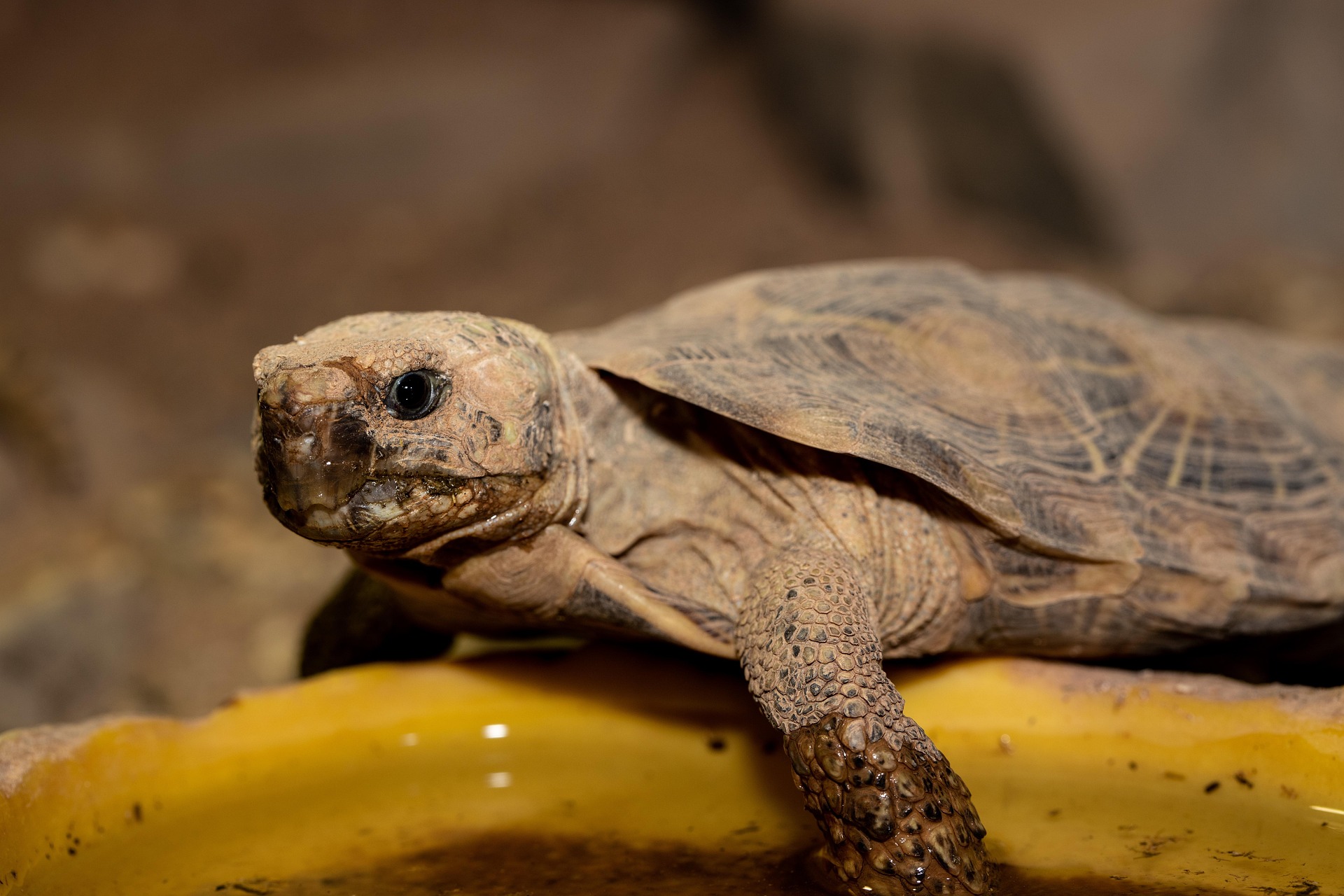
Females of the Burmese star tortoise are larger than males. They have a patterned, dome-shaped carapace that is somewhat elongated, and their head and limbs are covered with scales, with a flat and smooth top. The carapace is black or dark brown, with radial gray-brown or yellowish brown markings on each vertebral plate and costal plate. The head, neck, limbs, and tail are yellow or yellowish brown, and the horns (beak) covering the chin, eardrum, and throat are brown or gray-brown. They live in deciduous forests and grasslands in dry regions.
Appearance
Carapace Length (Dorsal Shell Length): Approximately 40-60cm, with larger individuals reaching nearly 70cm.
Weight: Grows to around 20kg. A type of large tortoise.
Carapace Shape: Dome-shaped and rounded, with a sturdy, hard shell on the back.
Pattern: A black base color with a yellow-orange star-shaped pattern radiating outward.
Head: Small, with a mouth shaped for easily nibbling on grass and fruit.
Limbs: Thick and powerful, with sharp claws on the front paws.
Personality/Behavior
Gentle and docile: Rarely aggressive, but can become accustomed to people.
Active both day and night: Basking in the sun and eating leaves during the day. Often resting during hot periods.
Low Vigilance: Does not immediately flee from people or animals, but moves slowly.
Ecology/Lifestyle
Diet: Primarily herbivorous. They feed on leaves, fruits, vegetables, and occasionally flowers.
Habitat Adaptation: They move slowly, searching for food among fallen leaves and grass in forested areas.
Reproduction: Females lay several eggs at a time. Because breeding is difficult in the wild, populations are small.
Visual Image
It resembles a “small, dome-shaped tank” dotted with yellow stars.
Its movements are slow considering its size, and its beauty and grace are more impressive than its impressive appearance.

What is their personality like?
Burmese star tortoises are active during the day and are gentle tortoises that rarely bite. They can be nervous and cautious, so they may quickly retract their faces.
Basic Personality
Gentle and docile
They rarely exhibit aggressive behavior and rarely bite or attack people.
Laid-back
They move very slowly and rarely panic. They enjoy eating grass and sunbathing.
Reactions to People and the Environment
Easily Tame
In captivity, they are not afraid of humans and will approach them and even eat food from their hands.
Low Alertness
Even in the wild, they prefer to hide rather than run, and are rarely aggressive.
Relationship to Activity Patterns
Their slow movements are consistent with their personality, and they rarely become impatient or panicked.
During hot periods or when they sense danger, they tend to rest quietly in the shade or under fallen leaves.
Personality in Captivity
Once accustomed to people, they will eat food handed to them and may even approach their owner when they recognize their presence.
Compared to other turtles, they are less aggressive, making them popular as a gentle-natured tortoise.
What is their ecology like?
Burmese star tortoises live by eating grasses, other plants, and fruits. They reproduce by laying eggs. They lay 5 to 8 eggs at a time. Their lifespan is 50 to 100 years.
Activity Pattern
They are primarily diurnal, but their activity varies depending on temperature and season.
During the day, they bask in the sun and eat grass and fruit.
When it gets too hot, they rest in the shade or under fallen leaves.
Movement Slowly
In the wild, they travel short distances each day, moving little by little in search of the food and water they need.
Diet
Predominantly herbivorous
Eats leaves, grasses, fruits, vegetables, and flowers
In arid regions, they tend to prefer juicy plants
They sometimes ingest stones and sand in their mouths to absorb minerals from the soil
Reproduction
Egg-laying
Females lay several eggs (usually 2-5) at a time
Eggs are laid in holes dug in the ground
Development and Hatching
It takes approximately 3-4 months for eggs to hatch
In the wild, survival rates are low due to predation and environmental conditions
Natural Predators and Defense
Adult individuals have few natural predators, but young individuals
may be attacked by birds, mammals, and snakes
Their primary defense mechanism is their hard shell
Habitat
They protect themselves from predators by hiding in forest leaves and undergrowth
During the rainy season, the amount of juicy leaves and fruits increases, making them more active
During the dry season, the ground becomes less humid, making them less active
Do they have any natural predators?
Because Burmese star turtles are a type of small turtle, they are often preyed upon by carnivores.

About Burmese Star Tortoise Hatchlings
This section provides detailed information about Burmese star tortoise hatchlings (juveniles).
Appearance
Size: Immediately after hatching, they are very small, measuring approximately 5-7cm in carapace length.
Shell Pattern:
Like adults, they have the same radial yellow or orange pattern, but it is more vivid and noticeable.
Their shells are still soft and harden as they grow.
Head and Limbs: Although small and cute, their claws and feet are already as strong as adults.
Personality and Behavior
Slightly more active and curious than adults.
Wary, but not aggressive.
They often hide under fallen leaves or thickets of grass to hide their small bodies.
Diet
They are herbivorous, with young ones particularly preferring soft leaves and fruit.
They are also known for their high calcium and mineral content. Nutritional intake is important and necessary for the growth of their shells.
In the wild, they supplement their nutrition by nibbling on fallen leaves and soft grass.
Ecology and Growth
Immediately after hatching, they are vulnerable to predators (birds and mammals), and their survival rate is low.
They grow relatively slowly, and it takes several years for their shells to harden.
In captivity, they grow relatively well if the food and environment are properly provided.
Breeding Tips
Young juveniles are more sensitive to their environment than adults.
Temperature and humidity control are important; dryness and cold affect growth.
Feeding them soft, nutritious foods promotes healthy growth.
Is the Burmese star tortoise an endangered species?
The Burmese star tortoise is listed in Appendix I of the Convention on International Trade in Endangered Species of Wild Fauna and Flora (CITES), and international trade is restricted. Not only has its habitat been reduced due to recent development, but it has also been over-hunted as a pet, which has become a problem.
Can the Burmese star tortoise be kept as a pet?
The Burmese star tortoise can be kept as a pet. The following items are necessary for keeping a turtle. Small individuals are newly registered and sold, and there are many adoption requests, so check them out. Pay attention to the type of food and cage. They also have a long lifespan, so take that into consideration. Check the food and insulation method. There are many products available in shops, and it is easy to purchase supplies such as food, cases, and lights.
Cage
Depending on the size of the shell and the growth rate, a cage with a width of about 60 cm is required at the shop. It is recommended to use a reptile cage made of glass, acrylic, or plastic.
Flooring
There are various types of flooring, from large to small. There are many types such as red clay, coconut shells, and artificial turf. They are sometimes sold at low prices during campaigns.
Heater
If necessary, prepare an air conditioner or heater to make sure your turtle is comfortable. There are panel heaters, spot lamps, and basking lights.
Thermo-hygrometer
When raising amphibious turtles, it is very important to control the temperature and humidity. It is best to keep the temperature at around 30 degrees.
Lighting
Turtles are animals that maintain their health by exposing themselves to strong ultraviolet rays throughout the day, producing vitamin D3 in their bodies that promotes calcium absorption. For this reason, lighting is essential. There are incandescent and fluorescent tube types, and it is best to choose one that suits the cage. Use the sunlight hours as a guide for lighting.
Shelter
Turtles are living creatures, so it is a good idea to have a shelter as a point to create a place for them to escape indoors. Make sure to install it properly so as not to cause them too much stress.
Water dish
A water dish is also essential. Clean the water bowl every day and provide fresh water.
Pet food
Turtles are herbivorous and their food consists mainly of small vegetables and fruits, with some komatsuna and mushrooms. Some turtles eat wild plants instead of vegetables. Give them fruits such as bananas, watermelons, apples, strawberries, kiwis, and mangoes as snacks. Some people also give supplements as a reference. It is a good idea to start by offering commercially available products. These contain all the nutrients that living creatures need.
Zoos Housing the Species (Japan & Worldwide)
The Burmese Star Tortoise (Geochelone platynota) is a rare species classified as Critically Endangered (CR) by the IUCN. In Japan, it is listed in the animal husbandry database of the Japanese Association of Zoos and Aquariums (JAZA).
🇯🇵 Japan
The following are the major facilities where the species is currently confirmed to be kept:
| Facility | Prefecture | Notes |
|---|---|---|
| Saitama Children’s Zoo | Saitama | Confirmed |
| Ueno Zoological Gardens | Tokyo | Confirmed |
| Hamura Zoo | Tokyo | Confirmed |
| Sunshine Aquarium | Tokyo | Confirmed |
| Chausuyama Zoo | Nagano | Confirmed |
| Higashiyama Zoo and Botanical Gardens | Aichi | Confirmed |
| Nijinomori Park Osakana-kan | Ehime | Confirmed |
| Kujukushima Zoo & Botanical Garden (Mori Kirara) | Nagasaki | Confirmed |
| iZoo | Shizuoka | Non-JAZA member |
| Picnica Republic | Fukuoka | Non-JAZA member |
Regarding Japan, these facilities have been identified, including past records. Notably, regarding JAZA-affiliated zoos and aquariums, JAZA itself lists Geochelone platynota in its animal husbandry database.
The Burmese Star Tortoise is also included among the species covered by the Ministry of the Environment’s “Certified Zoos and Botanical Gardens for Rare Species Conservation.”
🌎 Major Facilities Worldwide
The species is kept in facilities across a wide range of countries.
🇺🇸 USA
Zoo Atlanta
Los Angeles Zoo and Botanical Gardens
San Diego Zoo
Staten Island Zoo
Detroit Zoo
Oklahoma City Zoo
These can be verified through global zoo husbandry records.
🇨🇦 Canada
Toronto Zoo
The Toronto Zoo has an official webpage dedicated to the Burmese Star Tortoise.
🇩🇪 Germany
Tierpark Berlin
Zoo Rostock
Kölner Zoo
These can be verified in European husbandry databases.
🇧🇪 Belgium
Pairi Daiza
🇫🇷 France
Alligator Bay
Les Terres de Nataé
A Cupulatta
🇦🇹 Austria
Turtle Island (Graz)
🇭🇷 Croatia
Zagreb Zoo
🇩🇰 Denmark
Randers Regnskov
These are listed in European husbandry records. 🇸🇬 Singapore
Singapore Zoo
🇹🇭 Thailand
Chiang Mai Zoo
Nakhon Ratchasima Zoo
Dusit Zoo
Chiang Mai Zoo, in particular, lists Geochelone platynota on its official website.
🇵🇭 Philippines
Avilon Zoo
Recommended articles

コメント