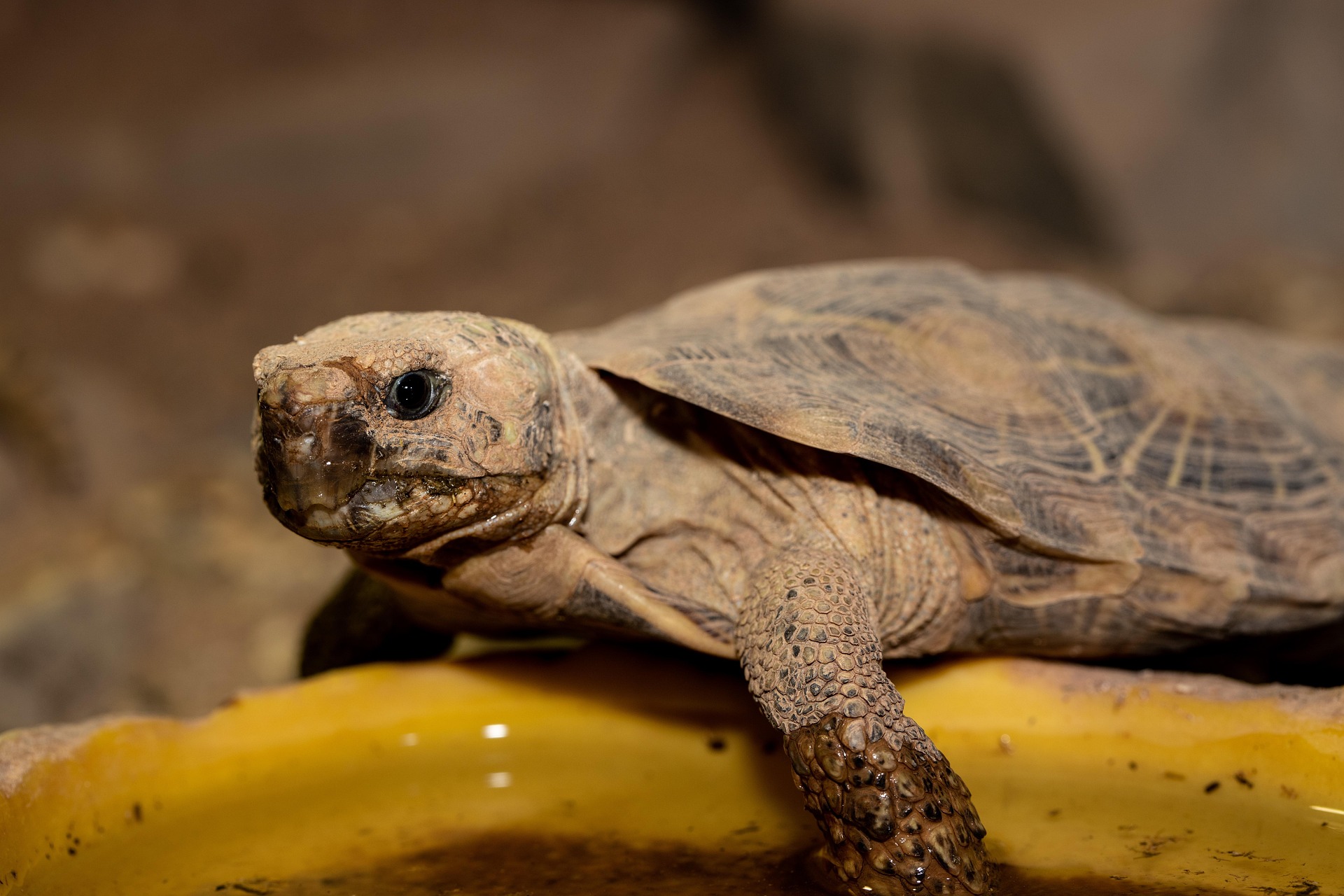
What kind of animal is a pancake tortoise? We will explain the characteristics, personality, ecology, habitat, and sales of small animals of amphibious reptiles. This tortoise lives in eastern Africa and is a member of the turtle family that is popular as a pet, but it is actually designated as an endangered species. It is suggested that it may become extinct in the future.


- What is Pancake Turtle? Basic Stats
- What are the roots and origins of the pancake tortoise?
- Habitat
- What are its characteristics? What kind of creature is it?
- What is its personality like?
- What is their ecology like?
- About Pancake Turtle Hatches
- Is the pancake turtle an endangered species?
- Can you keep a pancake turtle as a pet?
- Zoos Housing the Species (Japan & Worldwide)
- Recommended articles
What is Pancake Turtle? Basic Stats
The pancake turtle is a turtle classified in the order Testudins, family Testudinidae, genus Malacochersus. It is a small turtle with a carapace length of only about 15 cm. Its scientific name is Malacochersus tornieri, and its English name is African pancake tortoise. There is a lot of information on the Internet, and it is also sold in stores and is updated regularly.
| Japanese(和名) | パンケーキガメ |
| English(英名) | African pancake tortoise |
| scientific name(学名) | Malacochersus tornieri |
| classification(分類) | Reptilia、 Testudines、 Testudinidae、Malacochersus 爬虫綱、カメ目、リクガメ科、パンケーキガメ属 |
| IUCN Status(保全状況) | CRITICALLY ENDANGERED |
| Length(体長) | 15~18cm |
| Weight(体重) | 0.5~1kg |
Taxonomy of the Pancake Tortoise (Malaclemys terrapin)
| 分類階級 | 学名・内容 |
|---|---|
| 界(Kingdom) | Animalia(動物界) |
| 門(Phylum) | Chordata(脊索動物門) |
| 綱(Class) | Reptilia(爬虫綱) |
| 目(Order) | Testudines(カメ目) |
| 科(Family) | Testudinidae(リクガメ科) *一部では海岸ガメに近い分類もあり |
| 属(Genus) | Malaclemys(マラクレミス属) |
| 種(Species) | Malaclemys terrapin |
What are the roots and origins of the pancake tortoise?
🌍 Place of Origin
Its natural distribution is primarily in:
🇹🇿 Tanzania
🇰🇪 Kenya
🇿🇲 Northern Zambia
A particularly distinctive feature is its use of rocky areas, crevices, and spaces beneath rocks, rather than just the open ground typical of most tortoises. Rocky outcrops (kopjes) scattered across the dry savannas and shrublands of East Africa serve as vital habitats.
🧬 The Biggest Mystery: Why Is It So Flat?
This is the most fascinating aspect of the pancake tortoise’s evolution.
Typical tortoises
→ Hard, dome-shaped shell
Pancake tortoise
→ Extremely thin, flexible shell
They possess forms that are nearly polar opposites.
Current research suggests that the pancake tortoise evolved from a lineage sharing a common ancestor with the Indotestudo and Testudo genera. However, no fossils representing the pancake tortoise’s direct ancestors have been discovered to date, leaving a significant gap in its evolutionary history.
An Evolutionary Scenario
Typical ancestral tortoise
↓
Competition and predation pressure
↓
Individuals utilizing rocky areas gain an advantage
↓
Escaping into rock crevices and under rocks
↓
Body shapes that fit into narrower gaps become advantageous
↓
Shell becomes flatter
↓
Shell ossification decreases, increasing flexibility
↓
🐢 Modern pancake tortoise
This evolutionary scenario is a leading hypothesis. Researchers propose that the shift toward utilizing rock crevices—driven by predation pressure—likely led to the development of the species’ current, extremely flat body shape.
🪨 A “Flat Shell”: Not a Weakness, but a Weapon
For the pancake tortoise, its flat body is considered an adaptation to a specialized life among rocks.
Squeezing into a rock crevice
↓
Pushing the body deep into the gap
↓
Wedging itself in place by expanding its body
These behaviors are made possible by its unique anatomy. Consequently, unlike typical tortoises that possess hard, rounded shells, this species has evolved to specialize in using rock crevices themselves as refuges.
🔬 More Fascinating Recent Research
A 2026 study of mitochondrial genomes revealed a significant genetic divergence between the Kenyan and Tanzanian lineages, suggesting they may have diverged approximately 5.74 million years ago.
Researchers suggest this could serve as a basis for considering the existence of “cryptic species” in the future; however, they are not currently formally classified as separate species.
Habitat
Pancake turtles are found in parts of Africa, including Kenya, Zambia, and Tanzania.
- Geographic Distribution
Distributed primarily in estuaries, brackish waters, and salt marshes along the east coast of North America.
State Distribution Example:
Coastal areas from Maine to Florida
Prefers brackish waters, tidal flats, and salt marshes along the coast.
- Habitat Type
Mainly lives in brackish waters (estuaries and tidal flats where freshwater and seawater mix).
Often sunbathes on sand or mud.
Feeds, rests, and spawns in shallow waters or areas with thick saltweed.
- Relationship with Water
Semi-aquatic, primarily active in the water.
Excellent swimmers, primarily foraging and escape behaviors in the water.
Comes onto land to sunbathe, but quickly dives back into the water to escape.
- Habitat Characteristics
Adapted to specialized environments such as coastal tidal flats and salt marshes.
Often hides in shallow waters, aquatic plants, sand, and mud to escape predators.
Prefers coastal areas with stable air and water temperatures.
What are its characteristics? What kind of creature is it?
The pancake turtle’s shell is flat, thin and soft like a pancake. That’s why it was named pancake. The flat and elastic shell makes it easier for it to hide in narrow gaps. Its limbs are sturdy and its claws are sharp and strong. The color of its dorsal shell is yellow or yellowish brown, and the color of its plastron is yellowish brown. Each shell has dark spots with radial spots around them. Pancake turtles live in savannas, forests and brush from lowlands to mountainous areas.
- Body Size and Morphology
Body Length: Approximately 15-23 cm (medium-sized turtle) in adults
Weight: Approximately 0.5-1.5 kg
Shell (Carapace):
Very flat and soft (allows for easy escape and quick movement in the water)
Carapace color is dark brown to blackish brown, pattern varies from individual to individual
Head and Limbs:
Small head, large eyes, and well-developed senses
Webbed limbs for swimming and underwater movement
- Behavior and Personality
Semi-aquatic and excellent swimmers
Timid and cautious, they will immediately retreat into the water if they sense danger
Rarely aggressive, with a gentle personality
- Diet
Omnivorous
Food:
Small animals such as shellfish, crustaceans, small fish, and insects
Also eats plant foods such as aquatic plants, algae, and fruit
Feeding Method:
Extends its neck to search for food in the water and chews it with its jaws
- Biological Impressions
A semi-aquatic turtle characterized by its quick movements and escape ability in the water
With its flat shell and small body, it can quickly move through shallow waters and tidal flats
Timid and cautious, its behavior is primarily to flee from humans and predators

What is its personality like?
Pancake turtles are quite cautious turtles. They often hibernate in hiding places such as under rocks or in rock crevices, and when they sense danger, they quickly escape to their hiding places. They never stray far from their homes and are active in the early morning and at dusk.
- Timid and cautious
If they sense danger, they will immediately retreat into the water.
Extremely wary of humans and predators.
Even when on land, they will dive into the water at the slightest provocation.
- Gentle and low-aggression
Very rarely aggressive, they rarely bite.
Tends to be docile and quiet.
- Low sociality
Generally solitary.
Only encounters other individuals at feeding sites or sunbathing areas.
Rarely lives in groups.
- Adaptive behavior
Excellent at quickly escaping from shallow waters and tidal flats.
Excellent at moving around and using hiding places underwater.
What is their ecology like?
Pancake turtles are herbivorous and live by eating grass and other things. They breed oviparously, with males fighting over females. They mate year-round except during the dry season. They lay one egg at a time. The incubation period is 4-7 months, and they live for about 30 years.
- Lifestyle
Semi-aquatic, primarily living underwater
Mainly active in brackish waters, estuaries, tidal flats, and salt marshes
Coming onto land only for basking and spawning
Feeding and moving around by swimming underwater
- Diet
Omnivorous
Food:
Small animals such as shellfish, crustaceans, small fish, and insects
Also consume plant foods such as aquatic plants, algae, and fruit
Feeding Method:
Extends its neck to catch food from the water and crushes it with its jaws
Adapted to a semi-aquatic environment, it can efficiently search for food underwater
- Reproduction and Rearing
Breeding Season: Mainly spring to early summer (varies by region)
Oviparous. Females come onto sandy beaches or tidal flats, dig burrows, and lay eggs.
Egg count: Approximately 5-15 eggs per clutch (varies by individual)
Incubation period: Approximately Around 60 days
Juvenile Independence:
They survive independently in the water immediately after hatching.
They grow up in a safe place, being wary of predators.
- Behavior and Sociality
Primarily solitary.
Interaction with other individuals is limited to sunbathing areas and breeding season.
Their range of movement is shallow waters and tidal flats, varying depending on water levels and food distribution.
- Habitat Relationship
Adapted to estuaries, tidal flats, and salt marshes along the east coast of North America.
They primarily feed, move, and use hiding places in the water.
They come onto land only for spawning and sunbathing.
Do they have any natural enemies?
Pancake turtles are small turtles, so most carnivores are natural enemies.

About Pancake Turtle Hatches
This article provides a detailed overview of the characteristics and ecology of pancake turtle (Malaclemys terrapin) hatchlings (from hatching to juvenile stage).
- Birth and Hatching
Oviparous: Females dig burrows in sandy beaches or tidal flats and lay eggs there.
Number of eggs: Approximately 5-15 per clutch (varies by individual).
Incubation Period: Approximately 50-60 days (depending on temperature and humidity).
Body Length and Weight:
Body Length: Approximately 3-5 cm
Weight: Approximately 20-50 g
Appearance:
Carapace is soft and flat.
Dark brown to blackish brown in color, with pale markings.
Webbed feet and swimming ability are apparent immediately after hatching.
- Juvenile Behavior
Highly independent: Lives in the water immediately after hatching
Shy and cautious:
Quickly retreats into the water when it senses a predator or human presence
Protects by hiding in the shade of aquatic plants, sandy bottoms, or tidal flats
Feeding Behavior:
Eat small shellfish, insects, and aquatic plants on their own
Extends their neck to search for food in the water and crushes it with their jaws
- Growth Stage
Immediately after hatching
Solitary, prioritizes hiding
Juvenile Stage (several months to 1 year)
Their carapace hardens, and their patterns and colors gradually become more vivid
Increased feeding and range of activity
Juvenile Stage (1-2 years)
Improved underwater swimming and escape ability
Body length and weight increase as they approach adulthood
- Habitat Relationship
They use safe areas such as shallow waters, tidal flats, and the shade of aquatic plants or sandy bottoms.
Protection from predators is paramount.
They primarily spend their time underwater and rarely come onto land.
Is the pancake turtle an endangered species?
The pancake turtle is listed in Appendix I of the Convention on International Trade in Endangered Species of Wild Fauna and Flora, and international trade is restricted. Not only is its habitat decreasing due to recent development, but it is also overfished as a pet, which is a problem. If you want to keep it as a pet, it will cost you money as its price has risen sharply.
- IUCN Assessment
Classified as Near Threatened (NT) on the IUCN Red List.
While populations remain relatively stable in some areas, habitat destruction and human activities pose a risk of decline.
- Causes of Decline
Habitat Destruction
Estuarine and Tidal Flat Landfills, Revetment Construction, and Urban Development
Traffic and Human Interference
Vehicles and Pedestrians Endanger Basking Individuals
Changes in Predation Pressure
Impact of Predators such as Cats, Dogs, and Birds
Climate Change
Flooding of Nesting Holes Due to Low and High Tides and Storms Reduces Hatching Rates
- Conservation Efforts
Establishment of Protected Areas: Preservation of Tidal Flats and Salt Marshes
Breeding Site Management: Protection of Nesting Holes During the Spawning Season
Education and Awareness-Raising Activities: Raising Conservation Awareness among Local Residents
Can you keep a pancake turtle as a pet?
It is possible to keep a pancake turtle as a pet. The following items are necessary for keeping a turtle. Small individuals are newly registered and sold, and there are many adoption requests, so check them out. Pay attention to the type of food and cage. They also have a long lifespan, so take that into consideration. Check the food and how to keep them warm. There are many products available in shops, and it is easy to purchase supplies such as food, cases, and lights.
Cage
Depending on the size of the shell and the growth rate, a cage with a width of about 60 cm is required at the shop. It is recommended to use a reptile cage made of glass, acrylic, or plastic.
Flooring
There are various types of flooring, from large to small. There are many types such as red clay, coconut shells, and artificial turf. They are sometimes sold at low prices during campaigns.
Heater
If necessary, prepare an air conditioner or heater to make sure your turtle is comfortable. There are panel heaters, spot lamps, and basking lights.
Thermo-hygrometer
When raising amphibious turtles, it is very important to control the temperature and humidity. It is best to keep the temperature at around 30 degrees.
Lighting
Turtles are animals that maintain their health by exposing themselves to strong ultraviolet rays throughout the day, producing vitamin D3 in their bodies that promotes calcium absorption. For this reason, lighting is essential. There are incandescent and fluorescent tube types, and it is best to choose one that suits the cage. Use the sunlight hours as a guide for lighting.
Shelter
Turtles are living creatures, so it is a good idea to have a shelter as a point to create a place for them to escape indoors. Make sure to install it properly so as not to cause them too much stress.
Water dish
A water dish is also essential. Clean the water bowl every day and provide fresh water.
Pet food
Turtles are herbivorous and their food consists mainly of small vegetables and fruits, with some komatsuna and mushrooms. Some turtles eat wild plants instead of vegetables. Give them fruits such as bananas, watermelons, apples, strawberries, kiwis, and mangoes as snacks. Some people also give supplements as a reference. It is a good idea to start by offering commercially available products. These contain all the nutrients that living creatures need.
Zoos Housing the Species (Japan & Worldwide)
🇯🇵 Japan
Kyoto City Zoo (Kyoto Prefecture) ✅ Confirmed
Toba Aquarium (Mie Prefecture) ✅ Records available
Tennoji Zoo (Osaka Prefecture) ✅ Confirmed
Kyoto City Zoo lists the Pancake Tortoise (Malacochersus tornieri) in its official animal encyclopedia.
Toba Aquarium is also listed as a facility housing the species in global zoo databases.
Regarding Tennoji Zoo, the housing of two Pancake Tortoises can be confirmed in their official annual report (FY2022 data).
Additionally, Pancake Tortoises are listed as an “International Rare Species of Wild Fauna and Flora” in documents from the Ministry of the Environment regarding certified facilities for the conservation of rare species.
🌎 Worldwide
The species is kept in a significant number of zoos around the world.
🇺🇸 USA
Zoo Atlanta
Bronx Zoo
San Diego Zoo
San Diego Zoo Safari Park
Detroit Zoo
Cincinnati Zoo & Botanical Garden
St. Louis Zoo
Oklahoma City Zoo
Tulsa Zoo
Memphis Zoo
Dallas Zoo
Fort Worth Zoo
Buffalo Zoo
Montgomery Zoo
Tennessee Aquarium
Phoenix Zoo
Oakland Zoo
Birmingham Zoo
National Zoological Park (Smithsonian’s National Zoo)
Records of Pancake Tortoises being kept at numerous facilities in the US can be confirmed via Zooinstitutes.
🇩🇪 Germany
Aquazoo Löbbecke Museum Düsseldorf
Zoo Frankfurt
Zoo Leipzig
Zoo Berlin
Tierpark Berlin
Zoo Wuppertal
Zoo Hannover
Zoo Magdeburg
Zoopark Erfurt
Tierpark Hellabrunn (Munich)
Zoo Schwerin
Germany has a particularly large number of facilities housing the species; many can also be confirmed via Zootierliste. 🇳🇱 Netherlands
Rotterdam Zoo (Diergaarde Blijdorp)
ARTIS Amsterdam
🇧🇪 Belgium
ZOO Antwerpen
Pairi Daiza
🇬🇧 UK
West Midland Safari Park
Chester Zoo
Dudley Zoo
Dartmoor Zoological Park
Cotswold Wildlife Park
Twycross Zoo
Linton Zoo
Belfast Zoo
🇫🇷 France
ZooParc de Beauval
🇨🇭 Switzerland
Zoo Zürich
Zoo Basel
🇨🇿 Czech Republic
Prague Zoo
Zoo Plzeň
🇵🇱 Poland
Poznań Old Zoo
Wrocław Zoo
🇫🇮 Finland
Helsinki Zoo
🇮🇹 Italy
Parco Natura Viva
🇭🇺 Hungary
Budapest Zoo
🇷🇺 Russia
Moscow Zoo
Perm Zoo
Roev Ruchey Zoo
Yaroslavl Zoo
🇨🇳 China
Beijing Zoo
🇺🇦 Ukraine
Kyiv Zoo
EKZOland
🇰🇿 Kazakhstan
Almaty Zoo
🇹🇭 Thailand
Monsters Aquarium Pattaya
🇦🇪 UAE
Sharjah Safari
These are facilities that can be verified in global databases of zoological facilities.
Recommended articles

コメント