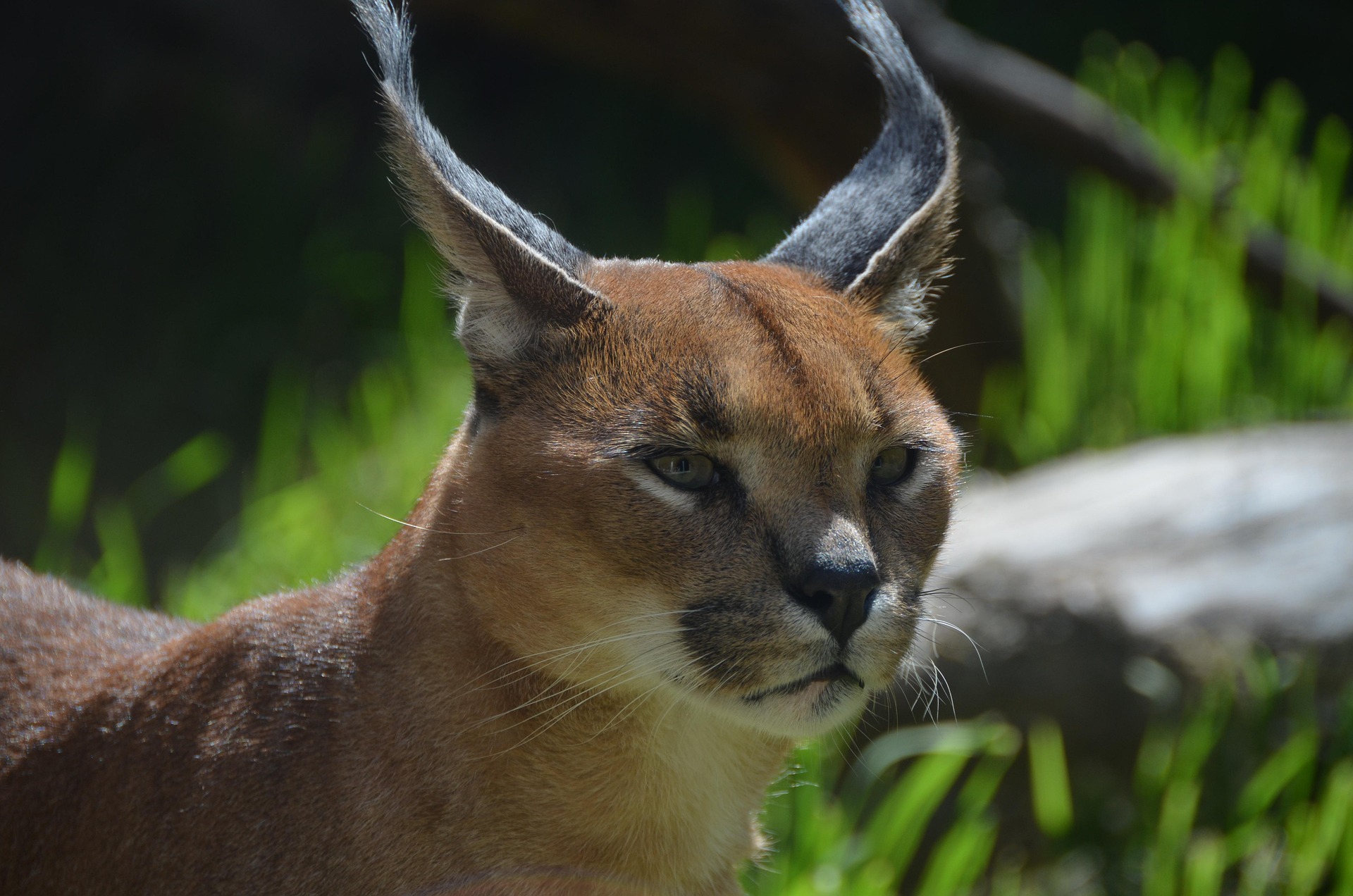
ネコ科カラカル(caracal)はどんな動物?特徴、生態、生息地について解説します。この猫はアラビア半島からアフリカなどでかなり広く分布しており、飼育する方も少なくありません。身体能力もとても高い動物ですので、かなり優秀な動物と言えます。


カラカルとは? 基本ステータスについて
カラカルは、食肉目ネコ科カラカル属に分類される食肉類。英語名はCaracal、学名はCaracal caracal。体長は60~90cm、体重は8~20kg、尾長は20~30cm。情報の一覧は以下の通り。写真や画像はネットでもたくさん見れます。
| Japanese(和名) | カラカル |
| English(英名) | Caracal |
| scientific name(学名) | Caracal caracal |
| classification(分類) | Mammalia、Carnivora、 Felidae、Caracal 哺乳綱、食肉目、ネコ科、カラカル属 |
| IUCN Status(保全状況) | LEAST CONCERN |
| Length(体長) | 60~90cm |
| Weight(体重) | 8~20kg |
カラカルの分類学
| 階級 | 分類 |
|---|---|
| 界 (Kingdom) | 動物界 (Animalia) |
| 門 (Phylum) | 脊索動物門 (Chordata) |
| 亜門 (Subphylum) | 脊椎動物亜門 (Vertebrata) |
| 綱 (Class) | 哺乳綱 (Mammalia) |
| 目 (Order) | 食肉目 (Carnivora) |
| 亜目 (Suborder) | ネコ亜目 (Feliformia) |
| 科 (Family) | ネコ科 (Felidae) |
| 属 (Genus) | カラカル属 (Caracal) |
| 種 (Species) | カラカル (Caracal caracal) |
カラカルのルーツ、起源は?
カラカル(カラカル)は、見た目こそオオヤマネコ類に似ていますが、実はオオヤマネコ(Lynx)の仲間ではありません。
🧬 進化上の位置
現在の分類では、
ネコ科 Felidae
↓
ネコ亜科 Felinae
↓
カラカル系統
↓
カラカル属 Caracal
↓
カラカル Caracal caracal
という位置にあります。
特に近縁なのが、
- 🐈 アフリカゴールデンキャット
- 🐆 サーバル
です。カラカル・アフリカゴールデンキャット・サーバルを含む系統は、他のネコ科とはかなり早い段階で分岐しました。分子系統解析では、カラカル系統は約850万年前に他のネコ科系統から分かれたと推定されています。
🌍 どこから来た?
ここが面白いところです。
現在のカラカルは主にアフリカに分布していますが、現生ネコ科そのものはアジアで約1,080万年前に成立したとされ、その後、カラカル系統の祖先がアフリカへ進出したと考えられています。
大まかな流れは、
アジア
↓
約1,080万年前
現生ネコ科の初期系統が発展
↓
カラカル系統が分岐
↓
約850~560万年前
アフリカへ進出
↓
アフリカで独自に進化
↓
現在のカラカルへ
というイメージです。
🦴 化石から分かること
カラカル系統として最も古い化石記録は、約400万年前のアフリカ東部・南部から知られています。
ただし、古い化石は歯や顎の断片などが中心で、現生カラカルそのものと完全に同一種だったのかについては不明な部分があります。
🐾 なぜ「オオヤマネコ」に似ている?
最大の特徴が、
長い耳+黒い耳房+短めの尾
です。
そのため昔はオオヤマネコ類と近いと考えられたことがあります。しかし遺伝学的には別系統で、カラカルの系統はオオヤマネコの系統よりも古く分岐しています。
生息地について
カラカルはインド、パキスタン、アフガニスタン、トルクメニスタンやトルコ南部、アラビア半島などに分布しているほか、サハラ砂漠やコンゴ盆地付近にも分布しています。
1. 地理的分布
- アフリカ大陸
- 北アフリカから南アフリカまで広く分布
- 特にサハラ以南の乾燥地帯、サバンナ、低木林など
- 中東
- アラブ半島、イスラエル、イランなど
- アジア南西部
- インド西部やパキスタン西部にも生息
2. 好む環境
- 乾燥草原・サバンナ
- 開けた土地で小型哺乳類や鳥を捕食しやすい
- 半砂漠地帯
- 乾燥していても隠れられる低木や岩場がある場所を好む
- 森林地帯や低木林
- 捕食や休息のために茂みや木陰を利用
3. 巣・隠れ場所
- 岩陰や低木の茂み、時には廃屋や洞穴なども利用
- 日中は隠れて休息し、夜間や夕方に活動することが多い
4. 生息環境の特徴
- 水源の近くよりも乾燥した開けた土地に多い
- 人間の影響を受けやすく、農地や都市周辺では生息が減少することもある
特徴は?どんな感じの生物なのか?
カラカルは顎の下から胸、腹部は白く、耳の外側は黒く先には黒いふさ毛が見られます。毛は短くて黄色がかった灰色や赤褐色で目のまわりには黒い輪があり、鼻まであります。カラカルは森林やサバンナ、ヤブ地などで広く見ることが可能です。主に夜行性の動物で、昼間は茂みや木の上などで休んでいることも多いです。
1. 体の大きさ・体重
- 体長:約 40〜50 cm(肩高もほぼ同じ)
- 尾の長さ:約 25〜35 cm
- 体重:約 8〜19 kg(オスの方がやや大きい)
- 中型ネコ科で、俊敏で筋肉質な体型
2. 外見
- 毛色:赤褐色〜黄褐色、腹部は白っぽい
- 顔:シャープで小型の目と黒い耳の先端の長い房毛が特徴
- 耳毛(耳の先端の黒い房)は警戒やコミュニケーションに使われる
- 尾は長く、バランスを取るのに適している
3. 性格・行動
- 基本的に単独行動を好む
- 夜行性が多いが、地域によって昼行性の個体もいる
- 縄張り意識が強く、他個体の領域には入らない
- 非常に俊敏で、跳躍力・瞬発力が高いハンター
4. 食性
- 小型哺乳類(ウサギ、リス、げっ歯類など)
- 鳥類を飛び跳ねて捕まえることも可能
- 爬虫類や昆虫も食べる
- 高い運動能力と耳の感度を生かして獲物を捕獲

性格はどんな感じなのか?
カラカルは典型的なネコ科の動物であり、単独行動をメインとしています。そのためイエネコと同じように気ままでマイペースな動物です。カラカルは気が荒く家畜や家禽を襲うこともあるため扱いに注意が必要です。
1. 独立心が非常に強い
- 基本は 単独生活
- 縄張りを持ち、他個体が侵入すると威嚇や攻撃で追い払う
- 社会性は低く、群れで生活することはほとんどない
2. 警戒心と慎重さ
- 人間や捕食者に対しては 非常に警戒心が強い
- 草むらや岩陰に隠れて周囲を確認してから行動する
- 自然界では「音・視覚・匂い」で獲物と天敵を常にチェック
3. 活発で俊敏
- 瞬発力・ジャンプ力・走力が高く、狩りに特化した性格
- 樹上ではなく地上を含む広い範囲で機敏に行動
- 獲物を捕るために慎重さと攻撃性を組み合わせる
4. 知能と学習能力
- 狩りのための観察力や戦略を学習できる
- 環境の変化や獲物の動きに応じて行動を変える柔軟性あり
5. 縄張り意識が強い
- 単独で生活する理由の1つは食料や巣の確保
- 他個体の接近を嫌い、マーキングや鳴き声で領域を主張
生態はどうなっているのか?
カラカルは動物食で、鳥類や小型レイヨウ、齧歯類、ノウサギ、ハイラックス、爬虫類を食べて生活をしています。繁殖期は特に決まってなく、妊娠期間は68 – 81日で他の動物が捨てた巣穴などを利用し、1 – 6頭を産むことが可能です。生後1か月で固形物を食べ始め、生後9 – 10か月で独立。寿命は20年くらいです。
1. 生活環境
- 主に 乾燥草原、サバンナ、低木林、半砂漠地帯 に生息
- 岩陰や低木林を隠れ場所として利用
- 開けた土地を移動しながら獲物を探すことが多い
2. 活動パターン
- 基本は 夜行性(夕方〜夜間に活発)
- 日中は茂みや岩陰で休息
- 人間の活動地域では、昼間に活動する個体も見られる
3. 食性・狩猟方法
- 主食:小型哺乳類(ウサギ、げっ歯類)、鳥類
- 副食:爬虫類や昆虫
- 狩猟技術:
- 跳躍力と俊敏さを使って空中の鳥も捕獲可能
- 音や視覚を駆使して獲物を待ち伏せ
4. 縄張り・単独生活
- 単独行動が基本で、縄張りを持つ
- 縄張り内での食料・巣穴を確保
- 他個体と接触するのは繁殖期や偶発的な場合のみ
5. 繁殖・子育て
- 繁殖期:地域によるが、雨季の前後が多い
- 妊娠期間:約 2〜3か月
- 出産数:1〜4匹
- 子育ては母親が中心
- 巣穴や茂みで育てる
- 父親は通常関与せず
6. 生存戦略
- 単独性+縄張り性で、食料を確保し競合を避ける
- 岩陰や茂みで身を隠すことで、捕食者や人間から身を守る
- 食料貯蔵は行わないが、俊敏な狩猟能力で捕食圧に対応
天敵はいるのか?
カラカルは外敵はライオンやヒョウ、ハイエナなど。

カラカルの幼獣について
カラカル(Caracal caracal)の幼獣(子ども)について詳しく整理します。
1. 誕生と体の大きさ
- 妊娠期間:約 2〜3か月
- 出産数:1回に 1〜4匹
- 出生時の体重:約 200〜250 g
- 体長:約 20〜25 cm
- 毛色は生後すぐは灰色や淡い茶色で、斑点模様があることも
2. 発達と成長
- 目は生後1〜2週間で開く
- 生後3〜4週間で毛がふわふわになり、耳の房毛も徐々に成長
- 離乳:生後2〜3か月頃から母乳以外の食物も食べ始める
- 幼獣は母親の後ろについて歩き、狩猟や隠れ方を学ぶ
3. 親との関係
- 母親が主に子育てを担当
- 授乳や巣での保護
- 父親は通常子育てには関与しない
- 幼獣は母親の近くで学習し、安全を確保
4. 行動
- 最初は巣穴で過ごす時間が長い
- 徐々に枝や岩陰で隠れる・移動する練習をする
- 幼少期から母親の狩猟行動を観察して学習
- 兄弟同士でじゃれ合い、運動能力や社会性を発達させる
5. 危険と生存率
- 捕食者(フクロウ、ハイエナ、ヘビなど)に狙われやすい
- 母親が近くにいないと生存率が低下する
- 幼獣の間に狩猟スキルや隠れ方を学ぶことが生存の鍵
カラカルは絶滅危惧種なのか?
カラカルは低懸念に分類されており、絶滅危惧種ではありません。現在のところ絶滅の危惧はないとされているが、ワシントン条約によって保護されている状況で国際取引に制限がかかっています。
1. IUCN(国際自然保護連合)による評価
- ステータス:軽度懸念(Least Concern, LC)
- 理由:
- 生息範囲がアフリカ大陸や中東・インド西部に広く分布
- 個体数は比較的安定していると推定される
2. 脅威となる要因
- 森林伐採や土地開発
- サバンナや低木林の減少で局所的に生息地が失われる
- 農地・家畜との衝突
- 家畜を襲うことがあり、農民による駆除の対象になることも
- 密猟
- 毛皮や違法取引の対象になる場合もある
- 気候変動
- 水源や植生の変化で生息地の質が低下する可能性
3. 保護状況
- 広範囲に生息しているため、現時点では絶滅の危険は低い
- 局所的に個体数減少の地域もある
- 自然保護区や国立公園内での生息は比較的安定
カラカルは飼育可能?
カラカルは家畜を襲ってしまう傾向にあり、あまり一般人には向いていません。動物園ではたくさん見ることができます。鑑賞して楽しんでみてください。
1. 理論上は飼育可能だが…
- 中型ネコ科のため、体格も力も十分にあり、野生の本能が強い
- 飼育下での性格:
- 独立心・縄張り意識が強く、人に慣れにくい
- 高いジャンプ力・俊敏性を持ち、家具や窓から脱走の危険あり
- 捕食本能が強いため、小動物やペットに攻撃する可能性がある
2. 必要な飼育環境
- 広いケージ・運動スペース
- 跳躍や走るスペースが必要
- 樹上に登れる構造も望ましい
- 温度・環境
- 乾燥地・サバンナに適応しているため、極端に湿度の高い環境は不適
- 食事
- 肉食性が強いため、生肉や特別なフードが必要
- 食事の管理を間違えると栄養不良や健康被害のリスクあり
3. 法的規制
- 多くの国で野生個体の捕獲や飼育は禁止または厳重に規制
- 日本では 特定動物 または 希少動物 に指定され、飼育には都道府県の許可が必要
- 無許可で飼育すると法律違反
飼育されている動物園(日本・世界)
🇯🇵 日本
現在確認できる主な施設は以下です。
| 動物園・施設 | 所在地 | 状況 |
|---|---|---|
| 姫路市立動物園 | 兵庫県姫路市 | 🟢 飼育・展示 |
| ごかつら池どうぶつパーク | 三重県多気町 | 🟢 飼育・展示 |
ごかつら池どうぶつパークには2026年7月にオスのカラカルが来園し、同園の公式発表では、現在日本で飼育されているカラカルは同園と姫路市立動物園を合わせて3頭とされています。
なお、過去には東山動植物園、福山市立動物園、大内山動物園などでも飼育されていましたが、現在の飼育状況は変化しています。古い一覧には現在と異なる情報が含まれるため注意が必要です。
🌍 世界
海外ではかなり幅広く飼育されています。特にヨーロッパには多くの施設があります。
代表的な飼育施設:
- 🇫🇷 ボーバル動物園(ZooParc de Beauval) — フランス
- 🇫🇷 パルク・ズーロジック・ダムネヴィル — フランス
- 🇫🇷 パルク・デ・フェラン — フランス
- 🇩🇪 ドレスデン動物園 — ドイツ
- 🇩🇪 ベルリン動物園/ティアパルク・ベルリン — ドイツ
- 🇨🇿 プラハ動物園 — チェコ
- 🇨🇿 ドヴール・クラーロヴェ動物園 — チェコ
- 🇨🇿 オストラヴァ動物園 — チェコ
- 🇬🇧 ハウレッツ・ワイルド・アニマル・パーク — イギリス
- 🇬🇧 ウィンガム・ワイルドライフ・パーク — イギリス
- 🇬🇧 ポート・リンプネ・ワイルド・アニマル・パーク — イギリス
- 🇺🇸 ブランディワイン動物園 — アメリカ
- 🇺🇸 カンザスシティ動物園 — アメリカ
- 🇺🇸 シンシナティ動物園 — アメリカ
- 🇨🇳 北京動物園 — 中国
- 🇷🇺 モスクワ動物園 — ロシア
- 🇷🇺 ノヴォシビルスク動物園 — ロシア
- 🇩🇰 コペンハーゲン動物園 — デンマーク
- 🇮🇱 ハイファ教育動物園 — イスラエル
- 🇹🇭 カオキアオ・オープンズー — タイ
これらは海外の動物園データベースで現在・近年の飼育例が確認できる施設です。
他の記事もおすすめ


コメント