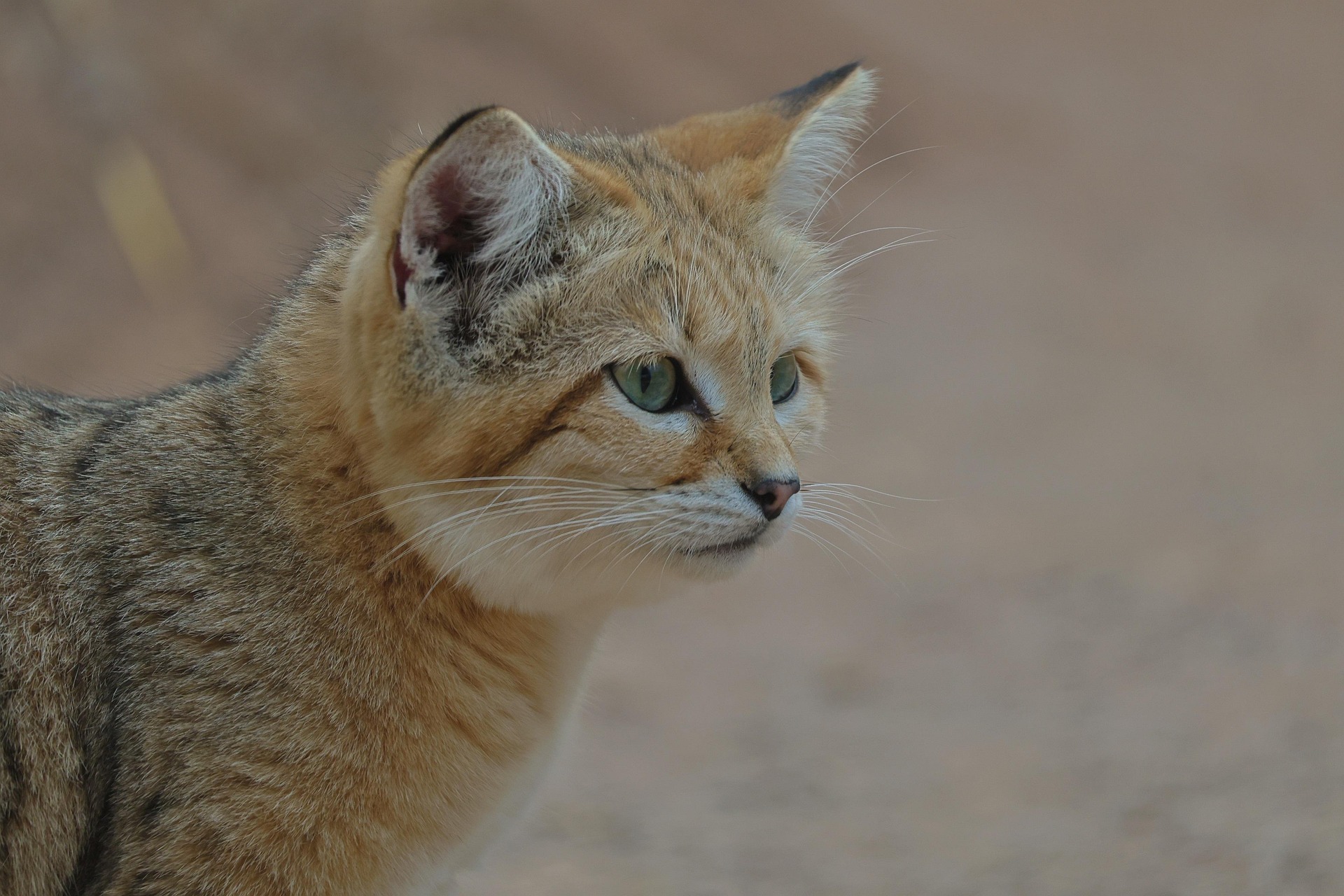
スナネコはどんな動物?特徴、生態、生息地について解説していきます。この猫は中東からアフリカにかけて生息しているとても可愛い猫でとても人気があります。しかしそんな背景がありながらも実は生息数が減っている状況でけっして良い状態にあるとは言い切れないのが実態です。


スナネコとは? 基本ステータスについて
スナネコは食肉目ネコ科ネコ属に分類される食肉類。学名は Felis margaritaで感じでは砂猫。この猫は体長42 – 57cmで尾長28 – 35cm、体重は1 – 3kg。アラブ首長国連邦を代表するネコで「砂漠の天使」とも言われています。中東の方なら絶対に知っています。情報の一覧は以下のようになります。
| Japanese(和名) | スナネコ |
| English(英名) | Sand Cat |
| scientific name(学名) | Acinonyx jubatus |
| classification(分類) | Mammalia、 Carnivora、 Felidae、Felis 哺乳綱、食肉目、ネコ科、ネコ属 |
| IUCN Status(保全状況) | LEAST CONCERN |
| Length(体長) | 42 – 57cm |
| Weight(体重) | 1 – 3kg |
スナネコのルーツ、起源は?
スナネコ(砂猫 / Sand cat / 学名:Felis margarita)のルーツは、約600万〜700万年前に分かれた「イエネコ属(Felis)」の古い系統にあります。
見た目は普通の猫に近いですが、実は砂漠という極限環境に特化した、非常に古い野生ネコの仲間です。
1. 祖先は「小型ネコ科」の古代系統
スナネコは分類上、
ネコ科(Felidae)
↓
ネコ亜科(Felinae)
↓
ネコ属(Felis)
↓
スナネコ(Felis margarita)
という位置にいます。
ネコ属には、現在のイエネコの祖先であるヤマネコ類や、以下のような小型野生猫が含まれます。
- ヨーロッパヤマネコ
- アフリカヤマネコ
- クロアシネコ
- ジャングルキャット
- スナネコ(Felis margarita)
遺伝的研究では、スナネコはネコ属の中で比較的早い段階に分岐した系統とされています。
2. 進化の流れ
大まかな進化史は以下のようになります。
約1000万年前以前
↓
古代のネコ科動物がアジアで進化
↓
約700万年前ごろ
↓
現代のネコ属につながる祖先が出現
↓
約600万年前以降
↓
ジャングルキャット、クロアシネコ、スナネコなどが分化
↓
スナネコの祖先が乾燥地帯へ進出
↓
現在の「砂漠専門猫」へ進化
3. なぜ砂漠に適応したのか?
スナネコは、単に「砂色の猫」ではありません。
数百万年かけて砂漠生活に適応しています。
足
- 肉球の間まで長い毛が生えている
- 熱い砂から足を守る
- 足跡を残しにくい
耳
- 大きな耳で地中の獲物の音を探知
- 砂が入りにくい毛もある
体色
- 淡い砂色
- 砂丘で完全な保護色になる
水分
- 獲物から水分を得る能力が高い
- 水をほとんど飲まず生活できる
4. イエネコの祖先なの?
よく誤解されますが、
スナネコ → イエネコ
ではありません。
イエネコ(Felis catus)の直接的な祖先は主にアフリカヤマネコ(Felis lybica)です。
スナネコとイエネコは、
共通の古い祖先から別々に進化した「いとこ」のような関係
です。
分類について
スナネコはヤマネコととても近い種族になります。この種族には4種類の亜種が存在します。一般に見た目、食べ物や鳴き声などはイエネコと同じ。飼育にかかる値段もそれほど変わりません。地域では飼ってる人間も多いです。
Felis margarita margarita
アルジェリア、エジプト、ニジェール、マリ共和国、モロッコに生息する亜種です。尾の輪状斑が2~6本程度あります。
Felis margarita harrisoni
イスラエル、イラク、シリア、ヨルダン、アラビア半島に生息する亜種。尾の輪状斑が5-7本あります。
Felis margarita scheffeli
パキスタンのみに生息する亜種で、個体数はとても少ないスナネコです。
Felis margarita thinobia
イラン、ウズベキスタン、カザフスタン、トルクメニスタンに住んでいる亜種です。2亜種に分ける説もあり、Felis margarita margaritaとFelis margarita thinobiaに分ける学者もいます。
生息地はどこなのか?
スナネコがメインで住んでいるのはアラビア半島。アラブ首長国連邦やエジプトでの分布が多いですが、それ以外にもモロッコ、クウェート、イランなどの北アフリカにも住んでいます。
1. 地理的分布
- 北アフリカ:モロッコ、アルジェリア、エジプト、リビア
- 中東:サウジアラビア、オマーン、イラク、イラン
- 中央アジア:パキスタン、アフガニスタン
- 分布の特徴:乾燥地帯や砂漠を中心に分布し、標高は0〜1,500m程度の場所で見られる
2. 生息環境
- 砂漠・半砂漠地帯:砂丘や岩場、砂混じりの平地
- 乾燥草原・荒地:低木や乾燥した茂みがある場所
- 隠れ場所の確保:
- 岩の隙間や砂丘の穴を巣穴として利用
- 昼間は巣穴に潜み、夜間に活動する
3. 環境条件の特徴
- 高温乾燥に適応
- 水源が少なくても生息可能(主に食物から水分を得る)
- 食物がある範囲に生息し、餌場の変化に応じて移動する
特徴は?どんな感じの生物なのか?
毛色は砂漠で見つかりにくい灰黄色をしており背中部分が明るい灰色がかった黄色です。しっぽは先端にいくに従い黒くなっていき、黒い輪っか模様が入っています。スナネコの耳の内側には長い毛が生えているほか、足裏にも長い毛が生えており、砂漠でやけどをしないように適応しています。頭部は幅広いうえに耳介は大きく幅広い三角形になっているのが最大の特徴です。昼間は穴に隠れ、夜行性です。
1. 体の大きさ・外見
- 体長:約39〜52cm
- 尾長:23〜31cm
- 体重:1.5〜3.5kg
- 体型・毛色:
- 小型でがっしりした体型
- 砂漠の環境に溶け込む薄い砂色~黄褐色の毛
- 顔には黒い斑点や縦線があり、目の周りに特徴的な模様
- 耳:
- 大きく丸い耳を持ち、聴覚が非常に発達
- 音の方向や獲物の位置を正確に把握可能
- 足・爪:
- 足裏は毛で覆われ、砂漠の砂や熱から保護
- 爪は鋭く、獲物を捕らえるのに適している
2. 行動・性格
- 夜行性・単独行動:昼間は巣穴に潜み、夜間に活動
- 臆病で警戒心が強いが、狩りや移動では非常に機敏
- 独立心が強く、縄張りを持つ
3. 食性
- 肉食性・捕食者:
- 小型哺乳類(げっ歯類など)、昆虫、爬虫類を捕食
- 食物から水分を補うため、飲水量は少ない
- 獲物を捕らえるときは忍び寄りながら素早く捕獲
4. 生態上の特徴
- 砂漠に適応した体型や毛色で敵から身を隠す
- 耳や足の構造は砂漠での生活に最適化
- 単独で縄張りを持ち、夜間に狩りを行う
性格はどんな感じなのか?
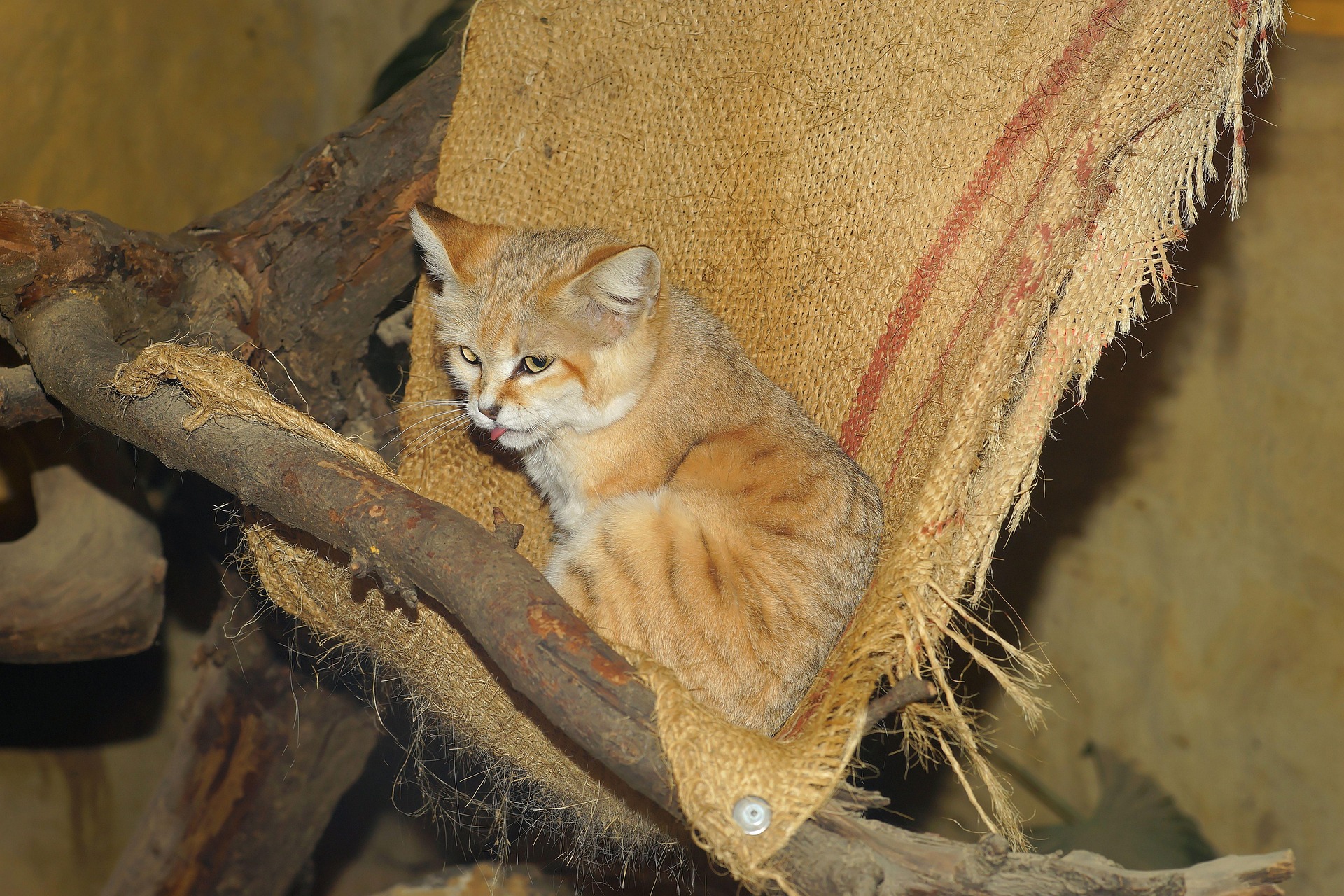
スナネコは珍しいとても獰猛で、攻撃的な性格をしています。スナネコをペットにしたいと考えている方は多いのですが、相当ネコの扱いに慣れている熟練者でなければ、飼育にかなり苦労するでしょう。他の動物との多頭飼いもおすすめしません。捕食したり、喧嘩をすることもあります。
スナネコの性格・行動特性
- 臆病で警戒心が強い
- 捕食者や人間の気配に敏感で、危険を察するとすぐに隠れる
- 昼間は巣穴で休み、外敵から身を守る
- 独立心が強い
- 基本的に単独行動
- 縄張り意識があり、他のスナネコと接触するのは繁殖期のみ
- 夜行性で機敏
- 夜間に活動して狩りを行う
- 小型哺乳類や昆虫などを巧みに捕らえる
- 警戒心と慎重さ
- 新しい環境や物には慎重に近づく
- 食物や巣穴の安全性を確認してから行動
生態はどうなっているのか?
野生動物のスナネコは岩砂漠や礫砂漠・砂砂漠・砂丘などに生息して、爬虫類、大きなヘビ、ネズミやサソリなどの小型の昆虫や哺乳類を捕食します。一般にサウジアラビアなど乾燥した気温の高い砂漠地帯で獲物を探すため、日中は巣穴や日陰で休むことも多いです。水分は獲物からも多く摂取できます。繁殖様式は胎生。飼育下での妊娠期間は2か月ほどあります。3月から4月にかけて繁殖をしてメスは一度に2-6頭産むことができます。飼育下での寿命は14年以上になります。
1. 生活リズム
- 夜行性:昼間は巣穴に潜み、夜間に狩りや移動を行う
- 巣穴:
- 岩の隙間や砂丘の穴に昼間は潜む
- 過酷な砂漠環境では巣穴で体温を維持
2. 食性
- 肉食性(捕食者):
- 小型哺乳類(げっ歯類)、昆虫、爬虫類など
- 水分摂取:
- 食物から必要な水分を補う
- 飲水の必要性は少ない
3. 繁殖
- 繁殖期:地域によって異なるが春〜夏に多い
- 巣作り:岩の隙間や砂丘の穴を利用
- 出産数:通常2〜4匹
- 育雛:
- 母親が抱き、給餌
- 生後約2か月で自立を開始
4. 社会性・行動
- 基本的に単独生活
- 縄張りを持ち、他個体との接触は繁殖期のみ
- 移動距離は砂漠環境に応じて柔軟に変化
5. 生息環境との関係
- 砂漠・半砂漠地帯に特化
- 高温乾燥・食物が少ない環境でも生きる能力がある
- 隠れ場所や狩りのための地形を利用して生活
天敵はいるのか?
スナネコの天敵は主に大型の肉食動物。オオカミやカラカル、キンイロジャッカル、イヌワシなどが大きな脅威で捕食されてしまうことも多いです。
スナネコの鳴き声
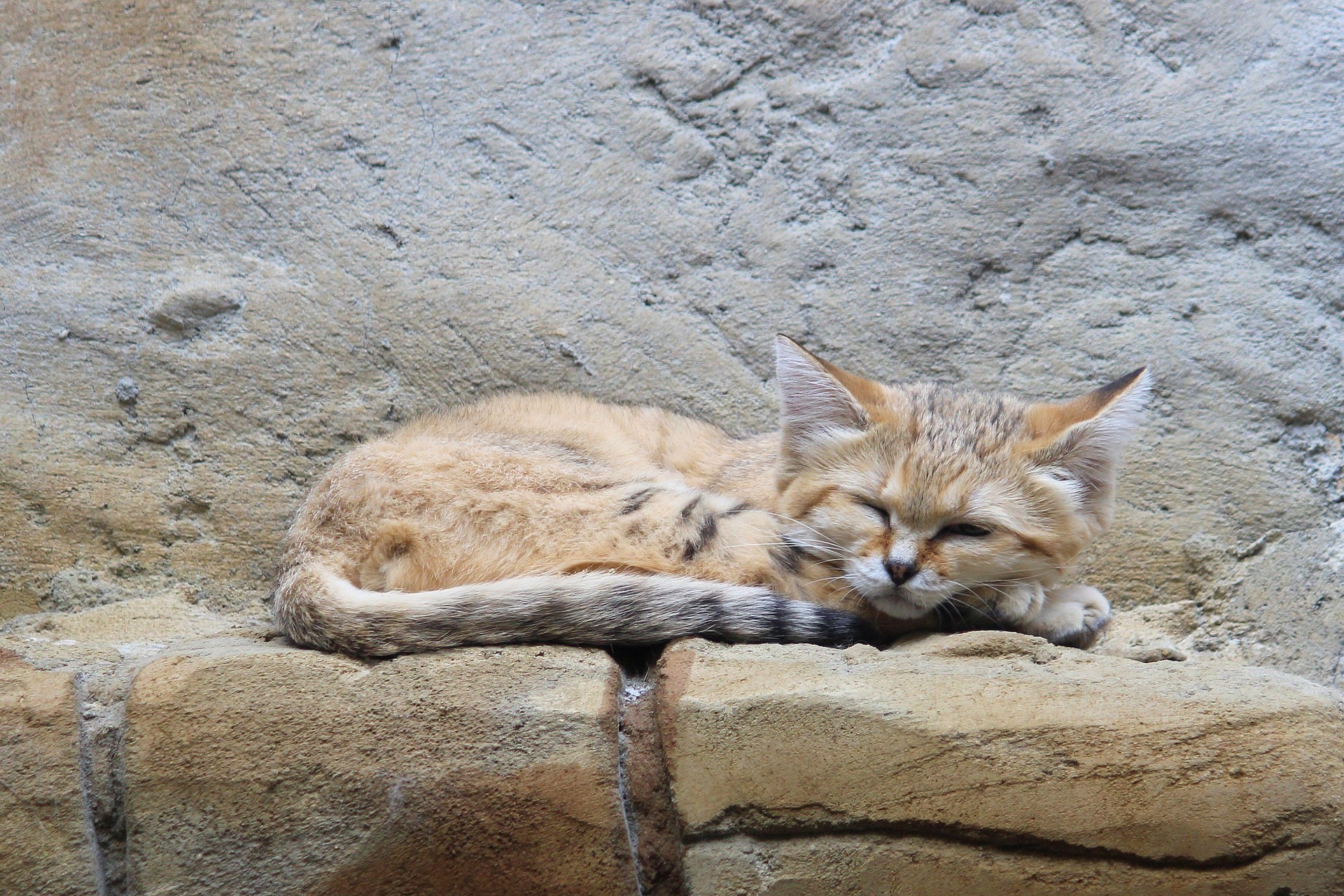
スナネコ(Felis margarita)の鳴き声は、見た目の可愛らしさとは少し違い、野生猫らしい高く細い声が特徴です。
代表的な鳴き方には以下があります。
🐱 1. 「ニャー」「ミャー」という短い声
スナネコもイエネコのような猫らしい鳴き声を出します。
- 仲間への呼びかけ
- 子猫と母親のコミュニケーション
- 飼育下で人間への反応
などで使われます。
ただし、イエネコほど頻繁には鳴かず、野生では基本的に声を抑えて生活する猫です。
🐱 2. 高く細い「ピーピー」「チッチッ」という声
特に子猫では、
- 鳥のような高音
- 小さな鳴き声
- かすれた呼び声
を出すことがあります。
砂漠では音が遠くまで響くため、親子間の距離を確認するための重要なコミュニケーションになります。
🐱 3. 威嚇時の「シャーッ」
危険を感じると、
「シャーッ」「フーッ」
という威嚇音を出します。
小型ですが、野生の捕食者なので、
- キツネ
- ヘビ
- 大型猛禽類
- 他の肉食動物
などに対して警戒します。
🐱 4. 独特の「ゴロゴロ音」
スナネコは、安心している時や親子間で
ゴロゴロ(purring)
という喉鳴らしをします。
飼育施設では、人間に慣れた個体がゴロゴロ鳴らすことがあります。
季節別の活動
スナネコ(Felis margarita)の活動は、季節によって大きく変化します。
砂漠という極端な環境に暮らすため、気温・獲物の量・繁殖時期に合わせて行動パターンを調整しています。
🌸 春(3〜5月):繁殖と子育ての季節
活動の特徴
- 繁殖期に入り、オスの移動が増える
- メスは出産準備のため安全な巣穴を探す
- 子育てが始まる地域もある
行動
- オスは広い範囲を巡回
- 尿や臭いによるマーキングが増える
- 夜間の鳴き声が増える
子育て
妊娠期間は約60〜70日程度で、通常2〜4匹ほどの子猫を産みます。
子猫は生後数週間は巣穴で過ごし、母親から狩りの技術を学びます。
☀️ 夏(6〜8月):砂漠の暑さを避ける季節
活動の特徴
夏の砂漠は日中、
- 地表温度が50℃以上
- 砂が非常に熱い
- 水分が失われやすい
環境になります。
そのため、
- 昼間 → 巣穴で休む
- 夜間 → 狩りに出る
という生活になります。
狩り
主な獲物:
- トビネズミなどの小型げっ歯類
- ヤモリ
- ヘビ
- 小鳥
- 昆虫
優れた聴覚で砂の下の獲物の動きを感じ取り、掘り起こします。
🍂 秋(9〜11月):狩りが活発になる季節
活動の特徴
夏の猛暑が弱まり、活動時間が増えます。
- 夜間活動時間が長くなる
- 巡回範囲が広がる
- 獲物探索が活発になる
特に冬に向けて体力を蓄える重要な時期です。
行動
- 巣穴を複数利用する
- 狩場を移動する
- 単独行動が中心
スナネコは基本的に単独生活者です。
❄️ 冬(12〜2月):寒暖差との戦い
砂漠は暑いだけではありません。
冬の砂漠では、
- 夜間は氷点下近くまで冷える
- 強い風が吹く
- 体温維持が必要
になります。
活動の特徴
- 夜間より夕方・明け方に活動することが増える
- 日没後すぐではなく気温が下がりすぎる前に狩ることもある
- 巣穴で寒さを避ける
体の適応
冬でも生きられる理由:
- 厚い毛皮
- 足裏の長い毛(砂の熱・冷気から保護)
- 丸みを帯びた体型による保温
スナネコの1日の活動リズム
| 時間 | 活動 |
|---|---|
| 昼 | 巣穴で休む |
| 夕方 | 活動開始 |
| 夜 | 狩猟・移動 |
| 明け方 | 巣穴へ戻る |
| 日中 | 睡眠 |
歩行速度
スナネコ(Felis margarita)の歩行速度について、野生個体で正確に測定された公式な平均速度データはほとんどありません。
🐾 通常の歩行速度(推定)
- 約1〜3km/h程度
- 巡回・探索時はゆっくり歩く
- 足音を消しながら獲物を探す
スナネコは長距離を走り続ける動物ではなく、**「忍び寄るハンター」**です。
🏃 短距離での走る速度(推定)
危険回避や獲物への接近では、
- 約30〜40km/h前後の瞬発的な走行能力
を持つと考えられています。
ただし、チーターのような高速追跡型ではありません。
スナネコの幼獣について
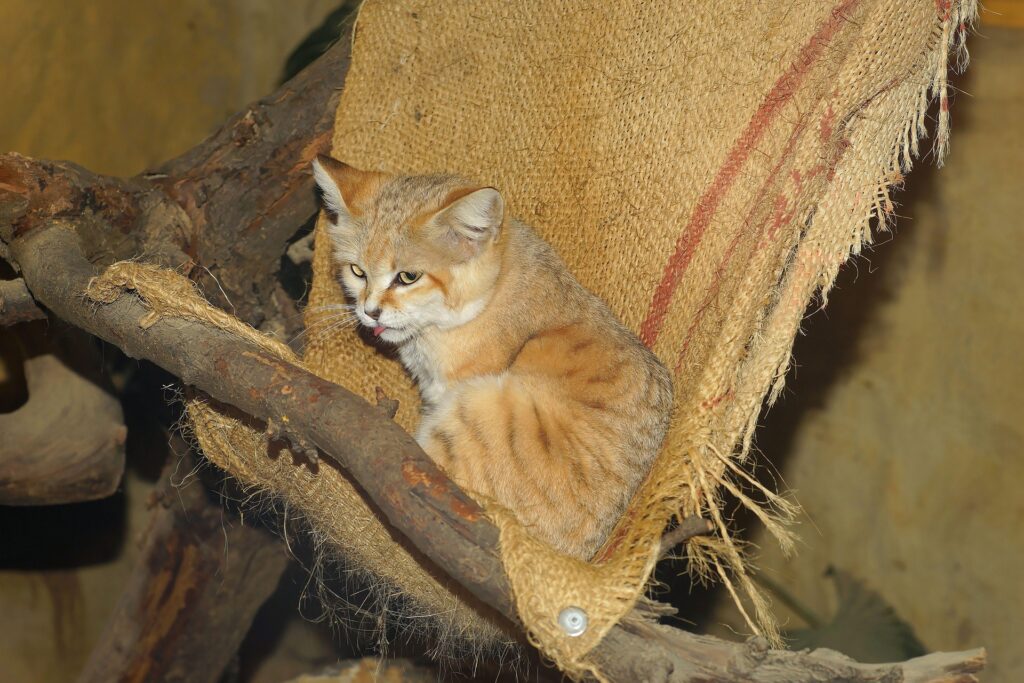
スナネコ(Felis margarita)の幼獣について整理すると、誕生から自立までの成長段階や行動がわかります。
1. 出産・巣
- 繁殖期:春~夏
- 巣作り:
- 岩の隙間や砂丘の穴、砂地のくぼみなど安全な場所に巣穴を作る
- 産仔数:通常2~4匹
- 出生時の体重:約50〜70g
2. 幼獣の特徴
- 産毛が生えた状態で誕生し、目は閉じている
- 足や耳、感覚器官も未発達
- 巣穴からほとんど動けず、親に完全に依存
3. 成長段階
| 週齢 | 発育・行動 |
|---|---|
| 0〜2週 | 目は閉じたまま巣穴で母親に抱かれる。給餌・保温に依存 |
| 2〜4週 | 目が開き、耳が立つ。毛が生え揃い、兄弟とじゃれ合う |
| 4〜6週 | 歩行や巣穴周辺の小移動を開始。親から狩りや生存術を学ぶ |
| 6〜8週 | 狩りの練習を開始。巣穴外の探索を始める |
| 約2か月 | 自立行動を開始。親の補助を受けつつ狩りや移動が可能に |
4. 生存上の注意点
- 天敵(猛禽類、ヘビ、イタチなど)による捕食リスクが高い
- 食物や巣穴の安全性が低いと幼獣の生存率は低下
スナネコは絶滅危惧種なのか?
現在、スナネコは低懸念に分類されており、絶滅危惧種ではありません。しかし個体数は決して安泰とは言えず、現地では以下のような問題が起こっており、とても懸念されています。行動は気性が荒いため、愛らしい猫の種とはいえあまり暮らしのなかでは飼育には向いていません。
ペット取引のために捕獲
スナネコは動物園でも見れるとても有名な猫ですが、ペット取引のために捕獲されています。乱獲が進んでおり、アラブ首長国連邦やイラクでかなり深刻な問題となっています。かなり高値で売れることからブリーダーに目を付けられてます。
病気が移るリスク
これはスナネコ同士、さらには飼い猫からの病気が移るリスクがあります。実際に観測されていますが、猫白血病や猫エイズなど感染症からの感染がありますので、疫病も大きな脅威です。
家禽を殺した報復を受ける
スナネコは肉食動物で野生の動物です。そのため、農家の家畜を襲って殺すこともあり、現地の農家によって殺されているケースが良く見られます。実際に報復を受けて死んでしまうケースが多いです。
スナネコは飼育できる?
スナネコは飼育できるかと言えば微妙です。スナネコはとてもイエネコよりも獰猛なので、初心者にはあまりおすすめできません。できれば動物園でのイベントなどで鑑賞するのが良いでしょう。日本では那須どうぶつ王国や神戸どうぶつ王国がとても有名です。距離がありますがオスやメスが見れます。公式にアクセスしてニュースを見てみましょう。動画や写真などで案内されています。
1. 法律面
- スナネコは野生動物で、ワシントン条約(CITES)付属書IまたはIIに指定されている場合が多く、国際的に輸出入が制限されている
- 日本国内でも野生種の飼育には環境省や都道府県の特別許可が必要
- 許可なしに飼育・輸入・繁殖することは違法
2. 飼育の難しさ
- 生息環境の再現が必要:
- 砂漠の昼夜の温度差や乾燥環境を再現する必要がある
- 昼間は隠れる巣穴、夜間に活動するためのスペースも必要
- 食性の問題:
- 小型哺乳類、昆虫、爬虫類などを与える必要がある
- 食物から水分を摂取する生態に合わせた給餌環境が必要
- 性格・行動:
- 臆病で夜行性、単独生活を好むため、環境ストレスに弱い
- 人間の生活環境に慣れさせるのは非常に困難
3. 飼育可能なケース
- 動物園や研究施設、砂漠生態に特化した専門施設のみ
- 専門的な設備、飼育ノウハウ、法的許可が必須
飼育されている動物園(日本・世界)
スナネコ(Felis margarita)は飼育が難しい希少な野生猫ですが、日本・欧米を中心にいくつかの動物園で飼育されています。
🇯🇵 日本でスナネコが見られる動物園
🐾 那須どうぶつ王国(栃木県)
日本でスナネコを有名にした代表的な施設です。
特徴:
- 日本で初めてスナネコの繁殖に成功
- 子猫の誕生で全国的に注目された
- 砂漠環境を再現した展示を行っている
スナネコの保全・繁殖活動でも重要な役割を持っています。
🐾 神戸市立王子動物園(兵庫県)
スナネコを飼育している日本の施設のひとつです。
特徴:
- 小型ネコ科動物の展示に力を入れている
- 夜行性のため、タイミングによって姿が見えにくいこともあります
🐾 長崎バイオパーク(長崎県)
スナネコの飼育・繁殖ネットワークに参加した施設です。
日本国内でスナネコを見ることができる場所として知られています。
🐾 沖縄こどもの国(沖縄県)
過去に那須どうぶつ王国からスナネコが移動した施設のひとつです。
🌍 世界でスナネコを飼育している主な動物園
🇺🇸 Smithsonian’s National Zoo(アメリカ)
世界的に有名なスナネコ飼育施設です。
特徴:
- スナネコの生態研究・教育展示を実施
- 砂漠適応能力について紹介
- 飼育個体の公開情報も多い
現在、複数のスナネコを飼育しています。
🇵🇱 Gdańsk Zoo(ポーランド)
ヨーロッパでスナネコを見ることができる動物園のひとつです。
特徴:
- 欧州繁殖計画(EEP)に関連する飼育施設
- 砂漠性動物として展示
🇩🇪 Zoological Garden Berlin(ドイツ)
ヨーロッパのスナネコ飼育施設として知られています。
🇩🇪 その他ドイツの飼育施設
- Zoo Osnabrück
- Zoo Neuwied
などでも飼育記録があります。

他の動物を紹介



コメント