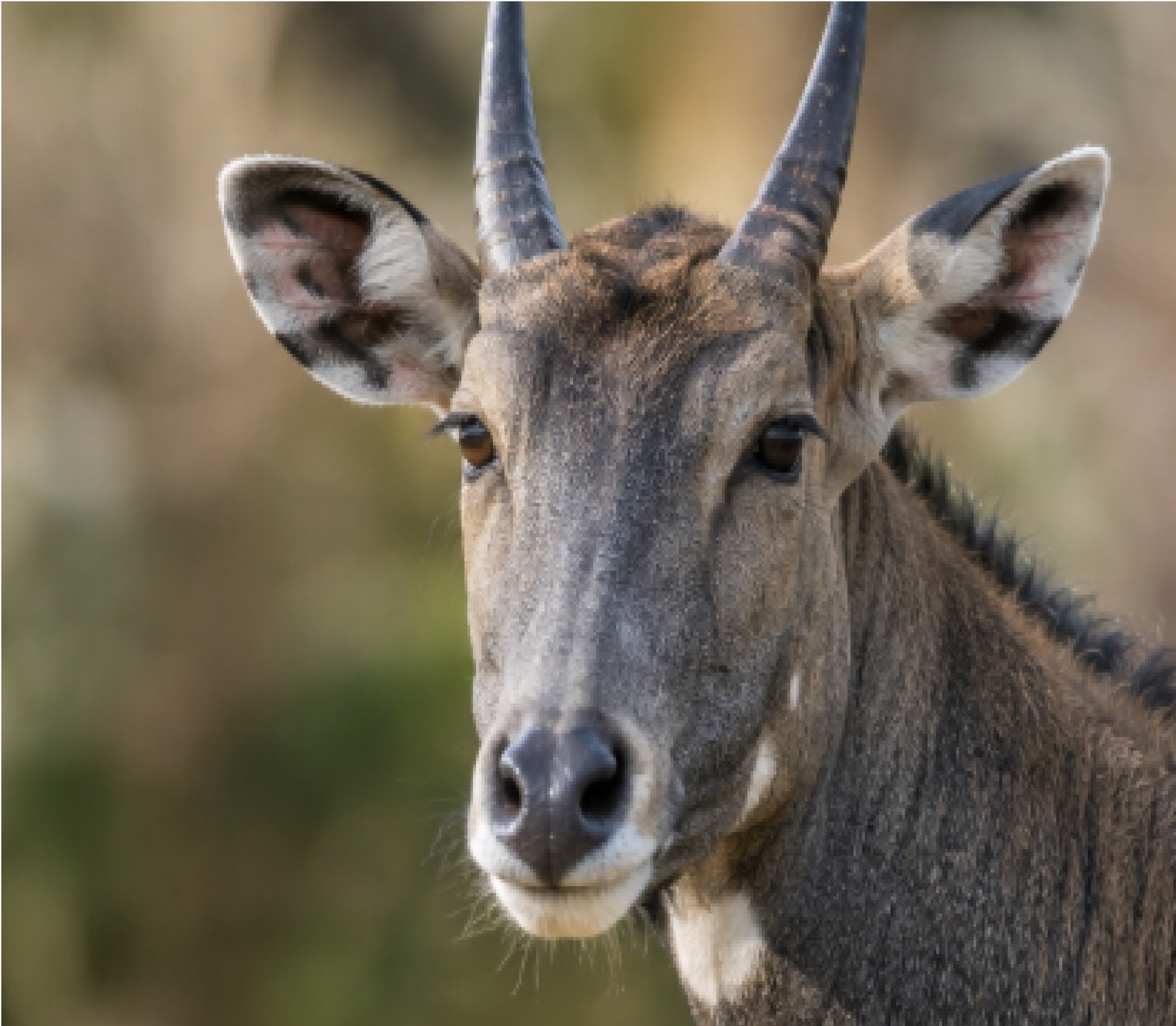
What kind of animal is the Shifu Elephant? We will explain its characteristics, ecology, and habitat. The wild ones are already extinct, and now they are all kept in zoos. Therefore, unfortunately, the wild population that was once abundant no longer exists. However, it is an animal that is strictly managed.


- What is Shifuzou? Basic Stats
- What are the roots and origins of the Père David’s deer?
- Habitat
- What are its characteristics? What kind of creature is it?
- What is the ecology of the Yakushika?
- Vocalizations
- Walking Speed
- Seasonal Activity
- About the young Shifu elephant
- Is the Chinese Elephant an endangered species?
- Can Chinese Elephants be kept as pets?
- Zoos Housing the Species (Japan & Worldwide)
- Recommended articles
What is Shifuzou? Basic Stats
The Pere David’s deer is an even-toed ungulate mammal classified in the Cetacean family of the Mammalia class. Its scientific name is Elaphurus davidianus, its English name is Pere David’s deer, and its Chinese characters are 四不象. Its total length is 170-200cm, and its weight is 150-200kg. The list of information is as follows.
| Japanese(和名) | シフゾウ |
| English(英名) | Pere David’s deer |
| scientific name(学名) | Elaphurus davidianus |
| classification(分類) | Mammalia、 Artiodactyla、Cervidae、Elaphurus 哺乳綱、偶蹄目、シカ科、シフゾウ属 |
| IUCN Status(保全状況) | EXTINCT IN THE WILD |
| Length(体長) | 170-200cm |
| Weight(体重) | 150-200kg |
animal classification
- 界:動物界 Animalia
- 門:脊索動物門 Chordata
- 綱:哺乳綱 Mammalia
- 目:鯨偶蹄目(旧:偶蹄目) Artiodactyla
- 科:シカ科 Cervidae
- 亜科:シカ亜科 Cervinae
- 属:シフゾウ属 Elaphurus
- 種:シフゾウ Elaphurus davidianus
What are the roots and origins of the Père David’s deer?
The Père David’s deer (known in Chinese as Sifuxiang) originated from a species of the deer family that evolved in the wetland and forest regions of China.
🦌 Origins of the Père David’s deer
Scientific name: Elaphurus davidianus
Classification: Family Cervidae (deer), Genus Elaphurus
Native region: Eastern and central China
It belongs to a very ancient deer lineage and has undergone a unique evolutionary path distinct from modern deer species.
The name Sifuxiang (meaning “four unalikes” or “four things that do not match”)
was given because the animal appears to possess the characteristics of various different creatures: the antlers of a deer, the hooves of a cow, the face of a horse, and the tail of a donkey.
🌏 Where did it come from?
A broad look at its evolutionary history reveals the following progression:
Ancient deer ancestor
↓
Diverged into a unique lineage around China
↓
Genus Elaphurus emerged
↓
Modern Père David’s deer
What is particularly interesting is how the species adapted to wetland environments, such as the basins of China’s Yellow and Yangtze Rivers. Traits like long legs, broad hooves, and a natural aptitude for swimming are considered adaptations to this type of habitat.
🇨🇳 And then, extinction in the wild
In modern times, their numbers in China plummeted rapidly, leading to the extinction of wild populations within the country. Subsequently, breeding programs based on individuals kept in European zoos allowed the species to recover, forming the basis of the current population.
In short, the Père David’s deer is an animal with a truly remarkable history:
“A highly unique deer that evolved in China → Nearly went extinct in China → Revived from captive individuals”
Habitat
The Siberian elephant is said to have lived and been distributed in the swamps of northern and central China.
① Original Natural Habitat (Historical Distribution)
Geographic Distribution
Eastern to Central China
Yellow River and Yangtze River (Changjiang) Basin
Estimated current habitat: Jiangsu, Anhui, Henan, and Hubei Provinces
Environmental Type
The Siberian Husky was a typical wetland deer.
Floodplains along rivers
Marshes and marshes
Grasslands around lakes and ponds
Seasonally submerged lowlands
Unlike typical forest deer, its greatest distinctive feature is that it is a “water-dwelling deer.”
② Habitat Adaptation Characteristics
It has morphological characteristics closely linked to its habitat.
Wide-open hooves
→ Less likely to sink in muddy areas
Long legs
→ Able to walk in shallow water
Excellent swimmer
→ Crossing rivers and lakes
Dietary focus on herbaceous plants
→ Eating aquatic plants and wetland herbs
All of these are adaptations to life in wetlands and floodplains.
③ Habitat changes leading to extinction in the wild
Major factors
Conversion of wetlands to farmland
River improvements and flood control projects
Excessive hunting
Floods and wars
In particular,
Flood control in the Yellow River basin
Expansion of agricultural land
went to the disappearance of the wetland ecosystem itself.
By the end of the 19th century, wild populations had completely disappeared.
- A unique habitat under imperial protection
The only place that survived after extinction in the wild is:
Nanyuan Imperial Hunting Grounds in Beijing
An artificially maintained wetland environment
Semi-wild conditions
This is the ancestral population of all extant Siberian elephants.
What are its characteristics? What kind of creature is it?
The Shifu elephant has a long, slender head and large eyes. Its limbs are long and its hooves are large. Its hooves resemble those of a cow, its head like a horse, and its horns like a deer, but it is not any of those animals, hence its name. It is thought that there used to be many of them in China, but they are now extinct. They are good swimmers and can submerge in water up to their shoulders. They usually live in groups in groups.
① Body Type
Height: Approximately 120cm
Body Length: Approximately 2m
Stout and long-legged
Slightly low back, high rump
It gives the impression of being more like a large herbivore that walks near water than a forest deer.
② Head and Horns (Male)
The antlers grow in an unusually unique way.
The branches grow forward.
The opposite direction from that of normal deer.
They are replaced annually.
At first glance, it looks like the antlers are growing in the wrong direction.
③ Tail
Very long (approximately 50cm)
Tussed with hair.
Similar to the tails of donkeys and horses,
This is the most “un-deer-like” feature.
④ Hooves
Wide and easily spread
Hooves are designed to resist sinking in mud and water.
Clearly adapted to wetlands.

What is the ecology of the Yakushika?
Shifu elephants live on grass, leaves, and emergent plants. They are viviparous. During the breeding season, males form harems with many females. The gestation period is 288 days, which is nine months. They can give birth to one baby at a time. They reach sexual maturity at two years and three months of age. They live for about 20 years.
① Lifestyle (How do they live?)
Basic Style
Diurnal and nocturnal (most active in the early morning and evening)
Live in groups (several to several dozen)
Home range centered around water
They are closer to herbivores that roam open wetlands than forest deer.
② Behavioral Ecology
Movement and Behavior
Typically walks slowly
Actively uses muddy and shallow areas
Excellent swimmers
Ability to cross rivers and lakes
In times of danger, they will flee to water rather than run
Pack Structure
Usually in groups of females and calves
Adult males live alone or in small groups outside of breeding season
Low aggression within the pack
③ Diet (What do they eat?)
Food
Exclusively herbivorous
Standalone:
Grassaceae
Wetland herbs
Aquatic plants
Depending on the season:
Young shoots
Leaves
Rhizomes
Specialized diet for wetland plants
④ Breeding Habits
Breeding Season
Mainly summer (June-August)
Males use their horns for display
Voluntary fighting is rare
Birth
Gestation Period: Approximately 9 months
Litter Size: Usually 1 calf
Calves are raised in the secluded areas of grass and brush.
What are the natural enemies of the Yakushika?
Shifu elephants are already extinct in the wild, so there is nothing to show for it.

Vocalizations
Père David’s deer have a much wider range of vocalizations than one might expect from the typical image of a deer.
🦌 Males: During the breeding season, they may emit low, growling sounds or deep, bellowing calls (like “buoo” or “guoo”).
🦌 Females and Fawns: They may make short calls when alert or to communicate between mother and fawn.
⚠️ Threat/Excitement: They may also make snorting sounds or breathe heavily.
Males, in particular, use low-pitched calls to announce their presence during the breeding season, making them unique in their behavior as well as their appearance.
Walking Speed
Regarding their walking speed, Père David’s deer are not built for high-speed running like cheetahs; they are essentially adapted for walking slowly and navigating wetlands.
🚶 Normal walking: Generally at the pace of a human’s brisk walk.
🏃 Fast walk/Trot: Capable of moving quite quickly when sensing danger.
💨 Running: Difficult to determine a precise top speed due to a lack of reliable measurements.
🌊 Swimming: Highly skilled swimmers with excellent mobility in waterside areas.
Père David’s deer have broad hooves, making it easy for them to move across wetlands and muddy terrain. Consequently, the ability to move stably through waterside and wetland environments was likely more important to their survival than sheer speed.
Seasonal Activity
🦌 Seasonal Activity of Père David’s Deer
| Season | Main Activities |
|---|---|
| 🌸 Spring | Grass begins to grow, and foraging activity intensifies. Females enter the birthing season. |
| ☀️ Summer | Actively feed on grasses and aquatic plants. May spend the hottest parts of the day near the water. Fawns continue to grow. |
| 🍂 Autumn | Breeding season (rut). Male activity becomes particularly intense; fighting with antlers and vocalizing are common. |
| ❄️ Winter | Breeding season ends; life centers on foraging. They remain active in the cold, though vegetation is less abundant than in spring and summer. |
Autumn is Particularly Important
The autumn breeding season is the most dramatic part of the Père David’s deer’s annual cycle. Males compete with one another using their antlers and bodies, vocalizing and moving actively around the females.
Meanwhile, the cycle involves pregnant females giving birth between winter and spring, with the offspring growing throughout the summer.

About the young Shifu elephant
① Basic Information about the Pup
Number of Pups Born: Usually 1 (Rarely Twins)
Birth: Early Summer to Summer
Birth Weight: Approximately 11-13kg
Standing: Able to stand within a few hours of birth
Typical of deer, they are precocial.
② Physical Characteristics
Body Color/Pattern
Light Yellowish Brown
White Spots All Over the Body
Serves as Protective Coloration
Spots Disappear as the Pup matures
Body Shape
Long Legs, Slender
Small Head, Large Eyes
Very Hard to See in Grass or Wetlands
③ Behavioral Ecology
Hiding Behavior
First Weeks:
Mother forages at a distance
Cubs lie low and wait in grass or wetland vegetation
Stay motionless and reduce scent
Extremely important for predator control
Begins moving
Begins following mother at 1-2 weeks old
Gradually joins herd behavior
④ Nursing and dietary changes
Nursing
Mainly breastfeeding (several months)
Mother is very attentive
Weaning
Begins consuming solid foods at 3-4 months old
Learns wetland plants early
Is the Chinese Elephant an endangered species?
When the Chinese Elephant was introduced to Europe in 1865, it was already extinct in the wild. It is said that it used to live in China. A herd of Chinese Elephants had been owned by the Chinese Emperor Tongzhi for generations. During the Boxer Rebellion in 1900, the gardens where the Chinese Elephants were kept were occupied by German troops, and all the remaining Chinese Elephants were shot and eaten by soldiers, leading to their extinction. Since then, more have been bred in Europe, and plans are underway to return the bred animals to the wild. There are currently a population of over 5,000.
Conclusion (Most Important Points)
The Siberian elephant is
classified as “Extinct in the Wild (EW).”
Official Conservation Status
IUCN (International Union for Conservation of Nature) Classification
Category: EW (Extinct in the Wild)
Meaning:
Extinct in the wild
However, it survives in captivity and under management.
Not completely extinct (EX).
Why did they become extinct in the wild?
Large-scale loss of wetlands
Agricultural land conversion and flood control
Overfishing
Floods and wars
Their wetland-dependent ecology made them particularly vulnerable to environmental changes.
Can Chinese Elephants be kept as pets?
Chinese Elephants are extinct, and cannot be kept by the general public. They are now strictly managed in zoos and other facilities.
① Are they actually kept in captivity?
Yes. They are kept in captivity all over the world.
Main breeding locations
Nature reserves (reintroduction facilities) in China
UK (Woburn Abbey, etc.)
Zoos in Europe and the United States
All existing populations of Shifu elephants have been maintained through artificial captivity and management.
② Why are they possible to keep in captivity?
Biological reasons
Gentle temperament
Adapted to group life
Relatively well adapted to artificial environments
Herbivorous diet is easy to manage
Among deer species, they are considered “suitable for captivity.”
③ Why are private captivity difficult?
① Legal and conservation issues
IUCN: Extinct in the Wild (EW)
Internationally protected species
In many countries:
Private ownership prohibited
Breeding management only by national and research institutions
② Unique captivity environment
Shifu elephants cannot be kept on ordinary farms.
Requirements:
Large area (for herd rearing)
Wetlands/shallow water
Safe ground, even in muddy areas
Water quality control
Fence (high jumping ability)
Requires more space and cost than sika deer.
③ Herd-oriented animal
Cannot be kept alone
Breeding management is essential
Pedigree management is important (due to low genetic diversity)
Zoos Housing the Species (Japan & Worldwide)
Père David’s deer are currently classified as Extinct in the Wild (IUCN: EW), making their care in zoos and conservation facilities crucial.
🇯🇵 Japan
Note the following: As of June 2025, there were three individuals housed across two facilities in Japan; however, the male “Aoba” at Tama Zoological Park died that same month, leaving Tama Zoological Park with zero individuals.
Therefore, regarding current facilities in Japan, one should be cautious about assuming that older information implies the animals can still be seen there today.
Tama Zoological Park (Tokyo): Stopped housing the species as of June 11, 2025.
Asa Zoological Park (Hiroshima): Recorded as one of the facilities housing the species in Japan, but current status should be verified via official information.
They are extremely rare animals to find in captivity within Japan.
🌍 Worldwide
They are housed in more facilities overseas than in Japan. Examples of facilities with confirmed current records include the following:
🇨🇳 China
Beijing Zoo
Shanghai Zoo
Suzhou Zoo
Chengdu Zoo
Changchun Zoological and Botanical Garden
🇩🇪 Germany
Berlin Zoo
Tierpark Berlin
Dresden Zoo
Duisburg Zoo
Schwerin Zoo
🇺🇸 USA
Bronx Zoo
San Diego Safari Park
Lincoln Park Zoo
Memphis Zoo
🇬🇧 UK
Scottish Deer Centre
🇧🇪 Belgium
Pairi Daiza
🇪🇸 Spain
Barcelona Zoo
Zoo Aquarium de Madrid
Recommended articles

コメント