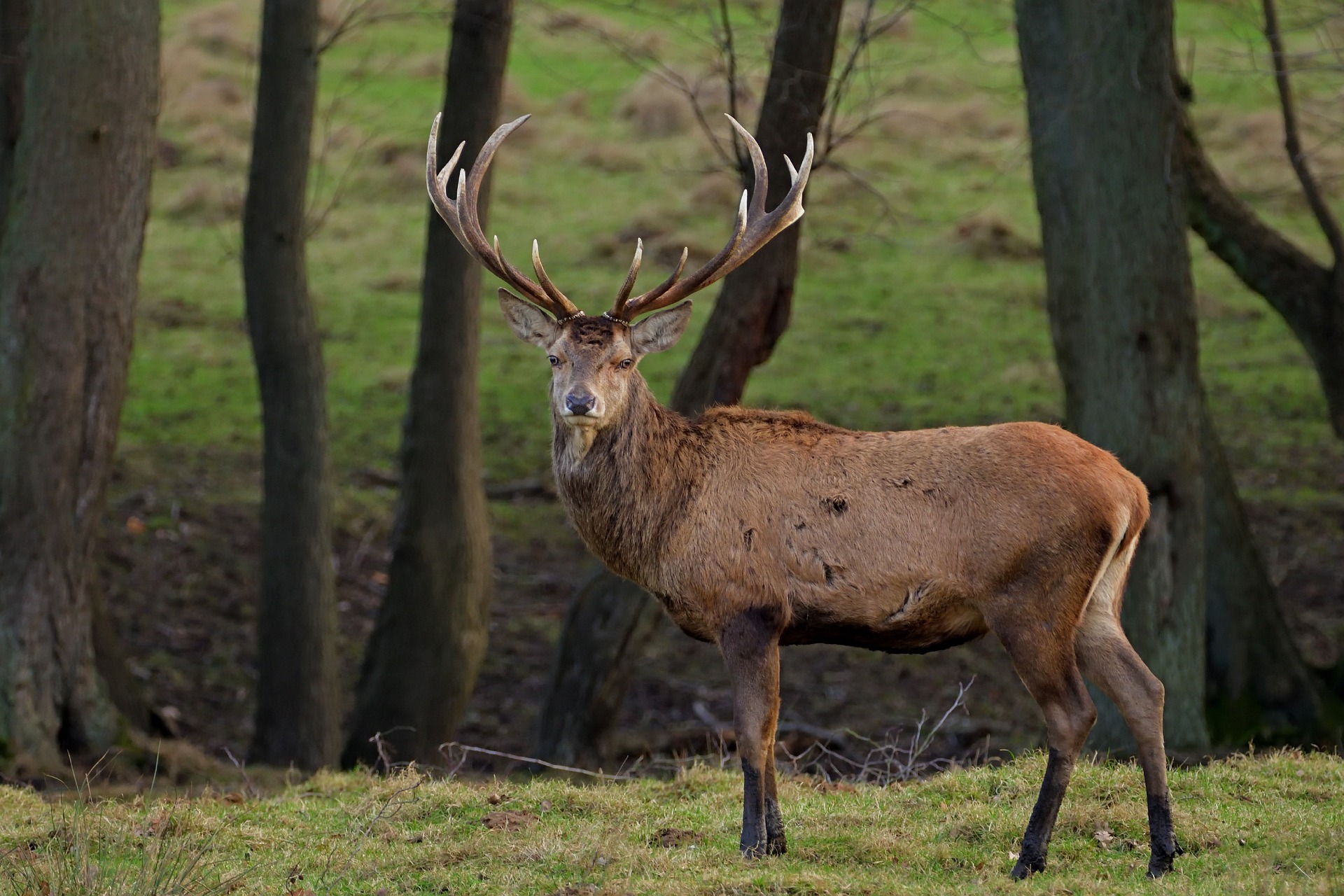
What kind of animal is the Yakushima deer? We will explain its characteristics, ecology, and habitat. This deer is quite rare and can only be seen in Japan. Please be careful as the damage caused by Yakushima deer on Yakushima Island is becoming more serious and they are sometimes considered pests.


- What is Yakushika? Basic Stats
- What are the roots and origins of the Yakushima deer?
- Habitat
- What are its characteristics? What kind of creature is it?
- What is the ecology of Yakushika?
- About Molting
- About Their Calls
- Seasonal Activities
- About Yakushima Deer Cubs
- Are Yakushika endangered?
- Can Yakushika be kept as pets?
- Zoos Housing the Species (Japan & Worldwide)
- Recommended articles
What is Yakushika? Basic Stats
Yaku Island Sika Deer is called Yaku Island Sika Deer in English, and its scientific name is Cervus nippon yakushimae. It is relatively small, with a body length of 70-80cm and a weight of 19-25kg. The list of information is as follows.
| Japanese(和名) | ヤクシカ |
| English(英名) | Yaku Island Sika Deer Yaku Is. Sika Deer |
| scientific name(学名) | Phascolarctos cinereus |
| classification(分類) | Mammalia、 Artiodactyla、Cervidae、Cervus 哺乳綱、偶蹄目、シカ科、シカ属 |
| IUCN Status(保全状況) | LEAST CONCERN |
| Length(体長) | 70~80cm |
| Weight(体重) | 19-25kg |
Taxonomy of Yakushika deer
- 界(Kingdom): 動物界 (Animalia)
- 門(Phylum): 脊索動物門 (Chordata)
- 綱(Class): 哺乳綱 (Mammalia)
- 目(Order): 偶蹄目 (Artiodactyla)
- 科(Family): シカ科 (Cervidae)
- 属(Genus): ニホンジカ属 (Cervus)
- 種(Species): ニホンジカ (Cervus nippon)
- 亜種(Subspecies): ヤクシカ (Cervus nippon yakushimae)
What are the roots and origins of the Yakushima deer?
The Yakushima deer (Yakushika) is a local population of the Japanese deer (Cervus nippon) that is endemic to Yakushima Island.
🌏 Where did they come from?
Broadly speaking, the history unfolds as follows:
Ancestors of the deer family (Cervidae)
↓
The Japanese deer lineage emerged in East Asia
↓
Distribution expanded to the Japanese archipelago
↓
A group of Japanese deer that crossed to Yakushima became isolated
↓
They adapted to the Yakushima environment over a long period
↓
The modern Yakushima deer
🏝️ Why did they evolve uniquely on Yakushima?
Because Yakushima is separated from the mainland by the sea, the deer population that crossed to the island had limited genetic exchange with Japanese deer from other regions.
Furthermore, Yakushima is characterized by an environment that features:
🌧️ Very high rainfall
🌲 Vegetation that varies significantly with elevation
⛰️ Predominantly mountainous terrain
🌿 Unique flora
As a result of generations living in this island-specific environment, differences—such as in physique—emerged compared to the Japanese deer found on Honshu and elsewhere.
Habitat
Yakushika are endemic to Japan. They only live on Yakushima and Kuchinoerabujima in Kagoshima Prefecture, so they can never be seen anywhere else.
- Main Habitat
Yakushima (Kagoshima Prefecture): Distributed throughout the island
Inhabits forests from 0 to 1,900 meters above sea level
Especially common in the mountainous and virgin forests of Yakushima
Environment: Subtropical to temperate forests
Uses a variety of forests, including evergreen broadleaf forests, deciduous broadleaf forests, and coniferous forests
- Habitat Characteristics
May diverge seasonally depending on altitude
Forms groups in the forest, feeding on trees, grasses, and shrubs
Tends to gather near water sources and areas with abundant food
- Ecological Points
Endemic to Yakushima, its habitat is extremely limited
Vulnerable to human activities such as forest development and road construction
What are its characteristics? What kind of creature is it?
Yakushika is a subspecies of Sika deer, and is the smallest of them all. Males have three antlers when mature. Yakushika have short limbs compared to their body size. It is said that they have become small because they have no predators. They tend to live in evergreen broadleaf forests, and their range of movement is small.
- Physical Characteristics
Size: Small to medium (approximately 100-140 cm in length)
Weight: Males weigh 40-60 kg; females weigh slightly lighter
Coat Color: Varies with the seasons
Summer: Reddish-brown
Winter: Dark brown
Horns: Only males develop; they are rounded and not branched.
Ears and tail: Small, adapted for agile movement in the forest.
- Behavior and Personality
Live in groups and are social.
Highly alert and sensitive to sounds and signs.
Herbivorous, feeding on shrubs, grasses, bark, and fallen leaves.
Move freely throughout the forest, active during the day and evening.
- Ecological Characteristics
An endemic subspecies perfectly adapted to the forests of Yakushima.
May change habitat depending on altitude and season.
During the breeding season, males can be seen fighting with their horns.

What is the ecology of Yakushika?
Yakushika eat fallen leaves, fallen fruits, seeds, etc. They may also eat plant leaves and mushrooms. They live for 10-20 years.
- Living Environment
Habitat: Forests throughout Yakushima at altitudes between 0 and 1,900 meters
Forest Environment: Diverse, including evergreen broadleaf forests, deciduous broadleaf forests, and coniferous forests
Popular Life: Moves in small to medium-sized groups
Activity: Mostly active during the daytime and evening hours
- Diet
Herbivory: Shrubs, grasses, bark, fallen leaves, fruit, etc.
Variety of plant life varies depending on the season and altitude
Has the habit of moving around the forest in search of food
- Reproduction
Breeding Season: Autumn (September to November)
Courtship Behavior: Males fight with each other using their horns
Birth: Usually gives birth to a single calf in the spring (April to June)
Rearing: Females raise their calves alone
- Behavior and Sociality
Highly alert and sensitive to the presence of humans and predators
Have clear hierarchy and relationships within the group
Move their habitat depending on altitude and season to efficiently forage for food
- Adaptability
Perfectly adapted to the rainy, mountainous forest environment of Yakushima.
Able to operate in mountainous areas even during the rainy season.
Although they have few natural predators, they ensure safety by working together in groups.
What are the natural enemies of Yakushika?
There are no significant natural enemies in Yakushika’s territory. On the contrary, past surveys have shown that they breed in places such as Shikoku and Kyushu, and sometimes cause damage to farmers without their knowledge. Looking at the data, there are many reports of large numbers of reports.

About Molting
As a subspecies of the Japanese deer (Nihon-jika), the Yakushima deer molts twice a year in accordance with the seasons.
Seasonal Coat Changes
🌸 Spring (approx. April–June): Transition from winter coat to summer coat. The thick, long winter fur sheds, giving way to a shorter, lighter summer coat.
☀️ Summer: The deer sports its summer coat. The fur is relatively short, making it well-suited for regulating body temperature.
🍂 Autumn (approx. September–November): Transition from summer coat to winter coat. The fur gradually grows longer and thicker,
enhancing heat retention for the winter. ❄️ Winter: The coat becomes long and dense, allowing the deer to withstand the cold, even in the mountainous regions of Yakushima.
🌿 Interesting Facts About Yakushima Deer
While Yakushima is often associated with a warm climate, the island experiences significant temperature differences depending on elevation.
Because environmental conditions vary greatly between coastal areas and high-altitude regions, Yakushima deer adapt their coats according to the season and their specific habitat.
During the spring molt in particular, you can observe the deer shedding clumps of winter fur as they transition to their summer coats.
About Their Calls
As the Yakushima deer is a regional population of the Japanese deer (Nihon-jika), their vocalizations share the same basic characteristics.
🔊 Main Calls
Male calls: “Fee-yoh” or “Pee”
These are particularly noticeable during the autumn breeding season.
Males make these sounds when seeking females or signaling their presence.
It is a distinctive call that carries over long distances.
Short calls by females and fawns
These are used for communication between mother and offspring or to signal alertness.
Fawns may call out to stay in contact with their mothers.
Alarm calls
When sensing danger, they emit short, sharp cries or snort.
These serve to alert the rest of the herd to danger.
🍂 Best heard in autumn
The autumn breeding season is the most notable time.
Males become more active than usual, competing for territory and mates. The high-pitched, far-carrying “Feeee” call heard during this period is one of the most iconic sounds of the Japanese deer.
Seasonal Activities
Yaku deer live by moving through the forests of Yakushima Island throughout the year, but their behaviors—such as breeding, giving birth, and foraging—shift with the seasons.
Seasonal Activities 🌸 Spring: Molting from winter coat to summer coat. As vegetation increases, foraging activity intensifies. The birthing season occurs around May and June; mother deer and fawns can be seen. ☀️ Summer: Active foraging on herbaceous plants and tree leaves. They remain active while avoiding the hottest times of day and rest within the forest. Fawns continue to grow. 🍂 Autumn: The peak breeding season. Male rutting intensifies; males compete with one another using vocalizations and antlers. ❄️ Winter: The breeding season ends, and they return to a lifestyle centered on foraging and resting. Coping with the cold becomes crucial in higher-altitude areas.
🍂 Autumn is the Most Distinctive Season
The autumn breeding season marks a particularly significant shift in the Yaku deer’s annual cycle.
Male rutting begins
↓
Males emit a high-pitched whistling call (“Fii—”)
↓
Males compete for females
↓
Mating occurs
↓
Birth takes place the following spring to early summer
This constitutes the cycle.
About Yakushima Deer Cubs
To summarize, Yakushima deer (Cervus nippon yakushimae) cubs differ in physique and behavior from adult cubs, and grow up dependent on their mother and herd.
- Physical Characteristics
Body Length and Weight: At birth, they are approximately 40-50 cm long and weigh approximately 3-5 kg.
Coat Color: Immediately after birth, they are yellowish-brown to reddish-brown with white spots, which disappear as they mature.
Horns: Newborn males do not yet have horns, but small protrusions appear as they mature.
Ears and Legs: Small and soft, but gradually become stronger as they become more active.
- Behavior and Personality
Dependent on Their Mother
They spend the first few months of their lives with their mother, staying with her for food and protection from danger.
Play and Learning
They learn how to forage by nibbling on grass and trees.
They develop motor skills and social skills through jumping and chasing.
- Biological Features
Diet: They are breastfed for the first few weeks of life.
Weaning: They begin eating leaves, grass, and shrub buds at 2-3 months.
Pack Learning: They learn vigilance and social behavior by observing the behavior of their mother and pack.
Growth: After about a year, their physique and behavior become similar to that of an adult, and they begin to participate in pack activities.
Are Yakushika endangered?
Yakushika are not endangered. In recent years, their population has increased, and they are over-breeding as a result of excessive feeding on understory vegetation and fallen leaves. Damage to crops caused by Yakushika has existed since the Edo period, and continues to this day. Damage to field crops and planted trees has occurred, and pest control began in 1978 as a countermeasure against the damage. In 2000, the Yakushika Working Group was established under the Yakushima World Heritage Site Regional Science Committee to take measures against the impact on the natural ecosystem. It has set out a direction to control the population.
- International Union for Conservation of Nature (IUCN) Assessment
Yakushima deer have not been assessed individually, but their parent species, the Japanese sika deer (Cervus nippon), are classified as “Least Concern (LC).”
As a subspecies endemic to Yakushima, their population is stable but their habitat is limited.
- Why they are not endangered
They are found throughout the forests of Yakushima, adapting to altitudes from 0 to 1,900 m.
They live in groups and have a stable reproductive rate.
They have few natural predators, and the areas affected by human activity are limited.
- Points to Note
Limited Habitat: Because they are endemic to Yakushima, they are susceptible to impacts such as forest development and road construction.
Interactions with Humans: They may be found near agricultural land and tourist attractions, and their population may decline due to vehicle accidents.
Conservation Activities: Forest conservation and population management are carried out on Yakushima.
Can Yakushika be kept as pets?
Yakushika have a very strong reproductive ability and can increase in numbers in an instant, so be careful. Recently, some organizations have begun research on management in forests and islands for protection.
- Legal and Conservation Issues
Yakushima deer are a subspecies endemic to Yakushima, and wild individuals are designated as a Special Natural Monument.
Unauthorized capture and captivity are prohibited by law (Act on the Protection of Cultural Properties and Wildlife Protection Act).
Only individuals with special permission from zoos or research institutions may be kept in captivity.
- Ecological and Breeding Environment Issues
Large habitat required
In the wild, they roam throughout Yakushima’s forests (altitudes 0-1,900 m).
Living space is insufficient in homes or small facilities.
They primarily live in groups.
Isolation can lead to stress and poor health.
Diet
Because they eat a wide variety of plants, including grasses, fallen leaves, fruits, and bark, it is difficult to provide an appropriate diet.
High physical activity level
In the wild, they travel long distances to find food, so they are prone to exercise deprivation in captivity.
- Breeding in Aquariums and Zoos
They are sometimes kept only in Japanese zoos and facilities.
Even in captivity, they require a large exercise area and a recreated forest environment.
Specialized staff, including management, health checks, and dietary management, are essential.

Zoos Housing the Species (Japan & Worldwide)
The Yakushima deer (Cervus nippon yakushimae) is a subspecies of the Japanese deer (Cervus nippon) endemic to Japan; it is not a species commonly kept in captivity overseas. Based on current information, the primary facilities housing them are located within Japan.
🇯🇵 Japan
| Zoo/Facility | Location | Notes |
|---|---|---|
| Inokashira Park Zoo | Tokyo | Currently exhibits Yakushima deer; details available on the official website. |
| Shiroyama Zoo | Nagano | Houses 4 males and 4 females (as of the end of February 2025). |
| Kiryugaoka Zoo | Gunma | Houses Yakushima deer; has published official information regarding antler growth and shedding cycles (as recently as 2026). |
| Showa Park Zoo | Akishima, Tokyo | Has kept Yakushima deer since opening in 1963; currently featured on the official website. |
🌍 Overseas
As the Yakushima deer is a subspecies endemic to Japan—native specifically to Yakushima and Kuchinoerabu-jima—instances of them being kept in overseas zoos are extremely rare.
Therefore, unlike species such as Père David’s deer or binturongs—which are widely kept in zoos around the world—it is most appropriate to view the Yakushima deer as a species primarily maintained for conservation and educational exhibition within Japan.
Recommended articles
コメント