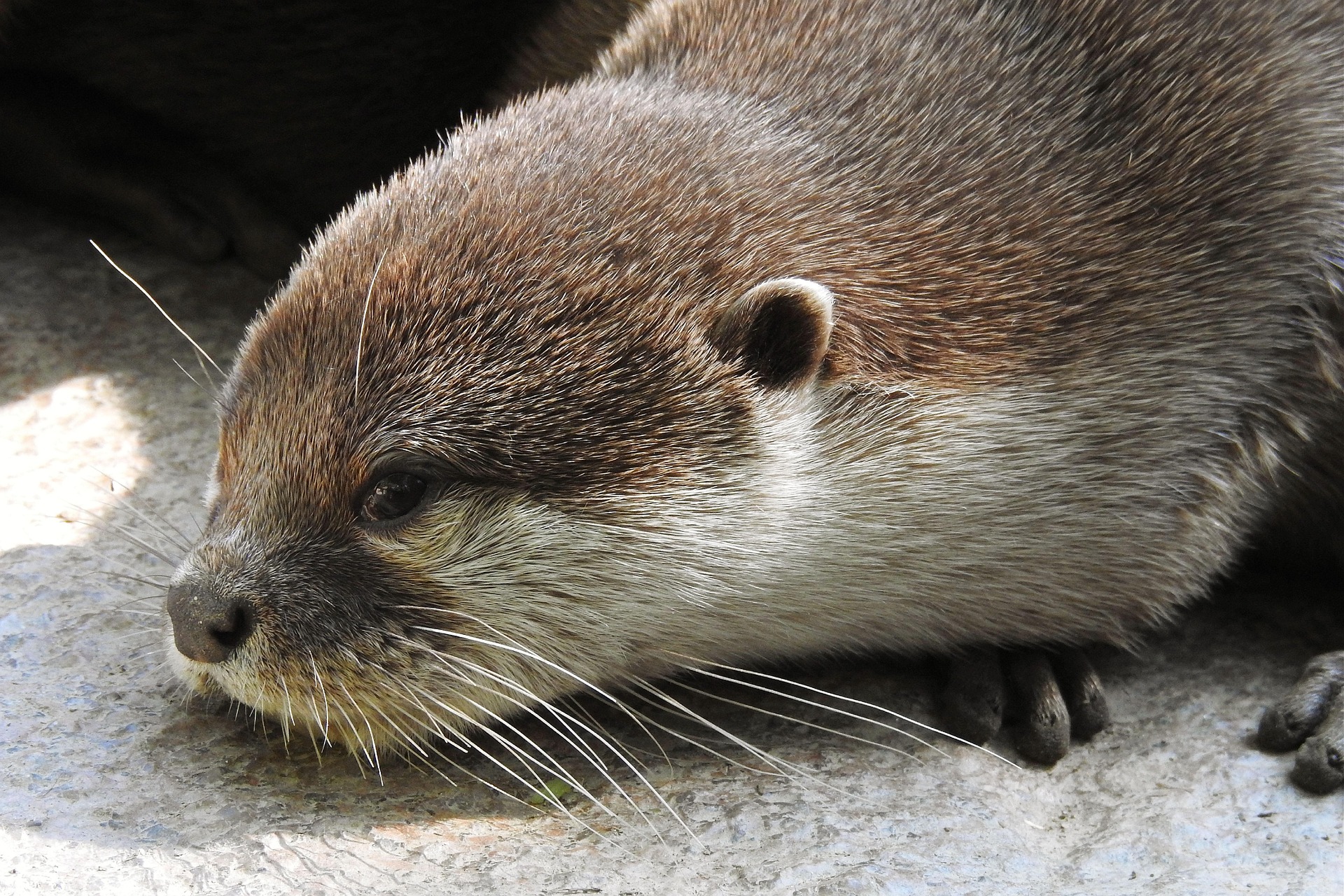
What kind of animal is the Japanese river otter? We will explain its characteristics, ecology, and habitat. Unfortunately, since it is already extinct, there is no footage of it, but we have compiled detailed information about what kind of animal it was in this article.


- What is a Japanese River Otter? Basic Stats
- What are the roots and origins of the Japanese otter?
- Habitat
- What are its characteristics? What kind of creature is it?
- What is their personality like?
- What is their ecology like?
- About Japanese River Otter Juveniles
- Why did the Japanese river otter become extinct?
- Recommended articles
What is a Japanese River Otter? Basic Stats
The Japanese river otter is an otter that lived in Japan. Its English name is Japanese river otter, its scientific name is Lutra nippon, and its kanji is Nihonkawaotta. Its body length is 64.5-82.0cm, its tail length is 35-56cm, and its weight is 5-11kg. The list of information is as follows.
| Japanese(和名) | ニホンカワウソ |
| English(英名) | Japanese river otter |
| scientific name(学名) | Lutra nippon Lutra lutra whiteleyi |
| classification(分類) | Mammalia、Carnivora、 Mustelidae、Lutra 哺乳綱、食肉目、イタチ科、カワウソ属 |
| IUCN Status(保全状況) | NEAR THREATENED |
| Length(体長) | 64.5-82.0cm |
| Weight(体重) | 5-11kg |
Taxonomy of the Japanese River Otter
- 界(Kingdom):動物界 (Animalia)
- 門(Phylum):脊索動物門 (Chordata)
- 綱(Class):哺乳綱 (Mammalia)
- 目(Order):食肉目 (Carnivora)
- 科(Family):イタチ科 (Mustelidae)
- 属(Genus):カワウソ属 (Lutra)
- 種(Species):ユーラシアカワウソ (Lutra lutra)
- 亜種(Subspecies):ニホンカワウソ (Lutra lutra whiteleyi)
What are the roots and origins of the Japanese otter?
The Japanese otter is considered to be an otter lineage that underwent unique evolution within the Japanese archipelago. However, regarding its current classification, debate remains as to whether it is a distinct species or a subspecies of the Eurasian otter.
- Where did its ancestors come from?
The most crucial factor is the timeframe: approximately 1.27 million years ago.
Research analyzing the mitochondrial DNA of a Japanese otter specimen from Kochi Prefecture suggests the possibility that the ancestors of this lineage
migrated from the Eurasian continent to the Japanese archipelago
approximately 1.27 million years ago.
At that time, the topography and sea levels differed significantly from the present, and there were periods when land bridges formed between the Japanese archipelago and the continent. Consequently, it is believed that the ancestral population entered Japan from the continent.
- Relationship with the Eurasian otter
This is a particularly interesting aspect.
In the past, the Japanese otter was considered to be
a Eurasian otter
or, more specifically, a Japanese subspecies thereof.
However, in 1989, based on morphological differences—such as the structure of the skull—Yoshinori Imaizumi and Mizuko Yoshiyuki proposed classifying it as a distinct species, Lutra nippon.
Subsequent DNA research has yielded the following results:
The Japanese otter and the Eurasian otter are very closely related.
However, some Japanese individuals belong to a very ancient, unique lineage.
The individual from Kochi Prefecture is estimated to belong to an ancient lineage that diverged approximately 1.27 million years ago.
- However, the Japanese otter cannot be defined as a single, uniform lineage
This is a key point in current research.
Studies have revealed that individuals from Kochi Prefecture and Kanagawa Prefecture possess different genetic histories. Analysis of specific lineages suggests that the population from Kochi Prefecture belongs to an ancient Japanese lineage that diverged approximately 1.27 million years ago, whereas the population from Kanagawa Prefecture falls within the Eurasian otter lineage, with an estimated divergence time of around 100,000 years ago.
In other words, the animals once known as “Japanese otters” may have actually comprised a mix of different lineages.
Furthermore, a 2019 study examining the Japanese otter holotype found that, while genetically distinct from the Eurasian otter, the degree of difference is not as great as that seen between other closely related species; the study suggests that the classification of the Japanese otter as a distinct species warrants re-evaluation.
- Summary
The prevailing theory regarding their evolutionary history is as follows:
Ancestral Eurasian otters
↓
Arrival in the Japanese archipelago around 1.27 million years ago
↓
Long-term isolation within the archipelago
↓
Evolution into a Japanese otter with unique genetic and morphological traits
↓
Japanese otter
The Japanese otter was officially declared extinct by the Ministry of the Environment in 2012. The last confirmed sighting occurred in Kochi Prefecture in 1979.
It should be noted that the otters currently observed on Tsushima Island are not Japanese otters; they are believed to be Eurasian otters that have dispersed from areas such as South Korea.
Habitat
During the Meiji period, Japanese river otters were found on Rebun Island, and since then they have lived widely throughout Japan, from the mainland to the islands, including Hokkaido, Honshu, Shikoku, Kyushu, Iki Island, Tsushima, and the Goto Islands.
Habitat of the Japanese River Otter
Historical Distribution Range
They inhabited almost all of Japan.
Honshu: Most areas except Hokkaido
Shikoku: All areas
Kyushu: All areas
Some reports suggest that they rarely inhabited Hokkaido.
Main Habitat
Japanese River Otters prefer freshwater habitats and are found in the following environments:
Rivers: Clear streams and midstream areas
Lakes and ponds: Small freshwater lakes and reservoirs
Wetlands: Natural marshes and riparian forests
Brackish water areas near the coast (rarely)
Habitat conditions
A place with good water quality and an abundance of fish, frogs, and other prey
Natural environments where they can build shelters (burrows) on the riverbank
Quiet environments with little human development
Habitat change and causes of extinction
Habitat decline has been due to human development and environmental destruction since the early 20th century
River pollution, deforestation, dam construction, and other factors have fragmented their habitat
Overfishing for fur has also had an impact
It has not been seen in the wild since the 1970s, and is believed to have become extinct around 1979
What are its characteristics? What kind of creature is it?
Japanese river otters have eyes and nostrils located high on their faces so that they can be alert and keep their eyes above the water. They have high-quality fur, which helps prevent them from losing body heat in the water. They often live alone in the middle and lower reaches of rivers, on sandy beaches, and on rocky shores, and are known for their wide range of movement, which can reach up to 10 km. They are nocturnal and often rest during the day.
Characteristics of the Japanese River Otter
Body Size
Body Length: Approximately 60-90cm (approximately 1m including the tail)
Tail Length: 30-40cm
Weight: Approximately 5-8kg
Slightly smaller than the Eurasian otter, with a slimmer overall appearance
Body Shape and Structure
Body: Slender and flexible, shaped for swimming
Legs: Short and webbed
Tail: Thick and rounded, providing balance while swimming
Face: Round face with a blunt nose and small, rounded ears
Coat Color
Back: Dark brown to nearly black
Belly: Light cream to ochre
Face: Around the mouth and chin Their coats are whitish.
Their fur is thick and water-repellent (highly waterproof).
Ecology & Behavior
Nocturnal/Crepuscular: Active at night and in the morning and evening.
Excellent Swimmers: Able to swim underwater for long periods of time.
Diet: Primarily carnivorous, feeding on fish, frogs, shrimp, and small river animals.
Burrows: They build burrows in riverbank caves, tree roots, or under rocks.
Personality & Sociality
Live alone or in family units.
Highly intelligent and territorial.
Highly cautious, they will flee upon sight of humans.
Calls
High-pitched, shrill calls and threatening growls.

What is their personality like?
Japanese river otters are solitary animals that are intelligent and curious, and will try anything. They are friendly creatures, which is why they are wiped out by humans.
Japanese River Otter Personality and Behavior
Highly cautious
Sensitive to human presence and sounds, they will immediately flee if approached
Very timid in the wild, with excellent hiding abilities
Curious but cautious
In rivers and ponds, they show curiosity when searching for prey in the water
However, they do not immediately approach new objects, but rather observe them carefully before acting
Playful and active
Like other otters in the same genus, they enjoy playing and swimming in the water
They use their bodies skillfully in the water to catch fish and shrimp
Highly territorial
They have territories along rivers and will fight if other otters intrude
They mark their territories with body odor and feces
Social only within the family unit
They form small groups with parents, offspring, or siblings
They tend to be solitary, but are cooperative during child rearing
Highly intelligent and adaptable
They rarely use tools, but are creative in their methods of catching prey
They can adapt their behavior to their environment, such as choosing hidden burrows along riverbanks or in rocky areas
What is their ecology like?
Japanese river otters live by eating fish, shrimp, crabs, and frogs. They mate in the water from spring to early summer, and after a two-month gestation period, they can give birth to one or more babies. The babies begin to leave the nest around 56 days after birth and become independent. Its lifespan is thought to be around 20 years.
- Living Environment
Live primarily in freshwater environments such as rivers, lakes, and wetlands.
Prefers areas with good water quality and an abundance of fish, frogs, and other prey.
Builds burrows (hideouts) in riverbank caves, under rocks, or at the base of trees.
- Activity Patterns
Nocturnal/crepuscular (active at night and in the morning and evening).
Typically rests in burrows during the day.
May swim in rivers or move on land.
- Diet
Mainly carnivorous, but omnivorous.
Main Food:
Fish (crucian carp, carp, char, etc.)
Frogs, crayfish, shrimp
Occasionally eats small mammals and birds.
To catch prey, it skillfully dives underwater or chases and captures fish.
- Breeding and Rearing
Breeding Season: Spring to Summer (estimated to be similar to the Eurasian otter)
Gestation Period: Approximately 60 days
Gives 2-5 pups per litter
Raising is primarily done by the mother, with the father and siblings sometimes joining in.
Pups master swimming and hunting skills within a few months.
- Sociality and Territory
They tend to be solitary.
They may form small groups consisting of parents and children or siblings.
They have territories along rivers and will fight if other otters intrude.
They mark their territories with urine and feces.
- Swimming and Diving Ability
Excellent swimmers using their webbed feet.
Able to dive for more than one minute.
They can freely navigate rivers and ponds to catch prey.
Do they have any natural enemies?
The natural enemies of the Japanese river otter are humans. They are the cause of their extinction.

About Japanese River Otter Juveniles
This section summarizes information about Japanese river otter juveniles (babies) based on existing records and related species.
- Size at Birth
Body Length: Approximately 15-20cm
Weight: Approximately 100-200g
Fur is still thin, and the body is only visible when wet.
- Physical Characteristics
Back: Dark brown to nearly black, underside: Light color
The white part of the face is barely noticeable, and the overall color is dark.
Ears and tail: Small, rounded
Eyes are born closed and open around two weeks after birth.
- Growth and Development
Eyes open: Approximately two weeks after birth
Teething: Around three weeks after birth
Walking and Swimming Practice: Introduced to water around one month of age, gradually learning to swim.
Weaning: Transition from breast milk to solid food at approximately two months of age
Independence: Gradually becoming independent from parents at four to six months of age
- Behavior/Personality
They are highly dependent on their mothers, sleeping and playing in their dens.
They learn swimming and hunting skills through play.
They are timid but curious, and often play with their siblings.
- Survival Considerations
In the wild, they are vulnerable to predators and environmental changes.
They may not survive if rivers are polluted or if the water level changes.
They wait in their dens while their mothers are out hunting.
Why did the Japanese river otter become extinct?
Why did the Japanese river otter become extinct? It is also listed in Appendix I of the Washington Convention, and we will explain the reason for its extinction. This animal is now also designated as a special natural monument of Japan.
Overhunting for fur
The Japanese river otter’s fur was known to be of good quality. Because of its excellent heat retention, overhunting was rampant from the Meiji to Showa eras. Records show that 891 otters were caught per year in 1906, but by 1918, this number had dropped dramatically to 7 per year. They were overhunted for their fur all over the country, and the Japanese government panicked and banned hunting throughout Japan.
High economic growth period
Japan was rebuilt after its defeat in World War II, and at that time it was in a period of high economic growth. This was a tragedy for the Japanese river otter. They lost their habitat due to embankment construction, deterioration of water quality, and land development, and they were also poached, so they disappeared at the end of the Showa era. Sightings in the wild decreased. It became extinct before it could be protected.
Possibility of survival
Investigations showed that the last confirmed species was in Kochi Prefecture in 1979, and since then, no sightings have been reported, leading the Ministry of the Environment to define it as an extinct species. However, in February 2017, a video taken by the University of the Ryukyus on Tsushima captured a creature believed to be an otter, and in 2020, a group of Kochi city officials released videos and photos of an animal resembling a Japanese otter in Otsuki Town, Kochi Prefecture. The debate is heating up as to whether it may still be alive. Research by experts is continuing and advancing.
Recommended articles

コメント