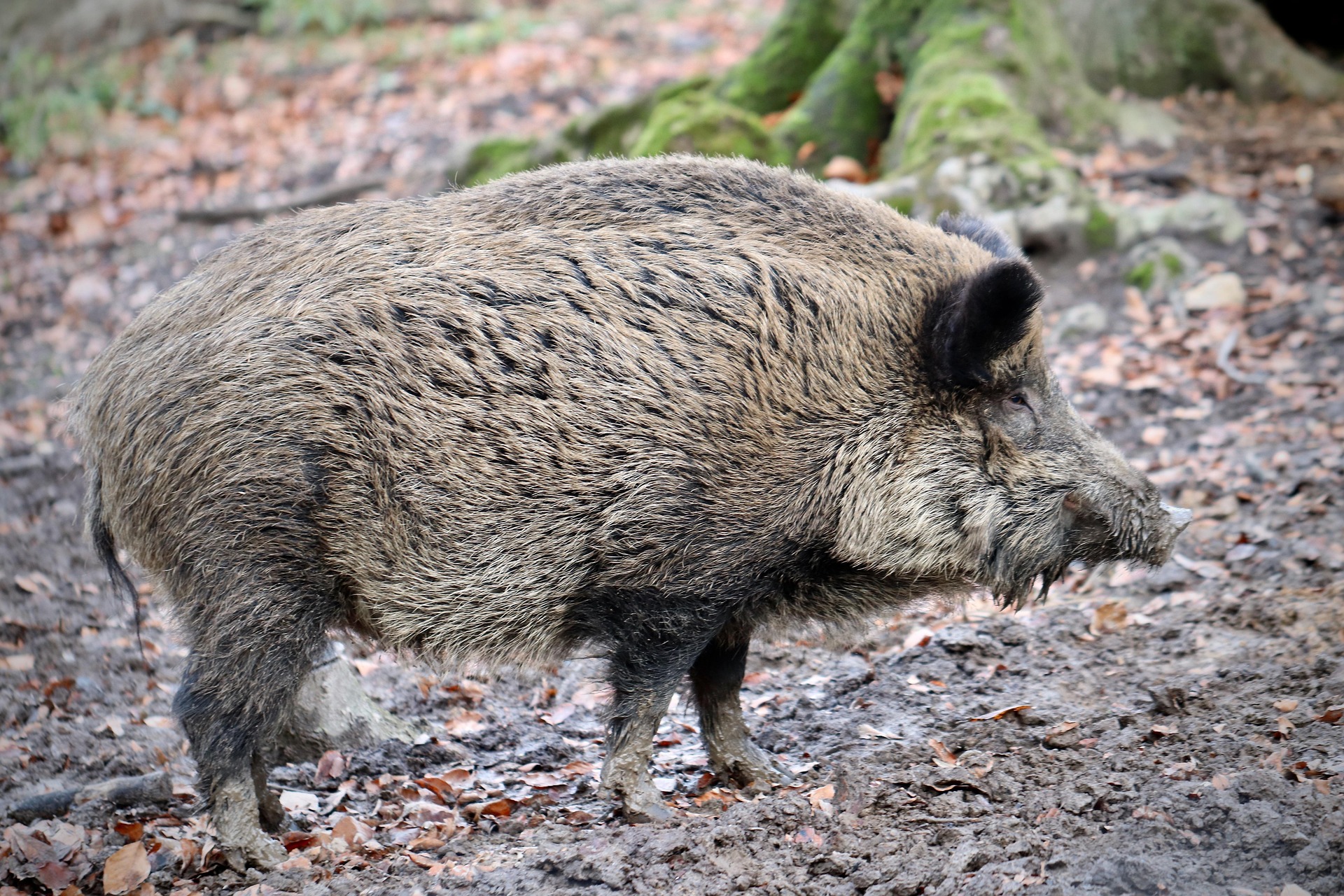
What kind of animal is a wild boar? We will explain its characteristics, ecology, and habitat. Wild boars are widely distributed in the southern part of the Eurasian continent, such as Asia and Europe, and are one of the animals that everyone knows. The important livestock that was developed from wild boars is the pig, and they are closely related animals.


- What is a boar? Basic stats
- What are the roots and origins of the wild boar?
- About their habitat
- What are their characteristics? What kind of creatures are they?
- What is their personality like?
- What is their ecology like?
- How fast do they walk?
- When do they molt?
- Seasonal Behavioral Patterns
- About young wild boars
- Are wild boars an endangered species?
- Can you keep wild boars as pets?
- Zoos Housing the Species (Japan & Worldwide)
- Recommended articles
What is a boar? Basic stats
Wild boars are a type of animal in the order Artiodactyla and family Suidae. Their scientific name is Sus scrofa, their English name is Wild boar, and their kanji characters are 猪・豬. Their size as wild boars is 90-180cm in body length, 50-200kg in weight, and 30-40cm in tail length. The list of information is below. You can see a lot of them in the area.
| Japanese(和名) | イノシシ |
| English(英名) | Wild boar |
| scientific name(学名) | Sus scrofa |
| classification(分類) | Mammalia、Cetartiodactyla、Suidae、Sus 哺乳綱、鯨偶蹄目、イノシシ科、イノシシ属 |
| IUCN Status(保全状況) | LEAST CONCERN |
| Length(体長) | 90~180cm |
| Weight(体重) | 50~200kg |
Difference between pigs and wild boars
What is the difference between pigs and wild boars? We will explain it below. For more information on pigs, please refer to the following article. Humans originally used wild boars as food through hunting and gathering. However, humans artificially bred wild boars to ensure a stable food supply. This is how pigs were born. Wild boars have a very aggressive nature, but by breeding two docile wild boars together, a gentle animal called pig was born.
Characteristics of wild boars
They have black or brown fur, short bodies and large noses. You can see many pictures of them on the internet. Japanese wild boars can be seen in large numbers in Honshu, Shikoku and Kyushu at certain times of the day.
Pig characteristics
The fur varies from individual to individual, with some being white, others pink, etc. They are characterized by a long body and a large but short nose.
Basic classification
Wild boars belong to the mammalian order Artiodactyla and family Suidae.
- 界:動物界 Animalia
- 門:脊索動物門 Chordata
- 綱:哺乳綱 Mammalia
- 目:偶蹄目 Artiodactyla
- 科:イノシシ科 Suidae
- 属:イノシシ属 Sus
- 種:イノシシ Sus scrofa
What are the roots and origins of the wild boar?
Tracing the roots of the wild boar leads us back to the Eurasian continent in the distant past.
🐗 Origins of the Wild Boar
The modern wild boar (Sus scrofa) is believed to have evolved from a lineage within the Suidae family that emerged approximately 5 to 7 million years ago.
Broadly speaking, the progression looks like this:
Ancient Suidae animals
↓
Genus Sus
↓
Sus scrofa
↓
Modern wild boars and domesticated pigs
🌏 Where did they originate?
The early evolution of Sus scrofa is closely linked to the Eurasian region, spanning from Europe to West Asia.
They subsequently spread across a vast area,
Europe
The Middle East
Central Asia
China
Southeast Asia
The Japanese archipelago
…and other regions.
🇯🇵 What about Japanese wild boars?
This is the interesting part.
While Japanese wild boars ultimately descend from the continental lineage that migrated to the Japanese archipelago, they have undergone their own unique evolution due to long-term isolation.
In particular, there are genetic differences based on region, such as:
The Japanese wild boar (Nihon-inoshishi; found on Honshu, Shikoku, Kyushu, etc.)
The Ryukyu wild boar (Ryukyu-inoshishi; found in the Nansei Islands)
Additionally, wild boars were domesticated by humans—starting in places like West Asia—between 9,000 and 10,000 years ago; this process gave rise to the modern domestic pig.
About their habitat
Wild boars are distributed all over the world. They can be seen in the wild mainly in Eurasia.
- Global Habitat
Wild boars (Sus scrofa) have one of the widest distributions of any land mammal.
Main Distribution Areas
Europe: Mediterranean coast to Eastern Europe and western Russia
Asia:
East Asia (China, the Korean Peninsula, and Japan)
Southeast Asia
South Asia (around India)
Central Asia
North Africa: Some areas
Furthermore, due to the feral nature of domestic pigs, they have become established outside their original distribution range, including in North America
South America
Australia
New Zealand
- Habitat in Japan
Japan is primarily home to the Japanese wild boar (Sus scrofa leucomystax).
Distribution
Honshu, Shikoku, and Kyushu
Found throughout most of the country, but not naturally in Hokkaido
Recent sightings have been due to human introductions and escapes
Environmental Conditions
Wild boars are highly adaptable to their environments and can be found in the following places:
Deciduous broadleaf forests and evergreen broadleaf forests
Satoyama (forests, farmland, and settlement boundaries)
Bamboo forests
Abandoned farmland
Riverbanks and wetlands
- Habitat characteristics
① Abundant food resources
Nuts (acorns, chestnuts)
Rhizomes and roots
Earthworms and insects
Crops (rice, sweet potatoes, etc.)
② Hiding places
Bamboo thickets and bamboo forests
Forests with dense understory vegetation
③ Near water sources
Swamps, streams, and creeks
Environments suitable for mud bathing
- Seasonal habitat changes
Spring to summer: Move to higher elevations and forest interiors
Autumn: Broadleaf forests in search of acorns and other nutrients
Winter: Move to lowlands and satoyama to avoid snow accumulation
→ This increases the risk of damage to farmland in winter.
What are their characteristics? What kind of creatures are they?
Wild boars can reach a body length of over 180 cm and a weight of nearly 300 kg. Their coat color can be brown, dark brown, or blackish brown, and they are strong, especially when charging. Wild boars are also good swimmers, and their athletic ability is superior to what you might think. They have large canines in their upper jaws and powerful tusks. Wild boars prefer places close to water, and love to bathe in water and mud. They are mostly active during the day. They are mainly found in safe forests and mountains, and their range of movement is narrow.
- Physical Characteristics
Physique
Body Length: 100-170cm
Weight: 50-150kg (Large males weigh nearly 200kg)
Thick body, with particularly developed neck and shoulders
Center of gravity over the front half of the body
Hair and Skin
Covered in stiff hair called setae
Undercoat grows in winter for better cold protection
Thick skin, making minor injuries less likely to be fatal
Fangs
Males have well-developed upper and lower canine teeth, curved like a sickle
Primarily used for defense, intimidation, and fighting
Continues to grow longer with age
- Senses and Abilities
Sense of Smell
Excellent (main means of exploration)
Can sniff out roots and insects underground
Hearing
Good
Sensitive to even the slightest noise
Vision
Not very good
Dynamic vision is average
- Behavioral Characteristics
Activity Period
Mainly nocturnal to crepuscular
Active during times when few people are around
Mobility
Fast runner (40-50 km/h)
Unaffected by steep slopes, mud, and thickets
Excellent swimmer
Foraging Behavior
Digging the ground with their nose (ratting)
Uses a wide range of food sources, both above and below ground

What is their personality like?
Wild boars are very nervous animals, and have a habit of avoiding anything they see that is unfamiliar. However, if you approach them, they will charge at you and attack you. They have powerful tusks, so even humans can be injured.
- Basic Personality
■ Timid and cautious
Highly sensitive to noise and smell
First flee when sensing human presence
Memorize and avoid the same dangerous places
→ Not an animal that will charge in recklessly.
- Vigilance and Learning Ability
■ Very intelligent
Learns the dangers of traps and electric fences
Understands human rhythms (active at night)
Ability to judge the “safety” and “danger” of feeding areas
■ Becomes bold once habituated
Individuals habituated to humans become less wary
Can be found in residential and urban areas
Not fleeing = high risk
- Conditions for aggressive behavior
Wild boars become aggressive only in exceptional circumstances.
Dangerous cases
Mothers with young
Without a place to escape (cliffs, dead ends)
Injured, weakened, or chased
Individuals that are too habituated to humans
In this case, they will charge as a defensive behavior.
- Differences Between Males and Females
Males
Mostly solitary
Aggressive during breeding season
May suddenly launch attacks
Females
Move in groups
Highly protective of their young
Quick decision-making and leadership skills
- Curiosity
Shows interest in new smells and objects
However, “safety” is their top priority
If they perceive danger, they will retreat immediately
What is their ecology like?
Wild boars are omnivorous, living off earthworms, frogs, plants, crops, lizards, and insects. Breeding season usually begins in December and lasts for about two months. Their lifespan in the wild is up to 10 years. They reach sexual maturity in about a year. Large adult animals eat a lot, so farmers need to manage crops and keep an eye on them.
- Daily Rhythm
■ Activity Times
Nocturnal to Crepuscular
Active in the evening, night, and dawn
Choosing times when there are fewer people around
■ Daytime
Rests in forests and bushes
Hollows, the shade of fallen trees, bamboo groves, etc.
Cool places in summer, sheltered places in winter
- Diet (What they eat)
■ Omnivorous
Eats a wide range of plant and animal matter
Plants
Acorns, chestnuts
Grass, leaves, roots, and rhizomes
Bamboo shoots
Crops (rice, sweet potatoes, corn)
Animals
Earthworms
Insects and larvae
Frogs and snakes
Small mammals and carrion
→ Selects the most efficient food source for each season
- Characteristics of Foraging Behavior
■ Digging Behavior (Ratting)
Digging the ground with their snout
Significantly disturbs the soil
Significant impact on vegetation and agricultural land
■ Range
Several kilometers to several dozen kilometers
Expands when food is scarce
- Seasonal Ecology
Spring
Food mainly consists of shoots, roots, and insects
Birthing Period (Females)
Summer
Increased nighttime activity
Frequent use of water and muddy areas
Autumn
Consumes large amounts of acorns and nuts
Important period for fat accumulation
Winter
Move to lowlands and satoyama
Avoids snow accumulation
Increased damage to farmland
- Mud Baths (Mud Baths)
Purpose
Body temperature regulation
Parasite control
Skin protection
→ Created in water or wetlands
→ Repeated use of the same area
- Social Structure
Live in matrilineal groups
Females + offspring
Adult males are solitary
Strong cohesion within the group
- Breeding Ecology
Breeding Season: Mainly late autumn to winter
Gestation Period: Approximately 115 days
Litter Size: 4-8
Offspring are striped (Salmon-colored)
Do they have any natural enemies?
Wild boars’ predators include tigers, leopards, wolves, and bears.

How fast do they walk?
You can generally assume a wild boar’s normal walking speed is around 2 to 5 km/h.
However, this varies significantly depending on the situation.
🚶 Walking slowly: Approx. 2–3 km/h
🐗 Moving normally: Approx. 3–5 km/h
🏃 Running or fleeing: Approx. 30–40 km/h
⚡ Short-distance charge: Very fast; can reach speeds of around 40 km/h
In short, a walking wild boar moves at a pace similar to a human’s brisk walk, but they become extremely fast once they start running.
When do they molt?
Wild boars molt (shed and replace their fur) primarily in the spring and autumn.
🌸 Spring (around March–May): Winter fur sheds, replaced by shorter, thinner summer fur.
🍂 Autumn (around September–November): Summer fur transitions to winter fur, becoming longer and denser.
❄️ Winter: Long, dense fur to withstand the cold.
☀️ Summer: Short, relatively thin fur.
The spring molt is particularly noticeable; as large amounts of winter fur shed, it can look as though clumps of fur are still clinging to their bodies.
Note that the timing varies slightly by region in Japan; the spring molt tends to occur earlier in warmer areas.
Seasonal Behavioral Patterns
Japanese wild boars exhibit significant seasonal changes in their diet, activity times, home ranges, and reproductive behaviors. The general patterns are as follows:
Season | Main Activities | Diet & Characteristics
🌸 Spring | Activity increases | Digging the ground for bamboo shoots, grass, roots, insects, etc.
☀️ Summer | Adjusting activity to avoid heat | Increased activity at night and early morning; use of water sources and mud wallows.
🍂 Autumn | Intense foraging | Acorns, nuts, crops, etc.; storing nutrients for winter.
❄️ Winter | Foraging for food | Tree roots, rhizomes, fallen nuts, etc.; reduced activity in snowy regions.
🌸 Spring
After surviving the winter, boars become more active in their search for food.
They frequently engage in “rooting” (digging up the ground with their snouts) to find bamboo shoots, new sprouts, grass, and insects.
Spring is also the birthing season, so mother boars accompanied by their young may be spotted.
☀️ Summer
Wild boars dislike the heat and tend to avoid the hottest parts of the day.
Consequently,
Evening → Night → Early Morning
…are the times when they are most active.
They may also visit water sources or muddy areas known as nutaba (mud wallows) to bathe in mud, which helps regulate their body temperature and manage parasites.
🍂 Autumn
This is a particularly crucial season of the year.
With an abundance of nuts—such as acorns—foraging activity intensifies.
In areas with agriculture, they may venture closer to human settlements in search of crops like rice, sweet potatoes, and fruits.
❄️ Winter
As food becomes scarce in winter, they move about searching for whatever is edible.
However, unlike bears, they do not hibernate.
In regions with little snow, they remain active as usual.
About young wild boars
- Name
Common Name: Uribou (Sweet Boar)
Academically: Baby Wild Boar
English: Piglet (also known as a wild boar)
- Appearance
■ Stripes
White to pale yellow vertical stripes on the sides of the body
The name “Uribou” comes from its resemblance to a melon
Functions as protective coloration (makes it less noticeable in grasslands and forest floors)
■ Body Size
Birth Weight: Approximately 0.8-1.2 kg
Rapid growth in the first few weeks after birth
■ Body Type
Round with short legs
Soft fur
- Behavioral Characteristics
■ Very active
Runs around and jumps
Frequently engages in playful behavior
■ Dependent on mother
Close to mother during nursing
Immediately retreats to mother when threatened
- Developmental Process
■ Changes in Stripes
3-4 months: Stripes fade
Around 6 months: Turns brown like an adult
■ Weaning
Gradually introduce solid foods at 2-3 months of age
Learns to forage with mother
- Socialization
Always interacts with siblings
Play = practicing hunting and avoidance behaviors
Learning pack rules
- Survival Rate and Dangers
Dangers in the Natural World
Cold and Hunger
Illness
Accidents
Relationships with People
Do not approach even if seen alone
Mother is always nearby
Mothers can become very aggressive
- Maternal Behavior
Extremely cautious while raising their young
May charge at people and dogs
Do not run away to protect their young
Are wild boars an endangered species?
The wild boar population is very stable and they are not an endangered species. In addition to causing damage to crops, they are also often attacked by people in urban areas, so they are often exterminated as pests.
- Global Assessment (IUCN)
The IUCN Red List, an international standard, categorises wild boars (Sus scrofa) as Least Concern.
This category means that the species is unlikely to become extinct.
Reason:
Very wide distribution range
High reproductive capacity
Extremely adaptable to the environment
- Treatment in Japan
■ Japan as a whole
Not endangered
Rather, agricultural damage
Personal injuries
Ecosystem impact
are concerns.
As a result, they are subject to hunting and capture as pests.
Management species
- Exceptions: Local Population Level
■ Some declines have occurred in some areas
Remote islands
Areas subject to heavy hunting pressure
Areas where habitat has undergone rapid change
In such cases,
Wild boars (Sus scrofa) may be designated as “Near Threatened” or similar on prefectural-level Red Lists.
However, this does not mean that the entire species is endangered.
Can you keep wild boars as pets?
Wild boars are not recommended as pets. Due to their aggressive nature, it is best to view them at a zoo. Currently, you can see information about exhibits by accessing their website.
- Is it legal to keep them? (Japan)
■ Not completely prohibited
Wild boars are wild animals, not livestock.
Therefore,
Capture, acquisition, and keeping are subject to various legal restrictions.
Major related laws:
Wild Animal Protection and Management Act
A permit is required to capture and keep wild individuals.
Municipal ordinances
Some areas restrict or prohibit keeping them.
Capturing and keeping them without permission is illegal.
- Exceptional cases of keeping
■ Main examples of permitted keeping
Zoos and research facilities
Educational and exhibition purposes
Keeping wild boars in pig farms
Individuals and organizations with permission (very rare)
*Picking up and raising wild boars → Generally prohibited
- Actual difficulty of keeping them (this is the biggest problem)
■ They become “different animals” as they grow.
They’re cute when they’re young.
As adults,
They weigh over 100kg.
They develop tusks.
They’re extremely strong.
■ Personality
Difficult to tame
Males in heat are especially dangerous
May charge when startled
■ Facilities
Sturdy fences or cages are essential
They will destroy standard fences
Escape = Potential for serious accidents
Zoos Housing the Species (Japan & Worldwide)
🇯🇵 Japan
The Japanese wild boar (Sus scrofa leucomystax) is kept and exhibited at various zoos across Japan. You can also search for animals housed in JAZA-affiliated facilities.
Notable facilities include:
Asahiyama Zoo (Hokkaido)
Morioka Zoological Park ZOOMO (Iwate)
Yagiyama Zoological Park (Miyagi)
Tama Zoological Park (Tokyo)
Inokashira Park Zoo (Tokyo)
Hamura Zoo (Tokyo)
Toyama Family Park (Toyama)
Hamamatsu Zoo (Shizuoka)
Hiroshima City Asa Zoological Park (Hiroshima)
Fukuoka City Zoological Garden (Fukuoka)
Uminonakamichi Seaside Park “Animal Forest” (Fukuoka)
Miyazaki City Phoenix Zoo (Miyazaki)
Kagoshima City Hirakawa Zoological Park (Kagoshima)
…and others. As the list of animals on display can change, it is best to check the latest information on each zoo’s website before visiting.
Inokashira Park Zoo, in particular, currently exhibits wild boars, and their official website provides details on the exhibit area and the animal’s ecology.
🌍 Worldwide
Wild boars (Sus scrofa) are also commonly kept in zoos overseas.
Examples include:
Tallinn Zoo (Estonia)
Alpenzoo (Austria)
Děčín Zoo (Czech Republic)
Bratislava Zoo (Slovakia)
Minnesota Zoo (USA)
Madrid Zoo (Spain)
Helsinki Zoo (Finland)
Sofia Zoo (Bulgaria)
Ljubljana Zoo (Slovenia)
…among others.
Additionally, some facilities house specific regional subspecies, such as the Thai wild boar (Sus scrofa jubatus).
Recommended articles
コメント