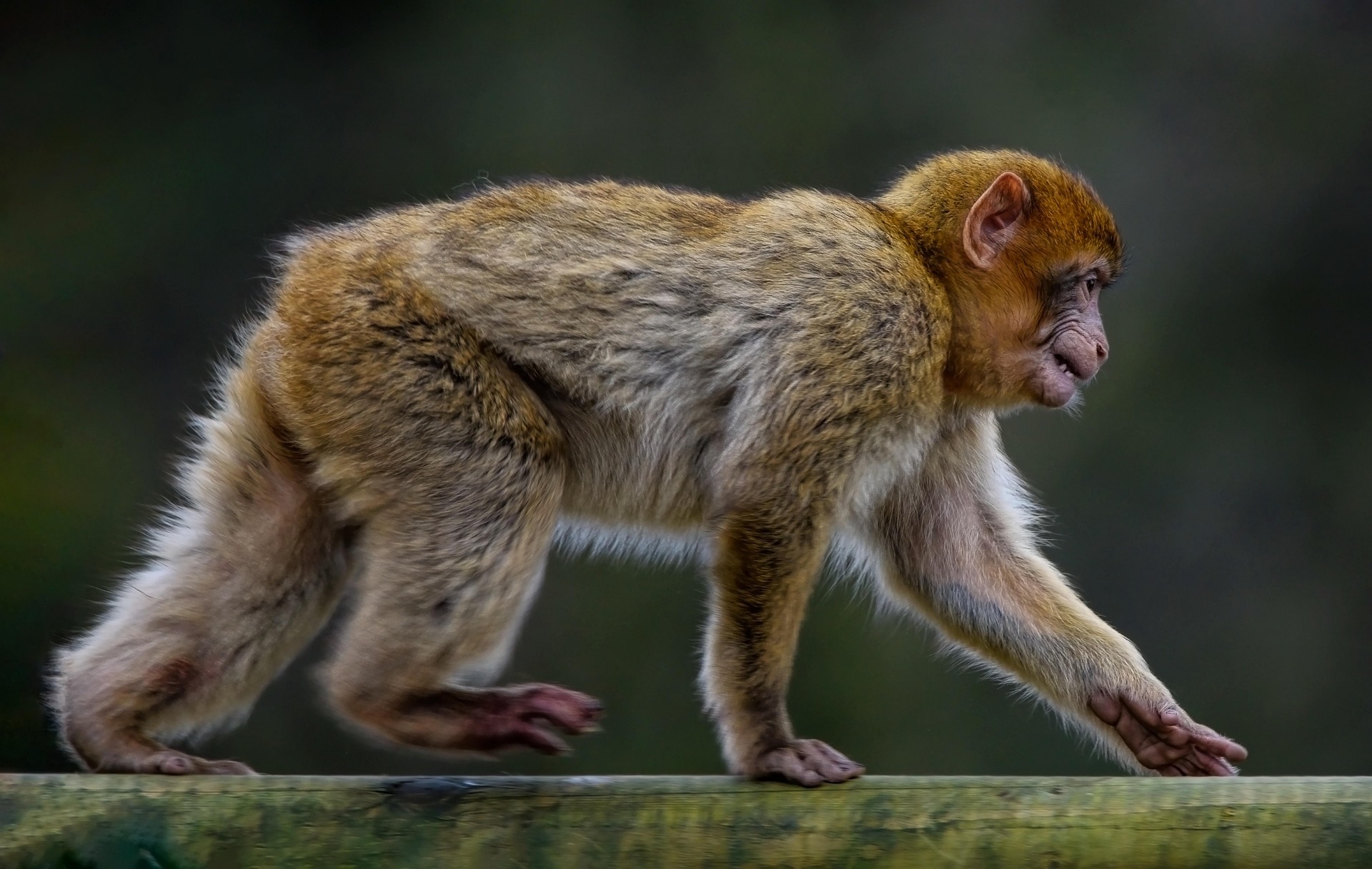
What kind of animal is the Barbary macaque? We will explain its characteristics, ecology, and habitat. You may see a very lively group of several dozen males and females living together in groups of almost equal numbers. They are actually an endangered species.


- What is a Barbary Macaque? Basic Stats
- What are the roots and origins of the Barbary macaque?
- Habitat
- What are their characteristics? What kind of creature are they?
- What is their personality like?
- What is their ecology?
- About Molting
- Vocalizations
- Seasonal Activities
- About Barbary Macaque Baby
- Are Barbary macaques endangered?
- Can Barbary macaques be kept as pets?
- Zoos Housing the Species (Japan & Worldwide)
- Recommended articles
What is a Barbary Macaque? Basic Stats
Barbary macaques are classified as primates in the family Cercopithecidae, order Primates, and genus Macaca. Their English names are Barbary ape and Barbary Macaque. Their scientific name is Macaca sylvanus. They are 50-60cm long and weigh 10-15kg. The list of information is as follows:
| Japanese(和名) | バーバリーマカク |
| English(英名) | Barbary ape Barbary Macaque |
| scientific name(学名) | Macaca sylvanus |
| classification(分類) | Mammalia、Primate、 Cercopithecidae、Macaca 哺乳綱、霊長目、オナガザル科、マカク属 |
| IUCN Status(保全状況) | ENDANGERED |
| Length(体長) | 50-60cm |
| Weight(体重) | 10-15kg |
Taxonomy of Barbary macaques
- 界 (Kingdom): 動物界 (Animalia)
- 門 (Phylum): 脊索動物門 (Chordata)
- 綱 (Class): 哺乳綱 (Mammalia)
- 目 (Order): 霊長目 (Primates)
- 科 (Family): オナガザル科 / マカク属に分類されることもある (Cercopithecidae)
- 属 (Genus): マカク属 (Macaca)
- 種 (Species): バーバリーマカク (Macaca sylvanus)
What are the roots and origins of the Barbary macaque?
While the Barbary macaque (Macaca sylvanus) appears today simply as a “North African monkey,” tracing its evolutionary history reveals a fascinating story.
🌍 Origins in Africa
The macaque genus itself is believed to have originated in Africa.
The Barbary macaque represents a particularly ancient lineage among extant macaques; it is considered one of the earliest branches to diverge within the genus. Molecular clock studies suggest the genus originated approximately 5.5 million years ago.
Broadly speaking, the history unfolds as follows:
Macaques evolved in Africa
↓
Spread from North Africa into Eurasia
↓
Expanded into various parts of Europe
↓
Flourished in Europe during warmer periods
↓
Disappeared from Europe due to cooling climates and environmental changes
↓
The lineage that remained in North Africa became the modern Barbary macaque
🦴 Once abundant in Europe
This is a crucial point.
Although wild populations are currently restricted to parts of Morocco and Algeria, they were once widely distributed across Europe.
Fossils have been discovered in:
🇪🇸 Spain
🇫🇷 France
🇮🇹 Italy
🇬🇷 Greece
🇩🇪 Germany
🇬🇧 The UK
…and elsewhere.
Remarkably, they are believed to have inhabited Germany as recently as 60,000 years ago.
Habitat
Barbary macaques are found in northwestern Africa, including Morocco and Algeria.
- Main Distribution Area
Atlas Mountains in North Africa
Mainly mountainous areas in northern Morocco and northern Algeria
Inhabits forests and mountains at altitudes between 500 and 2,500 meters
Small islands
Wild populations exist in Gibraltar
Historically introduced by humans
- Habitat
Strongly forested
Evergreen forests, deciduous broadleaf forests, and mixed forests
Also uses open forests and rocky mountainous areas
Prefers to be near water sources
Hydrates near rivers and streams
Adapts to changing food environments
Gathers fruits, leaves, seeds, insects, etc.
- Habitat
Live in groups, mainly in mountain forests
Active both in trees and on the ground
Forages and rests in trees
Moves and engages in social activities on the ground
- Habitat Status and Issues
Populations are declining
Habitat fragmentation due to deforestation and agricultural development
Stress from tourism and human contact is also a problem
Conservation efforts are underway in protected areas and national parks
What are their characteristics? What kind of creature are they?
Barbary macaques have very short tails, almost none at all. Their hair is rather long and thick, yellowish gray or grayish brown. Their underside is white and their body is sturdy. Barbary macaques have five fingers on their limbs, which allows them to grasp things. They prefer forested areas, such as valleys and cliffs at altitudes of 1500 to 2500 meters. They are mainly active during the day.
- Appearance
Size: Medium-sized monkey, approximately 50-70cm long, with a barely noticeable tail.
Weight: Males weigh 15-20kg, females 10-15kg.
Fur Color: Yellowish-brown to brown on the back, pale gray to white on the belly.
Face: Pink skin with little hair.
Tail: Compared to other macaques, the tail is very short and barely noticeable.
- Personality and Behavior
Social and socially active in groups.
Groups of approximately 10-50 individuals have a male-dominated social structure.
Highly intelligent and curious.
Plays and explores in trees and on the ground.
Cautious, but not overly timid.
Works together as a group to avoid danger.
- Diet
Omnivorous, but primarily plant-based.
Fruit, seeds, leaves, flowers, and bark.
May also eat insects and small animals.
- Ecological Characteristics
Active both in trees and on the ground
Food gathering is often done in trees
Movement and social behavior on the ground
Reproduction
Gestation period: Approximately 5-6 months
Gives birth to one offspring at a time
Baby grows dependent on the mother
- Other Characteristics
The only macaque species found in North Africa
Having almost no tail, they are also known as “tailless macaques”
Although sometimes called Barbary apes in English, they are actually monkeys (macaques)

What is their personality like?
Barbary macaques are highly social animals and live in groups. They have a social hierarchy, and this applies to both males and females. They have very strong bonds with each other, as they take care of the young in the group, especially those related to them, by carrying and grooming them.
- Sociable and Emphasizing Group Behavior
Barbary macaques are highly social monkeys that live in groups.
There is a social hierarchy within the group, with males protecting the center.
They build relationships with each other through grooming and play.
- Highly intelligent and curious
They actively engage in playful and investigative behaviors, such as tree climbing and ground exploration.
They have a high learning ability, such as being creative when searching for food.
They may observe and learn from humans in tourist areas.
- Wary but not overly timid
They are wary of danger and predators.
However, because the group cooperates to stay vigilant, they act appropriately rather than completely hiding.
In groups that are accustomed to humans, they can be relatively bold.
- Playful and active
Young and young individuals are particularly playful.
They are active, climbing trees, chasing each other, and exploring objects.
They engage in many behaviors that foster socialization.
What is their ecology?
Barbary macaques live on fruits, flowers, leaves, seeds, buds, bark, bulbs, and other plants. They are polygamous, breeding from November to March with a 160-day gestation period and can give birth to 1-3 pups at a time. Newborns weigh 400-500g and are weaned after about six months. Their lifespan is about 20 years.
- Habitat
Main habitat: Atlas Mountains in North Africa (northern Morocco and northern Algeria), Gibraltar
Environment: Forests, rocky mountainous areas, open woodlands
Water source: Prefers to be near rivers or streams
Altitude: Approximately 500-2,500m
- Activity Pattern
Diurnal
Active during the day, resting in trees or on rocky areas at night
Active both in trees and on the ground
Foraging and playing in trees
Movement and social interactions on the ground
- Group Structure
Highly social monkeys living in groups
Group size: Approximately 10-50 individuals
Male-dominant social structure (clear hierarchy)
Strengthens bonds through grooming
- Diet
Omnivorous, but primarily plant-based
Fruits, seeds, leaves, bark, flowers
Also eats insects and small animals
Hydration: Swamps and rivers
- Breeding
Gestation Period: Approximately 5-6 months
Birth: One baby per litter
Baby animals are dependent on their mother for sustenance
Sexual Maturity: Females reach maturity at approximately 4 years, males at approximately 5 years
Do they have any natural predators?
Natural predators of Barbary macaques include eagles, jackals, and even foxes.

About Molting
Barbary macaques shed and regrow their fur throughout the year, but the condition of their coat changes notably with the seasons.
🧥 Spring to Early Summer: Transitioning from Winter to Summer Coat
As the winter chill subsides, their thick winter fur gradually sheds.
Increased shedding
Coat temporarily appears rough or shaggy
New fur begins to grow in
Coat becomes lighter as the weather warms
These seasonal changes are particularly distinct in regions that experience cold winters, such as the Atlas Mountains.
☀️ Summer: A Relatively Light Coat
In summer, the coat becomes thinner than in winter to help them cope with the heat.
Since Barbary macaques inhabit not only the hot regions of North Africa but also high-altitude mountains and areas with snowfall, these seasonal changes in their fur are crucial.
🍂 Autumn: Growing Fur for Winter
As temperatures drop, the coat gradually transitions from the summer style to a winter-ready one.
The cycle involves: old fur shedding → new fur growing → coat becoming thicker.
Preparing for low winter temperatures is especially important for those living in mountainous areas.
❄️ Winter: A Thick Coat to Withstand the Cold
One of the defining characteristics of the Barbary macaque is its remarkable resilience to cold environments—a rarity among monkeys.
Snow can fall in the Atlas Mountains during winter.
Consequently, in winter, the following changes occur:
Fur grows longer
Coat becomes denser
Body heat is better retained
Vocalizations
Barbary macaques are monkeys that use a wide variety of vocalizations to communicate with their troop members. Since they live in groups, these vocalizations serve as a crucial means of conveying information.
🔊 Typical Vocalizations
- Soft “Coo” or “Co” sounds
These are relatively gentle sounds made when individuals are in close contact with one another.
They are thought to be associated with friendly communication, conveying messages such as:
“I’m here” or “It’s okay.”
- Sharp “Kip” or “Chat” alarm calls
When they sense danger in the surroundings or are on alert, they may emit short, sharp sounds.
These serve to warn other troop members of potential danger.
- High-pitched “Kee” sounds
These sounds are made when the monkey is excited or during tense situations, such as conflicts.
They serve to create distance between individuals or to signal one’s state to others.
- Infant vocalizations
Because the bond between mother and infant is vital, young ones use high-pitched, attention-grabbing calls.
They vocalize to attract their mother’s attention, such as when they have strayed away from her.
🐒 Paired with facial expressions and body movements
Barbary macaques do not communicate solely through vocalizations.
They communicate using a combination of:
Facial expressions
Mouth movements
Gaze
Posture
Grooming
Distance from others
…and more.
Grooming, in particular, is a crucial behavior for maintaining social relationships within the troop.
🗣️ Varying vocalizations is key within the troop
Barbary macaques are highly social animals, and their troops are characterized by complex hierarchies and parent-child relationships.
Consequently, they adjust their vocalizations according to the situation:
Gentle interaction
→ Soft sounds
Alertness/Warning
→ Short, sharp sounds
High excitement or conflict
→ High-pitched, loud sounds
Seasonal Activities
Barbary macaques do not hibernate; they remain active throughout the year.
However, in regions like the Atlas Mountains, significant seasonal changes in temperature, snowfall, and vegetation lead to marked differences in their activities.
🌸 Spring: Increasing Activity
A time when the winter chill subsides and vegetation begins to flourish.
Foraging for new shoots, grasses, and other plants
Spending more time moving as a troop
Caring for offspring and engaging in social interactions
Resting together as a troop while grooming
Compared to winter, food is easier to find, and their range of movement expands.
☀️ Summer: Active Foraging
With food abundant, this is a relatively comfortable season for activity.
Fruits
Grasses
Leaves
Seeds
Nuts
Insects, etc.
They utilize these resources depending on the situation.
They rest in the shade or forest during the hottest parts of the day and may forage during cooler hours.
🍂 Autumn: Preparing for Winter
Temperatures begin to drop, and food availability changes in anticipation of winter.
During this period, they cycle through activities such as:
Searching for food → Foraging → Moving → Resting as a troop
…while looking for food sources that will be available in winter.
Their coats also change from autumn through winter, adapting them for the cold.
❄️ Winter: Active Even in the Snow
This is one of the most distinctive characteristics of the Barbary macaque.
They do not hibernate, even when it snows.
In the high altitudes of the Atlas Mountains, they forage while moving through the snow.
Searching for ground-level plants
Feeding on tree buds, bark, etc.
Moving to areas with less snow
Resting close together as a troop
Seeking out sunny spots
They adopt behaviors suited to the cold environment.
About Barbary Macaque Baby
Let’s take a closer look at Barbary macaque (Macaca sylvanus) baby animals.
- Appearance
Immediately after birth, they weigh approximately 0.5-1.0 kg and are very small.
Their coat color is yellowish-brown or reddish, and is lighter and softer than that of adults.
Their tails are very short and barely noticeable even as they grow.
Their pink faces and minimal hair give them a cute appearance.
- Behavior
They stay close to their mother.
For the first few months of their lives, they stay close to their mother, ensuring their safety by cuddling and grooming.
They are playful and active.
They play with other young of the same age, chasing each other and climbing trees.
They learn social skills and motor skills through play.
They will quickly hide behind their mother or the herd in the event of danger.
- Diet
They rely on their mother’s milk for the first few months of life.
At 3-6 months of age, they gradually begin to learn to eat fruits, leaves, insects, etc.
Weaning is completed at approximately 6 months to 1 year.
- Socialization
Cubs learn from their mother and other members of the pack.
They learn grooming and social hierarchy.
They learn how to function and cooperate in a pack through play with other young of the same age.
- Growth
By the time they reach one year of age, their physical size has grown to roughly half its original size.
The cub stage (0-3 years old) is focused on learning and acquiring motor skills.
Females reach sexual maturity at approximately four years, and males at approximately five years.
Are Barbary macaques endangered?
Barbary macaques are endangered. They are listed in Appendix I of the Convention on International Trade in Endangered Species of Wild Fauna and Flora (CITES), so international trade is strictly restricted. Their habitats are destroyed by deforestation and development, and they are also eaten, so they are being overhunted. The biggest threat is poaching, with about 300 macaques being sold annually as spectacles or pets. In Japan, they were designated as a specified animal in 2020.
- IUCN Assessment
Barbary macaques are classified as Endangered (EN) on the IUCN (International Union for Conservation of Nature) Red List.
Wild populations are declining, and the species is considered in need of protection.
- Main Causes of Extinction
Deforestation and Habitat Destruction
Habitat Fragmentation due to Forest Development and Agricultural Expansion in the Atlas Mountains
Human Contact and Hunting
Captivity for Food and Pets
Stress from Human Contact in Tourist Areas
Limited Habitat
Since they are found only in certain areas of North Africa, they are vulnerable to environmental changes.
- Conservation Activities
In Morocco and Algeria, conservation activities are carried out in national parks and protected areas.
Restrictions on Capture and Sale
Management in Tourist Areas and Habitat Conservation
Can Barbary macaques be kept as pets?
As mentioned above, Barbary macaques are designated as endangered species and are listed in the Convention on International Trade in Endangered Species of Wild Fauna and Flora (CITES), so international trade is strictly restricted. Therefore, it is extremely difficult to keep them as pets.
- Endangered Species
Barbary macaques are listed as an IUCN Endangered Species (EN)
Capturing and exporting wild individuals is prohibited by law.
Private ownership and captivity are illegal.
- Ecological and Personality Difficult to Keep
Highly social monkeys that live in groups
Keeping them alone can cause significant mental stress
Highly intelligent and curious
A monotonous environment can lead to behavioral problems due to a lack of play and exploration.
Diurnal and active
Lack of exercise and stress can be serious in captivity.
- Environmental Issues
Their diet is diverse, including fruits, seeds, leaves, and insects, making it difficult to replicate a diet similar to that of their natural environment.
They engage in a lot of arboreal and exploratory activity, requiring ample space.
While their lifespan is extended in captivity, managing their health and mental health is extremely difficult.
Zoos Housing the Species (Japan & Worldwide)
The Barbary macaque (Macaca sylvanus) is currently kept in a relatively large number of zoos, particularly across Europe. As the status of captive populations changes due to transfers and breeding, the following list highlights representative facilities confirmed as of 2026.
🇯🇵 Japan
Japan Monkey Centre (Inuyama City, Aichi Prefecture)
This is currently the primary facility in Japan where Barbary macaques can be seen. The official park map indicates that Barbary macaques are housed in the “African Centre.”
In short, regarding Japan:
🇯🇵 The Japan Monkey Centre is the most important facility for keeping this species.
🇩🇪 Germany
Germany is a country with a particularly high number of facilities housing this species.
Tierpark Berlin
Berlin Zoo
Aachen Zoo
Aschersleben Zoo
Dortmund Zoo
NaturZoo Rheine
Halle Zoo
Erfurt Zoo
Tierpark Nadermann
…and many others.
🇦🇹 Austria
Schönbrunn Zoo (Vienna)
Altenfelden Wildlife Park
Raritätenzoo Ebbs
…and others.
🇫🇷 France
Montagne des Singes
Forêt des Singes
Parc Zoologique de Lunaret
Réserve Africaine de Sigean
…and others.
🇫🇮 Finland
Helsinki Zoo (Korkeasaari Zoo)
Here, the species is not merely on display; the zoo also participates in the EAZA Ex-situ Programme (EEP) for Barbary macaques and supports the conservation of wild populations.
🇨🇿 Czech Republic
Prague Zoo (Zoo Praha)
Confirmed as a facility housing Barbary macaques.
🇬🇧 United Kingdom
Edinburgh Zoo
Blair Drummond Safari Park
Folly Farm
Trentham Monkey Forest
…and others, where husbandry and conservation activities have been confirmed. 🇳🇱 Netherlands
Apenheul Primate Park
Ouwehands Dierenpark
Eindhoven Zoo
…and others.
🇮🇹 Italy
They are housed at facilities such as Parco Natura Viva. Collaboration with conservation organizations has also been confirmed.
🇬🇮 Gibraltar
Alameda Wildlife Conservation Park
Gibraltar, famous for its wild Barbary macaques, also has a conservation facility.
Recommended articles
コメント