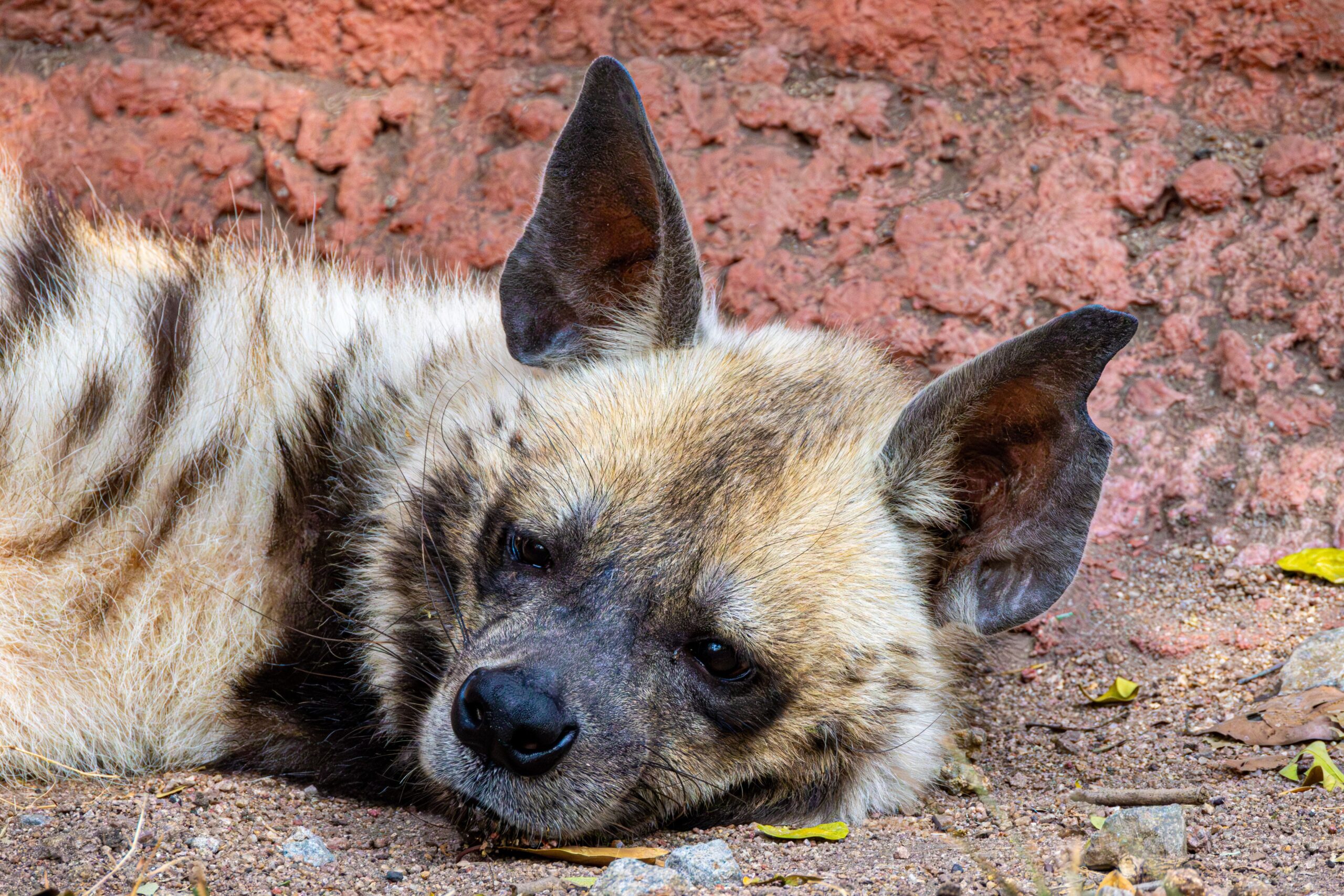
ハイエナはどんな動物?特徴、生態、生息地について解説します。アフリカからアジアに広く生息している動物です。しかしながら意外と生息数は安定していない亜種も多く、中には絶滅危惧種に指定されているハイエナも少なくないのが実態ですので解説していきます。


ハイエナとは? 基本ステータスについて
ハイエナは食肉目ハイエナ科に属する動物。体長1.3m、体重は62-70kg。漢字では鬣犬で学名はTamias。イヌに似た姿をしてますが、ジャコウネコ科に近い動物です。基本的な情報の一覧は以下の通り。体が大きく、生活では肉に群がり、食べるイメージが強いでしょう。悪役として強力なイメージがある動物です。
| Japanese(和名) | ハイエナ |
| English(英名) | hyena |
| scientific name(学名) | Tamias |
| classification(分類) | Mammalia、Carnivora、 Hyaenidae 哺乳綱、食肉目、ハイエナ科 |
| IUCN Status(保全状況) | LEAST CONCERN |
| Length(体長) | 1.3m |
| Weight(体重) | 62-70kg |
ハイエナのルーツ、起源は?
ハイエナ(科名:Hyaenidae(ハイエナ科))は、見た目から「犬の仲間」と思われがちですが、実際にはネコ科に近い系統(ネコ型類=Feliformia)に属する肉食哺乳類です。イヌ科とは遠い親戚で、独自の進化を遂げたグループです。
1. 起源は約2200万年前(中新世)
ハイエナの祖先は、約2200万年前のユーラシア大陸で誕生したと考えられています。初期のハイエナは現在のような骨を砕く大型捕食者ではなく、ジャコウネコのような小型で細身の動物でした。
代表的な初期ハイエナ:
- Plioviverrops(プリオビベロプス)
- 約2000〜2200万年前に生息
- 体格は小型
- ジャコウネコに似た姿
- 樹上生活に近い特徴を持っていたと考えられる
この時代のハイエナは「死肉を食べる専門家」ではなく、小動物を捕食する雑食寄りの動物でした。
2. 犬のようなハイエナへ進化(1500万年前頃)
中新世になると草原環境が広がり、走って獲物を追う能力が重要になりました。
この時代、ハイエナは大きく2方向へ進化します。
A. イヌ型ハイエナ
特徴:
- 長い脚
- 走る能力が高い
- 群れで狩りをする種類も存在
代表:
- Chasmaporthetes(チャンスマポルテテス)
この仲間は一時期、北アメリカにも進出しました。しかし、イヌ科動物の進出や環境変化により多くが絶滅しました。
B. 骨を砕く大型ハイエナ
現在のハイエナに近い進化です。
特徴:
- 強力な顎
- 太い歯
- 骨まで食べる能力
- 死肉利用能力の向上
代表:
- Pachycrocuta brevirostris(パキクロクタ)
-史上最大級のハイエナ
-体重100kg以上に達した可能性
-更新世のユーラシアに生息
現在のブチハイエナなどの祖先につながる系統です。
3. アフリカへの進出
ハイエナの祖先はユーラシアで誕生した後、アフリカへ移動しました。
約1000万年前以降、アフリカでは大型肉食動物として発展し、現在の:
- ブチハイエナ
- シマハイエナ
- カッショクハイエナ
- アードウルフ
につながります。
分類について
ハイエナには以下のような亜種が存在します。以下はWikipediaからの引用です。4種が自然では生息しており大きな違いはそれほどありません。
Crocuta crocuta
ブチハイエナは哺乳綱食肉目ハイエナ科ブチハイエナ属に分類される食肉類。アフリカ大陸に生息しており個体数は安定しています。体長95-165cm。尾長25-36cm。体高70-90cm。体重40-86kg。主に草原に生息しており夜行性の動物です。
Hyaena hyaena
シマハイエナはハイエナ科シマハイエナ属に分類されるハイエナ。体長100–120cm、尾長25–45cm、体重25–55kg。アフリカ大陸から中東に生息しており個体数は安定しています。主に草原に生息しており夜行性の動物です。
Hyaena (Parahyaena) brunnea
カッショクハイエナはハイエナ科シマハイエナ属に分類される食肉類。体長110 – 140㎝。尾長20 – 27cm。体高65 – 88cm。体重35 – 50kg。アフリカ大陸に生息しており個体数は減少しているため、準絶滅危惧種に指定されています。主に草原に生息しており夜行性の動物です。
Proteles cristatus
アードウルフは別名ツチオオカミ。体長55–80cm,尾長20–30cm,体高45–50cm,体重8–14kg。主に草原に生息しており夜行性の動物です。毛衣は灰色や黄灰色、黄褐色や黄白色、赤褐色で上記の種類とは違いがあります。
生息地について
ハイエナは主に南アフリカなどアフリカ大陸に分布していますが、中東からインド、ネパールでも見ることが可能です。
① 主な分布地域
- アフリカ大陸が中心
- サハラ砂漠以南の広い地域
- 一部の種は
- 中東(アラビア半島)
- インド周辺
にも分布
● ブチハイエナ(最も有名)
- サバンナ
- 草原
- 半砂漠
- 開けた森林
ライオンと同じ地域に生息。
● シマハイエナ
- 乾燥地帯
- 岩山
- 砂漠周辺
- 人里近くに現れることもある
人間の生活圏に適応しやすい。
● カッショクハイエナ
- 山岳地帯
- サバンナ
- 草原
標高の高い場所にも強い。
● アードウルフ(昆虫食のハイエナ)
- 草原
- 半乾燥地帯
シロアリが多い場所に限定される。
② 環境の特徴
- 暑く乾燥した地域が中心
- 水が少なくても生きられる
- 昼は岩陰や巣穴で休み、夜に活動
③ 巣(ねぐら)
- 自分で穴を掘ることもある
- 他の動物の巣穴を利用することも多い
- 子育て期は安全な場所を重視
④ 人との距離
- 国立公園・保護区
- 牧草地
- 郊外や村の近く
環境への適応力が非常に高い。
特徴は?どんな感じの生物なのか?
ハイエナは主にサバンナから砂漠地帯に生息しており、夜行性で、日中は穴や岩の隙間などで休むことが多いです。巣穴にある骨は非常食であることが多く骨などを食べて耐え凌ぐことも多いです。歯列は門歯が上下3対ずつ、犬歯が上下1対ずつ、小臼歯が上顎4対・下顎3対、大臼歯が上下1対ずつの計34本。他の肉食動物が食べ残すような骨を噛み砕き、有機成分を消化吸収できる性質を持っています。趾の数は前後肢とも4本。
① 見た目の特徴
- 前脚が長く、後脚が短い独特の体型
- 背中が前下がり
- 顎と首が太く、頭が大きい
- 種によってはたてがみ状の毛
歩き方が独特で迫力がある。
② 驚異的なあごの力
- 哺乳類最強クラスの咬合力
- 太い骨も噛み砕ける
- 骨・皮・角まで食べる
「骨まで食べる掃除屋」。
③ 実は優秀なハンター
- 死肉あさりの印象が強いが
狩りで獲物を仕留める割合が高い - チームワークで大型獲物も狙う
- 持久力が高く、長距離追跡が得意
④ 非常に賢い
- 問題解決能力が高い
- 仲間の関係を覚える
- 状況判断が早い
霊長類並みと言われる知能。
⑤ 社会性が強い(特にブチハイエナ)
- 大きな群れ(クラン)で生活
- メスがオスより強い母系社会
- 厳密な序列がある
動物界でも珍しい社会構造。
⑥ 声とコミュニケーション
- 笑っているような鳴き声(実際は警戒や興奮)
- うなり声・悲鳴など多彩
- 匂いによるマーキングも多用
⑦ 種類による違い
- ブチハイエナ:最も大型・社会性が強い
- シマハイエナ:単独行動が多い
- カッショクハイエナ:中型
- アードウルフ:昆虫食(シロアリ専門)
性格はどんな感じ?
ハイエナはしっかりとした社会性が構築されている動物で、群れを形成します。そのためか、とても規律を守る生き物です。ハイエナの群れのリーダーはメスであるケースが多いです。
① とても知能が高い
- 状況判断が早い
- 他個体の立場や力関係を理解する
- 「今は引く/今はいける」を見極める
無謀ではなく計算型。
② 集団では大胆・強気
- 数で優位な時はライオンにも立ち向かう
- 仲間と連携して行動
- 堂々と獲物を奪うこともある
強者には集団戦術。
③ 単独では慎重
- 危険を感じるとすぐ撤退
- 無理な勝負はしない
- しつこく追わない場合も多い
生存第一主義。
④ 社会性が非常に強い(ブチハイエナ)
- 厳しい上下関係
- メスがオスより支配的
- 子どもも序列を学びながら成長
社会ルール重視。
⑤ 気性は荒い?
- 興奮すると攻撃的になる
- 争いは声・威嚇で解決することが多い
- 無意味な戦闘は避ける
「好戦的」より「現実的」。
⑥ 好奇心と警戒心の両立
- 新しいものに興味を示す
- 近づく前に必ず様子見
- 人間もよく観察する
⑦ 種類で性格差
- ブチハイエナ:大胆・社交的
- シマハイエナ:警戒心が強く単独行動
- カッショクハイエナ:比較的おとなしい
- アードウルフ:臆病で温和
生態はどんな感じ?
ハイエナは獲物を横取りしたり、他の動物の死骸を漁ったりすることが多いですが狩りもします。基本的には群れで行い、狩りの成功率は60〜70%。主食にシマウマなどの大型哺乳類やシロアリなど昆虫、鳥類を捕獲します。繁殖は4カ月くらいの妊娠期間を経て一度に平均2頭の子供を産みます。寿命は20年程度と長く、飼育下では40歳まで生きた例もあります。
① 活動時間
- 主に夜行性
- 夕方〜夜明けに活発
- 昼間は巣穴や岩陰で休息
暑さを避ける合理的な生活。
② 社会構造(特にブチハイエナ)
- クランと呼ばれる群れで生活
(10〜80頭以上のことも) - 母系社会
- 厳密な序列あり
- 狩り・子育て・防衛を分担
非常に組織的。
③ 食性
- 完全な肉食寄りだが利用範囲が広い
- 自分で狩る割合が高い
- 死肉も無駄なく利用
- 骨・皮・内臓まで食べる
サバンナの「掃除役」。
④ 狩りの方法
- 持久走で獲物を疲れさせる
- 群れで連携して包囲
- 大型草食動物(ヌー・シマウマ)も対象
⑤ 繁殖と子育て
- 年中繁殖可能(地域差あり)
- 妊娠期間:約110日
- 出産数:1〜3頭
- 子育ては主に母親
- 幼獣は序列を学びながら成長
⑥ 巣(ねぐら)
- 地下の巣穴を使用
- 他動物の巣穴を再利用することも
- 出産・育児期は特に重要
⑦ 寿命
- 野生:約12〜20年
- 飼育下:20年以上生きることも
天敵はいるのか?
ハイエナの敵はライオンです。ライオンとハイエナの生活圏は重なっているため、ライバル関係になることで、獲物の取り合いになりやすいです。ライオンの縄張りに侵入すると、捕食されてしまうこともあります。
換毛について
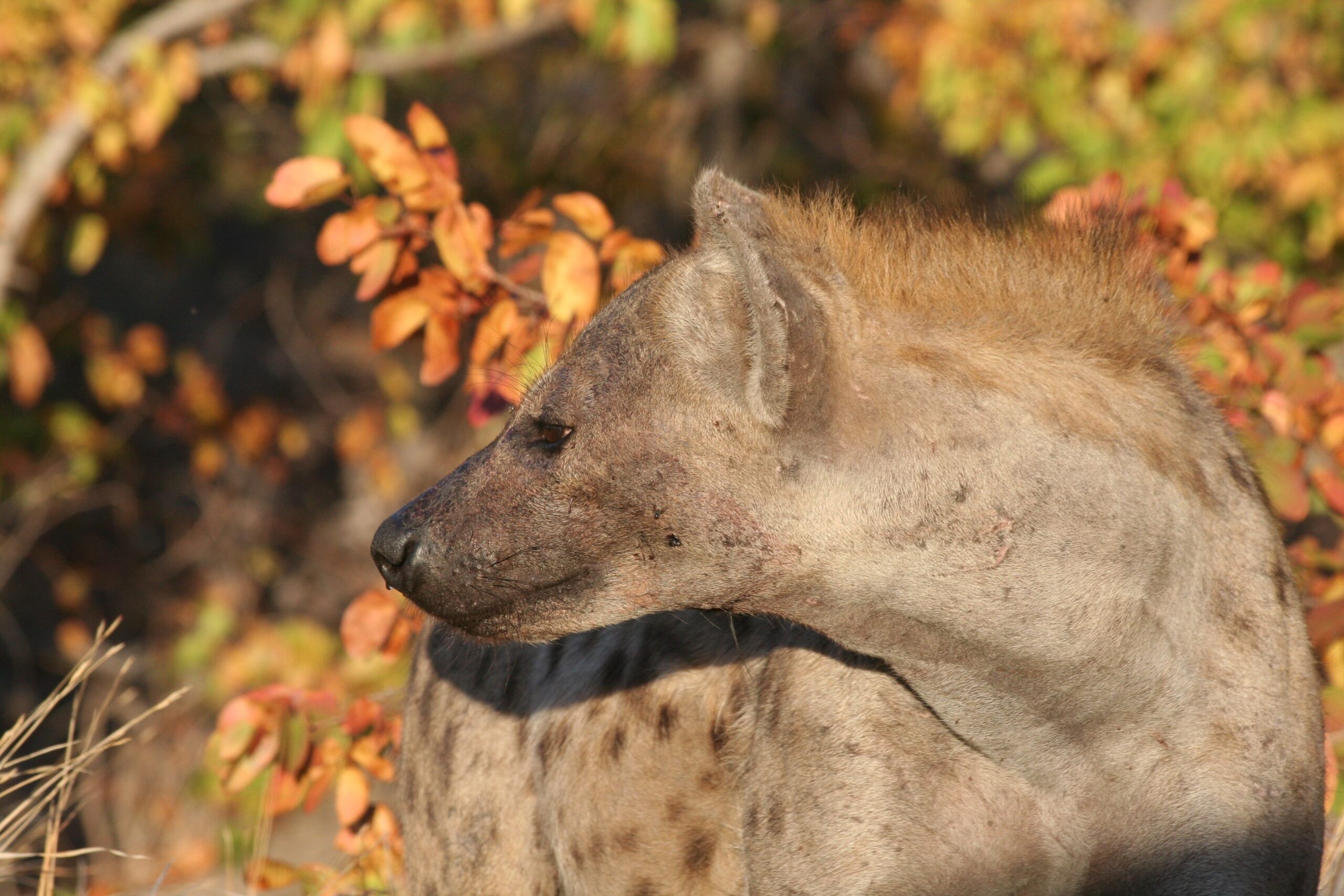
ハイエナは季節によって毛が生え変わる「換毛」を行う哺乳類です。ただし、オオカミやキツネのように極端に冬毛・夏毛の差が大きい動物ではなく、生息地域の気候に合わせた比較的ゆるやかな換毛をします。
1. 換毛の時期
ハイエナの換毛は主に:
🌱 春(乾季から雨季への移行期)
- 冬や乾燥期に発達した密な毛を落とす
- 短く通気性の良い毛へ変化
- 体温調節しやすくなる
🍂 秋〜冬
- 被毛がやや厚くなる
- 保温性が高まる
- 特に寒冷地に暮らす個体で顕著
ただし、アフリカのサバンナに暮らすブチハイエナでは、日本の犬やシカほど明確な「夏毛・冬毛」の変化はありません。
種類による換毛の違い
① ブチハイエナ(Spotted hyena)
ブチハイエナ
特徴:
- 短く粗い毛
- 斑点模様は生涯維持される
- 季節による毛量変化は小さい
換毛では:
- 古い毛が抜ける
- 新しい毛が生える
- 皮膚の健康維持
- 寄生虫対策
が主な役割です。
ブチハイエナは暑い地域に適応しているため、長い冬毛を作る必要がありません。
② シマハイエナ
シマハイエナ
特徴:
- 乾燥地・砂漠周辺に生息
- 長めの毛を持つ
- 首や背中のたてがみ状の毛が発達
換毛では:
- 夏:毛が薄くなる
- 冬:毛量が増える
傾向があります。
寒暖差の大きい砂漠環境では、体温調節のため換毛が重要です。
③ カッショクハイエナ
カッショクハイエナ
特徴:
- 南部アフリカの乾燥地帯に生息
- 長い毛を持つ
特に:
- 首周り
- 背中
- 肩
の毛が季節で変化します。
寒い夜には長い毛が保温材になります。
④ アードウルフ
アードウルフ
特徴:
- ハイエナ科だが昆虫食専門
- 細い体毛
- 背中のたてがみが特徴
危険を感じると背中の毛を逆立て、体を大きく見せます。
鳴き声について
ハイエナは肉食動物の中でも特に多彩な声を使ってコミュニケーションを行う動物です。特に有名なのが「笑い声」と呼ばれる独特の鳴き声ですが、実際には楽しんで笑っているわけではありません。
1. 「笑い声」の正体(ブチハイエナ)
ブチハイエナ
最も有名な鳴き声:
「クスクスクス」「ヒャッヒャッヒャッ」という高い声
一般的に「ハイエナの笑い」と呼ばれます。
しかし意味は:
❌ 楽しい
❌ 獲物を見て喜んでいる
ではなく、
✅ 興奮
✅ 緊張
✅ 不満
✅ 助けを求める合図
✅ 社会的な順位争い
などを表します。
「笑い声」は何を伝えている?
研究では、この鳴き声には個体情報が含まれることが分かっています。
声には:
- 年齢
- 個体の強さ
- 社会的地位
- 仲間関係
などが反映されます。
仲間は声を聞くだけで「誰が鳴いているか」を識別できます。
2. ハイエナの代表的な鳴き声
① クスクス笑い(Laugh)
用途:
- 仲間を呼ぶ
- 興奮状態を伝える
- 獲物争いの場面
- 群れへの参加要求
特に複数のハイエナが集まる時によく聞かれます。
② うなり声(Growl)
「グルルル」という低い声。
用途:
- 威嚇
- 獲物を守る
- 相手への警告
口を開けて歯を見せながら発することが多いです。
③ 咆哮・遠吠え(Whoop)
「ホーッ、ホーッ」という低く響く声。
主にブチハイエナで見られます。
用途:
- 群れへの位置確認
- 仲間集め
- 縄張り主張
数km先まで届くことがあります。
夜のサバンナでよく響く声です。
④ 鳴き声(Moan・Whine)
幼獣がよく使います。
用途:
- 母親への要求
- 授乳要求
- 不安の表現
子どものハイエナはかなり声を使って母親と交流します。
季節別の活動
ハイエナは主にアフリカの乾燥地・草原に生息しており、季節による活動変化は「気温」「獲物の移動」「水の量」「繁殖サイクル」に大きく影響されます。
🌱 春(雨季の始まり)
活動の特徴
- 活発に狩りを行う
- 草食動物の子どもを狙う
- 繁殖活動が増える
- 縄張り巡回が増える
雨季になると:
- 草が成長する
- ヌーやシマウマなどの草食動物が増える
- 出産シーズンを迎える動物が多い
ため、ハイエナにとって食料が豊富な時期になります。
行動
- 群れでの狩りが増加
- 幼獣への餌運びが増える
- 巣穴周辺での活動が増える
☀️ 夏(暑季・乾季)
活動の特徴
- 夜間活動が増える
- 日中は休む時間が増える
- 水場周辺で活動する
アフリカの暑い地域では昼間の気温が40℃近くになることもあるため、
ハイエナは:
- 日陰で休む
- 夕方から活動開始
- 夜間に長距離移動
する傾向があります。
狩り
主な獲物:
- シカ類
- シマウマ
- ヌー
- イボイノシシ
など。
乾季は獲物が弱りやすく、追跡狩りが成功しやすくなる時期でもあります。
🍂 秋(乾季への移行)
活動の特徴
- 長距離移動が増える
- 獲物の移動を追う
- 群れの縄張り争いが増える
水や食料を求めて草食動物が移動するため、ハイエナもその動きを追跡します。
特に:
- ヌーの大移動
- 水場への集中
はハイエナの重要な食料機会になります。
❄️ 冬(乾季)
※アフリカでは日本の冬とは違い「乾燥期」を指します。
活動の特徴
- 最も効率的に狩りをする時期
- 死肉利用が増える
- 夜間活動が中心
乾季には:
- 草食動物が弱る
- 水場に集まる
- 捕食のチャンスが増える
ため、ハイエナにとって重要な季節です。
歩行速度について
ハイエナは「走る動物」というイメージがありますが、実際には長距離を効率よく移動する持久型の肉食動物です。最高速度よりも、疲れずに追跡し続ける能力に優れています。
🚶 通常歩行
約4〜6km/h
- 縄張り内の巡回
- 群れでの移動
- 餌を探す探索行動
では、この程度の速度で長時間歩きます。
ハイエナは1晩で数十km移動することもあるため、ゆっくりした歩行でも非常に高い持久力を持っています。
🐾 速歩
約8〜12km/h
ハイエナが最も多用する移動速度です。
特徴:
- 体力消費が少ない
- 長時間維持できる
- 獲物を追跡するのに向いている
特にブチハイエナは、獲物を見つけるとすぐに全力疾走するのではなく、一定速度で追い詰めます。
🏃 最高速度
約55〜65km/h
主に:
- ブチハイエナ
- カッショクハイエナ
などで見られます。
ただし、チーターのように短距離で瞬間的に加速するタイプではありません。
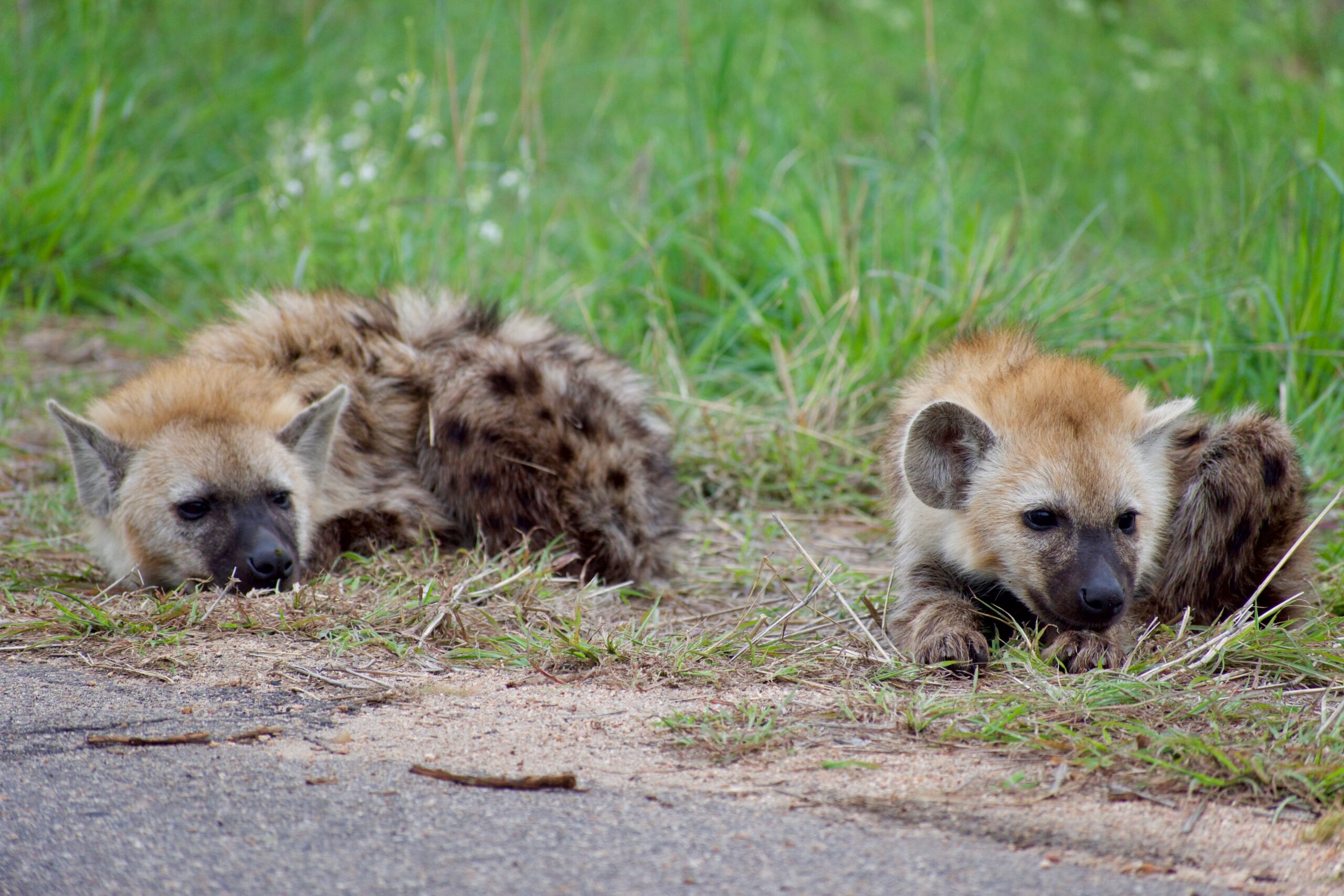
ハイエナの幼獣について
ハイエナの幼獣は、
「生まれた瞬間から競争社会に放り込まれる、かなり過酷な環境で育つ赤ちゃん」です。
見た目は可愛いですが、行動はとてもシビアです。
① 生まれた直後
- 目が開いた状態で生まれる(珍しい)
- すでに歯が生えている
- 体毛があり、動ける
- 攻撃行動も見られる
👉 肉食獣として完成度が高い状態。
② 兄弟間の激しい競争
- 同腹で1〜3頭
- 兄弟同士で激しく争う
- 食料・母乳をめぐってケンカ
- 弱い個体が命を落とすこともある
👉 「自然な選別」。
③ 巣穴での生活
- 生後数か月は巣穴で育つ
- 母親は授乳と防衛を担当
- 他の大人はあまり関与しない
④ 成長の特徴
- 成長は比較的ゆっくり
- 母乳は非常に栄養価が高い
- 離乳まで約1年以上(とても長い)
👉 肉食獣の中でも異例。
⑤ 社会を学ぶ時期
- 巣穴の外に出始めると
- 序列
- 威嚇
- コミュニケーション
を学ぶ
- 幼獣同士でも上下関係が形成される
⑥ メスとオスの違い
- メス幼獣の方が支配的になりやすい
- 母親の地位がそのまま子に影響
- 社会的地位は血筋が重要
⑦ 独立まで
- 完全独立まで数年
- 群れの一員として成長
- オスは成長後に群れを離れることが多い
ハイエナは絶滅危惧種なのか?
上記でも説明した通り、ハイエナは絶滅危惧種に指定されている亜種がおります。害獣としての駆除、イヌによる捕食などによる影響が高まっており、一部の亜種はワシントン条約にも掲載されております。
● ブチハイエナ
- 評価:LC(低懸念)
- 個体数は比較的安定
- アフリカ各地に広く分布
👉 一般に最もよく知られるハイエナで、絶滅の心配は小さい。
● カッショクハイエナ
- 評価:NT(準絶滅危惧)
- 生息地が限られ、個体数が少ない
- 人間との衝突が多い
👉 将来的に危険度が上がる可能性あり。
● シマハイエナ
- 評価:NT(準絶滅危惧)
- アフリカ〜中東〜インドに分布
- 開発・迫害により減少傾向
👉 「危険ゾーン一歩手前」。
● アードウルフ
- 評価:LC(低懸念)
- シロアリ専門で人間と競合しにくい
- 比較的安定
なぜ一部が減っている?
- 生息地の破壊・分断
- 家畜被害による駆除
- 迷信・誤解による迫害
- 交通事故
👉 「悪役イメージ」が直接の原因になることも。
ハイエナはペットとして飼育可能?
ハイエナはペットとして飼育は向いていません。これは人や家畜などに危害を与えることが多いため、とても危険性が高いからです。そのため素人にはおすすめしません。
① 法律面(日本の場合)
- ハイエナは危険動物・大型肉食獣
- 個人宅での飼育は
- 動物愛護管理法
- 都道府県条例
により 原則禁止または極めて厳格
- 飼育できるのは
👉 動物園・研究施設などの許可施設のみ
② 安全面の問題
- 顎の力が非常に強い(骨を砕く)
- 成獣は30〜80kg以上
- 知能が高く、人を試す行動をする
- 本気噛みは命に関わる
👉 幼獣でも安全とは言えない。
③ 性格・本能の問題
- 社会的だが人間社会向けではない
- 縄張り意識が強い
- 獲物を見ると本能が優先
- しつけで抑えきれない行動が多い
👉 犬や猫の延長では考えられない。
④ 飼育環境の問題
- 広大な運動スペースが必要
- 強固な檻・二重扉が必須
- 騒音(鳴き声)が大きい
- 食費・管理費が非常に高額
👉 一般家庭では物理的に無理。
⑤ 海外ではどう?
- 一部の国で違法飼育例は存在
- 問題行動・事故・安楽死が多発
- 動物福祉の観点からも強く否定されている
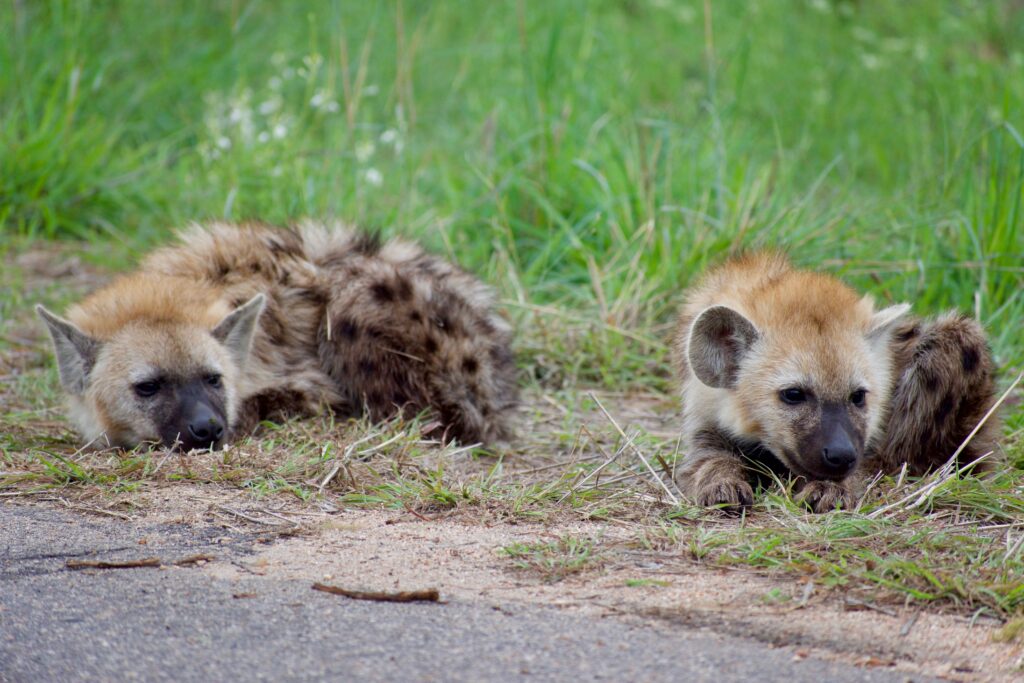
飼育されている動物園(日本・世界)
現在、動物園で飼育されているハイエナの多くは ブチハイエナ(Crocuta crocuta) です。ハイエナ科4種の中でも体が大きく、社会性が高いため展示対象になりやすい種類です。
🇯🇵 日本でハイエナを見られる動物園
北海道
札幌市円山動物園
- 種類:ブチハイエナ
- 特徴:
- 北海道で見られる数少ないハイエナ展示施設
- 夜行性のため、夕方以降に活発になることが多い
- 顎の力や群れ社会など、生態解説にも力を入れています。
関東
宇都宮動物園
- 種類:ブチハイエナ
- 間近で観察できる施設の一つです。
千葉市動物公園
- 種類:ブチハイエナ
- ハイエナの繁殖研究にも関わってきた施設です。
大宮公園小動物園
- 種類:ブチハイエナ
- 長年飼育実績がある施設です。
東海
静岡市立日本平動物園
- 種類:ブチハイエナ
- ハイエナの行動観察や給餌イベントなども行われています。
富士サファリパーク
- 種類:シマハイエナの飼育例あり(時期により展示状況は変動)
- サファリ形式で大型動物を観察できます。
関西
天王寺動物園
- 種類:ブチハイエナ
- ハイエナの給餌イベントなども実施されています。
中国・四国
池田動物園
- 種類:ブチハイエナ
- 飼育個体の生態紹介を公開しています。
高知県立のいち動物公園
- 種類:ブチハイエナ
とくしま動物園
- 種類:ブチハイエナ
しろとり動物園
- 種類:ブチハイエナ
🌍 世界の代表的なハイエナ飼育施設
🇺🇸 アメリカ
ウッドランド・パーク動物園
- ブチハイエナを展示
- 2026年に約25年ぶりに展示が復活しました。
サンディエゴ動物園
- アフリカ動物展示で有名
- ブチハイエナを含むアフリカ系肉食動物の飼育実績があります。
🇬🇧 イギリス
ロンドン動物園
- 歴史的にアフリカ産肉食動物の展示実績がある動物園。
チェスター動物園
- 大型肉食動物展示で知られる施設。
🇩🇪 ドイツ
ベルリン動物園
- 世界でも歴史の長い動物園。
- ハイエナを含む多様な肉食動物を飼育。
🇫🇷 フランス
パリ動物園
- アフリカ動物展示エリアで肉食動物を飼育。

他の動物を紹介

コメント