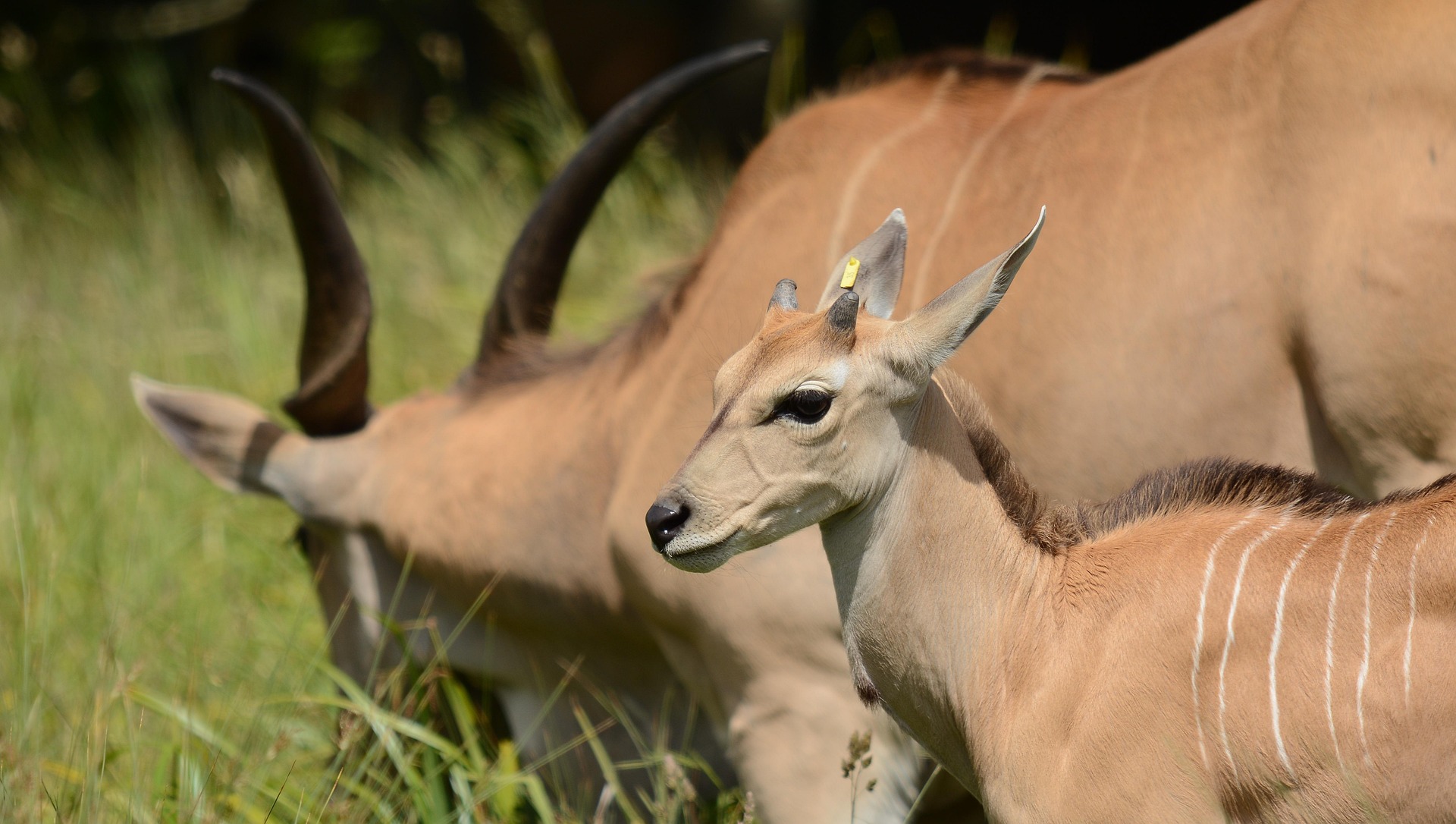
セーブルアンテロープはどんな動物?特徴、生態、生息地について解説します。雌雄で体色が白でレイヨウの中では大型で、アフリカの地域ではかなり広く分布している動物の仲間となりますので、興味がある方はアフリカに足を運んでみると良いでしょう。


セーブルアンテロープとは? 基本ステータスについて
セーブルアンテロープはウシ科ブルーバック族に分類されるレイヨウの一種。英語はSable antelope、学名はHippotragus niger。体長は190~250cm、体重は180~250kg、尾長は35~70cm。情報の一覧は以下の通り。
| Japanese(和名) | セーブルアンテロープ |
| English(英名) | Sable antelope |
| scientific name(学名) | Hippotragus niger |
| classification(分類) | Mammalia、Artiodactyl、 Bovidae、Hippotragus 哺乳綱、偶蹄目/鯨偶蹄目、ウシ科、ブルーバック族 |
| IUCN Status(保全状況) | LEAST CONCERN |
| Length(体長) | 190~250cm |
| Weight(体重) | 180~250kg |
セーブルアンテロープの分類学
| 階級 | 分類 |
|---|---|
| 界 (Kingdom) | 動物界 (Animalia) |
| 門 (Phylum) | 脊索動物門 (Chordata) |
| 亜門 (Subphylum) | 脊椎動物亜門 (Vertebrata) |
| 綱 (Class) | 哺乳綱 (Mammalia) |
| 目 (Order) | 偽蹄目(偶蹄目) (Artiodactyla) |
| 亜目 (Suborder) | ウシ亜目 (Ruminantia) |
| 科 (Family) | ウシ科 (Bovidae) |
| 亜科 (Subfamily) | ウシ亜科 (Hippotraginae) |
| 属 (Genus) | ヒッポトラグス属 (Hippotragus) |
| 種 (Species) | セーブルアンテロープ (Hippotragus niger) |
セーブルアンテロープのルーツ、起源は?
セーブルアンテロープ(Hippotragus niger、別名クロサイガとも呼ばれることがあります)は、アフリカのサバンナや疎林に生息する大型のウシ科動物です。分類上はウシ科・ハーテビースト亜科ではなく、ウマレイヨウ亜科(Hippotraginae)に属します。NCBIでも Hippotragus 属・Hippotraginae と分類されています。
🌍 そもそものルーツ
セーブルアンテロープの遠い祖先をたどると、**約2,300万年前ごろから多様化したウシ科(Bovidae)**につながります。分子系統研究では、ウシ科の初期の多様化にはユーラシアでの進化が重要だったと考えられています。
その後、アフリカでウシ科のさまざまな系統が発展し、その中からセーブルアンテロープを含むHippotraginae(ウマレイヨウ亜科)が分化しました。
大まかには、
古いウシ科の祖先
↓
ウマレイヨウ亜科が分化
↓
Hippotragus属が成立
↓
セーブルアンテロープ系統が発展
↓
🦌 現在のセーブルアンテロープ
という流れです。
🧬 実は「ロアンアンテロープ」と近縁
セーブルアンテロープの近縁種として特に重要なのが、ロアンアンテロープ(Hippotragus equinus)です。
さらに興味深いのが、現在絶滅しているブルーアンテロープ(Hippotragus leucophaeus)です。
ゲノム研究では、
セーブルアンテロープ
↕
ブルーアンテロープ(絶滅)
が姉妹種、つまり最も近い親戚であることが確認されています。両者の分岐は約280万年前と推定されています。
一方、ロアンアンテロープはこの2種の系統より少し外側に位置します。
🦌 進化系統を簡単にすると
ウシ科
 │
 └── ウマレイヨウ亜科
       │
       └── Hippotragus属
             ├── ロアンアンテロープ
             │   (Hippotragus equinus)
             │
             └──┬── ブルーアンテロープ †
                │   (Hippotragus leucophaeus)
                │
                └── セーブルアンテロープ
(Hippotragus niger)この関係は、現生種だけでなく古代DNA・ゲノム解析によってかなり詳しく分かってきました。
🌿 どんな環境に適応した?
セーブルアンテロープは、アフリカのサバンナ・疎林・森林と草原が入り混じる環境に適応しました。
特徴的なのが、
- 長く湾曲した角
- 大型で力強い体
- 草を中心とした食性
- 森林と草原の両方を利用する生活
です。
現在はアフリカ南部・中部・東部に分布し、ザンビア、ジンバブエ、マラウイ、モザンビーク、タンザニア、ケニア、南アフリカなどに個体群があります。
🇦🇴 巨大な「ジャイアントセーブル」との関係
セーブルアンテロープには、アンゴラに生息する**ジャイアントセーブルアンテロープ(Hippotragus niger variani)**という非常に特徴的な系統があります。
遺伝学的研究では、一般的なセーブルアンテロープとの分岐は最大で約17万年前と推定されています。
つまり、
セーブルアンテロープ系統
→ 約17万年前までに分化
→ 通常のセーブルアンテロープ系統+ジャイアントセーブル
という比較的新しい分化です。
生息地について
セーブルアンテロープは主にアフリカのケニアからタンザニア、ザンビア、アンゴラ、モザンビークやジンバブエ、南アフリカ共和国に分布しています。
1. 地理的分布
- アフリカ南部〜東部に広く分布
- 特に ボツワナ、ジンバブエ、ザンビア、南アフリカ共和国、モザンビーク
- サバンナや乾燥気味の草原地帯を好む
2. 好む環境
- 開けた草原や低木林
- 草を食べやすく、周囲の視界が開けている場所を好む
- 水源の近く
- 定期的に水を飲む必要があるため、池や川の近くに群れで生息
- 森林の深い場所は避ける
3. 群れの利用
- 広い範囲を移動しながら草を食べる
- 群れで移動することで捕食者からの警戒と食料の確保がしやすい
4. 季節による行動
- 雨季には食料が豊富な場所へ移動
- 乾季には水源の近くに集まることが多い
- 開けた環境での見通しの良さが、捕食者(ライオンやハイエナ)への警戒に役立つ
特徴は?どんな感じの生物なのか?
セーブルアンテロープは雌雄共に角があり、眼のすぐ上の辺りから、太い角が伸びてます。個体によっては1.5m以上に達することがありトラやライオンを殺すことが可能です。オスは頬にかけての横顔と腹部を除けば全身黒褐色で雌や子供は茶褐色。首の後ろから肩にかけては、タテガミのようにも見える長い毛があります。
1. 体の大きさ・体重
- 体長:約 2 m(頭から尾まで)
- 体高:約 1.2 m(肩の高さ)
- 体重:
- オス:230〜270 kg
- メス:180〜210 kg
- 大型で筋肉質、しっかりとした骨格
2. 外見
- 毛色:
- オス:黒色で光沢があり、非常に美しい
- メス:赤褐色
- 腹部は明るい色
- 長く湾曲した黒い角が特徴(オスもメスも持つ)
- 顔の側面に白い斑点や模様がある個体もいる
3. 性格・行動
- 群れで生活する社会性の高い草食動物
- オスは縄張り意識が強く、角を使って他のオスと争う
- 非常に俊敏で、捕食者(ライオン、ヒョウ、ハイエナなど)から逃げる能力が高い
4. 食性
- 草食性で主に草を食べる
- 食料の確保のために広範囲を移動しながら採食
- 水を定期的に必要とするため、水源の近くで群れが行動する

性格はどんな感じなのか?
セーブルアンテロープは10~20頭ほどの群れで生活していることが多く、多い時は100頭近くの群れを形成するため社会性が極めて強い動物です。セーブルアンテロープは森林や草原、サバンナなどに生息しており昼間に活動し、日中の暑い時間帯は休んでいることが多いです。
1. 群れで生活する社会性
- 群れを作り、オス1頭に複数のメスと子どもがつくハーレム構造が多い
- 群れで行動することで、捕食者からの警戒や移動の効率を高める
- 群れ内での社会的な順位はオスの支配力と角の大きさで決まる
2. 縄張り意識
- オスは強い縄張り意識を持つ
- 他のオスが縄張りに侵入すると、角を使った戦いや威嚇で追い払う
- メスは比較的穏やかで、群れ内で仲間との協調性を保つ
3. 警戒心と俊敏性
- 捕食者(ライオン、ヒョウ、ハイエナなど)に対して非常に警戒心が強い
- 視界が開けた草原で、遠くの危険も察知して逃げる能力が高い
- 俊敏で長距離も走れるため、逃避行動が得意
4. 知能と学習能力
- 群れでの協調行動や危険回避行動を通して学習
- 水場や草場の位置を覚える能力があり、効率的に移動・採食する
生態はどんな感じ?
セーブルアンテロープは草や木の葉などを食べて生活をしています。繁殖期は5~7月で一夫多妻。妊娠期間8~9ヵ月で1回に付き1頭を産むことが可能。子どもは6~8ヶ月程の間は授乳、雌は2~3年、雄は3~4年で性成熟。寿命は16年。
1. 生活環境
- アフリカ南部〜東部の開けた草原やサバンナ、低木林
- 水源の近くを好み、乾季には水の確保が重要
- 見通しの良い開けた環境が、捕食者から逃げやすい
2. 群れと社会構造
- 群れ生活が基本
- オス1頭に複数のメスと子どもがつくハーレム型が多い
- 群れの中でオスは縄張りとメスの保護を担当
- メスと子どもは協調して移動・採食
3. 活動パターン
- 昼行性(昼間に活動)
- 採食・移動・休息を群れで行う
- 草を食べながら広範囲を移動し、捕食者への警戒を怠らない
4. 食性
- 完全草食性(草、葉を中心に食べる)
- 水を定期的に必要とするため、水源の近くで群れが集まる
- 食料が少ない乾季には移動範囲を広げる
5. 繁殖と子育て
- 繁殖期は地域によって異なるが、多くは雨季の前後
- 妊娠期間:約 8〜9か月
- 出産数:1回に 1〜3頭
- 子どもは母親や群れの保護の下で育つ
天敵はいるのか?
セーブルアンテロープは ライオン、ブチハイエナ、リカオンなどが天敵に当たります。視覚と聴覚にすぐれ外敵を見つけると素早く森の中に逃げ込んで身を守ることも可能で、強力な角を使って立ち向かい、ライオンを倒すこともできます。

セーブルアンテロープの幼獣について
セーブルアンテロープ(Hippotragus niger)の幼獣(子ども)について詳しく整理します。
1. 誕生と体の大きさ
- 妊娠期間:約 8〜9か月
- 出産数:通常 1〜3頭
- 出生時の体重:約 10〜15 kg
- 体長は約 60〜80 cm
- 毛色は茶褐色で、オスほど黒くならず、斑点模様が残ることもある
2. 発達と成長
- 離乳:生後 4〜6か月 で母乳から草食へ移行
- 幼獣の毛色は数か月で徐々に成獣の毛色に変化
- 体格や角も生後1〜2年で徐々に成長
- 群れ内で母親や群れの動きを観察して採食・逃避行動を学習
3. 親との関係
- 母親が主に育児担当
- 授乳と保護、危険察知
- 群れ全体が間接的に幼獣を守る
- オスは通常、子育てには関与せず縄張り防衛が中心
4. 行動
- 生後数か月は母親の近くで安全を確保
- 群れに付いて採食や移動を学ぶ
- 幼少期に逃避行動や社会的スキルを習得
- 兄弟同士でじゃれ合うことで運動能力や群れ内の協調性を発達
5. 危険と生存率
- 捕食者(ライオン、ヒョウ、ハイエナ、ワニなど)に狙われやすい
- 群れの保護が生存に直結
- 幼獣期に逃避行動や警戒心を学ぶことが生存の鍵
セーブルアンテロープは絶滅危惧種なのか?
セーブルアンテロープは個体数が安定しており、絶滅危惧種ではありません。ただしアンゴラに生息する亜種ジャイアントセーブルアンテロープ(オオクロレイヨウ)はすでに絶滅寸前の状態で密猟が理由で残りがわずか100頭くらいしかいません。現地では保護活動がされています。
1. IUCN(国際自然保護連合)による評価
- ステータス:近危惧(Near Threatened, NT)
- 理由:
- 生息数は減少傾向にある
- 生息地の破壊や密猟の影響を受けやすい
2. 脅威となる要因
- 森林伐採・土地開発
- サバンナや草原の減少で生息地が縮小
- 密猟
- 毛皮や角を目的とした違法狩猟
- 家畜との競合
- 放牧牛や羊との食料争い
- 捕食
- ライオン、ヒョウ、ハイエナなど天敵による捕食
3. 保護状況
- 自然保護区や国立公園での生息は比較的安定
- 法的保護や管理が不十分な地域では個体数減少のリスクが高い
セーブルアンテロープは飼育可能?
セーブルアンテロープは集団生活をすることから多頭飼いが前提となり一般人には向いていません。そうなると動物園で鑑賞することがおすすめです。アンテロープは動物園でも有名で他よりも更新された写真や画像がネットのページで多く見られます。
1. 理論上は飼育可能だが…
- 大型草食動物で、体重はオスで230〜270 kg、メスでも180〜210 kg
- 群れで生活する動物のため、単独で飼うとストレスがかかる
- 飼育下での性格:
- 基本は温和だが、群れの秩序や縄張り意識が強い
- 大型で力も強いため、囲いが不十分だと脱走や事故のリスクがある
2. 必要な飼育環境
- 広い敷地
- 草を食べながら移動できる十分な運動スペースが必要
- 群れで飼う場合はさらに広い環境が必要
- 水源
- 定期的に水を飲む必要がある
- 餌
- 草食性なので、牧草や乾草を中心に栄養バランスを整えた飼料
- 栄養不足や偏食に注意
3. 法的規制
- 多くの国で野生個体の捕獲や飼育は禁止または厳重に規制
- 日本ではセーブルアンテロープは特定動物に指定されていないが、野生動物保護法や輸入規制に注意
- 無許可で飼育すると法律違反の可能性
飼育されている動物園(日本・世界)
セーブルアンテロープ(Hippotragus niger)は、世界の動物園では比較的珍しい大型レイヨウです。
🇯🇵 日本
現在、確実に確認できる現行飼育施設は見つかりませんでした。
以前は千葉市動物公園で飼育されていました。千葉市の資料にもセーブルアンテロープの繁殖記録がありますが、現在の同園の2026年7月末の飼育一覧・動物図鑑には掲載されていません。したがって、現在は飼育していないと判断するのが適切です。
つまり、現時点では、
🇯🇵 日本:現行飼育園を確認できず
という状況です。
🌍 世界
海外では現在も複数の動物園・サファリパークで飼育されています。飼育データベースで確認できる代表的な施設は以下です。
| 国 | 動物園・施設 |
|---|---|
| 🇩🇪 ドイツ | ベルリン動物園 |
| 🇩🇪 ドイツ | ZOOM Erlebniswelt |
| 🇩🇪 ドイツ | テューリンガー動物園エアフルト |
| 🇩🇰 デンマーク | コペンハーゲン動物園 |
| 🇵🇱 ポーランド | ワルシャワ動物園 |
| 🇨🇭 スイス | バーゼル動物園 |
| 🇦🇹 オーストリア | ザルツブルク動物園 |
| 🇭🇺 ハンガリー | ジェール動物園 |
| 🇨🇦 カナダ | トロント動物園 |
| 🇺🇸 アメリカ | フィラデルフィア動物園 |
| 🇺🇸 アメリカ | Wildlife World Zoo |
| 🇰🇷 韓国 | ソウル大公園動物園 |
| 🇮🇱 イスラエル | ラマト・ガン動物園 |
| 🇦🇪 UAE | アル・アイン動物園 |
| 🇦🇪 UAE | ドバイ・サファリパーク |
| 🇳🇿 ニュージーランド | オラナ・ワイルドライフ・パーク |
さらに、北米ではDisney’s Animal Kingdom、Omaha’s Henry Doorly Zoo、The Wilds、Fossil Rim Wildlife Centerなどで飼育されてきたことが、セーブルアンテロープの遺伝的管理に関する研究でも確認されています。
他の記事もおすすめ
コメント