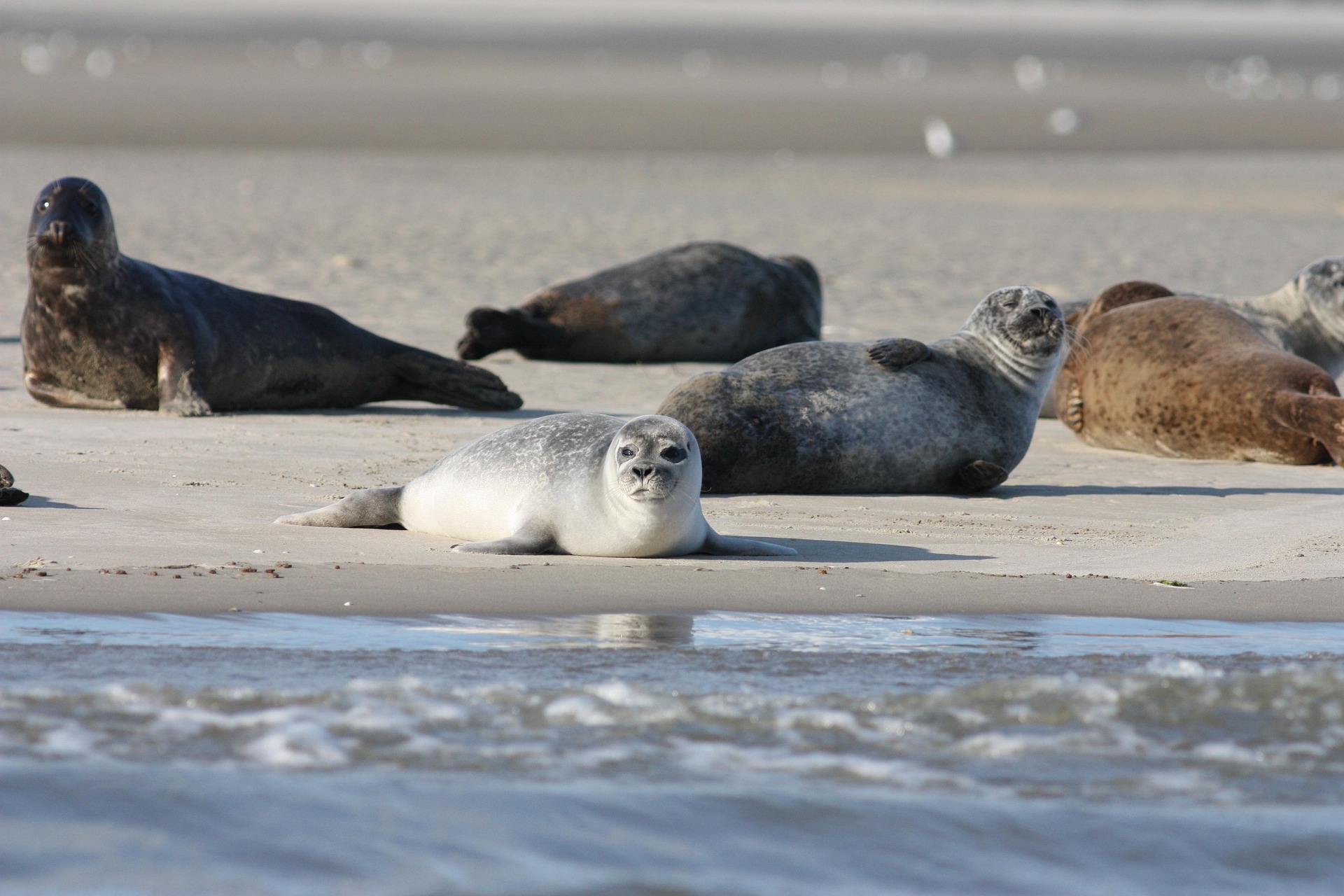
What kind of animal is the spotted seal? We will explain its characteristics, ecology, and habitat. Spotted seals are animals that can be seen quite widely along the coasts of Europe and North America. They can also be seen in some areas overseas in Japan, so they are a must-see animal.


- What is a Spotted Seal? Basic Stats
- What are the roots and origins of the harbor seal?
- Where does it live?
- What are their characteristics? What kind of creature are they?
- What is their personality like?
- What is their ecology?
- About Spotted Seal Pups
- Are Spotted Seals an Endangered Species?
- Can you keep seals?
- Zoos Housing the Species (Japan & Worldwide)
- Recommended articles
What is a Spotted Seal? Basic Stats
The harbor seal is a type of seal belonging to the genus Phoca. Its English name is the Harbor Seal/Common Seal, and its scientific name is Phoca vitulina. Its body length is 160-200cm, and it weighs 70-170kg. A list of information is below. For more information on seals, please also refer to the following article.
| Japanese(和名) | ゼニガタアザラシ |
| English(英名) | Harbor Seal / Common Seal |
| scientific name(学名) | Phoca vitulina |
| classification(分類) | Mammalia、 Carnivora、 Phocidae、 Phoca 哺乳綱、食肉目、アザラシ科、ゴマフアザラシ属 |
| IUCN Status(保全状況) | LEAST CONCERN |
| Length(体長) | 120-200cm |
| Weight(体重) | 70-170kg |
taxonomic position
| 階級 | 分類 |
|---|---|
| 界 | 動物界(Animalia) |
| 門 | 脊索動物門(Chordata) |
| 綱 | 哺乳綱(Mammalia) |
| 目 | 食肉目(Carnivora) |
| 科 | アザラシ科(Phocidae) |
| 属 | アザラシ属 (Phoca) |
| 種 | ゼニガタアザラシ (Phoca largha) |
What are the roots and origins of the harbor seal?
🌍 Where did their ancestors come from?
Fossil and molecular phylogenetic studies suggest that the family Phocidae (true seals)—to which the harbor seal belongs—originated long ago in the region spanning the North Atlantic, the Mediterranean, and the Paratethys Sea.
Subsequently, a lineage emerged that expanded into the Pacific via the Arctic region; it is believed that this group underwent significant diversification around the Bering Sea and North Pacific.
To visualize the process:
Early seal species
↓
Range expansion into the North Atlantic and Arctic regions
↓
Migration into the Pacific via the Bering Strait
↓
Population diversification in the North Pacific
↓
Evolution into the Northwest Pacific harbor seal lineage (including those in Japan)
🧬 The harbor seals of Japan are particularly interesting
Genetic studies indicate that the Northwest Pacific population—including those in Japan—may represent a foundational group that established itself relatively early among Pacific harbor seals. Research reports from the Ministry of the Environment also suggest the possibility that Pacific harbor seals expanded their range from west to east.
In other words, the harbor seals found in Hokkaido:
Are not seals that arrived in Japan from the north only recently, but rather a lineage that diverged over a long period following their expansion into the North Pacific.
🦭 What about the spotted seal?
This is a crucial point.
In Japan—specifically in Hokkaido—
Harbor seals
Spotted seals
…are both observed, but they are distinct species.
Harbor seal
→ Phoca vitulina stejnegeri
Spotted seal
→ Phoca largha
Spotted seals are distributed primarily in the pack-ice zones of the North Pacific, such as the Bering Sea and the Sea of Okhotsk; while they are very closely related to harbor seals, they belong to a separate lineage. Furthermore, recent genomic studies estimate that the spotted seal and the harbor seal diverged approximately 2.1 million years ago. This timing coincides roughly with the onset of the Pleistocene epoch, suggesting that the cooling of the Northern Hemisphere and the expansion of glaciers may have played a role in the differentiation of the two lineages.
🇯🇵 Evolutionary History in Japan
In Japan, harbor seals are currently established primarily along the coast of eastern Hokkaido.
Key habitats include:
Cape Erimo
Daikoku Island
The area around the Habomai Islands
A major difference between them and spotted seals is that, rather than migrating south in large numbers with the drift ice during winter, harbor seals remain resident along the Hokkaido coast throughout the year.
Where does it live?
Seals are distributed throughout the world’s oceans, from Hokkaido through the Kuril Islands and the Aleutian Islands, to Alaska, Canada, the west coast of the United States, and throughout the Atlantic and Pacific Oceans, with some individuals even found in Japan.
- Geographic Distribution
Harbor seals are found only in coastal areas of the northwest Pacific Ocean. Their main areas are as follows:
Sea of Okhotsk coast (around the Russian coast and Sakhalin)
Bering Sea coast (around southwest Alaska)
Northern Sea of Japan coast (around northern Hokkaido and Sakhalin)
Also found along the northern coast of the Korean Peninsula and parts of northeastern China
They generally prefer coastal areas and areas with ice, so they are rarely found in deep offshore waters.
- Habitat Characteristics
Coastal Waters: Prefers shallow coastal waters and estuaries.
Ice-Based Waters: Congregates on sea ice for breeding, birthing, and resting.
Water Temperature: Adapted to cold subarctic to polar waters.
Abundant Food Resources: Inhabits coastal areas rich in fish and crustaceans.
- Relationship between Behavior and Habitat
School Life: Forms small to medium-sized schools in coastal areas or on ice.
Birthing and Rearing: Mothers raise their young on ice or in safe coastal areas.
Seasonal Migration: May migrate along the ice in winter.
What are their characteristics? What kind of creature are they?
Spotted seals are stocky and covered in thick fat. They have a round head, V-shaped or heart-shaped nostrils, and brown, tan, or gray fur. They are named “zenigata” because they have black spots all over their body that look like white coins with holes in them. They usually live alone, are good swimmers, and can travel up to 50km in search of food. They also have excellent diving abilities, diving for 30 minutes and swimming to a depth of 500m.
- Physical Characteristics
Characteristics Details
Body Type: Rounded, stocky body with a streamlined shape adapted to aquatic life.
Body Length: Approximately 1.4-1.7 m (males are slightly larger than females).
Weight: Approximately 60-100 kg.
Fur Color: Light brown to gray with black spots on the back, white underside.
Head: Round with small ear holes, short snout.
Fins: Front and rear fins adapted for swimming; front fins for turning, rear fins for propulsion.
Characteristics: Individuals are easily identified by their spotted pattern, and they are very good swimmers underwater.
Appearance: “A small to medium-sized, rounded aquatic mammal resembling a seal with spots on its back.”
- Behavioral and Ecological Characteristics
Excellent swimmers: They dive to feed on fish and crustaceans.
Omnivorous but carnivorous: They eat fish and small invertebrates (crabs, shrimp, etc.).
Schooling: They form small to medium-sized schools along the coast or on the ice.
Resting: They rest in safe areas on the ice or along the coast.
Reproduction and rearing: They give birth on the ice or along the coast, and the mother raises her young.
- Personality and Behavior
Generally timid and cautious.
They live in schools to protect themselves from predators (such as Steller’s sea eagles and killer whales).
They sometimes move along the ice in winter.
They are extremely agile in the water, with excellent swimming and diving abilities.

What is their personality like?
Spotted seals are very curious. You can see this clearly at an aquarium. They will approach people in front of the tank and make a gesture as if they are peering into their faces. Another characteristic of them is that they are highly social, and they tend to live in groups.
- Timid and cautious
Highly sensitive to predators (such as killer whales, Steller’s sea eagles, and sea lions) and humans
If they sense danger, they will immediately flee into the water and dive to hide.
They are generally not aggressive and prioritize escape.
- Sociality
They often live in groups.
They form small to medium-sized groups along the coast or on the ice.
They share resting, breeding, and feeding schedules within the group.
Mothers intensively protect their young.
Mature males only become active during breeding season, and generally blend in docilely with the group.
- Environmental Adaptability
They are highly agile in the water and will quickly dive if they sense danger.
They behave flexibly depending on the environment, whether it be along the coast, on the ice, or in shallow waters.
They are timid and cautious, but living in groups increases their survival rate.
What is their ecology?
Spotted seals live by eating fish, squid, crustaceans, etc. Seals are often polygamous, have a gestation period of nine months, and give birth on land or on sea ice. The baby can swim within a few hours of birth and is nursed for about four to six weeks. The lifespan of a seal is said to be 25 to 30 years.
- Habitat
Distribution: Northwest Pacific coast (Sea of Okhotsk, Bering Sea, northern Sea of Japan, etc.)
Environment: Lives mainly in shallow coastal waters and on ice.
Resting Sites: Daytime resting on ice or in safe coastal areas.
Seasonal Migration: In winter, they migrate along the coast or on the ice depending on ice conditions.
- Diet
Mainly carnivorous (leaning towards omnivorous).
Small fish, crustaceans, mollusks, etc.
Feeds in coastal areas and estuaries where fish schools are abundant.
Feeding Method: Dives underwater to catch prey. Diving time is approximately a few minutes.
- Behavior Pattern
Rests during the day, active at night and at twilight (varies by region)
School Movement: Forms small to medium-sized schools to increase safety.
Danger Avoidance: Timid, immediately dives and hides if it senses predators or humans.
Swimming and Diving Ability: Extremely high and agile underwater.
- Reproduction and Rearing
Breeding Season: Spring to early summer (mating on ice or near the coast).
Gestation Period: Approximately 9 to 11 months (delayed implantation may occur).
Birth: Gives birth to a single calf on ice or in a safe area near the coast.
Calligraphy: Plays underwater under the protection of its mother, learning diving and hunting techniques.
Intra-group Cooperation: No one other than the mother is involved in rearing, but the presence of the group increases safety.
Do they have any natural enemies?
In the wild, their natural enemies are killer whales and polar bears. Seals are very large, so they don’t have many significant enemies.

About Spotted Seal Pups
- Habitat
Distribution: Northwest Pacific coast (Sea of Okhotsk, Bering Sea, northern Sea of Japan, etc.)
Environment: Lives mainly in shallow coastal waters and on ice.
Resting Sites: Daytime resting on ice or in safe coastal areas.
Seasonal Migration: In winter, they migrate along the coast or on the ice depending on ice conditions.
- Diet
Mainly carnivorous (leaning towards omnivorous).
Small fish, crustaceans, mollusks, etc.
Feeds in coastal areas and estuaries where fish schools are abundant.
Feeding Method: Dives underwater to catch prey. Diving time is approximately a few minutes.
- Behavior Pattern
Rests during the day, active at night and at twilight (varies by region)
School Movement: Forms small to medium-sized schools to increase safety.
Danger Avoidance: Timid, immediately dives and hides if it senses predators or humans.
Swimming and Diving Ability: Extremely high and agile underwater.
- Reproduction and Rearing
Breeding Season: Spring to early summer (mating on ice or near the coast).
Gestation Period: Approximately 9 to 11 months (delayed implantation may occur).
Birth: Gives birth to a single calf on ice or in a safe area near the coast.
Calligraphy: Plays underwater under the protection of its mother, learning diving and hunting techniques.
Intra-group Cooperation: No one other than the mother is involved in rearing, but the presence of the group increases safety.
Are Spotted Seals an Endangered Species?
Unfortunately, the population of Spotted Seals in Japan is declining, and they are designated as an endangered species by the Ministry of the Environment. Their meat is edible, their fat can be used for fuel, and their fur can be used for coats. Conservation efforts are underway around the world.
- International Union for Conservation of Nature (IUCN) Assessment
Status: Least Concern (LC)
Current populations are relatively stable, and the risk of extinction is low.
However, there are localized pressures from habitat loss and human activities.
- Major Threats
Habitat Loss/Ice Loss
Because they breed and rest on ice, sea ice loss due to global warming poses a risk.
Conflicts with Fisheries
Bycatch in nets and deaths due to contact with fishing gear.
Human Activities
Habitat changes due to coastal development, tourism, and shipping.
Natural Predators
Killer whales, Steller sea lions, large seabirds, etc.
- Conservation Status
Distributed along the northwest Pacific coast, the Sea of Okhotsk, and the Bering Sea.
Populations are protected in nature reserves and national parks.
Because they rely on ice for birthing and resting, ice loss poses a long-term threat.
Can you keep seals?
Spotted seals need a large pool. They also need space to rest, so it’s not easy. Their main food is raw fish. They eat a lot of fish, so it’s quite expensive. Some species are well protected, and in some cases permission is required, so be sure to check. It is realistic to get a seal from a zoo or aquarium. There are generally information about events and exhibitions, so check the zoo’s page.
- Difficulty of Raising
Key Points Details
Size: Varies by species, but adult harbor seals reach 1.5–1.7 m and weigh 60–100 kg. Larger species grow even larger.
Living Environment: Because they are adapted to coastal habitats, ice, and cold ocean waters, it is difficult to recreate their habitat in an aquarium or at home.
Swimming/Diving: They require long periods of diving and swimming, and require large areas of water to stay healthy.
Diet: Their diet consists primarily of raw seafood, such as fish and crustaceans. It is difficult to recreate a balanced nutritional profile at home.
Sociality: Many species live in groups, and solitary captivity can be stressful.
Laws: Under wildlife protection laws in many countries, capture and captivity require a permit, and private captivity is prohibited.
- Examples of captivity:
Keeping in aquariums and marine parks
Large pools or artificial seawater, recreating school life
Kept for breeding, research, and educational purposes
Keeping at home or privately is practically impossible
Environment, diet, legal requirements, and health management are all difficult.
- Environment (Ideal Conditions)
Large saltwater pools or artificial ponds (water temperature adjusted to cold water)
Space allowing for natural underwater swimming and diving
Rich food sources, such as raw fish and crustaceans
Schoolmates and a stress-reducing environment
Constant medical and veterinary care
Zoos Housing the Species (Japan & Worldwide)
🇯🇵 Japan
The following are the major facilities confirmed in the current husbandry database:
| Facility Name | Location | Status |
|---|---|---|
| Sapporo Maruyama Zoo | Sapporo City, Hokkaido | 🟢 Housing |
| Kushiro City Zoo | Kushiro City, Hokkaido | 🟢 Housing |
| Otaru Aquarium | Otaru City, Hokkaido | 🟢 Housing |
| Kamogawa Sea World | Kamogawa City, Chiba | 🟢 Housing |
| Ueno Zoological Gardens | Taito Ward, Tokyo | 🟢 Housing |
| Yokohama Hakkeijima Sea Paradise | Yokohama City, Kanagawa | 🟢 Housing |
Yokohama Hakkeijima Sea Paradise is particularly notable. Two harbor seal pups were born there in June 2026, marking the facility’s first successful breeding of the species.
Ueno Zoo also lists harbor seals on its official website, explicitly citing the scientific name Phoca vitulina stejnegeri.
🌏 Overseas
When focusing specifically on Phoca vitulina stejnegeri, instances of the species being kept in captivity outside Japan are quite rare.
Facilities currently confirmed via Zootierliste include:
🇨🇳 China
Changchun Zoological and Botanical Park
Hangzhou Zoo
🇭🇰 Hong Kong
Ocean Park
🇰🇷 South Korea
Daejeon O-World
Sacheon Aramaru Aquarium & Zoo
Seoul Zoo
COEX Aquarium
Lotte World Aquarium
Yongin Everland
…and others.
⚠️ Do not confuse “Harbor Seal” (Phoca vitulina stejnegeri) with “Spotted Seal” (Phoca largha)
This is a crucial distinction.
General information regarding “Harbor Seals” may sometimes include data on different regional populations or subspecies.
The overseas facilities listed here are limited to those identified as Phoca vitulina stejnegeri on Zootierliste.
Recommended articles


コメント