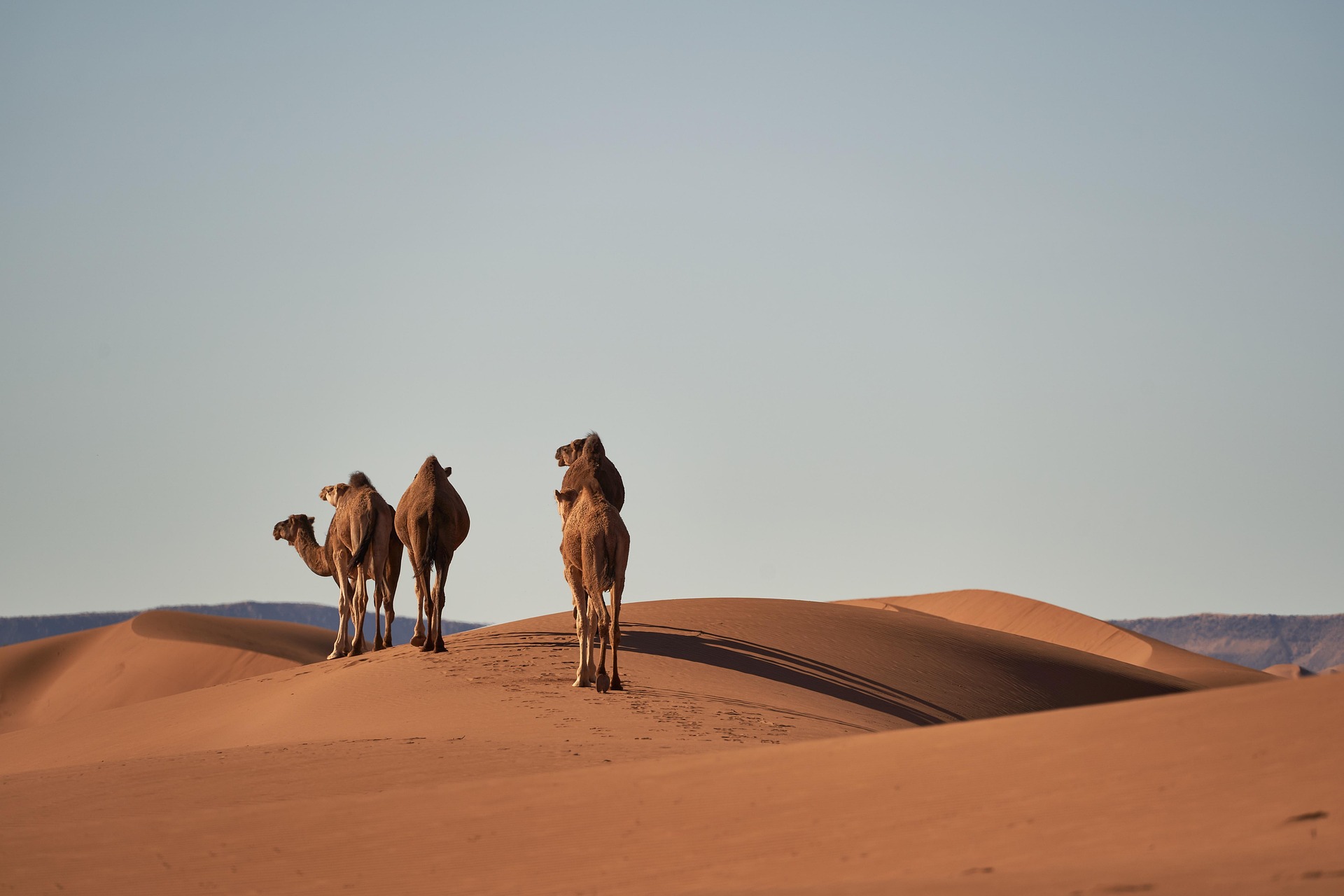
ラクダはどんな動物?特徴、生態、生息地について解説します。ラクダはアフリカや中東の人々にとって運搬の役目をしてくれるため、とても重宝されている動物。砂漠や乾燥した地域に適しているため、砂漠地帯の方にはとても馴染みのある動物と言えるでしょう。


ラクダとは? 基本ステータスについて
ラクダは哺乳類・ウシ目(鯨偶蹄目)・ラクダ科・ラクダ属の動物です。Camelusが学名で、ヒトコブラクダ、フタコブラクダが存在します。体長は220~350cm、体重は300~1000kgあります。コブまでの体高190~250cmで尾長55cm。毛は茶色。
| Japanese(和名) | ラクダ(ヒトコブラクダ、フタコブラクダ) |
| English(英名) | Camel/Bactrian camel |
| scientific name(学名) | Camelus |
| classification(分類) | Mammalia、 Artiodactyla、 Camelidae、Camelus 哺乳綱、鯨偶蹄目、ラクダ科、ラクダ属 |
| IUCN Status(保全状況) | CRITICALLY ENDANGERED |
| Length(体長) | 220~350cm |
| Weight(体重) | 300~1000kg |
ラクダのルーツ、起源は?
ラクダのルーツは意外にも現在の砂漠地帯ではなく、北アメリカです。現在のラクダ(ヒトコブラクダ・フタコブラクダ)の祖先は、約4,000万〜4,500万年前(始新世)に北アメリカで誕生したと考えられています。
① 原始ラクダの誕生(約4,500万年前)
最初期のラクダ科動物は、現在の北アメリカにいました。
代表例:
- プロティロプス(Protylopus)
- 大きさはウサギほど
- 森林や湿地に暮らしていた
- 現代の巨大な砂漠ラクダとは全く違う姿
この頃のラクダは、
- 小型
- 足の指が複数ある
- 森林の植物を食べる
という生活でした。
② 大型化と多様化(約3,500万〜1,000万年前)
進化の中でラクダの仲間は巨大化していきました。
代表的な種類:
🦒 アエピカメルス(Aepycamelus)
- 首が非常に長い
- キリンのような姿
- 高い木の葉を食べていた
🐫 ステノミルス(Stenomylus)
- 細長い脚
- ガゼルのように走るタイプ
🐪 プロカメルス(Procamelus)
- 現代ラクダに近い体型へ進化
北アメリカでは多くのラクダ類が繁栄していました。
🌎 世界への大移動
ラクダの祖先は北アメリカから世界へ広がりました。
① アジア方面へ(約700万年前)
北アメリカのラクダ類は、当時存在した陸橋 ベーリング地峡(現在のベーリング海峡付近) を渡ってユーラシアへ移動しました。
その系統が、
- ヒトコブラクダ
- フタコブラクダ
につながります。
② 南アメリカ方面へ(約300万年前)
別の系統は南へ移動し、
- リャマ
- アルパカ
- グアナコ
- ビクーニャ
などの祖先になりました。
つまり、
ラクダ 🐪 と リャマ 🦙 は親戚
です。
分類について
ラクダはヒトコブラクダ、フタコブラクダが存在します。
Camelus dromedarius
ヒトコブラクダはほぼ完全に家畜個体群に飲み込まれた動物で学名はCamelus dromedarius。スーダン、エチオピアなどに分布しておりオスはやわらかい口蓋を持ち、ドゥーラと呼ばれる深いピンク色の袋を作り、口の両側に垂らして、メスを引きつけようとする習性があります。飼育下での寿命は25年程度。体長は350cmまで成長します。
Camelus bactrianus
フタコブラクダは中国からモンゴル、中央アジアにかけて生息しており、大多数が家畜化されました。瘤が2つあるのが特徴でここがヒトコブラクダとの違いです。体長220~350cm。尾長55cm。標高1500~2000mにある半砂漠地帯が好みで海水よりも塩分濃度の高い水を摂取します。寿命は平均で20年から30年。
生息地について
生息地の分布は中国からモンゴル、などのアジアから中東、アフリカにかけてです。歴史でみても西アジアではかなり広い範囲となります。
ラクダの種類と生息地
- フタコブラクダ(Camelus bactrianus)
- 背中に2つのこぶがある
- 主な生息地:中央アジアの乾燥地帯や寒冷砂漠
- モンゴル、カザフスタン、中国北西部(ゴビ砂漠)
- 特徴:寒さにも強く、砂漠だけでなく草原やステップ地帯にも適応
- ヒトコブラクダ(Camelus dromedarius)
- 背中に1つのこぶ
- 主な生息地:北アフリカ、アラビア半島、中東、インド北西部
- サハラ砂漠、アラビア砂漠などの乾燥砂漠
- 特徴:暑さや乾燥に非常に強く、砂漠での長距離移動に適応
- 野生ラクダ
- 現在、野生のフタコブラクダはモンゴルや中国にわずかに生息
- ヒトコブラクダの野生種はほぼ絶滅し、家畜としてのみ存在
生息環境の特徴
- 極端に乾燥した砂漠や半砂漠
- 草や低木などの乾燥に耐える植物がある場所
- 水や食料が少ない環境でも耐えられる
特徴は?どんな感じの生物なのか?
ヒトコブラクダとフタコブラクダがあります。これは瘤の数が1つか2つかの違いでしかありません。砂漠や乾燥した地域に適していて1回に60~100ℓくらいの水を飲みます。長期間水を飲まなくても良い。背中のコブに水分を溜めることで補給ができます。耐久力があり、100kg程の荷物なら1日に30km程は運ぶことができるため、これにより人間社会に適応しました。体毛は茶色で足の裏は角質化して大きく、砂地を歩くのに適しています。野生は群れで長い距離を移動、行動して食べることが多いです。
ラクダの特徴
- 体の大きさ・体型
- 体長:2〜3メートル
- 体重:300〜600kg
- 背中にこぶ(1つまたは2つ)があり、脂肪を蓄える貯蔵庫として機能
- 足は長くて頑丈で、砂漠での長距離移動に適応
- 足の裏は広く柔らかく、砂に沈みにくい
- 毛・色
- 毛色は茶色や黄褐色、個体によって白っぽいこともある
- 厚い毛が寒さから体を守り、暑い日には脱毛して体温を調節
- 頭部・顔
- 大きな目と長いまつ毛で砂塵から目を保護
- 丸い鼻孔は閉じることができ、砂嵐でも呼吸可能
- 食性
- 草食性:乾燥地帯の草、低木、枝、葉などを食べる
- 水がなくても長期間耐えられる(数日〜数週間)
- 体内の脂肪をエネルギー源として利用
- 水分・適応
- 水分を効率的に体内に蓄えることができる
- 尿は濃縮され、糞も乾燥して少ない
- 体温の上下変動が大きく、暑さや寒さに強い
- 行動・性格
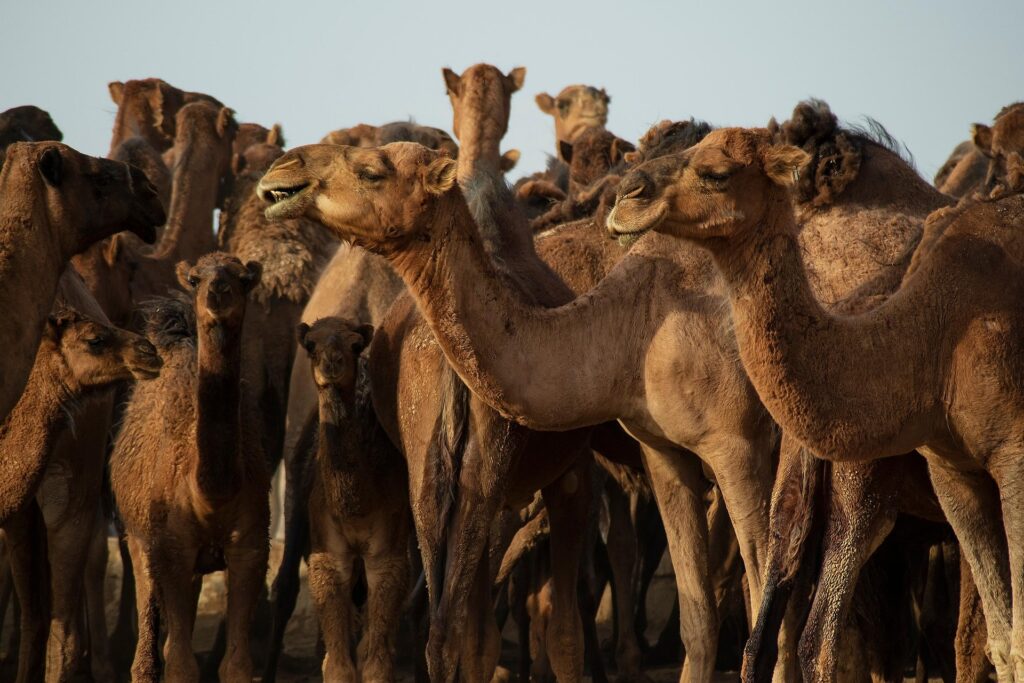
- 基本的に穏やかで社交的
- 群れで生活することが多い
- 荷役や移動のために人間に利用されることも多い
性格はどんな感じなのか?
ラクダは与えられた状況への適応力が抜群に高いのが特徴。ラクダは過酷な環境でも過ごすことができ、人間とも調和できます。見た目通り基本的には穏やかな性質で人にも懐きやすいと言われています。
ラクダの性格・行動傾向
- 穏やかでおとなしい
- 基本的に攻撃性は低く、人間や他の動物に慣れやすい
- 群れの中でも比較的落ち着いて行動する
- 忍耐強い
- 砂漠の厳しい環境(暑さ、乾燥、食料不足)でも耐えられる
- 荷役用として利用されることも多く、長時間の歩行や重い荷物にも耐える
- 社交性
- 群れで生活することが多く、仲間との関係を重視
- 群れの中で順位や縄張り意識を持つこともある
- 知能・好奇心
- 観察力があり、危険や変化に敏感
- 飼育下では学習能力が高く、簡単な指示や道順を覚えることができる
- 気性
- 基本的に穏やかだが、怒ると唾を吐いたり蹴ったりすることがある
- 特に雄は繁殖期に攻撃的になることがある
生態はどうなっているのか?
ラクダはほとんどが人間によって家畜化されました。草食性で植物や昆虫、サボテンを食べて生活をしています。情報では体の中のこぶの中には脂肪があります。現在は生きるにあたりエネルギーとして活用します。またラクダの血液は、濃縮され血流が低下しても、濃度が高くならず気温が変化しても凝固も起こしません。 ラクダは6歳にならないと性成熟しないため繁殖が難しいです。妊娠期間は12ヶ月で、発情期は年に1回しかないです。寿命は30年あります。
ラクダの生態
- 生息環境
- 砂漠、半砂漠、乾燥草原
- 水や食料が少なくても耐えられる環境
- フタコブラクダ:寒冷乾燥地(モンゴル、中央アジア)
- ヒトコブラクダ:熱帯砂漠(アラビア半島、北アフリカ)
- 食性
- 草食性:乾燥に強い草、低木、枝、葉などを食べる
- 水分が少ない植物からも水分を補給可能
- 水や食料が少ないときは体内の脂肪(こぶ)をエネルギー源に
- 水分管理
- 体内に水分を効率的に保持
- 尿は濃縮され、糞も乾燥して少ない
- 長期間水を飲まずに生きられる
- 行動・生活リズム
- 群れで生活することが多く、社交的
- 日中は暑さを避けて休み、涼しい時間帯に活動することもある
- 長距離移動に適応しており、食料や水を求めて数十キロ移動することもある
- 繁殖
- 繁殖期:種類や地域によって異なるが、多くは春~夏
- 妊娠期間:約13か月(フタコブラクダ)、約12か月(ヒトコブラクダ)
- 1度の出産で1頭の子供を産む
- 適応能力
- 気温の上下に強く、暑さや寒さに耐える
- 足や毛、鼻など身体の構造が砂漠環境に最適化されている
ラクダの鳴き声
ラクダの鳴き声は、一般的に「グォーグォー」「ブーブー」「モーモー」のような低く響く声として表現されます。犬や猫のような可愛らしい声ではなく、うなり声・叫び声・唸り声が混ざった独特な音です。
① 低いうなり声(グォォォ…)
最も代表的な声です。
用途:
- 仲間との連絡
- 不満や警戒
- ストレス表現
- 人間への反応
特に群れの中では、遠くにいる仲間へ低い声で合図します。
② 怒った時の「ゴロゴロ・ブーブー」
ラクダは怒ると、
- 鼻を鳴らす
- 低く唸る
- 喉を震わせる
ような音を出します。
特に、
- 荷物を載せられる時
- 縄で引かれる時
- 繁殖期のオス
では激しい鳴き声になります。
③ 繁殖期のオスの声(大迫力)
繁殖期のオスのフタコブラクダやヒトコブラクダは非常に特徴的です。
音:
- 「ゴォォォォ」
- 「ブワァァァ」
- 「ガァァァ」
という低音。
さらにオスは、
「ドゥーラ(dulla)」
と呼ばれる喉の袋状の器官を口から出して、泡状の唾液を垂らしながら大きな音を出します。
これは、
- メスへのアピール
- 他のオスへの威嚇
のためです。
季節別の活動
ラクダは砂漠や乾燥地帯に適応した動物で、季節によって活動量・食べ物・移動距離・繁殖行動が大きく変化します。特にフタコブラクダ(中央アジア)とヒトコブラクダ(アラビア・北アフリカ)では季節変化への対応が異なります。
🐪 春(3〜5月)|活動が活発になる季節
行動
- 冬の寒さが弱まり活動量が増える
- 新芽や草を求めて移動する
- 群れでの採食時間が長くなる
食べ物
- 若い草
- 低木の葉
- 砂漠植物
特に雨が降った後の砂漠では植物が一気に増えるため、ラクダにとって重要な栄養補給の時期です。
繁殖
- フタコブラクダでは繁殖期の終盤
- 妊娠したメスは出産準備へ
☀️ 夏(6〜8月)|暑さへの耐久シーズン
砂漠のラクダにとって最も厳しい季節です。
行動
- 日中の活動を減らす
- 朝夕や夜間に採食する
- 日陰で休む時間が増える
体の適応
ラクダは、
- 体温を約34〜40℃の範囲で変化させる
- 汗をかく量を抑える
- 濃い尿で水分を節約する
ことで暑さに耐えます。
水分補給
条件によっては、
- 数日〜数週間水なしで耐える
- 一度に大量の水を飲む
ことが可能です。
🍂 秋(9〜11月)|栄養を蓄える季節
行動
- 食欲が増える
- 冬に備えて脂肪を蓄える
- 長距離移動が増える
コブの変化
コブは脂肪の貯蔵庫なので、
栄養状態が良い
↓
コブが大きく立つ
栄養不足
↓
コブが小さく垂れる
という変化があります。
繁殖
特にフタコブラクダ・ヒトコブラクダでは、
秋〜冬に繁殖期へ入る種類が多いです。
❄️ 冬(12〜2月)|寒さとの戦い
意外ですが、ラクダは暑さだけでなく寒さにも強いです。
特にフタコブラクダは、
- モンゴル
- 中国西部
- カザフスタン
などの氷点下になる地域に適応しています。
行動
- 厚い冬毛で体温維持
- 雪や乾燥草を食べる
- 水分を雪から得ることもある
フタコブラクダの特徴
冬になると、
- 毛が長くなる
- 体脂肪を利用する
- 厳しい環境でも移動する
ことができます。
歩行速度
ラクダの歩行速度は、普段はゆっくりですが、長距離移動では驚くほど持久力があります。種類や状況によって異なります。
🐪 ラクダの歩行速度
| 動き | 速度の目安 |
|---|---|
| 普通の歩行 | 約3〜5 km/h |
| 巡航歩行(長距離移動) | 約5〜8 km/h |
| 速歩(ラクダ騎乗時など) | 約10〜15 km/h |
| 走行(短距離) | 約20〜25 km/h |
| 最高速度 | 約40〜65 km/h(短時間) |
🏜 長距離移動能力
ラクダの本当の強みは「速さ」ではなく持久力です。
砂漠での移動
- 1日に約30〜50km移動可能
- 条件が良ければ100km近く移動することもある
- 数日間、水なしで移動できる
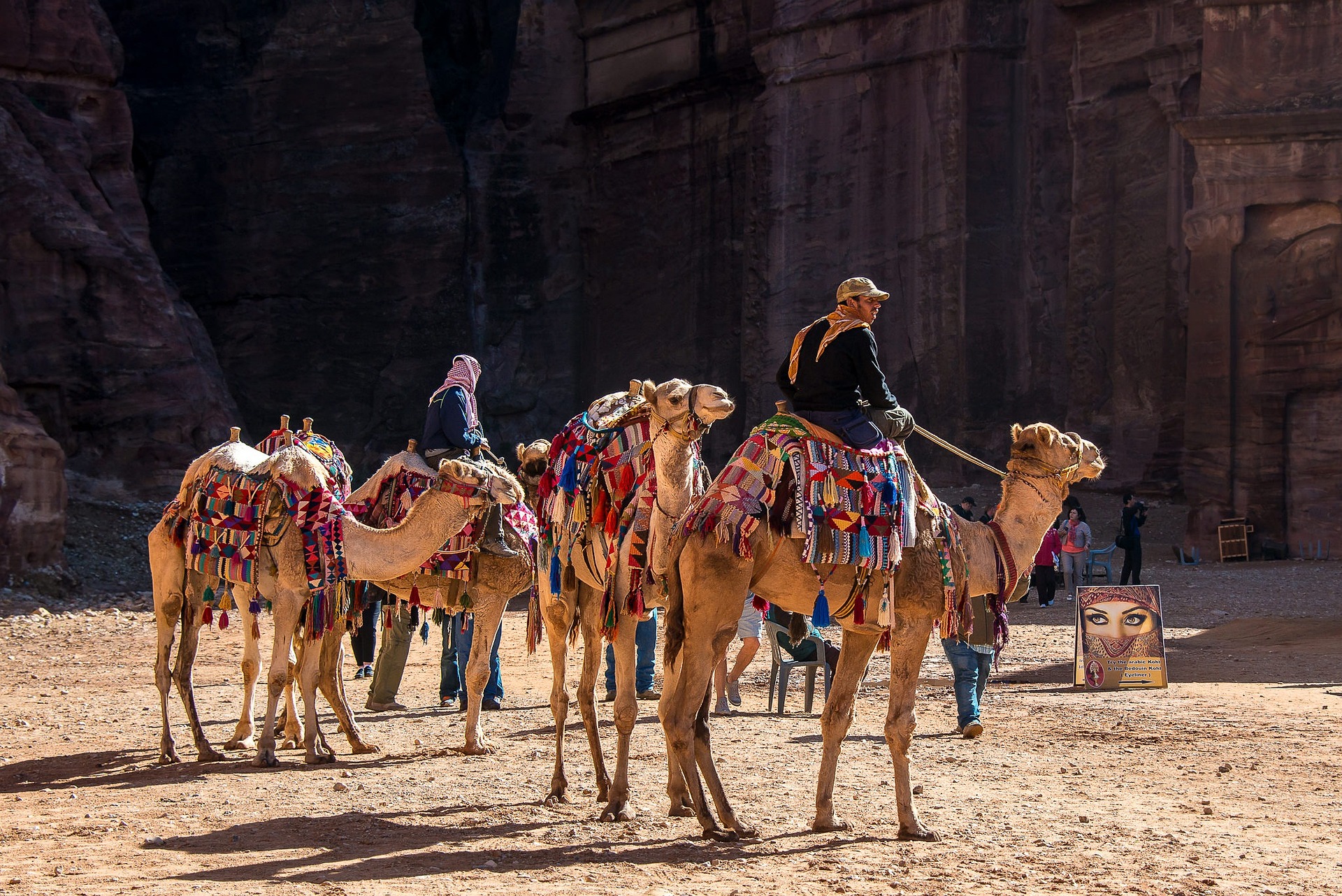
古代の交易では、ラクダの隊商(キャラバン)が砂漠を横断するために利用されました。
① 大きく柔らかい足裏
- 砂に沈みにくい
- 雪や泥でも歩きやすい
② 2本の指が広がる
- 体重を分散
- 砂漠での安定性を向上
③ 長い脚
- 地面の熱から体を離す
- 歩幅を大きくする
ラクダの幼獣について
ラクダの幼獣について整理すると、成長過程や生態の特徴がわかりやすくなります。
ラクダの幼獣(子ラクダ)の特徴
- 出生時の大きさ
- 体長:約1.0〜1.2メートル
- 体重:約30〜50kg
- 背中のこぶはほとんど発達しておらず、生後数週間〜数か月で脂肪が蓄積されて膨らむ
- 外見・毛
- 産毛に覆われていて、茶色や淡褐色
- 体毛は柔らかく、成獣のように粗く長くはない
- 目や鼻は発達しているが、産毛で守られている
- 行動
- 生まれてすぐに立ち上がり、歩くことができる(砂漠移動に対応)
- 母親に付き添い、母乳を飲む
- 群れの中で母親や他の成獣と一緒に行動する
- 食性
- 初期は母乳を主に摂取
- 生後2〜3か月で徐々に草や低木の葉を食べ始める
- 成長に応じて徐々に独立した草食生活に移行
- 成長過程
- 生後6か月〜1年でこぶが目立ってくる
- 体重や体格は急速に増加し、1〜2年でほぼ成獣の体格に近づく
- 社会性や群れのルールもこの期間に学習
- 性格・行動傾向
- 好奇心が強く、母親や群れの仲間を観察
- 危険を察知するとすぐに母親のそばに隠れる
- 遊びを通して運動能力や社会性を身につける
ラクダは絶滅危惧種なのか?
ラクダはヒトコブラクダに関してはすべて家畜化されましたから、ほぼ野生は絶滅しています。フタコブラクダは絶滅危惧種に指定されています。といってもフタコブラクダも家畜化されたのが大きな原因となります。
ラクダの種類別絶滅危惧状況
- ヒトコブラクダ(Camelus dromedarius)
- 背中に1つのこぶを持つ
- 家畜化されており、世界中で広く飼育されている
- 野生個体はほぼ絶滅しており、絶滅危惧の心配はないが、野生種はほぼ確認されない
- フタコブラクダ(Camelus bactrianus)
- 背中に2つのこぶを持つ
- 家畜化された個体が多い
- 野生のフタコブラクダ(Camelus ferus)は絶滅危惧種(EN:Endangered)
- 生息地はモンゴルや中国のゴビ砂漠に限定される
- 個体数は数千頭程度で、保護活動が行われている
ラクダはペットとして飼育できる?
ラクダはペットとして飼育できます。ただしとても大きな動物で広大なスペースが必要になりますから容易ではありません。またとても高価です。日本でも世界でも動物園でのイベントの場所で一般の方は観察したほうが良いです。確認してから写真や動画を取ることもできます。
値段はどれくらいなのか?
ラクダは餌をよく食べます。サボテンを月に10万円くらいの量を食べますので経費はとても掛かります。さらには仕入れるなら500万円くらいが必要になりますから、到底一般人に飼える動物はといえません。
飼育されている動物園(日本・世界)
ラクダは世界各地の動物園で飼育されています。主に飼育されているのは、
- 🐪 ヒトコブラクダ(Camelus dromedarius)
- 🐫 フタコブラクダ(Camelus bactrianus)
の2種類です。
🇯🇵 日本でラクダを見られる主な動物園
🐪 よこはま動物園ズーラシア
種類:ヒトコブラクダ
特徴:
- 日本では珍しいヒトコブラクダを飼育
- 砂漠環境を再現した展示
- 飼育員によるガイドやトレーニングイベントも実施されています
🐫 仙台市八木山動物公園フジサキの杜
種類:フタコブラクダ
特徴:
- 中央アジア原産の大型ラクダ
- 冬毛への換毛など季節変化を観察できる
- 寒冷地に強いラクダの特徴を見ることができます
🐫 千葉市動物公園
種類:フタコブラクダ
特徴:
- 日本の動物園で比較的よく見られるラクダ種
- 大きな体格と2つのコブが特徴
🐪 東山動植物園
種類:ラクダ類
特徴:
- 乾燥地帯の動物展示の一部として飼育
🐫 神戸市立王子動物園
種類:フタコブラクダ
特徴:
- 日本国内でラクダを見られる代表的な施設の一つ
🌍 世界の有名なラクダ飼育施設
🇺🇸 サンディエゴ動物園
種類:ヒトコブラクダ・フタコブラクダ
特徴:
- ラクダの生態解説が充実
- 乾燥地帯動物の展示で有名
🇺🇸 スミソニアン国立動物園
種類:フタコブラクダ
特徴:
- 保全教育目的でも飼育
- 中央アジアの動物展示で知られる
🇺🇸 チャタヌーガ動物園
種類:ヒトコブラクダ
特徴:
- 1つコブのアラビアラクダを展示
🇿🇦 ヨハネスブルグ動物園
種類:ラクダ類
特徴:
- 乾燥地域の動物展示の一環として飼育
🇦🇺 オーストラリアの動物園・保護施設
オーストラリアでは野生化したヒトコブラクダが多数生息しており、一部の動物園や保護施設で展示されています。

他の動物を紹介

コメント