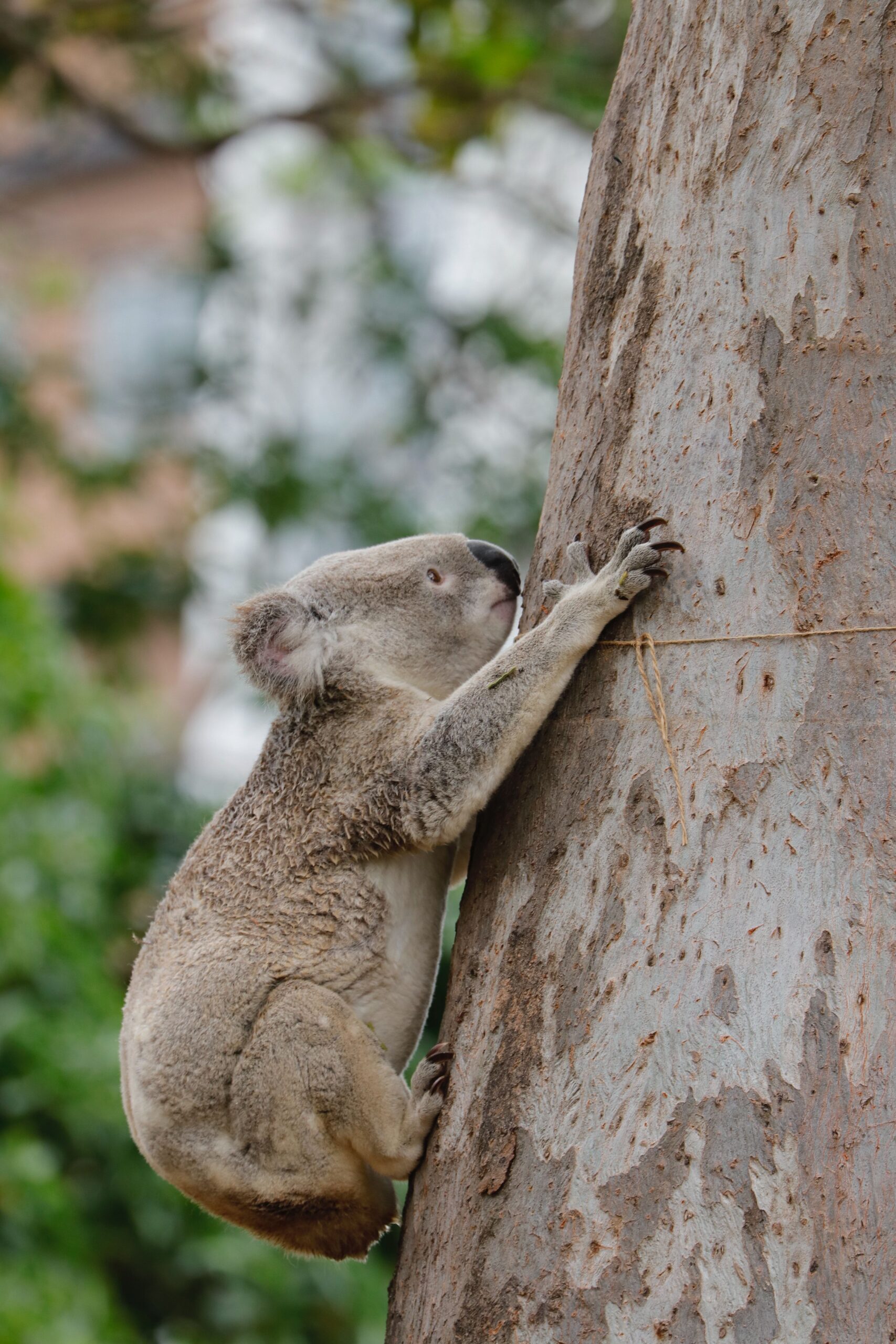
コアラはどんな動物? 特徴、生態、生息地について解説していきます。オーストラリアのシンボルとなっているコアラは世界的にもとても人気の動物で、動物園でも多数の展示がされています。この記事では亜種も含めてどんな特徴があるのかを解説していきます。


コアラとは? 基本ステータスについて
コアラは哺乳綱双前歯目コアラ科コアラ属に分類される動物でオーストラリアの固有種になります。学名はPhascolarctos cinereus。体長は67~85cm、体重は5~15kgです。野生の種類においてオスのほうがメスより大きいです。特性として木にしがみつく性質がありイメージもこれが強いでしょう。顔はおっとりしています。木登りが得意なイメージ。
| Japanese(和名) | コアラ |
| English(英名) | Koala |
| scientific name(学名) | Phascolarctos cinereus |
| classification(分類) | Mammalia、 Diprotodontia、Vombatiformes、Phascolarctos 哺乳綱、双前歯目、コアラ科、コアラ属 |
| IUCN Status(保全状況) | VULNERABLE |
| Length(体長) | 67~85cm |
| Weight(体重) | 5~15kg |
コアラのルーツ、起源は?
コアラのルーツ(起源)は、約3,000万~4,000万年前にオーストラリアでウォンバット類と共通祖先から分岐した有袋類だと考えられています。つまり、見た目はクマに似ていますが、クマとはまったく関係ありません。
進化の流れ
- 約5,500万年前
- オーストラリアには原始的な有袋類が生息していました。
- この頃の祖先から、カンガルーやウォンバット、コアラなどが枝分かれしていきます。
- 約3,000万~4,000万年前
- コアラの系統がウォンバットの系統から分岐。
- 当時の祖先は現在のコアラほどユーカリに特化していませんでした。
- 約2,500万年前
- 「コアラらしい動物」の化石が見つかっています。
- 当時は現在より種類が多く、コアラ科には15~20種ほど存在していたと考えられています。
- 約35万年前
- 現在のコアラ(Phascolarctos cinereus)が出現。
- 現在生き残っているコアラ科はこの1種だけです。
なぜユーカリだけ食べるようになった?
昔のオーストラリアは熱帯雨林が広がっていましたが、約1,600万年前頃から気候が乾燥し、ユーカリ林が拡大しました。
そこでコアラの祖先は、
- 毒を分解する能力
- 長い盲腸で葉を発酵・消化する能力
- 低栄養の食事に合わせて活動量を減らす(1日18~20時間眠る)
といった特徴を進化させ、他の動物がほとんど利用できないユーカリを食べる「専門家」になりました。これにより食料競争を避けられる一方、食性が極端に限定されることにもなりました。
「コアラ」という名前の由来
「コアラ(Koala)」という名前は、オーストラリア先住民アボリジニの言語(ダラグ語など)の”gula” や “gulawany” に由来するとされ、「水を飲まない」という意味だったという説が広く知られています。ただし、語源については複数の説があり、完全には確定していません。
分類について
コアラ属の動物は実は1種ではありません。多数の亜種がいます。それぞれ特徴を持っています。種類はいますが地上より木の上で過ごし、エネルギーを節約するためにほとんどの時間はじっとしています。食事や水分を補給するために地上に降りることがあります。東部や南部で現在は多くが見れます。
| Name: (名前) | Academic Name (学名) |
| Queensland koala クイーンズランドコアラ | Phascolarctos cinereus adustus |
| New South Wales koala ニューサウスウェールズコアラ | Phascolarctos cinereus cinereus |
| Victorian koala ヴィクトリアコアラ | Phascolarctos cinereus victor |
クイーンズランドコアラとは?
クイーンズランドコアラはクイーンズランド州に分布するコアラです。最も小さく体毛も短いと言う特徴を持っています。
ニューサウスウェールズコアラとは?
ニューサウスウェールズコアラはニューサウスウェールズ州に分布しています。大きさも体毛の長さも亜種の中では中間程度になります。
ヴィクトリアコアラとは?
ヴィクトリアコアラはビクトリア州に分布。最も大きく体毛も長くもさもさしているコアラになります。
コアラの生息地について
コアラはオーストラリアの固有種の哺乳類になります。自然では西オーストラリア州、タスマニア州には分布していませんので実際に会う場合は注意しましょう。およそ行動は木の上であり、手足の爪や指を活かして気にしがみついています。長い期間、眠っていることも多いです。
生息地
- 主な地域:コアラはオーストラリア固有の動物で、オーストラリア東部および南東部の森林地帯に生息しています。
- クイーンズランド州(北東部)
- ニューサウスウェールズ州(東部沿岸)
- ビクトリア州(南東部)
- 南オーストラリア州の一部(小規模な分布)
環境の特徴
- コアラはユーカリの木を主食とするため、ユーカリ林やユーカリが多い森林に依存しています。
- 標高は海岸沿いから丘陵地帯まで幅広く、乾燥地帯よりも湿潤な森林を好みます。
生息状況
- 人間の開発や森林伐採、都市化の影響で生息地は縮小しており、コアラの個体数は地域によって減少傾向にあります。
- 保護地域や国立公園での保護活動が進められています。
特徴は?どんな感じの生物なのか?
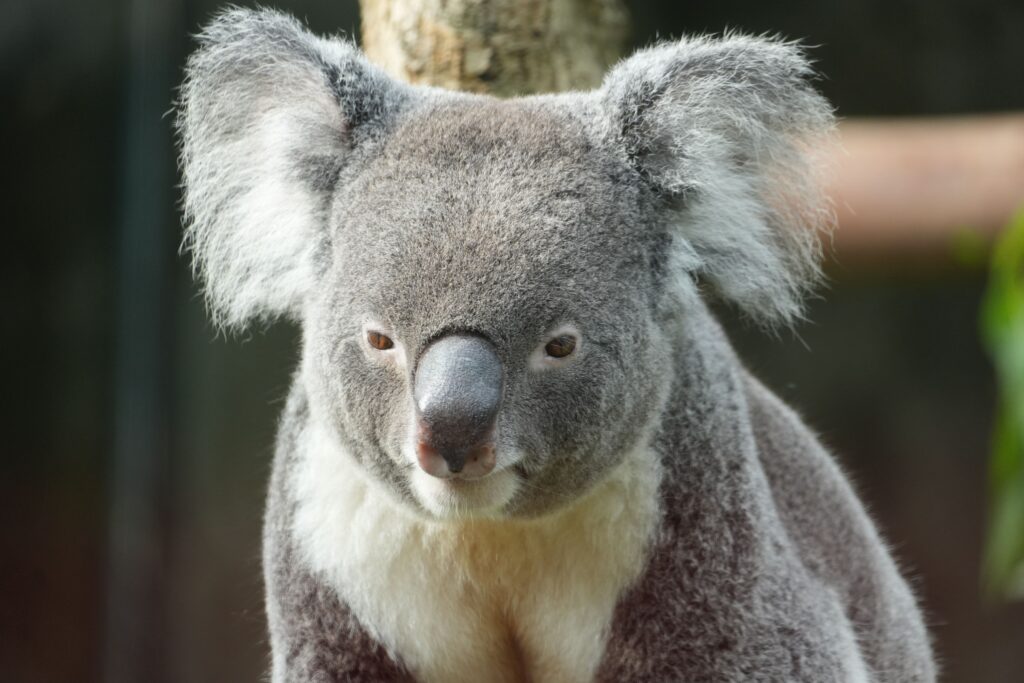
コアラはカンガルーのような有袋類のように袋、育児嚢をもっています。育児嚢で子供を育てます。体は全体にがっしりとしていて毛色は、背面が灰色や暗灰色。四肢の先まで毛で覆われています。耳は大きく、全体に厚く毛が生えていて尾がありません。コアラは地面に降りることは稀で、ほとんど樹上生活をしていて単独行動をします。前肢の鋭くて丈夫な爪を使って木の間を巧みに場所を移動して動きます。
なぜ木にずっとしがみついているのか?
コアラと言えばずっと木にしがみついていますよね。コアラは他の動物が食べないユーカリの葉を主食にしたことで、手も足も木に登りやすいように進化したのです。しがみついている理由は食べることで体温の調節をするためです。
1. 体の特徴
- 大きさ:成体は体長60〜85cm、体重4〜15kg(オスは大きめ、メスは小さめ)。
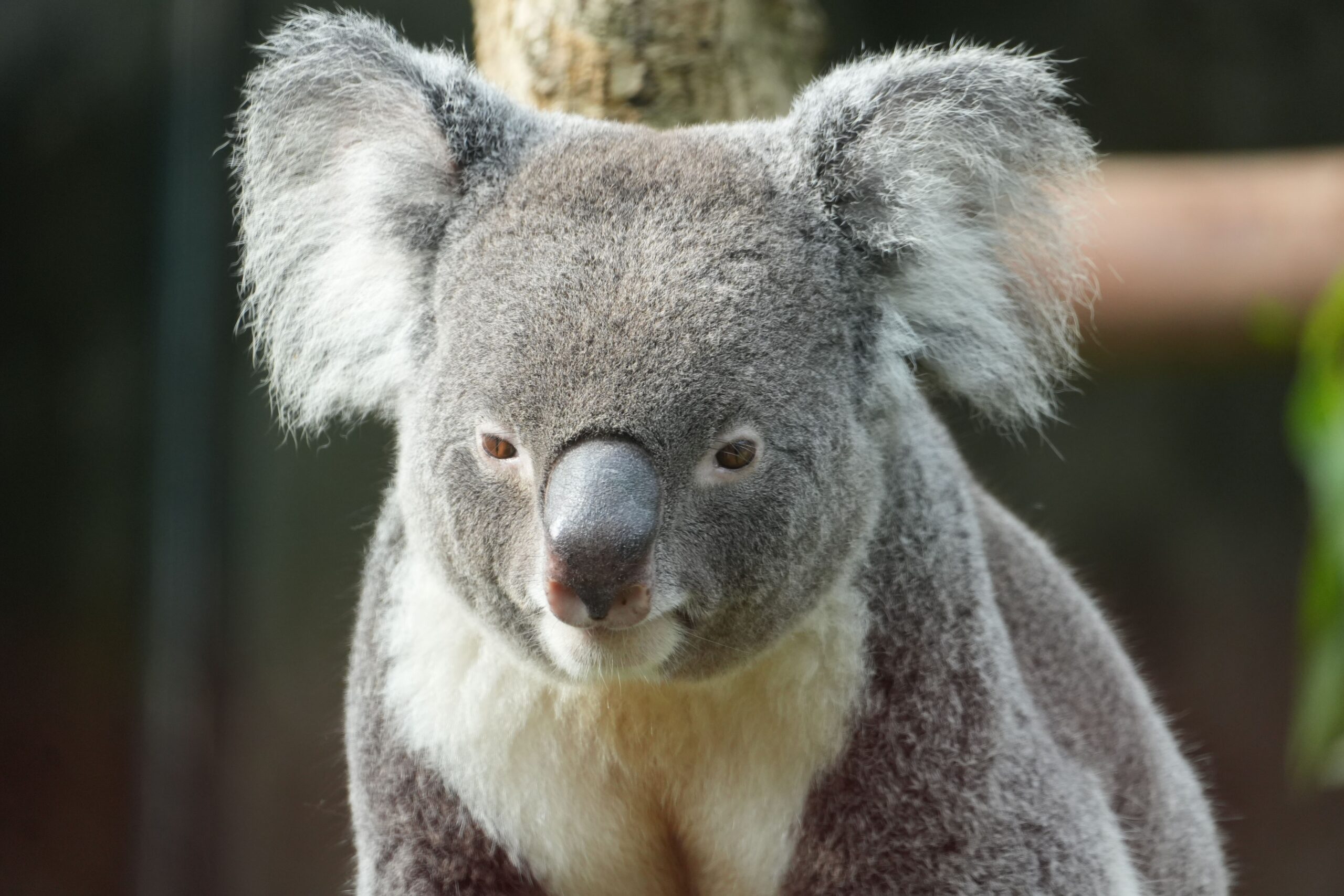
- 外見:丸い顔、丸い耳、黒い鼻が特徴的で、愛らしい「ぬいぐるみのような見た目」とよく言われます。
- 毛:厚く柔らかい灰色〜茶色の毛で、寒い時期には毛が密になり、暑い時期は薄くなります。
- 手足:前足には鋭い爪があり、木を登るのに適しています。指は2本ずつ対向する形(前足は「把握しやすい構造」)で、枝をつかむのが得意です。
2. 食性
- 主食:ユーカリの葉(特に一部の種類のみ食べる)
- 消化:ユーカリの葉は毒性があり、栄養も少ないため、非常に消化の良い腸を持ち、ゆっくり時間をかけて消化します。
- 水分:ほとんどの水分を葉から摂るため、水をほとんど飲まないこともあります。
3. 行動・習性
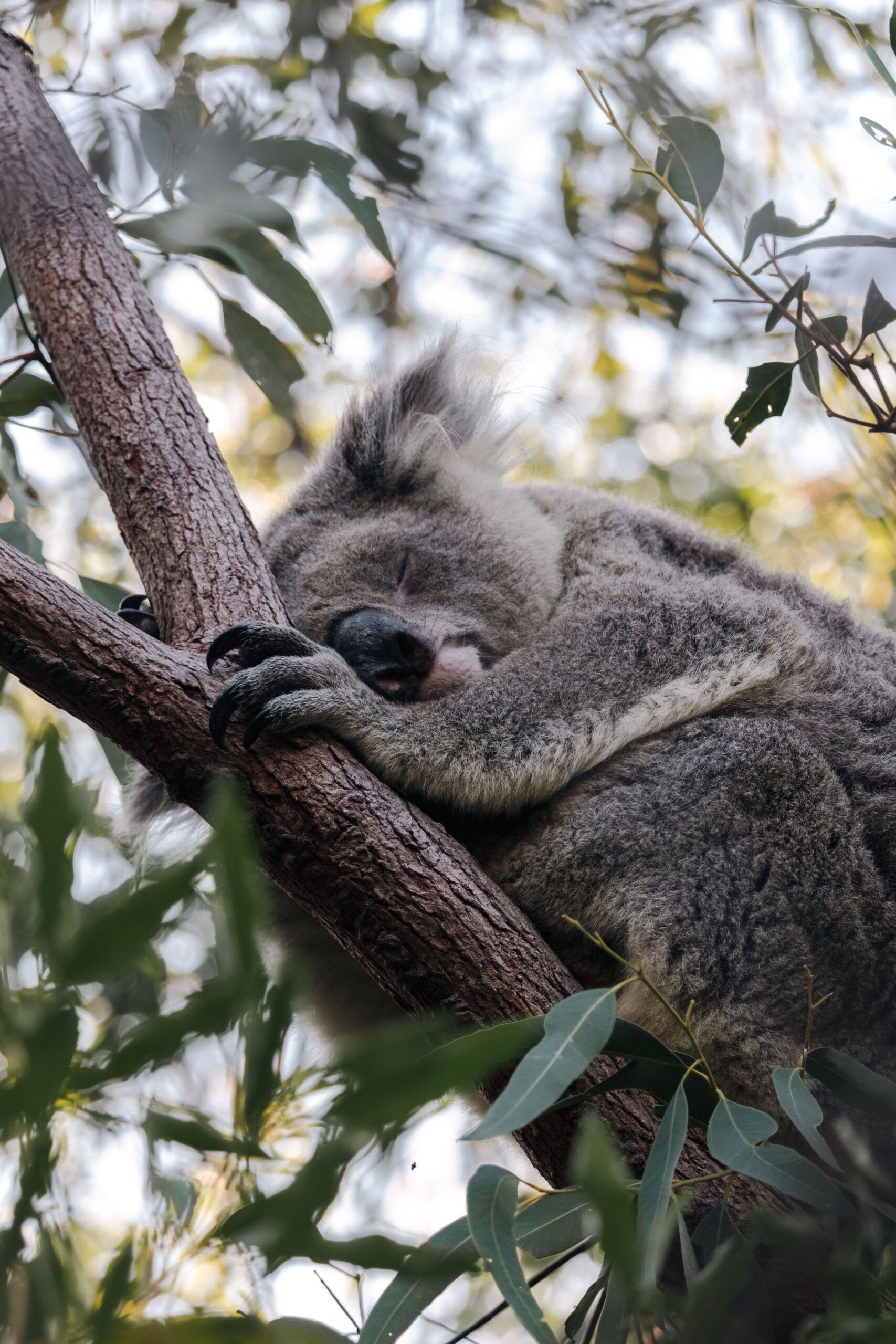
- 生活スタイル:ほとんどの時間を木の上で過ごします。
- 活動時間:夜行性で、夜に活動して葉を食べ、日中は木の上で眠ることが多いです。
- 睡眠時間:1日に18〜22時間も眠ると言われています。
4. 社会性
- 基本的に単独行動が多く、縄張りを持つことがあります。
- 繁殖期になるとオス同士が声やにおいで縄張りを主張したり、争ったりします。
5. その他の特徴
- 鳴き声:低くて大きな「ゴロゴロ音」や叫び声のような声を出します。特にオスの鳴き声は遠くまで届きます。
- 寿命:野生で10〜15年ほど、飼育下では15〜20年ほど生きます。
性格はどんな感じになるのか?
明るくおおらかな性格をしているのがコアラでこれは外見の通り。彼らは群れを作らず、単独で生活をします。縄張り意識がとても強く、自分の縄張りに入ってこようものなら歯を剥き出しにして噛みつきます。そのため狂暴な性格とも言えるでしょう。
1. 基本的な性格
- おとなしくて単独行動派
コアラは基本的に孤独を好む動物で、ほとんどの時間を1匹で過ごします。 - 臆病で神経質
大きな音や見慣れないものには敏感で、驚くとすぐ木の上で身を潜めます。
2. 活動・行動の性格
- マイペース
1日の大半を寝て過ごすため、せかせかした性格ではなく、のんびりとしています。 - 縄張り意識が強い
特にオスは縄張りを守る本能が強く、他のオスと会うと低いうなり声や叫び声で威嚇します。
3. 社交性
- 社交性は低め
親子以外では他のコアラと関わることが少なく、接触を避ける傾向があります。 - 人間には警戒心あり
野生のコアラは、人間が近づくと逃げるか木の高いところでじっとします。
4. 特徴的な性格のまとめ
- のんびりしている
- 臆病で慎重
- 単独行動を好む
- 縄張り意識が強い
- 見た目のかわいらしさに反して、気難しい一面がある
コアラの生態は?
コアラは草食性でユーカリ、アカシアといった毒性の強い植物を食べます。ずっとしがみついて動かないのはこの毒を中和するために体力を使うからとも言われています。繁殖様式は胎生。一夫多妻で時期は9月から2月にかけてメスは1度に1頭産むことが可能。寿命は15年程度と言われています。
1. 生活環境
- 生息地:オーストラリア東部〜南東部のユーカリ林。
- 生活場所:ほとんどの時間を木の上で過ごす樹上生活者。地上に降りることは少ない。
2. 食性
- 主食:ユーカリの葉(約600種類のユーカリのうち数種類しか食べない)
- 栄養:葉には栄養が少なく毒素もあるため、消化に時間がかかる腸を持つ。
- 水分:葉からほとんど水分を摂取するため、飲水の必要はあまりない。
3. 行動
- 活動時間:夜行性が基本で、夜に食事をし、昼間は寝る。
- 睡眠時間:1日18〜22時間。
- 移動:木から木へゆっくり移動し、長距離はほとんど歩かない。
4. 繁殖
- 繁殖期:オーストラリア南部は春(9〜11月)、北部は季節を問わず繁殖することもある。
- 妊娠期間:約35日
- 出産:未熟な子ども(赤ちゃんコアラ=ジョーイ)は袋の中で約6か月間成長する。
- 離乳:袋から出た後も母親の背中に乗り、約1年かけて独立。
5. 社会性
- 基本的に単独行動
- 縄張りがあり、オスは特に縄張り意識が強い
- 繁殖期以外は他の個体との接触を避ける
6. コミュニケーション
- 鳴き声:低いゴロゴロ声や叫び声で遠くまで伝える(特にオス)
- におい:オスは前肢のにおい腺で縄張りをマーク
7. 寿命
- 野生:約10〜15年
- 飼育下:15〜20年ほど
コアラの天敵は?
コアラの天敵はオオトカゲやディンゴ、フクロウ、ワシ、ニシキヘビになります。木の上で生活をするため、ほとんど襲われることがありませんが、以前より一部で肉食動物は増えており生息数が減っているのが実態です。
コアラの鳴き声
コアラは見た目からは想像しにくいですが、特にオスは非常に低く大きな声で鳴きます。
オスの鳴き声
繁殖期(主に9~2月)によく聞かれます。
- 「ウォーッ…グルルルル…」
- 「ブォォォォォ…」
- 「ゴォォォ…オオオオ…」
人によっては、
- 豚のうなり声
- チェーンソーのエンジン音
- 恐竜のような声
に例えられることがあります。体の大きさからは想像できないほど低音で、数百メートル先まで届くことがあります。
メスの鳴き声
メスは普段あまり鳴きませんが、
- 「キュー」
- 「キーッ」
- 「ギャッ」
といった高めの声を出すことがあります。
赤ちゃん(ジョーイ)の鳴き声
母親を呼ぶときなどに、
- 「ピッ」
- 「キュッ」
- 「チュチュ」
という小さくかわいらしい声を出します。
なぜあんな低い声なの?
オスのコアラは胸の近くに発達した特殊な発声器官(下降した喉頭など)を持っており、体の大きさ以上に低い声を出せます。
これは、
- メスに自分の存在を知らせる
- 他のオスを威嚇する
- 縄張りを主張する
ために役立っていると考えられています。
季節別の活動
コアラは一年中活動しますが、季節によって活動量や行動が大きく変化します。南半球(オーストラリア)の季節で説明すると、以下のようになります。
🌸 春(9~11月)
- 繁殖シーズンの始まり。
- オスが「ブォォォー」という低い鳴き声でメスを呼びます。
- 木から木へ移動する機会が増えます。
- ジョーイ(赤ちゃん)が育ち始めます。
☀️ 夏(12~2月)
- 最も暑い季節。
- 日中は木陰でじっとしていることが多く、活動の中心は夜になります。
- 幹にお腹を密着させて体温を下げる行動が見られます。
- 水分は主にユーカリの葉から摂取しますが、猛暑や干ばつ時には水を飲むこともあります。
🍂 秋(3~5月)
- 繁殖期が終わり、比較的穏やかな生活になります。
- ジョーイが母親の背中に乗って移動する姿がよく見られます。
- 食事と休息を繰り返し、体力を維持します。
❄️ 冬(6~8月)
- 気温が低いため、体を丸めて熱を逃がさないようにします。
- 活動量はやや減りますが、冬眠はしません。
- 夜にユーカリの葉を食べる習慣は一年を通して続きます。
一年を通して変わらない特徴
- 💤 1日18~20時間ほど眠る・休む
- 🌿 ユーカリの葉を1日に約300~800g食べる(種類や個体差による)
- 🌙 主に夕方から夜に活動する夜行性・薄明薄暮性
- 🌳 樹上生活が中心で、地上に降りるのは木を移動するときがほとんど
歩行速度
コアラは普段はゆっくりしていますが、必要なときには意外と素早く動けます。
地上での歩行速度
- 通常の歩行:約 2~4 km/h
- 急いで移動するとき:約 10 km/h 前後まで走ることがあります。
木から木へ移動するときだけ地面に降りることが多く、その際は四足歩行で小走りになります。
木登りの能力
コアラは地上よりも木の上での移動が得意です。
- 鋭い爪で幹をしっかりつかむ
- 太い枝を器用に渡る
- 数メートルの高さなら素早く登れる
なぜ普段は遅いの?
コアラが食べるユーカリの葉は栄養が少ないため、無駄なエネルギーを使わないように進化しました。
そのため、
- 1日の約18~20時間を休息・睡眠に充てる
- 必要なとき以外はほとんど動かない
という生活を送っています。
コアラの幼獣について
コアラの幼獣(赤ちゃんコアラ=ジョーイ)について詳しく整理します。
1. 出生
- 妊娠期間:約35日と非常に短い
- 誕生時の大きさ:わずか2〜3cm、重さは約0.5g程度で、目も耳も閉じた未熟な状態
- 特徴:非常に小さく、毛もなく、手足もまだ発達していない
2. 袋の中での成長
- 母親の**腹部の袋(ポーチ)**の中で成長する
- 期間:約6か月
- 発達:この間に目が開き、毛が生え、手足も発達して木につかまれるようになる
- 母乳:母親の乳を吸って栄養を摂る
3. 袋から出た後
- 袋を出ると母親の背中やお腹に乗る
- 期間:約6か月間、母親と一緒に過ごす
- この間に徐々にユーカリの葉を食べ始めるが、母乳も併用する
4. 独立
- 独立時期:生後約1年
- 行動:独立後は自分で木に登り、ユーカリの葉を食べて生活する
5. 性格・特徴
- 非常に臆病でおとなしい
- 母親に強く依存する期間が長いため、母親の行動に合わせることが多い
- 袋から出ると、好奇心はあるがまだ木登りは不器用
コアラは絶滅危惧種なのか?
コアラはもともと絶滅危惧種で、2014年に絶滅危惧Ⅱ類に再評価されました。ニューサウスウェールズ州、クイーンズランド州では、2022年に絶滅の危機に瀕している種としてリストに記載しています。推定個体数はオーストラリア政府の絶滅危惧種科学委員会の情報によると、2021年のコアラの個体数は9万2,000頭で、20年前の18万5,000頭から減少したと推定。以下のような原因が挙げられます。
ヨーロッパの入植者によって激しく狩猟された
ヨーロッパの入植者によって激しく狩猟されたのがコアラです。毛皮は敷物、コートの裏地などに利用され、儲かりました。いまでこそ、制限されているのですが、昔は乱獲がひどく、かなり生息数が減りました。
生息地の破壊と分断
生息地の破壊と分断も大きな問題。森林伐採などによってコアラが生息できる地域が激減しております。農村部では農業のために生息地が伐採されています。保護が必要な状態にあります。
コアラは飼育が可能なのか?
コアラはユーカリを消化するのに特化した、特殊な体のつくりをしています。そのため、一般人が飼育することは極めて難しいとも言えるでしょう。さらに絶滅危惧種であることから決して簡単に入手はできません。
1. 法的な制約
- コアラは**オーストラリアの固有種であり、絶滅危惧種(地域によっては絶滅危惧I類)**に指定されています。
- オーストラリア国外での輸出入は厳しく規制されており、日本では個人で飼育することは法律上認められていません。
- 飼育できるのは動物園や研究施設などの許可を受けた団体のみです。
2. 生態・飼育の難しさ
- 食性が極端に特殊
- 主食はユーカリの葉のみで、種類によっては食べられない葉もある
- 葉の鮮度や種類を常に確保する必要がある
- 活動パターンが特殊
- 1日の大半を寝て過ごす夜行性
- 木の上での生活が基本で、広い樹上空間が必要
- 病気やストレスに弱い
- ストレスで食欲不振や病気になることが多い
- 捕獲や環境の変化に弱く、家庭環境では長生きさせるのが困難
3. 飼育されている例
- 世界中の動物園やオーストラリア国内の保護施設で飼育されている
- 飼育には専門の知識、設備、許可、食料供給が必須
- 例えば日本の動物園では、ユーカリの葉を海外から調達し、温度・湿度管理をした専用施設で飼育されている
まとめ
- 個人で飼うのは不可能
- 飼育できるのは動物園・研究施設のみ
- 飼育には特殊な食事管理と環境整備が必須
飼育されている動物園(日本・世界)
コアラはユーカリの安定供給が必要なため、世界でも飼育できる動物園は多くありません。
日本でコアラを飼育している動物園
現在、日本でコアラを飼育している主な動物園は7園です。
- 多摩動物公園(東京都)
- 埼玉県こども動物自然公園
- 横浜市立金沢動物園
- 東山動植物園
- 神戸市立王子動物園
- 淡路ファームパーク イングランドの丘
- 平川動物公園
世界で有名なコアラ飼育施設
オーストラリア
- Lone Pine Koala Sanctuary
- 世界最古のコアラ保護施設(1927年開園)
- Australia Zoo
- Taronga Zoo Sydney
- Currumbin Wildlife Sanctuary
アメリカ
- San Diego Zoo
- San Diego Zoo Safari Park
- Los Angeles Zoo
ヨーロッパ
- Zoo Duisburg
- Zoo Leipzig
- Wilhelma
- Zoo Dresden
抱っこできる?
現在は動物福祉の観点から、抱っこ体験は減少傾向です。
- オーストラリアでも州によって規制が異なります。
- クイーンズランド州の一部施設では写真撮影などが可能な場合がありますが、多くの施設では「見るだけ」の展示へ移行しています。
他の動物を紹介
コメント