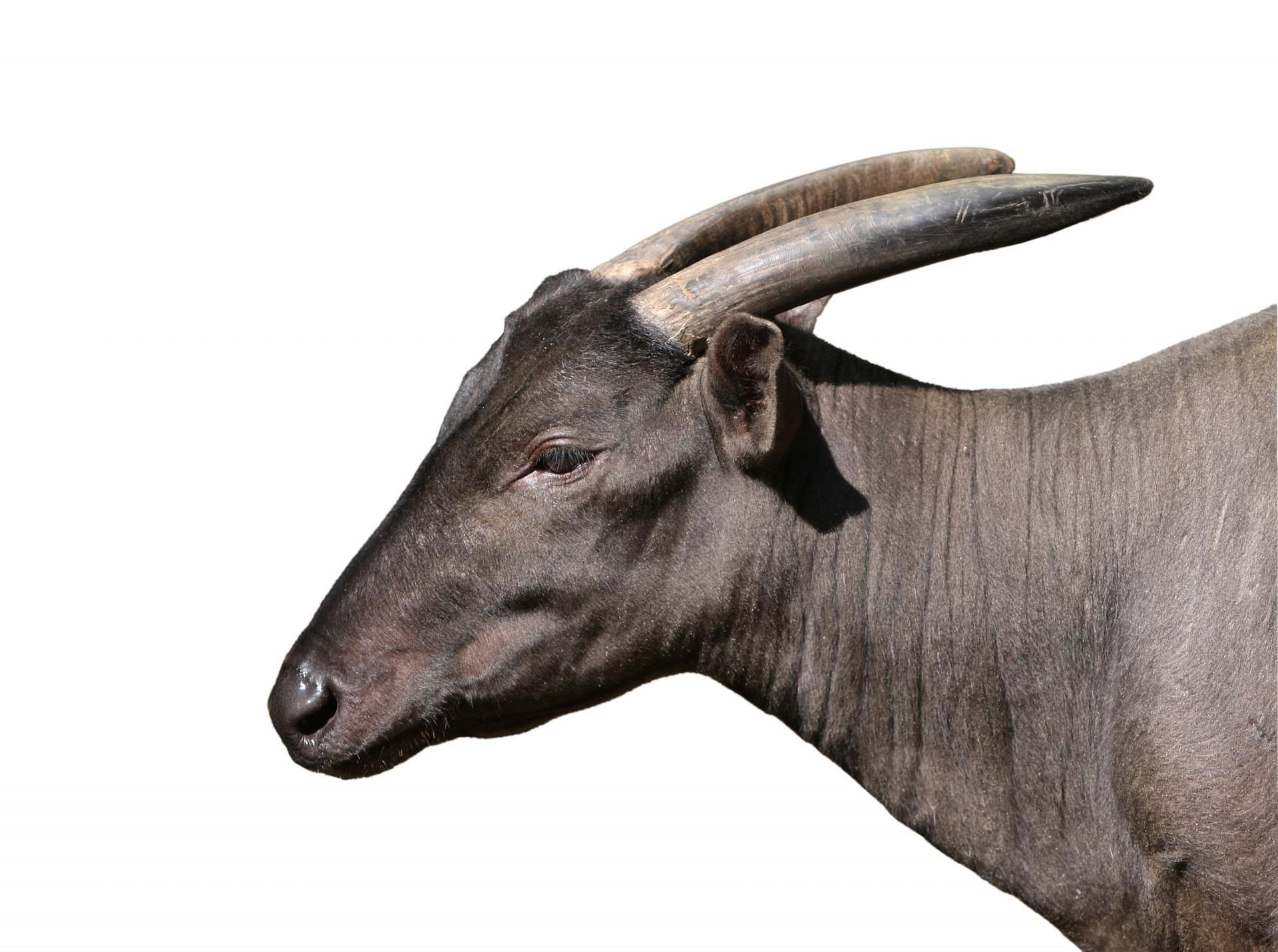
アノア(ローランドアノア)はどんな動物?特徴、生態、生息地について解説します。インドネシアのセレベス島北部だけに生息する小型の水牛であり、とてもレアな動物です。そのため知らない方も多いと思いますのでこの動物について紹介をしていきます。


アノアとは? 基本ステータスについて
アノアは哺乳綱ウシ目(偶蹄目)ウシ科アジアスイギュウ属に分類される偶蹄類。学名はBubalus depressicornis、英語名はCommon anoa、Lowland anoa。体長は150-180cm、体重は150-300kgで体高70~100cm。情報の一覧は以下の通り。
| Japanese(和名) | アノア |
| English(英名) | Common anoa Lowland anoa |
| scientific name(学名) | Bubalus depressicornis |
| classification(分類) | Mammalia、Artiodactyla、 Bovidae、Bubalus 哺乳綱、ウシ目、ウシ科、アジアスイギュウ属 |
| IUCN Status(保全状況) | ENDANGERED |
| Length(体長) | 150-180cm |
| Weight(体重) | 150-300kg |
アノア(Anoa)の分類学
アノアは、インドネシアのスラウェシ島などに生息する小型の水牛で、野生種と考えられています。学術的には以下のように分類されます。
- 界 (Kingdom): 動物界 (Animalia)
- 門 (Phylum): 脊索動物門 (Chordata)
- 綱 (Class): 哺乳綱 (Mammalia)
- 目 (Order): 偶蹄目 (Artiodactyla)
- 科 (Family): ウシ科 (Bovidae)
- 亜科 (Subfamily): ウシ亜科 (Bovinae)
- 属 (Genus): アノア属 (Bubalus の一部として分類されることもあります)
- 種 (Species):
- 小型アノア (Anoa depressicornis)
- 大型アノア (Anoa quarlesi)
生息地について
アノアはインドネシアのセレベス島(スラウェシ島)にのみ分布しています。固有種の動物となります。
アノアの生息地
アノアは インドネシア固有種 で、特に スラウェシ島と周辺の小島 に分布しています。種類によって少し異なります。
1. 小型アノア(Anoa depressicornis)
- 生息地:スラウェシ島の 南部・南東部の森林
- 特徴:より湿った低地の熱帯雨林を好みます。
- 標高:海抜0〜1,500m程度までの森林に生息。
2. 大型アノア(Anoa quarlesi)
- 生息地:スラウェシ島の 北部・中央部の森林
- 特徴:丘陵地や山地の森林を好みます。
- 標高:低地から中山地まで。
生息環境の特徴
- 森林依存性が強い:密林や湿地帯の近くで生活。
- 単独または少数群で行動:大規模な群れは作らない。
- 水の確保が重要:湿地や小川の近くを行動範囲とする。
分布上の問題
- アノアの生息地は 森林伐採や農地開発 により断片化しています。
- 狩猟や人間の活動も個体数減少の大きな要因です。
特徴は?どんな感じの生物なのか?
アノアは頸部や胴体は太い、尾は短く体毛がなく、皮膚がほぼ露出しています。V字状の角があります。角は18-37cmで左右の角の基部は接しています。スイギュウの角のように湾曲していないのが特徴です。彼らは森林内の沼地などの湿地帯を好みます。日中は休んでいて、夕方から良く活動をします。雄は角で樹木にマーキングすることから縄張り意識があります。
1. 外見
- 体格:小型の水牛で、成獣でも 体高70〜120cm程度、体重150〜300kgほど。
- 体色:濃い茶色〜黒色で、種類によってやや違う。
- 小型アノア:濃い茶色で体毛が短め
- 大型アノア:黒っぽく光沢のある毛
- 角:短めで曲がった角を持つ(オス・メスともに角があるがオスの方が太く長い)
- 顔:鼻先が丸く、目が大きめでかわいらしい印象
- 耳:丸く小さめ
2. 行動・性格
- 性格:臆病でおとなしい。人間や捕食者に遭うとすぐ逃げる。
- 生活:主に単独か小群(親子など)で生活。大きな群れは作らない。
- 活動時間:夜行性〜薄明薄暮性(朝晩や夜間に活動することが多い)
3. 食性
- 草食性:葉っぱ、若芽、果実、湿地の草などを食べる
- 水分摂取:水辺の植物や川の水から水分を補給
4. 繁殖
- 妊娠期間:約9か月
- 出産:1回に1頭だけ(稀に双子)
- 幼獣は生後数か月は母親に依存
5. 生態の特徴
- 森林や湿地帯に適応した隠密型の水牛
- 捕食者(ジャコウネコや人間)から逃れるため、身を隠して静かに生活
- 生息地が狭く、人間活動によって分布が断片化している

性格はどんな感じなのか?
アノアは普段は単独か母親とその子どもで生活しているため、あまり社会性が強い動物ではありません。また怒りっぽいので小柄ですが、気が荒く、怒らせると危険ですので扱いに注意が必要になります。
1. 臆病で警戒心が強い
- 人や捕食者に遭遇するとすぐ逃げる。
- 森林の中で静かに身を隠して暮らすことが多い。
- 大声や大きな物音に敏感。
2. おとなしくて攻撃的ではない
- 基本的に草食で平和的。
- オス同士で縄張り争いはあるが、人間には攻撃してこない。
- 群れを作らず、単独か小さな家族単位で生活する。
3. 慎重で警戒心が強い
- 移動するときも、音や匂いに敏感で慎重。
- 自然界では生き残るために「隠れること」を第一にしている。
4. マイペースで穏やか
- 森林でのんびり草を食べる時間が多い。
- 他の動物や人と接触することを避けるため、目立たない行動を好む。
生態はどうなっているのか?
アノアは草木の芽や木の葉、木の枝、水生植物、果実を食べて生活します。妊娠期間275~315日で一年中繁殖をします。1回につき1頭産むことができます。寿命は野生下では長くても20年程度と言われています。
1. 生息環境
- 森林依存型の動物
- 熱帯雨林や湿地のある森林に生息。
- スラウェシ島の低地〜中山地(標高0〜1,500m)が中心。
- 水辺の近くを好む
- 草や果実だけでなく、水分補給のために小川や湿地近くで行動。
2. 活動パターン
- 夜行性〜薄明薄暮性
- 朝夕や夜に活発に活動。
- 日中は密林の中で休息して身を隠すことが多い。
- 単独か小群で行動
- 親子や兄弟など2〜3頭程度の小集団で生活。
- 大群は作らず、あくまで森の隠密型。
3. 食性
- 完全草食性
- 葉っぱ、若芽、果実、湿地の草などを食べる。
- 食物を探して森の中をゆっくり移動。
- 水分補給
- 湿地や小川の水を飲むことも多い。
4. 繁殖・寿命
- 妊娠期間:約9か月
- 出産:1回に1頭(稀に双子)
- 育児:生後数か月は母親に依存し、徐々に独立
- 寿命:野生で約15〜20年
天敵はいるのか?
アノアはこれといった天敵がいません。
アノアの幼獣について
アノアの 幼獣(赤ちゃん)の特徴や生態 について詳しくまとめます。
1. 外見
- 生まれた直後は 体重5〜10kg程度。
- 体高も低く、おとなの半分以下の小ささ。
- 毛色はおとなより明るめの茶色で、斑点や模様があることもある(保護色として森に溶け込む)。
- 角は生えておらず、成長とともに徐々に伸びる。
2. 行動
- 母親に 密着して行動
- 生後数か月は母親のそばから離れない。
- 母親の行動を見て食べ方や森の移動の仕方を学ぶ。
- 臆病で警戒心が強い
- 幼獣は特に捕食者に敏感で、物音がすると母親の背後や茂みに隠れる。
3. 食性
- 生後すぐは 母乳を飲む
- 生後数か月で 葉や果実などの草食 を少しずつ食べ始める
- 離乳はおよそ 6〜8か月ほどで完了
4. 社会性
- 幼獣は母親とだけ行動することが多く、他の幼獣と接する機会は少ない
- 独立性が高くなるのは 1年近く経ってから
- 危険を感じると母親の後ろに隠れる、隠密行動を学ぶ
5. 成長
- 1年で体重はおよそ半分程度まで成長
- 2〜3年でほぼ成獣に近い大きさになる
- 成熟はオスで3〜4歳、メスで2〜3歳ほど
アノアは絶滅危惧種なのか?
アノアは絶滅危惧種に指定されている動物です。ワシントン条約附属書Iに掲載されていますので国際取引が厳しく制限されています。森林伐採や開発による生息地の破壊、さらには食用にもなるため乱獲が進んでいる状態です。アノアは森林地帯を好むため、森林伐採は致命的な状況になっています。
1. IUCNの評価
- 小型アノア(Anoa depressicornis):絶滅危惧(EN)
- 大型アノア(Anoa quarlesi):絶滅危惧(EN)
- どちらも 「野生での個体数が減少している」 と評価されています。
2. 主な絶滅危惧の原因
- 森林破壊
- 森林伐採や農地開発により生息地が減少・分断
- 生息地の断片化で個体間の交流が難しくなる
- 狩猟
- 食肉や角・皮を目的とした狩猟
- 捕食者が少ないとはいえ、人間の狩猟圧で個体数が減少
- 小さな生息域
- スラウェシ島固有種で分布が限定的
- 生息範囲が狭いため、環境変化に弱い
3. 保護の取り組み
- インドネシア国内で保護区や国立公園内に生息
- 捕獲や狩猟の規制
- 森林再生や生息環境の保全活動
アノアはペットとして飼育可能?
アノアは以上のように絶滅危惧種に指定されているうえにワシントン条約にも掲載されているため国際取引が厳しく制限されています。そのため、飼育することは極めて難しいです。動物園やイベントで鑑賞することをおすすめします。
1. 絶滅危惧種である
- アノアは IUCN絶滅危惧種(EN) に指定されており、野生個体の捕獲・輸出は禁止されている。
- 法的に保護されているため、個人がペットとして入手することはできません。
2. 生態的に飼育が難しい
- 森林性で臆病
- 密林で静かに暮らす生態で、人間に慣れにくい
- 広い行動範囲が必要
- 野生では森や水辺を自由に移動するため、狭い檻ではストレスが大きい
- 単独行動を好むが警戒心が強い
- 人間や他の動物との接触に適応していない
3. 食事や環境の管理が難しい
- 草食だが 特殊な森林植物や果実を必要
- 湿度や温度の管理も重要で、家庭で再現するのは非常に困難
4. 現実的な飼育例
- 動物園や保護施設でのみ飼育可能
- 飼育は 専門家による管理下でのみ
- ペットショップや個人宅での飼育例は基本的に存在しない
飼育されている動物園(日本・世界)
アノアはインドネシア・スラウェシ島固有の小型のウシ科動物で、主に「ローランドアノア(Bubalus depressicornis)」と「マウンテンアノア(Bubalus quarlesi)」の2タイプが知られています。
🇯🇵 日本
現在、日本の主要な動物園でアノアを常時展示している施設は確認できません。
過去には、
- 金沢動物園
- 旧・行川アイランド
などでローランドアノアの飼育・展示実績がありましたが、現在は日本のJAZA加盟園での現存個体は確認できません。
したがって、日本で現在アノアを見るのはかなり難しいです。
🌍 世界
海外では現在も飼育されています。特にヨーロッパ・インドネシア・北米に飼育施設があります。
🇬🇧 イギリス
チェスター動物園(Chester Zoo)
ローランドアノアを飼育しており、2026年7月にはメスの幼獣が誕生しています。
また、チェスター動物園はアノアの域外保全にも取り組んでおり、EAZA域内には約35頭のローランドアノアがいるとしています。
🇩🇪 ドイツ
ローランドアノアでは、
- ベルリン動物園
- ティアパーク・ケムニッツ
- ライプツィヒ動物園
- ヴィルヘルマ動植物園
などが確認されています。
マウンテンアノアでは、クレーフェルト動物園が現在の飼育施設として確認されています。
🇳🇱 オランダ
- アムステルダム動物園(Artis)
- ロッテルダム動物園
などでローランドアノアが確認されています。
🇧🇪 ベルギー
- アントワープ動物園
- プランケンダール動物園
などで飼育されています。
🇨🇿 チェコ
- プラハ動物園
- オロモウツ動物園
- ウースチー・ナド・ラベム動物園
などでローランドアノアが確認されています。
🇺🇸 アメリカ
- フィラデルフィア動物園
- ローリー公園動物園(タンパ)
- サンディエゴ動物園
- フォートワース動物園
などでローランドアノアの飼育記録があります。
🇮🇩 インドネシア
本来の生息国なので、飼育施設もあります。
ローランドアノアでは、
- Taman Safari Bogor
- スラバヤ動物園
- Secret Zoo Batu
などが確認されています。
マウンテンアノアでは、
- Ragunan Zoo(ジャカルタ)
- Kebun Binatang Citra Satwa Celebes
などが確認されています。
他の記事もおすすめ

コメント