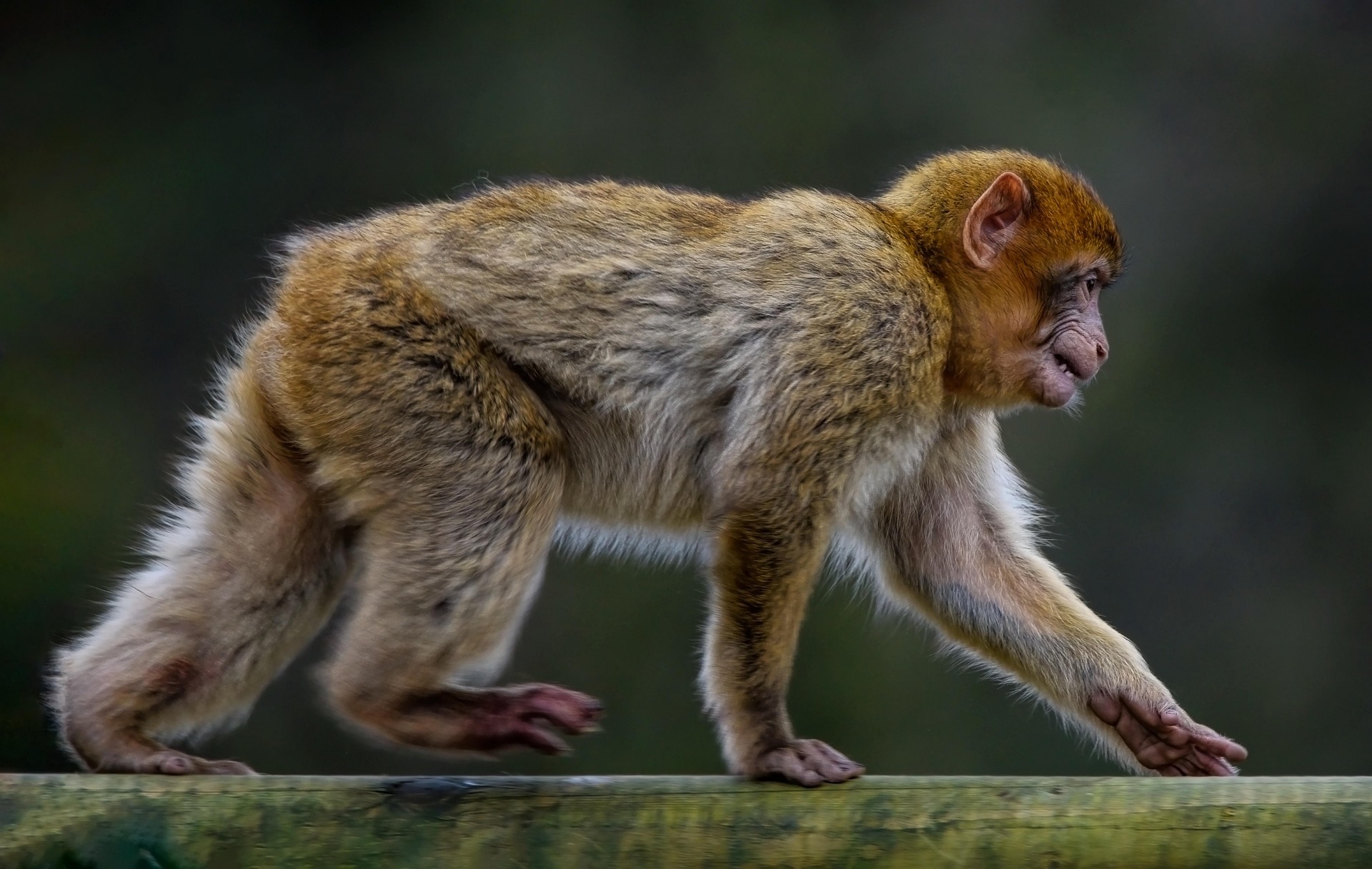
バーバリーマカクはどんな動物?特徴、生態、生息地について解説します。数十頭に達する雌雄がほぼ同数の複雄複雌の群れを形成して生活していることからとても賑やかな集団を見ることがあるでしょう。彼らは実は絶滅危惧種に指定されている動物です。


バーバリーマカクとは? 基本ステータスについて
バーバリーマカクは哺乳綱霊長目オナガザル科マカク属に分類される霊長類。英語名はBarbary ape、Barbary Macaque。学名はMacaca sylvanus。体長は50-60cm、体重は10-15kgになります。情報の一覧は以下の通り。
| Japanese(和名) | バーバリーマカク |
| English(英名) | Barbary ape Barbary Macaque |
| scientific name(学名) | Macaca sylvanus |
| classification(分類) | Mammalia、Primate、 Cercopithecidae、Macaca 哺乳綱、霊長目、オナガザル科、マカク属 |
| IUCN Status(保全状況) | ENDANGERED |
| Length(体長) | 50-60cm |
| Weight(体重) | 10-15kg |
バーバリーマカク(Barbary macaque)の分類学
- 界 (Kingdom): 動物界 (Animalia)
- 門 (Phylum): 脊索動物門 (Chordata)
- 綱 (Class): 哺乳綱 (Mammalia)
- 目 (Order): 霊長目 (Primates)
- 科 (Family): オナガザル科 / マカク属に分類されることもある (Cercopithecidae)
- 属 (Genus): マカク属 (Macaca)
- 種 (Species): バーバリーマカク (Macaca sylvanus)
バーバリーマカクのルーツ、起源は?
バーバリーマカク(Macaca sylvanus)は、現在の姿だけを見ると「北アフリカのサル」ですが、進化史をたどるとかなり面白い動物です。
🌍 起源は「アフリカ」
マカク属そのものはアフリカで起源したと考えられています。
バーバリーマカクは現生マカク類の中でも特に古い系統で、現生のマカク属では最も早く分岐した系統の一つとされています。マカク属の起源は約550万年前とする分子時計研究があります。
大まかには、
アフリカでマカク類が進化
↓
北アフリカからユーラシアへ拡散
↓
ヨーロッパ各地へ進出
↓
温暖な時期にヨーロッパで繁栄
↓
寒冷化・環境変化などでヨーロッパから姿を消す
↓
北アフリカに残った系統が現在のバーバリーマカク
という歴史です。
🦴 昔はヨーロッパにも大量にいた
ここが最大のポイントです。
現在の野生個体はモロッコとアルジェリアの一部に限られていますが、過去にはヨーロッパに広く分布していました。
化石は、
- 🇪🇸 スペイン
- 🇫🇷 フランス
- 🇮🇹 イタリア
- 🇬🇷 ギリシャ
- 🇩🇪 ドイツ
- 🇬🇧 イギリス
などから発見されています。
なんとドイツでは約6万年前まで生息していたとされます。
生息地について
バーバリーマカクはアフリカ北西部のモロッコやアルジェリアなどに分布しています。
1. 主な分布地域
- 北アフリカのアトラス山脈
- モロッコ北部とアルジェリア北部の山岳地帯が中心
- 標高500〜2,500m程度の森林や山地に生息
- 小さな島
- ジブラルタルには野生化した個体群が存在
- 歴史的に人間により導入されたもの
2. 生息環境
- 森林性が強い
- 常緑樹林、落葉広葉樹林、混交林
- 森林の開けた場所や岩場の多い山岳地帯も利用
- 水場の近くを好む
- 川や小川の近くで水分補給
- 食物環境の変化に適応
- 果実、葉、種子、昆虫などを採取
3. 生息形態
- 山岳地帯の森林を中心に 群れで生活
- 樹上と地上の両方で活動
- 樹上で食物採取や休息
- 地上で移動や社会的活動
4. 生息状況と課題
- 個体数は減少傾向
- 森林伐採や農地開発で生息地が断片化
- 観光や人間の接触によるストレスも問題
- 保護区や国立公園での保護活動が進められている
特徴は?どんな感じの生物なのか?
バーバリーマカクは尾は非常に短く、ほとんどないです。毛はやや長くて厚く、毛色は黄色っぽい灰色や灰色を帯びたような茶色。腹面は白で体つきはがっしりとしています。バーバリーマカクは四肢には5本の指があり、物をつかむことが出来ます。棲息地は標高1500~2500m程のところの渓谷や断崖などの環境を好み森林地帯が好きです。昼間に活動がメインです。
1. 外見
- 体格:中型のサルで、体長は約 50〜70cm、尾はほとんど短いかない
- 体重:オスで 15〜20kg、メスで 10〜15kg 程度
- 毛色:背中は黄褐色〜茶色、腹は淡い灰色〜白色
- 顔:ピンク色の肌で毛が少ない
- 尾:他のマカク属に比べて尾が非常に短く、ほとんど目立たない
2. 性格・行動
- 社交的で群れで生活
- 群れは 10〜50頭程度、オス優勢の社会構造
- 知能が高く好奇心旺盛
- 木の上や地上で遊んだり探索する
- 警戒心はあるが、臆病すぎない
- 群れで協力して危険を回避
3. 食性
- 雑食性だが植物中心
- 果実、種子、葉、花、樹皮
- 昆虫や小動物も食べることがある
4. 生態的特徴
- 樹上と地上の両方で活動
- 食物採取は樹上で行うことが多い
- 地上では移動や社会的行動を行う
- 繁殖
- 妊娠期間:約5〜6か月
- 1回に1頭を出産
- 幼獣は母親に依存して成長
5. その他の特徴
- 北アフリカに生息する唯一のマカク属
- 尾がほとんどなく、「尾なしマカク」 とも呼ばれる
- 英語では Barbary ape(バーバリーエイプ) と呼ばれることがあるが、実際はサル(マカク)

性格はどんな感じなのか?
バーバリーマカクは社会性が強い動物で群れで生活しています。社会的な階級をもっていてこれはメスでも雄でも同様になります。群れの中にいる幼獣、特に血縁関係のある幼獣を運搬・毛づくろいするなどの子育てを行うためかなり絆が強いです。
1. 社交的で群れ行動を重視
- バーバリーマカクは 群れで生活する社会性の高いサル
- 群れの中では序列(社会的ヒエラルキー)があり、オスが群れの中心を守る
- 仲間同士で 毛づくろいや遊び を通して関係を築く
2. 知能が高く好奇心旺盛
- 木登りや地上での探索など 遊びや調べる行動が活発
- 食べ物を探すときに工夫するなど、学習能力が高い
- 観光地などでは人間を観察し、学習することもある
3. 警戒心はあるが臆病すぎない
- 危険や捕食者に対しては警戒する
- しかし群れで協力して警戒するため、完全に隠れるより 状況に応じて行動
- 人間に慣れている群れでは、比較的大胆に行動することもある
4. 遊び好きで活発
- 幼獣や若い個体は特に遊び好き
- 木登り、追いかけっこ、物の探索などで活発に動く
- 社会性を育むための行動が多い
生態はどうなっているのか?
バーバリーマカクは果実や花、木の葉や種子、芽、樹皮、球根などの植物を食べて生活します。一夫多妻で、繁殖期は11~3月、妊娠期間160日あり、1回につき1-3頭産むことができます。生まれたばかりの子どもの体重は400~500gで半年くらいで離乳します。寿命は20年程度です。
1. 生息環境
- 主な生息地:北アフリカのアトラス山脈(モロッコ北部・アルジェリア北部)、ジブラルタル
- 環境:森林、岩場の多い山岳地帯、開けた林地
- 水源:川や小川の近くを好む
- 標高:約500〜2,500m
2. 活動パターン
- 昼行性(Diurnal)
- 日中に活動、夜は木の上や岩場で休む
- 樹上・地上の両方で活動
- 食物採取や遊びは樹上
- 移動・社会的交流は地上
3. 群れ構造
- 群れで生活する社会性の高いサル
- 群れの大きさ:10〜50頭程度
- オス優勢の社会構造(順位がはっきりしている)
- 仲間同士の毛づくろいで絆を強める
4. 食性
- 雑食性だが植物中心
- 果実、種子、葉、樹皮、花
- 昆虫や小動物も摂取
- 水分補給:湿地や川で行う
5. 繁殖
- 妊娠期間:約5〜6か月
- 出産:1回に1頭
- 幼獣は母親に依存して生活
- 性成熟:メスは約4年、オスは約5年で成熟
天敵はいるのか?
バーバリーマカクはワシやジャッカル、さらにはキツネなどが天敵に当たります。

換毛について
バーバリーマカクは年間を通して毛が生え替わりますが、特に季節の変化に合わせて毛の状態が変わります。
🧥 春〜初夏:冬の毛から夏の毛へ
冬の寒さが緩むと、厚くなっていた毛が徐々に抜けていきます。
- 抜け毛が増える
- 毛並みが一時的に粗く見える
- 新しい毛が伸びてくる
- 暖かくなるにつれて被毛が軽くなる
アトラス山脈など、冬に冷え込む地域ではこの季節変化が比較的はっきりします。
☀️ 夏:比較的軽い被毛
夏は冬よりも被毛が薄くなり、暑さに対応します。
バーバリーマカクは北アフリカの暑い地域だけでなく、標高の高い山地や雪の降る地域にも暮らすため、季節による体毛の変化は重要です。
🍂 秋:冬に向けて毛が増える
気温が下がってくると、夏の毛から徐々に冬向けの被毛へ変わります。
古い毛が抜ける → 新しい毛が伸びる → 被毛が厚くなる
というサイクルです。
特に山地では冬の低温に備える必要があります。
❄️ 冬:厚い被毛で寒さに対応
バーバリーマカクの特徴の一つが、サルとしては珍しく寒冷環境にかなり強いこと。
アトラス山脈では冬に雪が降ることもあります。
そのため冬には、
- 毛が長くなる
- 被毛が密になる
- 体温を逃がしにくくなる
といった変化が見られます。
鳴き声について
バーバリーマカクは、かなり多彩な声を使って群れの仲間とコミュニケーションするサルです。特に群れで生活するため、鳴き声は重要な情報伝達手段になっています。
🔊 代表的な鳴き声
1. 「クー」「コー」という柔らかい声
仲間同士が近距離で接触しているときなどに出す、比較的穏やかな声です。
「ここにいるよ」「大丈夫」
といった、友好的なコミュニケーションに関係すると考えられています。
2. 「キッ」「チャッ」という警戒音
周囲に危険を感じたり、何かを警戒したりすると、短く鋭い声を出すことがあります。
群れの仲間に危険を知らせる役割があります。
3. 「キーッ」という高い声
興奮したときや、争いなどの緊張した状況で発する声です。
個体間の距離を取らせたり、自分の状態を相手に伝えたりする意味があります。
4. 幼獣の鳴き声
子どもは母親との関係が非常に重要なので、高くて目立つ声を使います。
母親から離れたときなどに声を出し、親の注意を引きます。
🐒 顔や体の動きとセット
バーバリーマカクは、鳴き声だけで意思疎通するわけではありません。
- 顔の表情
- 口の動き
- 視線
- 姿勢
- 毛づくろい
- 相手との距離
などを組み合わせてコミュニケーションします。
特に**毛づくろい(グルーミング)**は群れの社会関係を維持する重要な行動です。
🗣️ 群れの中では「声の使い分け」が重要
バーバリーマカクは社会性が高く、群れの中には複雑な順位関係や親子関係があります。
そのため、
穏やかな交流
→ 柔らかい声
警戒
→ 短く鋭い声
強い興奮・争い
→ 高く大きな声
というように、状況に応じて声を変えます。
季節別の活動
バーバリーマカクは冬眠せず、1年を通して活動します。
ただし、アトラス山脈などでは季節による気温・降雪・植物の変化が大きいため、活動内容にはかなり違いが出ます。
🌸 春:活動量が増えていく
冬の寒さが弱まり、植物が増えてくる時期。
- 新芽や草などを探して採食
- 群れで移動する時間が増える
- 子どもの世話や社会的交流
- 毛づくろいをしながら群れで休息
冬に比べて食べ物を見つけやすくなり、行動範囲も広がっていきます。
☀️ 夏:採食が活発
食物が豊富になるため、年間でも比較的活動しやすい季節です。
- 果実
- 草
- 葉
- 種子
- 木の実
- 昆虫など
を状況に応じて利用します。
暑い時間帯には日陰や森林で休み、涼しい時間に採食することもあります。
🍂 秋:冬への準備
気温が下がり始め、冬に向けて食物環境が変化します。
この時期は、
食物を探す → 採食 → 移動 → 群れで休息
という活動を繰り返しながら、冬に利用できる食物を探します。
また、秋から冬にかけて被毛が変化し、寒さへの対応も進みます。
❄️ 冬:雪の中でも活動
バーバリーマカク最大の特徴の一つです。
雪が降っても冬眠しません。
アトラス山脈の高地では雪の中を移動しながら採食します。
- 地面の植物を探す
- 木の芽や樹皮などを利用する
- 雪の少ない場所へ移動する
- 群れで身を寄せるように休む
- 日当たりのよい場所を利用する
など、寒冷環境に合わせた行動を取ります。
バーバリーマカクの幼獣について
では バーバリーマカク(Macaca sylvanus)の幼獣 について詳しく整理します。
1. 外見
- 生まれた直後は体重 約0.5〜1.0kg、体長も非常に小さい
- 毛色は 黄褐色や赤みがかった色 で、成獣より明るく柔らかい
- 尾は非常に短く、成長してもほとんど目立たない
- 顔はピンク色で毛が少なく、可愛らしい印象
2. 行動
- 母親に 密着して過ごす
- 生後数か月は母親から離れず、抱っこや毛づくろいで安全を確保
- 遊び好きで活発
- 同じ年齢の幼獣同士で追いかけっこや木登りをして遊ぶ
- 遊びを通して社会性や運動能力を学ぶ
- 危険があるとすぐ母親や群れの後ろに隠れる
3. 食性
- 生まれてから数か月は 母乳 に依存
- 生後3〜6か月で徐々に 果実や葉、昆虫などを食べる 練習を始める
- 離乳はおよそ 6か月〜1年 で完了
4. 社会性
- 幼獣は母親と群れの他のメンバーから学ぶ
- 毛づくろいや社会的な順位の理解などを習得
- 同年代の幼獣との遊びで 群れでの立ち回り方や協調性 を身につける
5. 成長
- 生後1年で体格はほぼ半分程度に成長
- 幼獣期(0〜3歳)は学習と運動能力の獲得が中心
- 性成熟はメスが約4年、オスが約5年
バーバリーマカクは絶滅危惧種なのか?
バーバリーマカクは絶滅危惧種に指定されている動物です。ワシントン条約附属書Iに掲載されていますので国際取引が厳しく制限されています。森林伐採や開発による生息地の破壊、さらには食用にもなるため乱獲が進んでいる状態です。最大の脅威は密猟であり、年間300頭ほどが見世物やペットとして売られていると言う惨状です。日本では2020年に特定動物に指定しました。
1. IUCNの評価
- バーバリーマカクは IUCN(国際自然保護連合)レッドリストで絶滅危惧(Endangered, EN) に分類されています。
- 野生個体数は減少傾向にあり、保護が必要な種とされています。
2. 絶滅の主な原因
- 森林伐採・生息地の破壊
- アトラス山脈の森林開発や農地拡大により、生息地が断片化
- 人間との接触や狩猟
- 食用やペット目的での捕獲
- 観光地での人間との接触によるストレス
- 生息域の限定
- 北アフリカの特定地域にしか生息していないため、環境変化に弱い
3. 保護活動
- モロッコやアルジェリアでは 国立公園や保護区 での保護活動
- 捕獲や販売の規制
- 観光地での管理や生息環境の保全
バーバリーマカクはペットとして飼育可能?
バーバリーマカクは以上のように絶滅危惧種に指定されているうえにワシントン条約にも掲載されているため国際取引が厳しく制限されています。そのため、飼育することは極めて難しいです。
1. 絶滅危惧種である
- バーバリーマカクは IUCN絶滅危惧種(EN)
- 野生個体の捕獲・輸出は 法律で禁止 されている
- 個人が入手して飼育することは 違法
2. 生態的・性格的に飼育が難しい
- 群れで生活する社会性の高いサル
- 単独で飼育すると精神的ストレスが大きい
- 知能が高く好奇心旺盛
- 飼育環境が単調だと、遊びや探索不足で問題行動が起こる
- 昼行性で活発
- 飼育環境では運動不足やストレスが深刻
3. 飼育環境の問題
- 食事は果実や種子、葉、昆虫など多様で、自然環境に近い食事を再現するのが難しい
- 樹上活動や探索行動が多く、広い空間が必要
- 飼育下での寿命は伸びるが、健康や精神面での管理が非常に困難
飼育されている動物園(日本・世界)
バーバリーマカク(Macaca sylvanus)は、現在もヨーロッパを中心に比較的多くの動物園で飼育されています。飼育状況は移動・繁殖などで変わるため、以下は2026年時点で確認できる代表的な施設です。
🇯🇵 日本
日本モンキーセンター(愛知県犬山市)
現在、日本でバーバリーマカクを見られる代表的な施設です。公式の園内マップにもAfrican Centre(アフリカセンター)でバーバリーマカクを飼育していることが掲載されています。
つまり日本では、
🇯🇵 日本モンキーセンターが最重要の飼育施設
と考えてよいです。
🇩🇪 ドイツ
ドイツは特に飼育施設が多い国です。
- ティアパーク・ベルリン
- ベルリン動物園
- アーヘン動物園
- アッシャースレーベン動物園
- ドルトムント動物園
- ナトゥアツォー・ライン
- ハレ動物園
- エアフルト動物園
- ティアパーク・ナーダーマン
など、多数の施設で確認されています。
🇦🇹 オーストリア
- シェーンブルン動物園(ウィーン)
- アルテンフェルデン野生動物公園
- Raritätenzoo Ebbs
など。
🇫🇷 フランス
- モン・ド・サンジュ(Montagne des Singes)
- フォレ・デ・サンジュ(Forêt des Singes)
- Parc Zoologique de Lunaret
- Réserve Africaine de Sigean
などがあります。
🇫🇮 フィンランド
ヘルシンキ動物園(Korkeasaari Zoo)
ここでは単なる展示だけでなく、バーバリーマカクの**EAZA域外保全プログラム(EEP)**にも参加しています。野生個体の保全も支援しています。
🇨🇿 チェコ
プラハ動物園(Zoo Praha)
バーバリーマカクの飼育施設として確認されています。
🇬🇧 イギリス
- エディンバラ動物園
- Blair Drummond Safari Park
- Folly Farm
- Trentham Monkey Forest
などで飼育・保全活動が確認されています。
🇳🇱 オランダ
- アペンヒュール霊長類公園
- Ouwehands Dierenpark
- Eindhoven Zoo
など。
🇮🇹 イタリア
Parco Natura Vivaなどで飼育されています。保全団体との協力も確認されています。
🇬🇮 ジブラルタル
Alameda Wildlife Conservation Park
野生のバーバリーマカクで有名なジブラルタルにも、保全施設があります。

他の記事もおすすめ


コメント