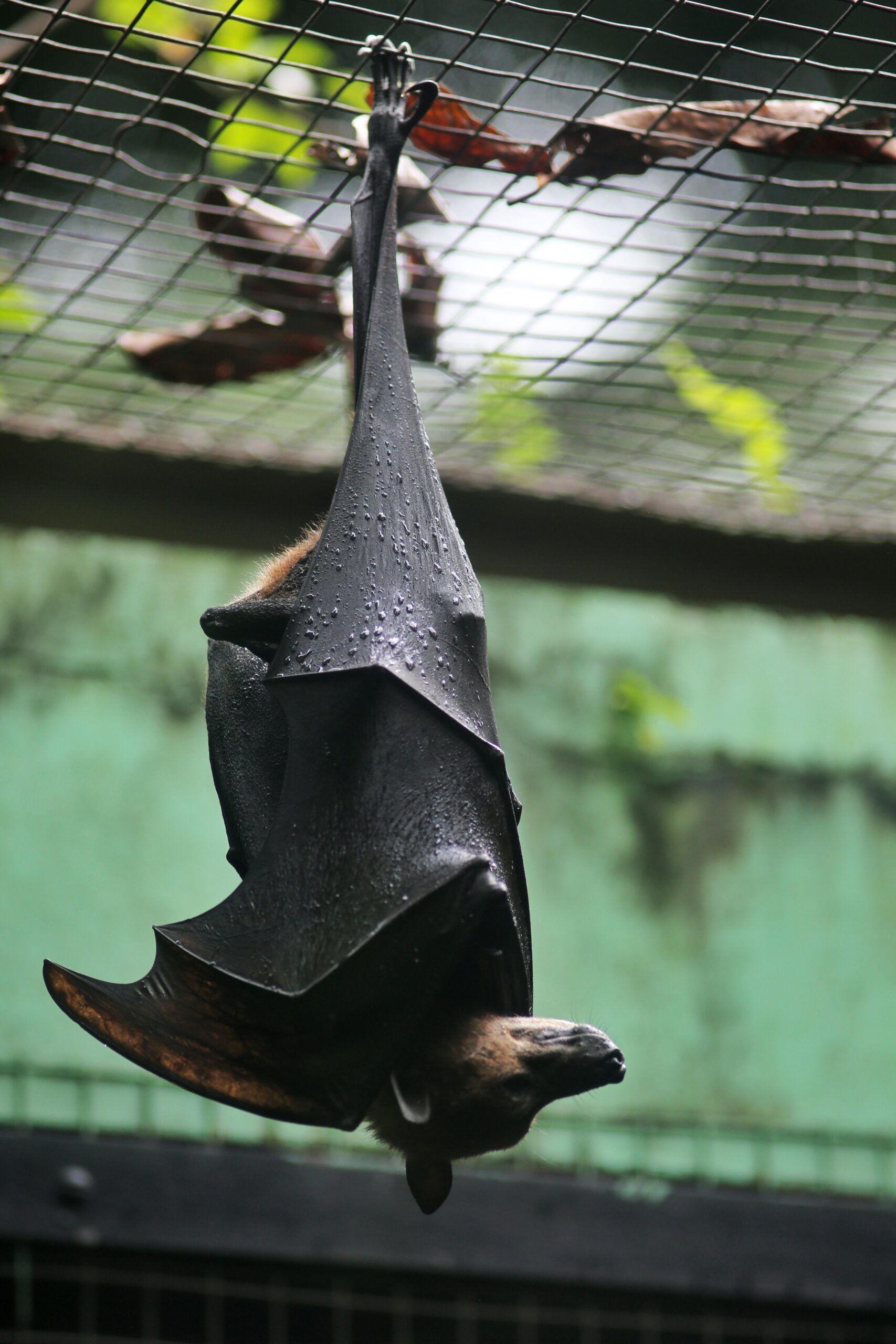
インドオオコウモリはどんな動物?特徴、生態、生息地について解説します。いわゆるコウモリであるが、大型のものが多く、翼を広げると2m に達するものもあるためオオコウモリという種に分類されており、とても迫力がある蝙蝠のなかまになります。


インドオオコウモリとは? 基本ステータスについて
インドオオコウモリは翼手目、オオコウモリ科に分類される動物。英語名はIndian Flying Fox、学名はPteropus giganteus。体長は27cmで体重は1kgになります。情報の一覧は以下の通り。
| Japanese(和名) | インドオオコウモリ |
| English(英名) | Indian Flying Fox |
| scientific name(学名) | Pteropus giganteus |
| classification(分類) | Mammalia、 Chiroptera、 Pteropodoidea 哺乳綱、翼手目、オオコウモリ科 |
| IUCN Status(保全状況) | LEAST CONCERN~ |
| Length(体長) | 27cm |
| Weight(体重) | 1kg |
インドオオコウモリのルーツ、起源は?
インドオオコウモリ(英: Indian flying fox、学名:Pteropus medius)は、世界最大級のコウモリ類であるオオコウモリ科(Pteropodidae)に属する動物です。名前に「キツネ」とありますが、キツネとは無関係で、果実を食べる大型のコウモリです。
起源:古代の樹上性哺乳類から進化
インドオオコウモリの祖先は、約5000万年以上前(始新世)に現れた初期のコウモリ類にさかのぼります。
進化の流れ:
初期の哺乳類(小型樹上生活者)
↓
原始的なコウモリ類(約5200万年前)
↓
大型化した果実食コウモリ類(オオコウモリ科)
↓
Pteropus属(オオコウモリ属)
↓
インドオオコウモリ(Pteropus medius)
コウモリの起源
最古級のコウモリ化石として知られるものには、
- Onychonycteris finneyi
- Icaronycteris index
などがあります。
約5000万年前の地層から発見されており、すでに翼を持ち、飛行能力を獲得していました。
当時の地球では森林が広がり、昆虫を食べる小型哺乳類が樹上生活から空中生活へ進出したと考えられています。
オオコウモリ科の誕生
インドオオコウモリが属するオオコウモリ科は、一般的な小型コウモリ(ココウモリ類)とは異なる進化をしました。
特徴:
- 大きな目
- 優れた視覚
- 発達した嗅覚
- 大型の体
- 果実・花蜜中心の食性
多くの小型コウモリが超音波エコーロケーション(反響定位)頼るのに対し、オオコウモリ類は主に、
- 視覚
- 嗅覚
で食べ物を探します。
生物学的分類(タクソノミー)
| 階級 | 分類 |
|---|---|
| 界 | 動物界(Animalia) |
| 門 | 脊索動物門(Chordata) |
| 綱 | 哺乳綱(Mammalia) |
| 目 | 翼手目(Chiroptera) |
| 亜目 | オオコウモリ亜目(Yinpterochiroptera) |
| 科 | オオコウモリ科(Pteropodidae) |
| 属 | オオコウモリ属(Pteropus) |
| 種 | Pteropus medius |
生息地について
分布はインド・スリランカ・ミャンマーです。
1. 地理的分布(どこにいるか)
インドオオコウモリは南アジアを中心に広く分布しています。
主な分布国
- インド(ほぼ全域)
- パキスタン
- ネパール
- バングラデシュ
- スリランカ
南アジアでは最も一般的な大型コウモリの一種です。
2. 生息環境(どんな場所に住むか)
基本的な環境
- 熱帯〜亜熱帯気候
- 低地から中山地(標高1,000m前後まで)
具体的な生息場所
- 森林(常緑林・落葉樹林)
- 川沿い・湿地帯
- 農村部
- 都市近郊や市街地の公園
人間の生活圏にも適応しており、「人里離れた動物」ではありません。
3. ねぐら(昼間の休息場所)
インドオオコウモリの生息地を特徴づける重要な要素が**ねぐら(ロースト)**です。
ねぐらの特徴
- 高くて大きな樹木
- 日当たりの良い開けた場所
- 川沿いや寺院、公園の大木
よく使われる樹種
- バンヤン(インドゴムノキ)
- マンゴー
- タマリンド
- イチジク類
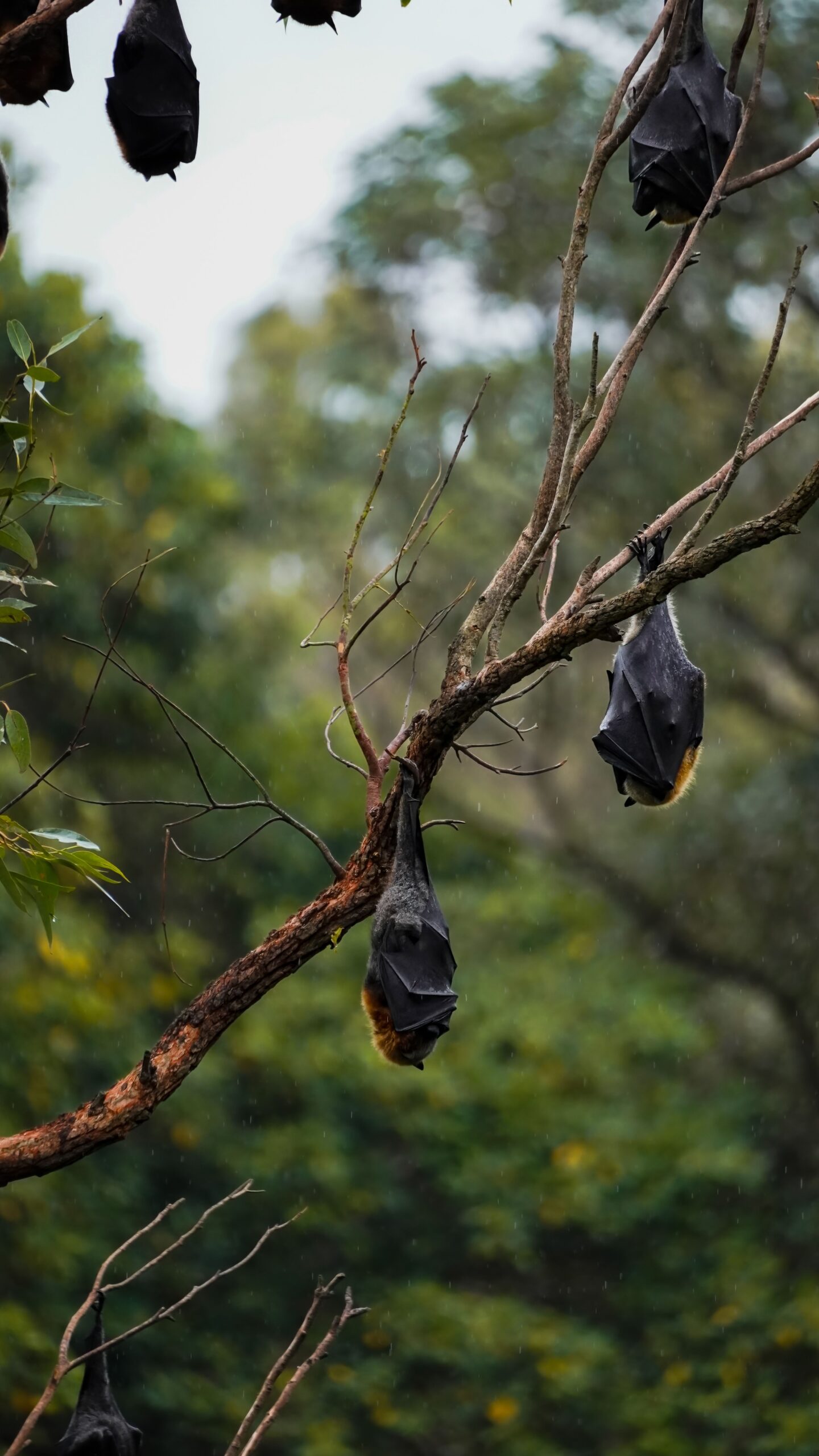
数百〜数千頭が同じ木に集団でぶら下がる光景は、南アジアでは非常に有名です。
4. 行動圏と移動
- 夜行性:夜に採食、昼は樹上で休息
- 採食のために
10〜50km以上飛行することもある - 季節により果実のある地域へ移動(局地的移動)
特徴は?どんな感じの生物なのか?
インドオオコウモリは森の中にくらしています。日中はたくさんの個体が集まってぶら下がっています。完全な夜行性で夕方になるとエサを探しに出かけます。翼を広げた大きさは最大1.5mにも達しコウモリの中ではかなり大型の種類。超音波を出して獲物の位置を確かめること(エコーロケーション)はできません。視覚に頼って飛行するため目がとても発達しています。
1. 見た目の特徴(第一印象)
とにかく大きい
- 翼開長:約1.2〜1.5m
- 体重:1〜1.6kg
- 日本のコウモリとは別物レベルの大きさ
顔つき
- 犬やキツネに似た顔(→英名 Flying fox)
- 目が大きく、意外と「かわいい」と感じる人も多い
- 鼻先はとがり、耳は比較的小さい
体色
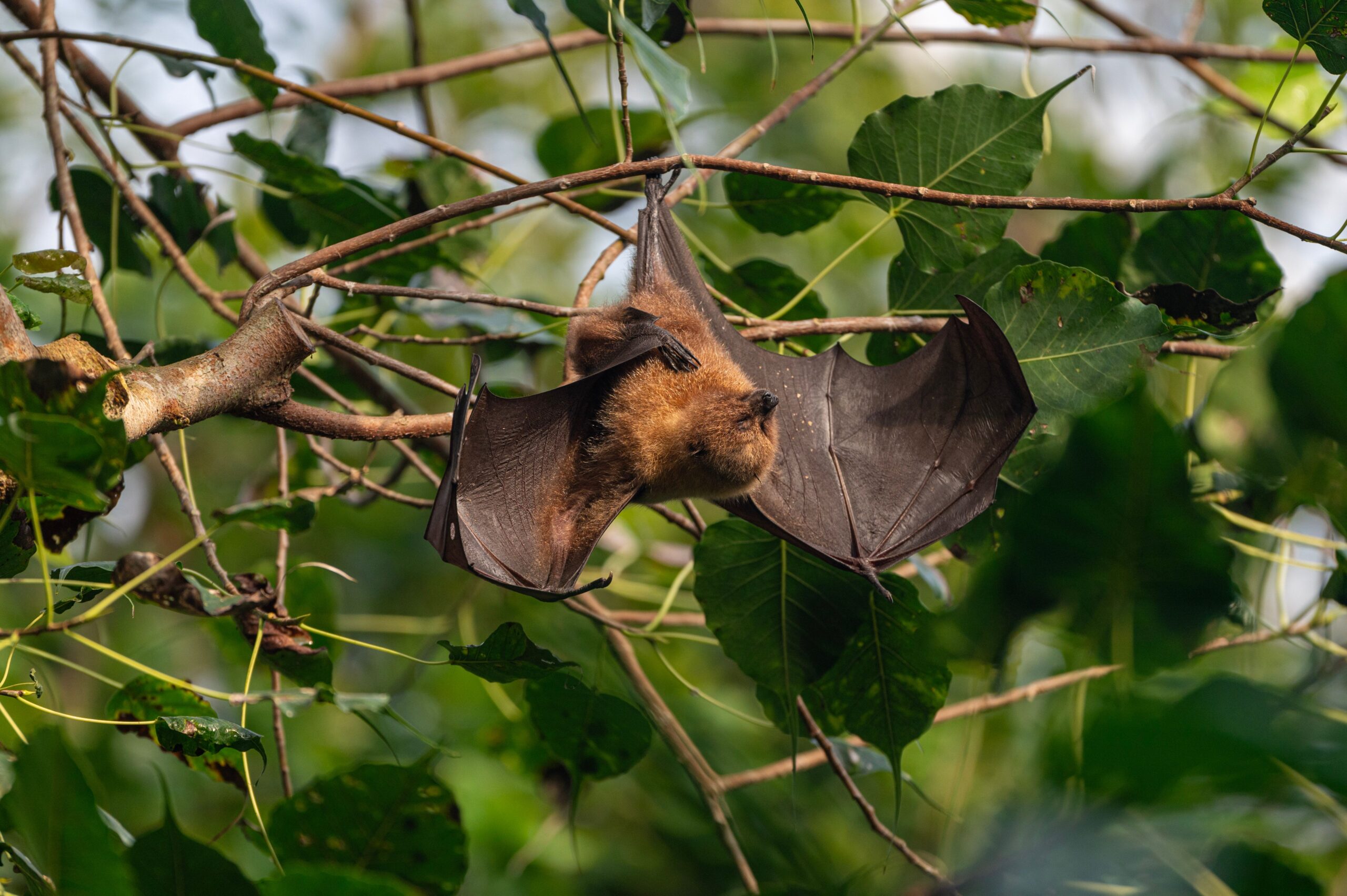
- 胴体:黒褐色
- 首・肩:黄褐色〜金色
- 翼膜:黒色
2. 性格・気質(どんな感じ?)
攻撃性は低い
- 基本的におだやか
- 人間を見ると逃げるか無視することが多い
- 自ら人を襲うことはほぼない
ただし:
- 捕まえられそうになると噛む(防御)
- 群れの中では小競り合いあり
3. 行動パターン(生活リズム)
昼
- 大木にぶら下がって休息
- 羽で体をあおぐ、毛づくろい
- 鳴き声をあげて仲間とコミュニケーション
夜
- 日没と同時に一斉に飛び立つ
- 果実や花を求めて長距離飛行
- 静かでゆったりした飛び方
4. 食性(何を食べる?)
完全な植物食
- 果実(マンゴー、イチジク、バナナなど)
- 花蜜・花粉
- 柔らかい果肉を吸い、繊維は吐き出す
肉食・吸血ではまったくない
5. 知能・社会性
非常に社会的
- 数百〜数千頭の大コロニー
- 親子関係がはっきりしている
- 声や体の動きで細かく意思疎通
学習能力
- 採食ルートを記憶
- 果実の熟す時期を把握
- 経験から危険を学ぶ
生態はどうなっているのか?
インドオオコウモリは果汁が主食で、夕方になるとマンゴーやバナナなどの果実や果汁を探して食べています。繁殖期は7~10月。妊娠期間150日で1回において1頭産むことができます。1年半ほどで性成熟し、寿命は20年くらいになります。
1. 1日の生活リズム(行動生態)
昼(休息)
- 大木の枝に逆さにぶら下がって集団休息
- 羽で体をあおいで体温調節
- 毛づくろい・鳴き声による交流
- 直射日光を好む(体温維持・寄生虫対策)
夕方〜夜(活動)
- 日没直後に一斉に飛び立つ
- 採食地まで長距離移動
- 夜明け前にねぐらへ帰還
2. 採食生態(何をどう食べるか)
食性
- 完全な植物食
- 果実(マンゴー、イチジク、グアバなど)
- 花蜜・花粉
- 熟した果実を視覚と嗅覚で探す
食べ方の特徴
- 果肉を噛んで果汁だけを飲む
- 繊維質は吐き出す(ペレット)
- 種子は飲み込むか、落下させる
3. 移動・行動圏
- 1晩で10〜50km以上飛行
- 季節によって行動圏が変化
- 定期的な長距離移動は少なく、局地的移動が中心
記憶力が高く、毎晩ほぼ同じルートを使うことも多い。
4. 社会構造(群れの生態)
コロニー構造
- 数百〜数千頭の巨大コロニー
- 明確なリーダーはいない
- 個体間距離は近いが秩序がある
コミュニケーション
- 高音の鳴き声
- 翼の動き・体の向き
- 匂いによる個体識別
5. 繁殖生態
繁殖サイクル
- 年1回繁殖
- 出産は地域・季節により異なる
- 子は通常1匹
子育て
- 母親が常に子を抱え移動
- 授乳期間:数か月
- 成長後も母子関係はしばらく続く
6. 寿命と成長
- 野生下の寿命:15〜20年
- 飼育下では30年以上の例も
- 成熟は比較的遅い(数年)
大型・少産型=K戦略生物
天敵はいるのか?
インドオオコウモリはヘビやフクロウなどの猛禽類などが天敵に当たります。
換羽について
インドオオコウモリ(Pteropus medius)は鳥類のような「換羽」は行いません。哺乳類なので正確には換毛(かんもう:毛の生え替わり)です。
🌱 春〜夏:冬毛から夏毛へ
時期
地域によって異なりますが、
春から初夏(3〜6月頃)に起こることが多いです。
特徴:
- 古い毛が抜ける
- 体毛がやや短くなる
- 体温を逃がしやすい毛になる
インド亜大陸では暑季が非常に高温になるため、余分な保温性を減らします。
🍂 秋〜冬:夏毛から冬向きの毛へ
時期
秋頃(9〜11月頃)
特徴:
- 毛の密度が増える
- 保温性が高まる
- 体表の断熱能力が上がる
インドオオコウモリは熱帯〜亜熱帯に生息しますが、夜間は気温が下がるため、毛皮による体温維持が重要です。
🦇 オオコウモリ特有の毛の構造
インドオオコウモリの体毛は主に2種類あります。
① 上毛(ガードヘア)
役割:
- 外部刺激から皮膚を守る
- 雨や湿気への防御
- 体色を作る
② 下毛(アンダーファー)
役割:
- 空気の層を作る
- 体温低下を防ぐ
- 夜間の冷え込みから守る
飛行中は風を受けるため、保温性のある毛は重要です。
鳴き声について
インドオオコウモリ(Pteropus medius)は、コウモリの中でも比較的声によるコミュニケーションが発達した種類です。小型コウモリのような超音波探知ではなく、主に人間にも聞こえる可聴域の声を使って仲間と交流します。
① ギャー・ガーという低い声(叫び声)
最もよく聞かれる鳴き声です。
特徴:
- 大きく響く
- しわがれた声
- カラスの声に近い印象
用途:
- 仲間への呼びかけ
- 群れの位置確認
- 興奮時の意思表示
特に昼間のねぐらでは、多数の個体が鳴き交わします。
② キーキーという高音
特徴:
- 短い高音
- 細かく繰り返す
使う場面:
- 仲間との接触
- 子どもと母親の通信
- 不安や警戒
親子関係では重要なコミュニケーションになります。
③ うなり声・威嚇音
主に争いの場面で使います。
発生場面:
- 止まり木の場所争い
- 餌場での競争
- オス同士の接近
特徴:
- 低い声
- 短い唸り
- 口を開けた威嚇行動
④ 求愛の鳴き声
繁殖期のオスは特徴的な声を出します。
目的:
- メスへのアピール
- 縄張り主張
- 他のオスへの警告
オスは声だけでなく、
- 翼を広げる
- 体を揺らす
- 匂いを出す
など複数の方法でアピールします。
季節別の活動
インドオオコウモリ(Pteropus medius)の活動は、主に季節ごとの果実量・気温・繁殖周期によって変化します。熱帯〜亜熱帯に暮らすため冬眠はせず、一年中活動する大型の夜行性哺乳類です。
🌱 春(3〜5月):繁殖準備・活動量増加
主な活動
- 繁殖行動
- 群れの維持
- 食料探索範囲の拡大
春は気温が上がり、植物の成長が活発になる時期です。
行動の特徴:
- 夕方になると一斉にねぐらを出る
- 果樹や花を探して長距離飛行
- オス同士の縄張り争いが増える
食べ物:
- マンゴー
- イチジク
- 花蜜
- 果汁
☀️ 夏(5〜8月):繁殖・子育ての季節
主な活動
- 出産
- 授乳
- 子育て
インドオオコウモリでは、地域によって差がありますが、夏に繁殖活動が盛んになります。
行動の特徴
母親:
- 子どもを抱えて飛ぶ
- 夜間に餌を探す
- ねぐらで育児
子ども:
- 母親にしがみつく
- 成長すると群れの中で過ごす
暑さへの対応
インドの夏は非常に暑いため、昼間は活動しません。
日中:
- 木の枝にぶら下がる
- 翼を広げて体温調節
- 口を開けて放熱することもある
夜:
- 気温が下がると採食へ出る
🍂 秋(9〜11月):採食活動が活発になる時期
主な活動
- 体力回復
- 食料確保
- 群れの移動
雨季後は植物が豊富になり、果実が増えます。
食べ物:
- 熟した果実
- 花
- 樹液
行動:
- より広範囲を飛ぶ
- 食料の多い場所へ移動する
- 大規模な群れを形成する
❄️ 冬(12〜2月):繁殖サイクルと安定生活
主な活動
- 群れ生活
- 休息
- 次の繁殖準備
インドオオコウモリは冬眠しません。
冬でも:
- 夜間飛行
- 採食
- ねぐら生活
を続けます。
ただし寒い地域では、
- 活動時間が短くなる
- 飛行距離が減る
- 日中の集団行動が増える
傾向があります。
飛行速度について
インドオオコウモリ(Pteropus medius)は、世界最大級のコウモリ類であり、高速飛行よりも長距離飛行と効率的な滑空能力に優れた動物です。
🦇 通常飛行速度
約15〜25km/h
日常的な移動や採食時の速度です。
特徴:
- ゆっくり大きく翼を羽ばたかせる
- 果実の場所を探しながら飛ぶ
- 群れで一定方向へ移動する
大型の体と長い翼を利用し、省エネルギーで飛びます。
⚡ 最高飛行速度
約40〜50km/h程度
危険回避や長距離移動時には速度を上げます。
用途:
- 猛禽類から逃げる
- 群れに戻る
- 他個体との競争
ただし、ハヤブサのような急降下速度や小型コウモリの俊敏な飛行とは異なります。
🪽 翼の特徴と飛行能力
インドオオコウモリは、
- 翼開長:約1.2〜1.5m
- 体重:約1〜1.6kg程度
という大型の体を持ちます。
大きな翼のメリット:
① 長距離飛行が得意
広い翼で効率よく空気を捕らえるため、
- 少ない羽ばたき
- 滑空
- 風の利用
が可能です。
② 夜間の移動能力
採食のために、
- 数km〜数十km
- 場合によってはさらに長距離
移動することがあります。
果実が少ない季節には、餌を求めて広範囲を飛び回ります。
インドオオコウモリの幼獣について
インドオオコウモリ(Pteropus medius)の幼獣(赤ちゃん)について、見た目・成長・親子関係・生態の特徴を中心に解説します。
1. 誕生時の特徴
- 出生数:通常1頭のみ
- 出生時は目が開いている
- 毛は短く、色は暗褐色
- 体は小さいが、指(翼の骨)がすでに長い
- 母親の乳首にしっかり吸い付く能力がある
生まれた瞬間から「ぶら下がる」ことができるのが大きな特徴です。
2. 母親との関係(非常に重要)
生後〜数週間
- 母親は幼獣を連れて飛行する
- 昼も夜も常に一緒
- 母親の胸元にしがみつき、翼で包まれる
飛行中も落ちないほど強い把握力を持っています。
3. 成長段階
生後1〜2か月
- 体重が急増
- 母親が採食に出る際、ねぐらに置いていかれることが増える
- コロニー内で幼獣同士が近くに集まる
生後3〜4か月
- 翼が大きくなり、羽ばたき練習を始める
- 短距離の滑空・飛行が可能に
- 固形の果実をかじり始める
生後5〜6か月
- 授乳が終了(離乳)
- 見た目は小型の成獣に近づく
- 自立した採食が可能
4. 子育ての特徴
- 母親の育児投資が非常に大きい
- 父親は育児に関与しない
- 母子認識は鳴き声と匂いで行われる
- 混雑したコロニーでも母子が迷子にならない
5. 幼獣の行動的特徴
- よく鳴く(高く細い声)
- 翼を広げてバランス練習
- 周囲の個体を観察し、行動を学習
- 危険時は母親の胸に顔を埋める
6. 生存率とリスク
自然界でのリスク
- 落下(未熟な把握力)
- 猛禽類による捕食
- 飢餓・脱水
- 人為的な伐採・ねぐら破壊
幼獣期が最も死亡率が高い
インドオオコウモリは絶滅危惧種なのか?
インドオオコウモリは絶滅危惧種ではありません。果樹園を荒らすことがあるので、多くの地域で害獣とされており、むしろ駆除されてしまうことが多い動物です。
国際自然保護連合(IUCN)の評価
- ステータス(2024年評価):Near Threatened(準絶滅危惧)
インドオオコウモリは 「絶滅危惧」には分類されていませんが、将来的な減少が懸念されているため準絶滅危惧に指定されています。- 「Near Threatened」は日本語では「絶滅の危険性が近い種」という意味で、次のレッドリストの危険区分に移る可能性があることを示しています。
個体数の傾向
- 全体としては個体数が減少傾向にあるとみられています。これは以下のような要因によるものです:
- 生息地の破壊・劣化(伐採・開発)
- 果樹園等での害獣扱い(迫害・駆除)
- 電線に触れての感電死
- 極端な気象によるコロニーへの影響
などが原因と考えられています。
しかし、その広い分布域(南アジア全域)や都市環境への適応力から、現時点では絶滅の危機にはないと評価されています。
法的保護や地域差
- 一部地域では保護強化の動きがあり、インドでも法改正により保護区分が見直されています(例:2022年の野生生物保護法改正による再評価)。
- しかし、地域ごとの人間との衝突(農作物被害など)から、今なお多くの地域で害獣として扱われている場合もあります。
インドオオコウモリは飼育できるのか?
インドオオコウモリは害獣として扱われることが多いため、飼育することには適していません。近所に迷惑をかけてしまいますので、動物園で鑑賞することをおすすめします。
⚖️ 1. 法律面(日本/海外)
日本の場合
- インドオオコウモリは日本には自然分布していない種なので、日本の野生動物保護規制の対象外としても
輸入や飼育の許可は別途必要になる可能性が高いです。
外来種・野生動物の個体を安易に飼うことには法的・行政上の制限があるのが一般的で、自治体ごとの条例でも規制されることがあり得ます。
(※該当種名での具体的な指定例は確認できませんが、原則として野生種の取り扱いには許可が必要な場合が多いです。)
海外(例:アメリカ)
- 多くの国・地域では、野生動物を個人でペットとして飼うには特別な許可・ライセンスが必須です。
たとえばフロリダ州では、野生動物を家庭で飼うには行政許可が必要で、許可がないと飼育できません。許可は展示や個体の保護目的でないと出ないことも多いです
野生個体の捕獲・飼育は原則違法・厳しく規制されると考えてください。
2. 動物としての特性(ペット向きではない)
インドオオコウモリは大型で社会性が強く、特別な環境が必要な野生動物です。
飼育が現実的に難しい点:
- 群れで暮らし、単独での生活に不適応(ストレスが大きい)
- 非常に大きな飛行スペースが必要
- 夜行性・長距離飛行習性があり、家では満足できない
- 特殊な栄養管理(果汁・果実中心・高エネルギー食)
- 感染症リスク(野生コウモリは人間に病原体を持つ場合がある)
野生動物は、たとえ捕獲して持ち帰ったとしても「飼育動物」として生涯管理するのは非常に難しいとされています。ペットとしての飼育は推奨されません。
3. 飼育現実(ケーススタディ)
動物園での飼育例
- 日本の動物園(例:池田動物園、ネオパークオキナワ)では、専門の飼育環境でインドオオコウモリを展示・飼育しています。
これは「教育・保全・展示」という目的があり、専門スタッフが適切な設備で管理しているから可能です。
一般家庭で飼うのではなく、動物園や専門施設で観察するべき動物です。
飼育されている動物園(日本・世界)
インドオオコウモリ(Pteropus medius / Indian flying fox)は、世界の動物園で比較的飼育されている大型コウモリですが、飛行スペース・温度管理・群れ管理が必要なため、飼育施設は限られます。日本でも複数の動物園で飼育例があります。
🇯🇵 日本で飼育されている主な施設
🦇 京都市動物園
日本でインドオオコウモリを観察できる代表的な施設の一つです。
特徴:
- 大型オオコウモリ展示
- 夜行性動物として紹介
- ぶら下がり、毛づくろい、採食行動を観察できる
飼育記録・展示情報があります。
🦇 長崎バイオパーク
インドオオコウモリの飼育例があります。
特徴:
- 熱帯系動物展示
- オオコウモリの自然な姿を観察できる施設
🦇 池田動物園
インドオオコウモリの展示記録があります。
🦇 草津熱帯圏
熱帯動物を中心に扱う施設で、インドオオコウモリの飼育例があります。
🌎 世界の飼育施設
🇺🇸 アメリカ
Denver Zoo
インドオオコウモリの飼育例が確認されています。
特徴:
- 熱帯・アジア系展示
- 大型コウモリの飛行能力を紹介
🇮🇳 インド
Alipore Zoological Gardens
インドオオコウモリの展示例があります。
原産地域の動物園では、野生個体との関係や生態系での役割を紹介する目的で飼育されています。
他の動物を紹介

コメント