インドホシガメはどんな動物?種類や特徴、性格、生態、生息地について解説します。インドホシガメは、インドやスリランカ、パキスタンなどで見ることができる小型のカメであり、飼育する方も多いですが、絶滅危惧種に指定されています。


インドホシガメとは? 基本ステータスについて
インドホシガメは爬虫綱カメ目リクガメ科リクガメ属に分類されるカメ。和名は印度星亀、学名はGeochelone elegans、英語はIndian star tortoise。甲羅長は38.1cm、体重5~7kg、体長は20-30cm。情報の一覧は以下の通り。
| Japanese(和名) | インドホシガメ |
| English(英名) | Indian star tortoise/Indian starred tortoise |
| scientific name(学名) | Geochelone elegans |
| classification(分類) | Reptilia、Testudines、 Testudinidae、Geochelone 爬虫綱、カメ目、リクガメ科、リクガメ属 |
| IUCN Status(保全状況) | VULNERABLE |
| Length(体長) | 20~30cm |
| Weight(体重) | 5~7kg |
インドホシガメ(Star Tortoise, Geochelone elegans)の分類学
| 分類階級 | 学名・内容 |
|---|---|
| 界(Kingdom) | Animalia(動物界) |
| 門(Phylum) | Chordata(脊索動物門) |
| 綱(Class) | Reptilia(爬虫綱) |
| 目(Order) | Testudines(カメ目) |
| 科(Family) | Testudinidae(リクガメ科) |
| 属(Genus) | Geochelone(ジオケロン属) |
| 種(Species) | Geochelone elegans(インドホシガメ) |
インドホシガメのルーツ、起源は?
インドホシガメ(Geochelone elegans)は、名前の通りインド亜大陸を起源とするリクガメです。現在の野生分布は、主にインド、パキスタン南東部、スリランカに分かれています。
🌏 どこから来たカメなのか?
大きな進化の流れでは、
古いリクガメ類
↓
リクガメ科(Testudinidae)
↓
アジアを含む系統の分化
↓
南アジアのリクガメ類
↓
インドホシガメ(Geochelone elegans)
という位置づけです。
リクガメ科全体については、化石記録と分子系統を合わせた研究から、派生的なリクガメ類の主要系統は始新世後期(約3,700万~3,400万年前)までには成立していたと推定されています。
ただし、「インドホシガメそのものが何千万年前に誕生した」という年代は、現在の研究では明確に確定していません。
🧬 実は「インド」と「スリランカ」でかなり違う
ここがインドホシガメの進化史で面白いところです。
現在の遺伝学研究では、インドホシガメには大きく、
- 北西部グループ
- 南部グループ
- 南インド
- スリランカ
という遺伝的なまとまりが確認されています。
2024年の研究では、北西部グループと南部グループが約200万年前に分岐した可能性が示されています。
つまり、
約200万年前ごろ
↓
インド亜大陸内の個体群が地理的に分離
↓
北西部系統と南部系統へ遺伝的に分化
↓
現在のインド・スリランカの集団へ
という歴史が考えられます。
⭐ アジアの「ホシガメ」グループ
そしてインドホシガメの非常に近い仲間が、**ミャンマーのビルマホシガメ(Geochelone platynota)**です。
遺伝解析では、
インドホシガメ
↕
ビルマホシガメ
が近縁の姉妹種としてまとまることが確認されています。
生息地について
インドホシガメはインドやスリランカ、パキスタンに分布しています。
1. 地理的分布
- 主にインド南部とスリランカ北部に分布
- インドではカルナータカ州、タミル・ナードゥ州、アンドラプラデーシュ州など南部の乾燥〜半乾燥地域に多い
- スリランカ北部では乾燥地帯に限定的に生息
2. 生息環境のタイプ
- 乾燥森林やサバンナ的環境を好む
- 草原、低木林、半乾燥地帯で生活
- 土質の柔らかい場所に穴を掘って休息や産卵する
3. 水との関係
- 完全な乾燥地に住むことも可能だが、雨水や水たまりで水分補給をする
- 雨季には移動距離が増え、食料と水を求めて行動範囲が広がる
4. 生息条件の特徴
- 高温・乾燥に強いが、湿潤すぎる環境は苦手
- 草や葉、果実が採れる環境を中心に行動
- 捕食者が少ない場所を好む
特徴は?どんな感じの生物なのか?
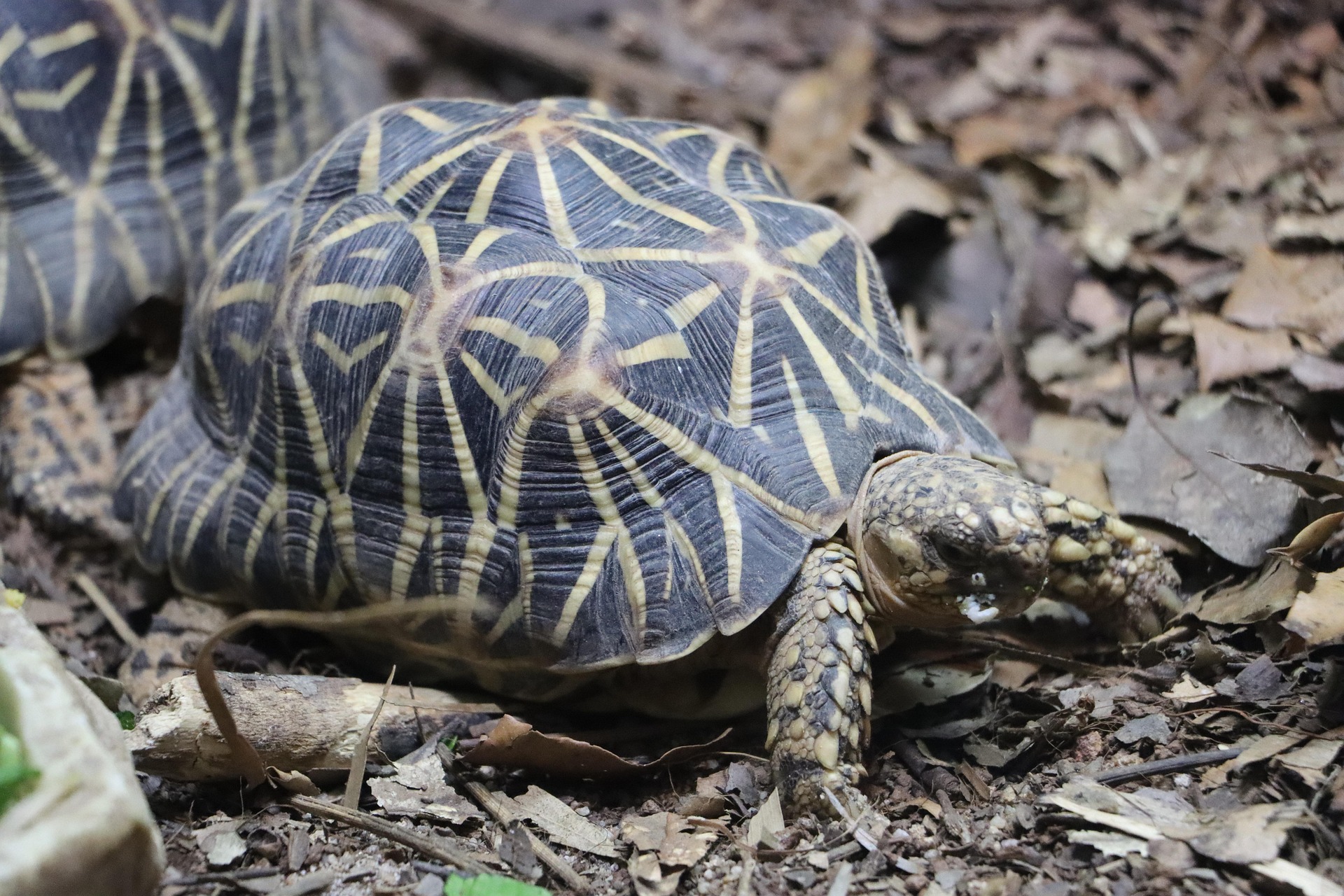
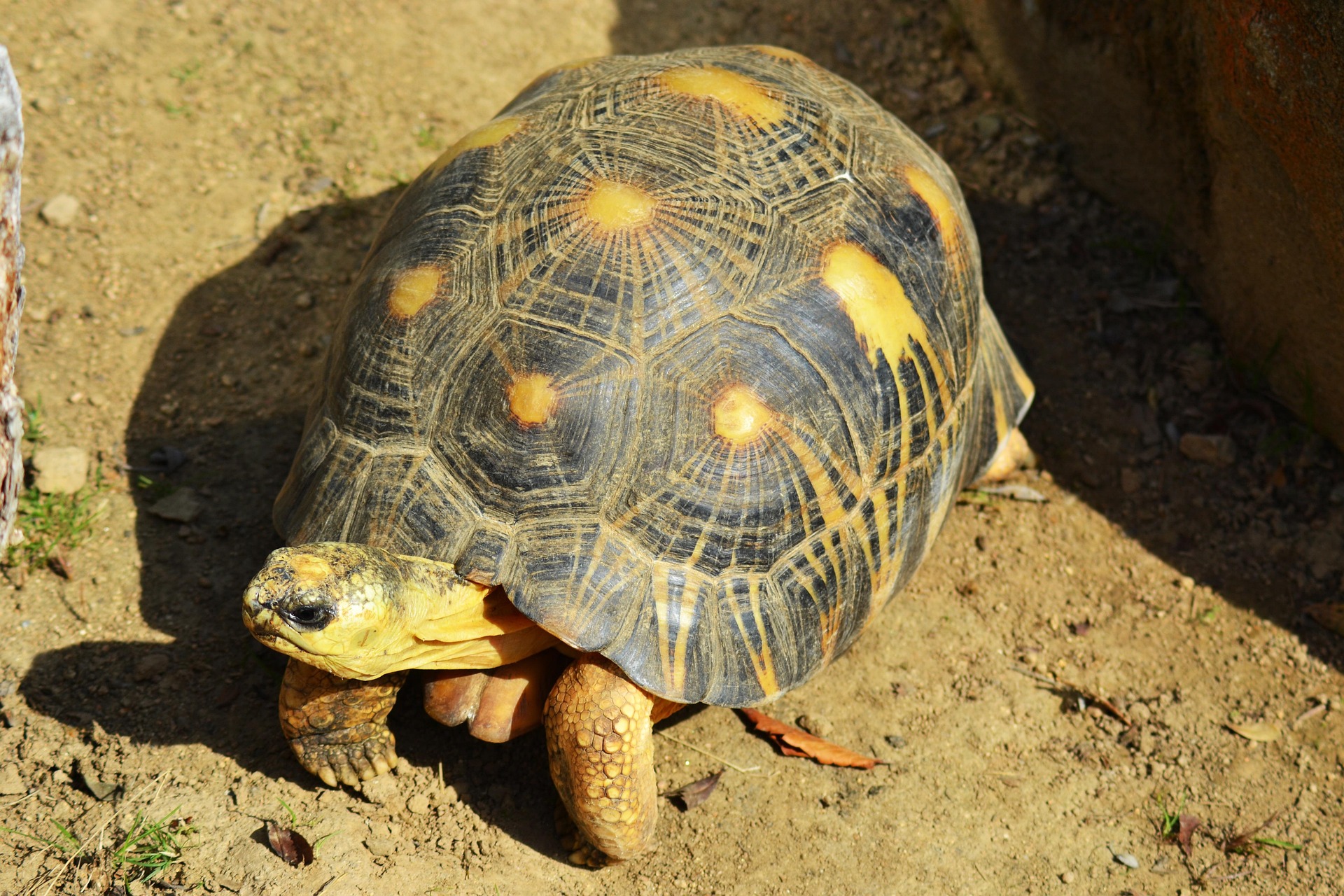
インドホシガメは甲羅は黒く、甲板には星型の濃い黄色や灰褐色の線があります。背甲はドーム状に盛り上がり、上から見るとやや細長い。頭部や四肢、尾なども黒で淡い黄色や黄褐色の斑があります。インドホシガメは平野部から低い山間部などの森林や雑木林、乾燥した草原などに生息しています。
1. 体の大きさ・形態
- 体長:約 25〜35 cm(成体)
- 体重:およそ 3〜5 kg
- 甲羅(背甲):
- 濃い褐色〜黒色をベースに、**黄色や淡色の放射状の模様(星型模様)**が入る
- 星型模様は個体ごとに違い、名前の由来になっている
- 頭・手足:
- 顔や手足は黄色がかる褐色
- 甲羅に比べて頭部は小さく、目は丸く表情豊か
- 手足は頑丈で、土を掘ったり歩いたりするのに適応
2. 行動・性格
- 動きは遅く、のんびりしている
- 攻撃性はほとんどなく、臆病で警戒心がある
- 単独で行動することが多く、社会性は低い
3. 食性
- 草食性が基本
- 食べるもの:
- 草、葉、果実、サボテンなど
- 首を伸ばして草や葉を食べることができる
- ゆっくり食べ、消化も時間をかける
4. 生態的印象
- 小型〜中型リクガメの中でも見た目が美しいため人気がある
- 臆病で穏やか、捕食者が少ない環境ではのんびり過ごす
- 長寿で、飼育下では50年以上生きることもある

性格はどんな感じなのか?
インドホシガメは雨季には日中のあいだ活発に動き回り、乾季には主に早朝や夕暮れ時に活動し、昼間は休んでいることが多いです。性格はとても温和な動物で飼育している方も多いです。
1. 穏やかでおとなしい
- 攻撃性はほとんどなく、のんびりした性格
- 人間や他の動物に対しても、基本的に臆病で逃げる傾向が強い
2. 臆病で警戒心がある
- 危険を察知すると首や手足を甲羅に引っ込めて身を守る
- 環境の変化や大きな音に敏感
3. 社会性は低め
- 基本的に単独行動
- 食事場や水場で他個体と接触することはあるが、群れを作ることはない
4. 忍耐力・安定志向
- 移動距離は短く、じっとして環境に耐えることができる
- 長寿で穏やかなので、環境に合わせて無理なく生活する
5. 知能・学習能力
- 複雑な社会行動はないが、食べ物や水の位置を覚える能力が高い
- 季節や環境に応じて行動パターンを変えることができる
生態はどんな感じ?
インドホシガメは草食性で、主に落下果実や木の葉、木の芽や草類を食べて生活をします。繁殖は卵生で、大量の卵を産むことが多いです。孵化は100日くらいかかることが多いです。寿命は種によりますが、8年~10年くらい生きることができるため、長寿の動物です。
1. 生活スタイル
- 昼行性で、日中に活動して採食や移動を行う
- 移動はゆっくりだが、食料や水を求めて数百メートル〜数キロ移動することもある
- 休息は岩陰や低木の下、柔らかい土の上で行う
2. 食性
- **草食性(Herbivorous)**が基本
- 食べるもの:
- 草、葉、果実、低木の枝、サボテン
- 採食方法:
- 首を伸ばして草や葉を採取
- ゆっくりかみ砕き、消化にも時間をかける
3. 繁殖・子育て
- 繁殖期:主に雨季に活発になる
- 卵生で、メスは柔らかい土を掘って巣穴を作り、3〜8個の卵を産む
- 孵化期間:約 90〜120日
- 幼獣の自立性:
- 孵化直後から自力で生活
- 捕食者から身を守るため、甲羅に隠れて行動
4. 行動・社会性
- 基本的に単独行動
- 他個体との接触は水場や採食場で見られる
- 行動パターンは季節や水源・食料の分布に応じて変化する
5. 生息環境との関係
- 乾燥〜半乾燥の低木林や草原に適応
- 水分や食料がある場所を中心に行動
- 捕食者が少ない環境では、ゆったりとした生活を送る
天敵はいるのか?
インドホシガメはオオカミやキツネなどが天敵に当たります。

インドホシガメの幼獣について
インドホシガメ(Geochelone elegans)の幼獣(子ども)の特徴や生態について詳しく整理します。
1. 誕生・孵化
- 卵で生まれる(卵生)
- メスは柔らかい土を掘って巣穴を作り、3〜8個程度の卵を産む
- 孵化期間:
- 約 90〜120日(温度や湿度によって変動)
- 体長・体重:
- 体長:約 5〜8 cm
- 体重:約 50〜100 g
- 外見:
- 甲羅は小さく柔らかめ
- 背甲の星型模様は既に現れるが、色は薄く、成体ほど鮮やかではない
2. 成長段階
- 孵化直後
- 自力で巣穴から出て行動開始
- 捕食者から身を守るため、低木や岩陰に隠れる
- 少量の草や葉を食べ始める
- 幼体期(数か月〜1年)
- 甲羅が徐々に硬くなり、色や模様も鮮明になる
- 採食量が増え、水や食料を求めて移動することが増える
- 若齢期(1〜5年)
- 体が大きくなり、活動範囲も広がる
- 捕食者の少ない環境では生存率が高く、ゆっくり成長していく
3. 幼獣の性格・行動
- 臆病で警戒心が強い:危険を察知すると甲羅に隠れる
- 好奇心はあるが慎重:周囲の環境を観察しながら採食
- 自立性が高い:孵化直後から母親に依存せず、自力で生活
- 社会性は低い:基本的に単独行動が中心
4. 生息地との関係
- 幼獣は低木や草陰、岩陰など安全な場所を中心に行動
- 水分補給も自力で行うが、小さな水たまりや湿った場所を好む
- 捕食者が少ない環境では生存率が高く、ゆっくり成長する
インドホシガメは絶滅危惧種なのか?
インドホシガメはワシントン条約附属書Iに掲載されており国際取引が制限され、さらに絶滅危惧種に指定されています。近年の開発などによって生息地が減少しているだけでなくペットとして乱獲されてしまう点が問題となっています。
1. IUCNの評価
- IUCNレッドリストでは、インドホシガメは VU(Vulnerable:絶滅危惧Ⅱ類) に指定されています。
- 絶滅の危険性は中程度ですが、生息数が減少傾向にあるため保護が必要です。
2. 減少の原因
- 密猟・ペット取引
- 背甲の美しい星模様が観賞用やペットとして人気
- 違法取引や密猟によって個体数が減少
- 生息地破壊
- 農地開発、都市化、道路建設などで生息地が縮小
- 外来種による影響
- ネズミや犬による幼獣の捕食
- 気候変動
- 干ばつや水不足が個体群に影響
3. 保護の取り組み
- インド・スリランカでの自然保護区や国立公園での生息地保護
- 違法取引の監視と規制
- 孵化場での幼獣保護、個体群管理
インドホシガメは飼育可能?
インドホシガメは飼育が可能です。カメを飼うにあたって必要なものは、以下の通りです。小さい個体が新着で登録されて販売されていたり、里親の募集も多いのでチェックです。餌の種類やケージなどに注意しましょう。また寿命も長いのでそこも考慮しましょう。餌や保温の方法など確認しましょう。ショップではいろいろ商品が商品されておりエサやケース、ライトなど用品の購入が簡単です。
ケージ
甲羅のサイズや成長の具合によりますが、ショップでは60㎝くらいの幅が広いケージが必要になります。ガラス製やアクリル製、プラスチック製など爬虫類用ケージを使用がおすすめです。
床材
床材のカテゴリーは大型から小型まで様々な種類があります。赤玉土、ヤシガラ、人工芝などさまざまです。キャンペーンだと安い価格で販売されていることもあります。
ヒーター
必要に応じてエアコンや暖房器具を用意して、カメが快適に過ごせるように気をつけてあげてください。パネルヒーターや照射スポットランプ、バスキングライトなどがあります。
温湿度計
両生類のカメを飼育するにあたって温度と湿度の管理はとても重要。保温は30度くらいで調節すると良いです。
照明
カメは1日で強い紫外線を浴びることで、カルシウムの吸収を促進させるビタミンD3を体の中で作り健康を維持する動物です。そのため照明は必須。電球タイプや蛍光管タイプがあり、ケージに合わせて選ぶと良いでしょう。日照時間を目安として照射してください。
シェルター
カメも生き物ですから室内で個体が逃げられる場所を作るため、ポイントとしてシェルターがあると良いです。ちゃんと全体で設置して大きくストレスを与えないようにしましょう。
水飲み皿
水飲み皿も必須。水入れは毎日洗浄して、新鮮な水を用意してください。
ペットフード
カメなどは草食性で、必ずフードは小さい野菜や果物が主食で、小松菜やキノコも一緒に食べます。野草を野菜の代わりに食べているカメもいます。おやつにバナナ、スイカ、リンゴ、イチゴ、キウイ、マンゴーなどの果物も与えてあげてください。参考にサプリメントを与える方もいます。最初は販売されているものを提供すると良いでしょう。完全に生き物に必要な栄養が入っています。
飼育されている動物園(日本・世界)
インドホシガメ(Geochelone elegans)について日本でも複数の動物園で飼育されています。
🇯🇵 日本
| 施設 | 都道府県 | 状況 |
|---|---|---|
| 池田動物園 | 岡山県 | ✅ 公式サイトで飼育を確認 |
| 平川動物公園 | 鹿児島県 | ✅ 公式サイトで展示場所まで確認 |
| 天王寺動物園 | 大阪府 | ✅ 環境省の2026年認定資料で飼育対象種として確認 |
| 足立区生物園 | 東京都 | ✅ 環境省資料で Geochelone elegans を確認 |
特に平川動物公園は公式ページで「は虫類・夜行性動物館」が展示場所として明記されています。
また、インドホシガメはCITES(ワシントン条約)の対象種で、日本でも国際希少野生動植物種として扱われています。環境省の2026年の認定資料でも、天王寺動物園などの取り扱いが確認できます。
🌍 世界
海外ではかなり広く飼育されています。
Zootierlisteの現行飼育記録では、少なくとも以下の国・地域で確認できます。
🇩🇪 ドイツ
- Zoo Augsburg
- Tierpark Bad Liebenstein
- Schmetterlingshaus Jonsdorf
- Zoo Kaiserslautern
- Reptilium Landau
- Schildkröten- und Reptilienzoo Neu-Ulm
- Zoo Neuwied
- Holland-Park
- Westküstenpark
- Tiergarten Straubing
- Reptilienhaus Unteruhldingen
ドイツだけで11施設が現行リストに掲載されています。
🇫🇷 フランス
- Le Village des Tortues(Carnoules)
- その他複数施設
Zootierlisteではフランスにも複数の現行飼育施設が掲載されています。
🇩🇰 デンマーク
- Skaerup Zoo
🇧🇬 ブルガリア
- Plovdiv Aquarium(Regionalen prirodonauchen muzey)

他の記事もおすすめ
コメント