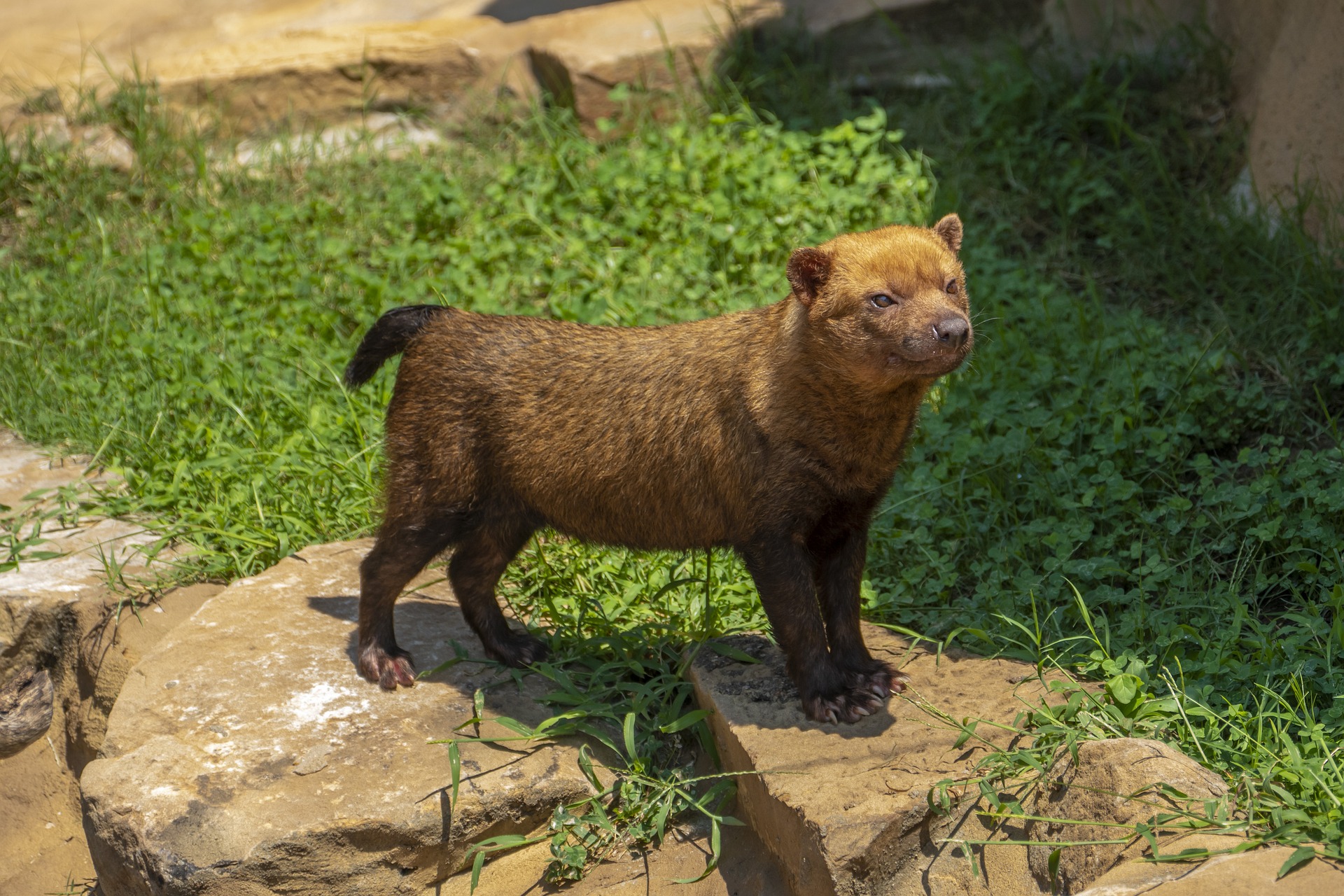
ヤブイヌはどんな動物?特徴、生態、生息地について解説します。ブラジル、コロンビア、ベネズエラ、ペルーなどで見られるこの動物は南米ではとてもよく知られています。しかしその割には個体数が激減しており絶滅の可能性があります。


ヤブイヌとは? 基本ステータスについて
ヤブイヌは哺乳綱食肉目イヌ科ヤブイヌ属に分類される食肉類。英語名はBush Dog、学名はSpeothos venaticus。体長は58~75cm、尾長は11~15cm、体重は5~7kg。情報の一覧は以下の通り。
| Japanese(和名) | ヤブイヌ |
| English(英名) | Bush Dog |
| scientific name(学名) | Speothos venaticus |
| classification(分類) | Mammalia、Carnivora、Canidae、Speothos 哺乳綱、食肉目、イヌ科、ヤブイヌ属 |
| IUCN Status(保全状況) | NEAR THREATENED |
| Length(体長) | 58~75cm |
| Weight(体重) | 5~7kg |
分類学的階級
| 階級 | 分類 |
|---|---|
| 界 | 動物界(Animalia) |
| 門 | 脊索動物門(Chordata) |
| 綱 | 哺乳綱(Mammalia) |
| 目 | 食肉目(Carnivora) |
| 科 | イヌ科(Canidae) |
| 属 | ヤブイヌ属(Speothos) |
| 種 | ヤブイヌ(Speothos venaticus) |
ヤブイヌのルーツ、起源は?
ヤブイヌ(Speothos venaticus)は、南アメリカに進化した非常に珍しいイヌ科動物です。
一見すると「小型の犬」のようですが、進化的にはかなり独特な存在です。
🧬 どの系統なの?
ヤブイヌは、
食肉目
↓
イヌ科(Canidae)
↓
イヌ亜科(Caninae)
↓
南米のイヌ科動物の系統
↓
🐕 ヤブイヌ属(Speothos)
という位置にいます。
特に興味深いのは、オオカミ・キツネ・イエイヌとはかなり違う進化をしていることです。
分子系統学的には、ヤブイヌは南米に進出したイヌ科動物の古い系統の一つで、タテガミオオカミやスジオイヌなどの南米固有のイヌ科動物とも遠い親戚です。
🌎 どこから来た?
ヤブイヌの祖先は、最終的には北米起源のイヌ科動物にさかのぼります。
イヌ科は北米で進化した後、約数百万年前に南米へ進出した系統があります。
その後、南米ではアンデス山脈やアマゾン、森林・草原など多様な環境に適応し、独自のイヌ科動物が進化しました。
ヤブイヌもその中で、
南米へ進出した祖先
↓
森林・湿地などに適応
↓
小型化・胴長化
↓
短い脚+水かきのある足
↓
→ 現在のヤブイヌ
という独特な形になったと考えられています。
🐾 なぜ「犬なのにこんな姿」なのか?
ヤブイヌの最大の特徴は、
- 胴体がずんぐりしている
- 脚が短い
- 耳が小さい
- 尾が短い
- 足に水かきがある
- 群れで生活する
- 泳ぎが得意
というところ。
これは単なる「小型犬化」ではなく、南米の森林・湿地環境への特殊な適応と考えると分かりやすいです。
特に水かきのある足は珍しく、ヤブイヌは水辺をかなり積極的に利用するイヌ科動物です。
🦴 実は化石記録も面白い
ヤブイヌ属は現在では1種、
ヤブイヌ
Speothos venaticus
だけですが、化石記録からは現在よりも広い地域に分布していたことが分かっています。
つまり現在のヤブイヌは、かつて南米に存在したより広い系統の生き残りと見ることができます。
生息地について
ヤブイヌは南アメリカのアルゼンチン、ブラジル、コロンビア、ベネズエラ、ペルーや中米のパナマに分布しています。
地理的分布
ヤブイヌは 南米に分布 しています。主な地域は以下の通りです:
| 地域 | 詳細 |
|---|---|
| アマゾン盆地 | ブラジル、ペルー、コロンビア、エクアドル、ボリビア北部 |
| グアラニー地域 | パラグアイ、ブラジル南部、アルゼンチン北部 |
| その他 | 南米の熱帯雨林や湿潤林、河川沿いの森林地帯 |
生息環境の特徴
- 密林・湿潤森林
- 地面が湿っており、密生した低木やつる植物が多い環境を好む
- 川や湿地帯
- 流れのある小川や湿地近くで活動することが多い
- 水中も泳げる能力がある
- 地面の隠れ場
- 木の根元や倒木の下、岩陰など、狩りや休息のために地面の隠れ場を利用
特徴は?どんな感じの生物なのか?
ヤブイヌは全身はがっしりとしていて重たい感じで、頭部は平たい、耳は小さくて丸く、両耳の間は離れています。毛は短くて粗く、毛色は、体の前部分は黄褐色や暗褐色。最も原始的なイヌ科の動物と言われています。ヤブイヌは森林や草原、開けた牧草地や湿気のあるサバンナに分布しています。
1️⃣ 基本情報
| 項目 | 内容 |
|---|---|
| 学名 | Speothos venaticus |
| 英名 | Bush Dog |
| 分類 | 食肉目 → イヌ科 → ヤブイヌ属 |
| 体長 | 約60〜75cm |
| 体高 | 約30〜35cm |
| 体重 | 5〜10kg(オス・メスで大きさはほぼ同じ) |
| 寿命 | 野生で約7〜8年、飼育下で最大12年 |
| 体色 | 茶褐色〜暗褐色、足先や胸元が少し淡い色 |
| 体型 | 短足でずんぐり体型、胴は長めで泳ぎやすい |
| 特徴 | 丸い耳、短い尾、群れで協力して狩りをする |
2️⃣ 外見の特徴
- 体型
- 小型~中型のイヌ科
- 短い脚、胴長でずんぐりした体型 → 密林や湿地を移動しやすい
- 毛色
- 茶褐色〜暗褐色、胸や足先は少し淡い色
- 密林環境でカモフラージュになる
- 頭・顔
- 丸い耳、短く広めの鼻先
- 歯は小型で、小動物を捕まえるのに適している
- 尾
- 短く、体型に比べて目立たない
- バランスよりも隠れる用途に寄せた形状
3️⃣ 行動・生態的特徴
- 群れで生活
- 3〜10頭の小規模群れで協力して行動
- 狩りの方法
- 小型哺乳類、鳥類、昆虫を主に捕食
- 群れで協力して追い込み捕獲する
- 泳ぎやすい体型
- 河川や湿地でも活動可能
- 警戒心が強い
- 外敵や人間に対しては素早く逃げる

性格はどんな感じ?
ヤブイヌは10~12頭ほどの群れで生活していて社会性がとても強く、仲間意識が強い動物です。昼間も行動しますが基本的には夜間に活動することが多いです。また水辺や湿地帯を好み、水かきがあり泳ぎや潜水も得意でうまいです。行動範囲は4~10平方kmで尿によるマーキングをする習性があります。
1️⃣ 基本的な性格
| 特徴 | 説明 |
|---|---|
| 協調性が高い | 群れで生活するため、仲間との協力が得意。狩りや移動は群れ単位で行動。 |
| 温厚で攻撃性は低め | 普段はおとなしく、無用な争いは避ける性格。 |
| 警戒心が強い | 捕食者や人間に敏感で、危険を察知するとすぐに逃げる。 |
| 好奇心もある | 新しい物や環境には興味を示すが、慎重に近づく。 |
| 防御本能あり | 群れの仲間や幼獣を守るため、必要に応じて牙で威嚇することもある。 |
2️⃣ 行動パターンと性格の関係
- 群れ思考
- 1頭で行動することは少なく、常に仲間と連携
- 狩りや移動、警戒行動は群れ全体で行う
- 狩猟と協力
- 群れで小型哺乳類や鳥類を追い込み捕獲
- 狩り中も仲間との距離を保ち、協力して獲物を仕留める
- 警戒心と慎重さ
- 新しい環境や人間、捕食者に敏感
- 危険を察知すると素早く逃げる行動をとる
- 社会性
- 群れ内で順位があり、幼獣や若い個体は遊びを通じて社会性を学ぶ
- 鳴き声や体の動きで情報を共有する
生態はどんな感じ?
ヤブイヌは哺乳類、シギダチョウなどの鳥類などを食べて生活をします。繁殖様式は胎生。アルマジロやアリクイの古巣・木の根元・岩の隙間などを巣穴にしておりここで繁殖をします。妊娠期間は2か月で1回に1 – 6頭産むことができます。6ヶ月ほどは授乳期間があり飼育下での寿命は13年くらいです。
1️⃣ 基本的な生活スタイル
- 活動時間:主に 薄明活動(早朝・夕方)・夜行性
- 日中は密林や倒木の下、岩陰で休む
- 生活圏:南米の密林、湿潤林、川沿い、湿地帯
- 群れ構造:
- 3〜10頭程度の小規模群れが基本
- メス・子中心で行動し、オスは群れの保護や狩りで協力
2️⃣ 食性(採食行動)
- 雑食寄りの肉食性(主に小型哺乳類)
- 小型哺乳類、鳥類、昆虫、果実も食べる
- 狩りの特徴
- 群れで協力して追い込み捕獲
- 短足で密林を巧みに移動し、獲物を追い詰める
- 採食場所は 地面や低木の茂み、川辺 が中心
3️⃣ 移動・行動パターン
- 群れで協力
- 採食、休息、移動、警戒行動は群れ単位で行う
- 警戒心
- 捕食者(ジャガーやピューマなど)や人間に敏感
- 危険時は素早く逃げ、必要に応じて牙で威嚇
- 適応能力
- 湿潤林・湿地・川沿いなどの環境に適応
- 密林での追跡や泳ぎにも適した体型
4️⃣ 繁殖と幼獣の行動
| 項目 | 内容 |
|---|---|
| 発情期 | 特定の季節があるが、地域差あり |
| 妊娠期間 | 約63日(約2か月) |
| 出産 | 2〜4頭程度(まれに1頭) |
| 幼獣の行動 | 群れ中心で保護され、母親や他の群れ成獣から狩猟・社会行動を学習 |
| 成長 | 生後半年〜1年で狩りに参加可能、1歳前後で成獣と同等の行動能力を獲得 |
天敵はいるのか?
ヤブイヌはピューマやジャガーが天敵に当たります。

ヤブイヌの幼獣について
ここでは ヤブイヌ(Speothos venaticus)の幼獣(子犬) について詳しく解説します。
1️⃣ 基本情報
| 項目 | 内容 |
|---|---|
| 呼び方 | 幼獣・子犬(puppy / juvenile) |
| 出生時体重 | 約200〜400g(小型) |
| 体長 | 約15〜20cm(尾含まず) |
| 毛色 | 明るい茶色〜赤褐色、体に斑点があることも |
- 成長とともに体色が濃くなり、成獣の暗褐色になる |
| 群れでの位置 | 母親と群れの中心で保護される
ヤブイヌは一度に 2〜4頭程度 出産することが多いです
2️⃣ 外見の特徴
- 体は小さく柔らかい毛に覆われる
- 脚はまだ短く、走る・泳ぐ能力は成獣ほど発達していない
- 鼻先は丸く、探索や匂いで学習する能力が強い
- 小さな牙はあるが、防御にはほとんど使わない
3️⃣ 行動・性格
- 母親依存
- 出生直後から母親のそばで行動
- 母乳を飲み、母親や群れから安全行動を学習
- 群れでの保護
- 群れ中心で守られる
- 外敵からの防御は母親や群れ全体が行う
- 遊び・社会学習
- 追いかけっこや軽い突き合いをして遊ぶ
- 遊びを通じて 群れ内での協力・順位・力加減 を学ぶ
- 警戒心
- 捕食者や危険に敏感で、母親や群れの動きを見て逃走行動を学習
4️⃣ 食性と成長段階
| 年齢 | 食性・行動 |
|---|---|
| 生後0〜1か月 | 母乳が中心、少しずつ地面の葉や小昆虫を嗅ぎ始める |
| 1〜3か月 | 群れと一緒に探索や小さな採食を学ぶ |
| 3〜6か月 | 幼獣も群れの狩りに参加、固形物を中心に摂取 |
| 6〜12か月 | 成獣とほぼ同じ行動パターンに移行、群れ内での社会性を確立 |
5️⃣ 生態学的ポイント
- 幼獣は 群れの保護下で安全に成長
- 遊びや模倣を通じて 狩猟能力・社会性・危険回避能力 を学ぶ
- 成獣になるまでに群れ内での役割が確立され、協力して生活する力を身につける
ヤブイヌは絶滅危惧種なのか?
ヤブイヌは準絶滅危惧種(NT)としてレッドリストに指定されています。農地開発・プランテーションや密猟などにより生息数が激減。ブラジルやペルーでは、法的に保護の対象になりました。
1️⃣ IUCNでの評価
- ステータス:Near Threatened(NT) → 準絶滅危惧種
- 評価団体:IUCN(国際自然保護連合)
- 理由:
- 生息地の 森林伐採・土地開発・湿地破壊 により分布が縮小
- 狩猟や交通事故など人間活動の影響も増加
- 個体数は安定していないが、完全絶滅の危険はまだ低い
2️⃣ 個体数・分布の状況
- 南米(ブラジル、ペルー、コロンビア、エクアドル、ボリビア、パラグアイ、アルゼンチン北部)に分布
- 森林伐採や土地開発で 生息地が断片化
- 個体数は不明瞭で、局所的には少数しか確認されていない
3️⃣ 保護状況・注意点
- 法的保護
- ブラジルやアルゼンチンの保護区では狩猟禁止
- 南米の一部国では捕獲や飼育に許可が必要
- 生息地の保全が 絶滅回避の鍵
- 野生個体の保護と、群れの生態を理解した管理が重要
4️⃣ まとめ
- ヤブイヌは 絶滅危惧種ではないが、準絶滅危惧(NT)
- 生息地の破壊や人間活動による影響で個体数は減少傾向
- 保護区や森林の保全が 生存のカギ
ポイント
ヤブイヌは「完全に絶滅の危険はないが、森林破壊や人間活動で個体数が減少しており保護が必要な種」です。
ヤブイヌは飼育できる?
ヤブイヌは絶滅危惧種に指定されており一般人が飼育することができません。動物園などで鑑賞することをおすすめします。カレンダーなどを見て行ける日に野生の展示ぶつを見てみましょう。バスや電車など交通サービスなどもチェックです。園内の総合案内にある開園マップにもチェックです。
1️⃣ 野生動物としての性質
- ヤブイヌは 小型~中型のイヌ科肉食動物(体重5〜10kg、体長約60〜75cm)
- 群れで生活する社会性が高く、単独では強いストレスを受ける
- 温厚で協調性はあるが、警戒心が強く、必要に応じて牙で威嚇する
2️⃣ 飼育の難易度
| ポイント | 内容 |
|---|---|
| 社会性 | 群れ生活が基本。単独飼育はストレスや行動異常の原因になる |
| 運動量・スペース | 群れでの探索・狩猟行動が必要。広い運動空間が必須 |
| 食事 | 小型哺乳類、鳥類、昆虫、果実など雑食性。野生に近い餌の管理が必要 |
| 防御本能 | 警戒心が強く、初対面の人や他動物には攻撃する可能性あり |
| 法律面 | 野生動物であり、多くの国で飼育が規制されている |
3️⃣ 法律・規制
- ヤブイヌは 国際的にワシントン条約(CITES)附属書IIに掲載
- 国際取引には許可が必要
- 多くの南米諸国では 個人での飼育は禁止または許可制
- 家庭でのペットとして飼うことは ほぼ不可能
4️⃣ 飼育可能な条件(動物園・保護施設の場合)
- 群れ単位で飼育(最低3〜5頭以上)
- 密林環境に近い広い運動スペースを確保
- 雑食性に対応したバランスの良い食事
- 捕食者や人間から隔離された安全な環境
飼育されている動物園(日本・世界)
🇯🇵 日本で飼育されている動物園
| 動物園 | 所在地 | 現在の飼育状況 |
|---|---|---|
| 埼玉県こども動物自然公園 | 埼玉県東松山市 | ○ |
| よこはま動物園ズーラシア | 神奈川県横浜市 | ○ |
| 名古屋市東山動植物園 | 愛知県名古屋市 | ○ |
| 京都市動物園 | 京都府京都市 | ○ |
| 神戸どうぶつ王国 | 兵庫県神戸市 | ○ |
| 高知県立のいち動物公園 | 高知県香美市 | ○ |
| 鹿児島市平川動物公園 | 鹿児島県鹿児島市 | ○ |
🌎 世界では?
世界では日本より多く、動物園データベース上ではヨーロッパ、北米、南米など多数の施設で飼育記録があります。
代表例として、
- 🇨🇿 プラハ動物園
- 🇩🇪 ティアパーク・ベルリン
- 🇫🇷 ミュルーズ動物園
- 🇬🇧 チェスター動物園
- 🇺🇸 サンアントニオ動物園
- 🇺🇸 デトロイト動物園
- 🇭🇺 ブダペスト動物園
- 🇪🇸 マドリード動物園
- 🇷🇺 モスクワ動物園
- 🇵🇱 ウッチ動物園
- 🇧🇷 サンパウロ動物園
などが飼育施設として記録されています。
ただし、海外の動物園データベースは過去の飼育記録も混在する場合があるため、「現在確実に見られる施設」と「過去に飼育していた施設」は分けて考える必要があります。別の2026年更新データベースでは49施設・13か国が登録されていますが、同サイト自身もデータが不正確・古い可能性があると注意しています。

他の記事もおすすめ

コメント