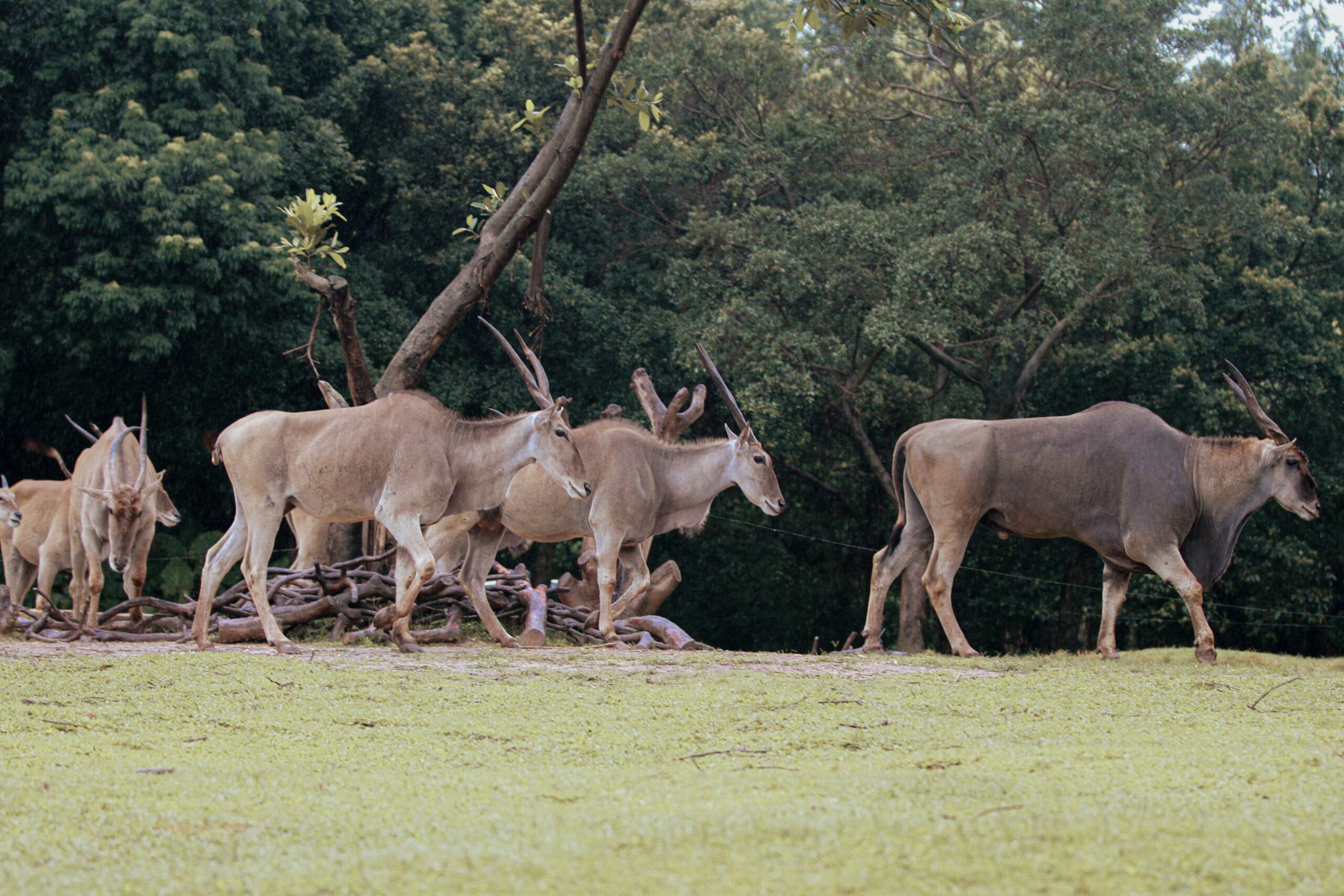
エランドはどんな動物?特徴、生態、生息地について解説します。レイヨウ類の中でも最大の動物でアフリカ大陸などを中心に分布しているウシの仲間です。大きな群れをつくる傾向があるためとても社会性の強い動物であることが良く分かっています。


エランドとは? 基本ステータスについて
エランドはアンテロープとしては世界で 2 番目に大きく、平均するとオオエランドよりわずかに小さい動物です。サザンエランドまたはエランドアンテロープとしても知られる動物で学名はTaurotragus oryx。体長は雄で240~350cm、雌で200~280cm、体重は400~1000kg、雌で300~600kgあります。
| Japanese(和名) | エランド |
| English(英名) | eland |
| scientific name(学名) | Taurotragus oryx |
| classification(分類) | Mammalia、Artiodactyl、 Bovidae、Bovinae 哺乳綱、偶蹄目/鯨偶蹄目、ウシ科、ウシ属 |
| IUCN Status(保全状況) | LEAST CONCERN |
| Length(体長) | 240~350cm |
| Weight(体重) | 300-1000kg |
エランドのルーツ、起源は?
エランドは、アフリカに生息する最大級のレイヨウ(アンテロープ)の仲間で、分類上はウシ科(Bovidae)・ウシ亜科(Bovinae)・エランド属(Taurotragus)に属します。現在は主に2種が知られています。
① 祖先は約2000万年前のアフリカのウシ科動物
エランドの遠い祖先は、約2000万年前(中新世)にアフリカで進化した原始的なウシ科動物です。
その後、
原始的なウシ科
↓
ヒヅメを持つ大型草食動物へ分化
↓
トラゲラフィニ族(Tragelaphini)
↓
エランド・クーズー・ニアラ・ボンゴなどの仲間
という進化をたどりました。エランドを含むトラゲラフィニ族は、約600万年前の後期中新世頃に現れたと考えられています。
② クーズーやボンゴに近い仲間
見た目では牛に似ていますが、実際の近縁関係では、
近い仲間:
- クーズー
- ボンゴ
- ニアラ
- シタツンガ
などの「ねじれ角を持つレイヨウ類」です。
エランドは巨大な体を持つため牛に近く見えますが、進化的にはアフリカ産レイヨウの大型化したグループです。
③ 古代エランド(絶滅種)の存在
化石記録では、更新世(約258万年前〜約1万1700年前)にすでにエランド類が存在していました。
代表的な古代種:
タウロトラグス・アーケリ(Taurotragus arkelli)
- 約更新世に東アフリカに生息
- 現代のケープエランドの祖先候補
- タンザニアのオルドヴァイ渓谷で化石発見
現在のエランドより原始的な特徴を持っていたとされています。
④ ケープエランドとジャイアントエランドの分岐
現在の2種、
ケープエランド
(南部・東部アフリカ中心)
と
ジャイアントエランド
(西〜中央アフリカ)
は、約160万年前頃に分岐したと推定されています。
分岐理由として考えられるもの:
- 気候変化
- 草原環境の拡大
- 地域ごとの食物資源の違い
- 氷期による生息地分断
などがあります。
⑤ なぜ巨大化したのか?
エランドが大型化した理由は主に以下です。
1. 捕食者への対抗
アフリカでは、
- ライオン
- ハイエナ
- リカオン
など大型肉食動物が存在しました。
体が大きいほど、
- 襲われにくい
- 長距離移動できる
- 群れで防御できる
という利点があります。
2. 草原環境への適応
エランドは、
- 草
- 木の葉
- 果実
- 枝
を食べることができます。
乾燥した環境でも生きられるよう、効率的な消化能力を発達させました。
3. 水への依存を減らした
エランドは植物から水分を得る能力が高く、乾燥地域でも生活できます。
これはアフリカのサバンナ・半乾燥地帯で生き残る大きな武器になりました。
分類について
エランドはレイヨウ類の中でも最大の動物です。「エランド」という名前はアフリカーンス語で「ヘラジカ」または「ヘラジカ」を意味します。
系統分類
| 階級 | 分類 |
|---|---|
| 界 | 動物界(Animalia) |
| 門 | 脊索動物門(Chordata) |
| 綱 | 哺乳綱(Mammalia) |
| 目 | 偶蹄目(Artiodactyla) |
| 科 | ウシ科(Bovidae) |
| 亜科 | ウシ亜科(Bovinae) |
| 属 | Taurotragus |
| 種 | 2種: ・グレーエランド (Taurotragus oryx) ・カラハリエランド (Taurotragus derbianus) |
生息地について
エランドは主にアフリカの南部(アンゴラ、ザンビア、ボツワナ、タンザニア、モザンビーク、ケニアやコンゴ民主共和国、スーダン、ジンバブエ、南アフリカ)に分布しています。
1. 全体の生息環境
- エランドは アフリカ大陸のサバンナや草原、半乾燥地帯 に生息
- 開けた草原で群れを作り、草や葉を食べる
- 水源に依存するが、乾燥に強く長距離を移動して水を確保できる
2. 種ごとの生息地
| 種類 | 生息地域 | 特徴 |
|---|---|---|
| グレーエランド (Taurotragus oryx) | 南部・東部アフリカ:ボツワナ、ジンバブエ、ナミビア、南アフリカ、ケニア、タンザニア | 開けた草原やサバンナに多く、個体数は比較的安定 |
| カラハリエランド (Taurotragus derbianus) | 西部・中央アフリカ:カメルーン、中央アフリカ共和国、チャド、カラハリ砂漠周辺 | 樹木の少ない乾燥地や半砂漠に適応、個体数はやや少なめ |
3. 生息環境の条件
- 草原・サバンナ
- 草や低木を採食するのに適している
- 視界が広く、捕食者(ライオン、ヒョウなど)に気づきやすい
- 半乾燥地・砂漠周辺
- 水が少なくても耐えられる
- 移動して水や食料を探す能力が高い
- 群れ生活が可能な広さ
- 1つの群れで数十頭〜数百頭が同時に採食可能
特徴は?どんな感じの生物なのか?
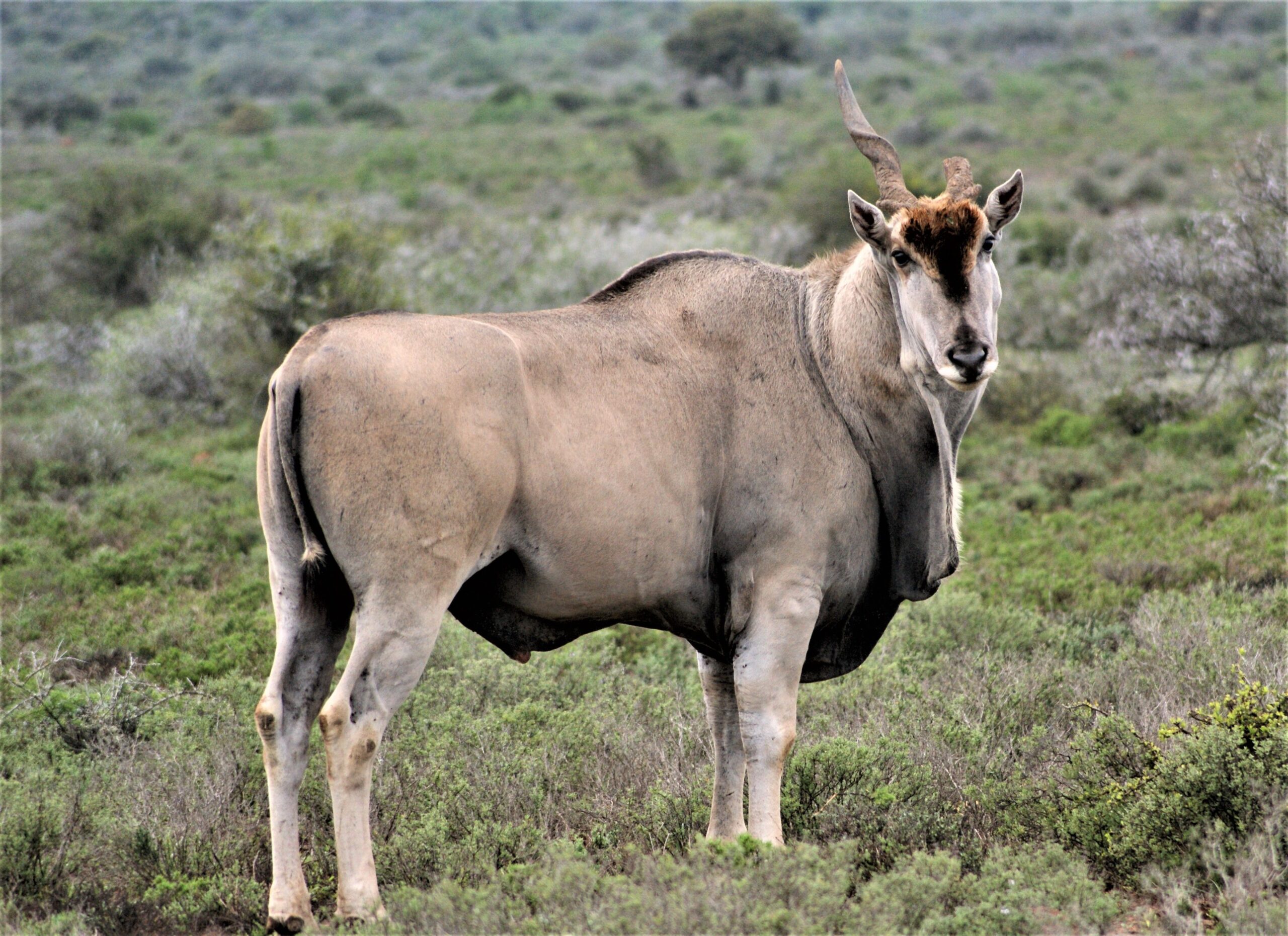
エランドは体毛は茶色、茶褐色、灰褐色。さらに白が混じっていることが多いです。四肢の内側は白っぽく、前足の後ろ側のひざ上部分には、黒い班があります。尾の先には長い毛があり、色は黒。エランドには雌雄ともに角があり、2回転ほどしています。エランドは主にアフリカ大陸の南部における草原や藪地、低木地帯などで群れを形成します。エランドは早朝と夕方に活発に活動します。
1. 外見の特徴
- 体格
- 体長:2〜3 m
- 肩高:約1.5〜1.8 m
- 体重:250〜1,000 kg(種類や個体による)
- 大型でがっしりした体格
- 毛色
- グレーエランド:淡茶色〜黄褐色
- カラハリエランド:赤褐色
- 背中に縦の白い筋が入る個体も
- 角
- 両性に存在
- 螺旋状にねじれた立派な角
- オスの角は太く大きめ、メスはやや細め
- 顔・頭部
- 顔は長く、目は落ち着いた印象
- 鼻はやや丸く、荒れた草原で呼吸しやすい
2. 行動・性格
- 群れで生活する社会性の高い動物
- 群れは数十頭〜数百頭になることも
- 群れ内でメス中心の秩序や順位がある
- 性格
- 穏やかで攻撃的ではない
- 捕食者が近づくと素早く走って逃げる
- 好奇心はあるが、慎重で警戒心が強い
- 活動
- 昼行性で日中に採食や移動
- 水を求めて広範囲を移動することもある
3. 生態的特徴
- 食性: 草食(草・葉・低木の芽)
- 繁殖:
- メス中心の群れにオスが加わる繁殖型
- 繁殖期はオスがハーレムを作る
- 防御:
- 群れで行動し視界が広く、捕食者から身を守る
- 必要に応じて素早く走る能力がある
- 適応:
- 草原や半乾燥地帯に適応
- 長距離移動と乾燥環境への耐性
性格はどんな感じなのか?
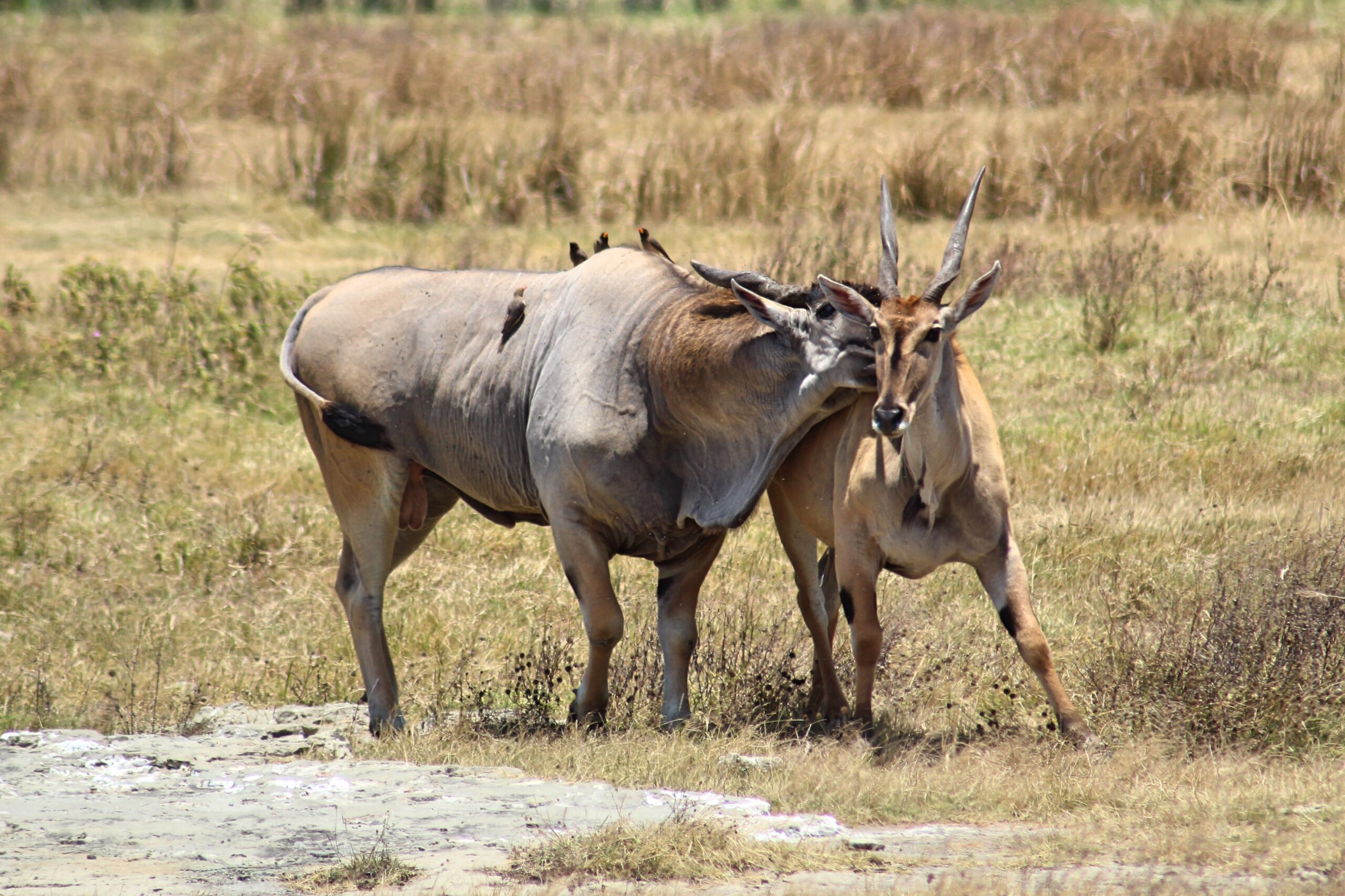
エランドは大人しくて温和で協調性のある性格をしている傾向にあります。ただし群れが襲われてしまった場合、集団で外敵に対して勇敢に戦う一面を持っており、不屈の精神を持っているのです。
エランドの性格の特徴
- 穏やかでおとなしい
- 攻撃的ではなく、基本的に平和的
- 群れ内で争いは少なく、秩序を守る
- 警戒心が強い
- 捕食者(ライオン、ヒョウ、ヒヒなど)や人間に敏感
- 危険を察知すると素早く逃げる
- 群れで広範囲を見渡して安全を確認する
- 社会性が高い
- 群れで生活し、メス中心の秩序を持つ
- オスは繁殖期に群れを守るため、軽いけん制や威嚇を行う
- メス同士や母子の絆も強い
- 好奇心はあるが慎重
- 新しい環境や物事には興味を示すが、すぐに飛びつくことはない
- 動作は落ち着いていて、急な行動は避ける
- 繁殖期の行動
- オスは群れのハーレムを守るため、他のオスに対して角を使った軽いけん制を行う
- 激しい戦闘はまれで、怪我を避ける傾向が強い
生態はどんな感じ?
エランドは草食性で、草類、木の芽や木の葉などを食べ、果実のほか、土を掘って木の根なども食べます。エランドは基本的に一夫多妻で雨季になると繁殖をします。妊娠期間は9ヵ月で1頭産むことが可能になっています。寿命は15年程度です。
1. 生活様式
- 群れで生活
- 群れは数十頭〜数百頭になることもあり、メス中心の秩序がある
- オスは繁殖期にハーレム型群れを形成
- 昼行性
- 日中に採食や移動を行う
- 夜間は休息や警戒行動を行う
2. 食性
- 草食性
- 主に草、葉、低木の芽を食べる
- 栄養価の低い草でも消化可能で、乾燥地でも生存可能
- 水分補給
- 水源を利用するが、乾燥地でも植物から水分を摂取
- 採食行動
- 群れで同時に採食しながら周囲の安全を確認
- 長距離を移動して食料を確保
3. 繁殖と子育て
- 繁殖
- メス中心の群れにオスが加わる
- 繁殖期はオスが群れを守り、他のオスに軽くけん制
- 妊娠期間
- 約9か月
- 出産
- 1頭のみ生まれる
- 群れ全体で子どもを守る
- 成長
- 子どもは母親と群れに付き添い、1〜2年で独立
- 社会的ルールや採食・移動の方法を学ぶ
4. 生息環境への適応
- サバンナや半乾燥地帯に適応
- 蹄と脚が丈夫で長距離移動や乾燥地での採食が可能
- 群れで広範囲を移動し、水や食料を確保する能力が高い
天敵はいるのか?
天敵はライオンやオオカミになります。肉食の大きな哺乳類が襲ってきます。
鳴き声について
エランドの鳴き声は、見た目の大きさに反して非常に控えめな声から、低く響く音まで幅広い特徴があります。特に有名なのは、エランド独特の「クリック音(カチッという音)」です。
① 最大の特徴:「膝から鳴るクリック音」
エランドは歩くときに、
「カチッ……カチッ……」
「コツ、コツ」
という乾いた音を出すことがあります。
これは口や喉から出す鳴き声ではなく、主に脚の関節や腱が動くことで発生する音と考えられています。
なぜ鳴るのか?
正確な役割はまだ完全には解明されていませんが、主な説は:
- オスの大きさを示すため
- 群れの中で存在をアピールするため
- 相手への威嚇・順位表示
- 遠くにいる仲間への合図
などです。
特に大型のオスほど大きなクリック音を出す傾向があります。
② 普段のコミュニケーション音
エランドは基本的に静かな動物ですが、状況によって以下のような声を出します。
子ども(仔エランド)
- 「メェー」
- 「ミャー」
- 小さな鳴き声
母親を呼ぶために使います。
成獣
危険を感じた時など:
- 低いうなり声
- 鼻息のような音
- 短い警戒音
を出します。
③ オスの威嚇音
繁殖期のオスは、
- 鼻を鳴らす
- 低いうなり声を出す
- 地面を踏み鳴らす
などの行動をします。
エランドのオス同士は角を使った争いをしますが、いきなり戦うより、
体の大きさ
↓
角の見せ合い
↓
クリック音や威嚇
↓
必要なら衝突
という順序で競争します。
④ エランドの声が少ない理由
エランドはサバンナの大型草食動物ですが、シカやサルのように頻繁には鳴きません。
理由は、
- 群れで生活して視覚的な情報交換が多い
- 捕食者に位置を知られたくない
- 大型なので声で仲間を呼ぶ必要性が低い
ためです。
季節別の活動
エランドの活動は、雨季と乾季の変化に大きく左右されます。アフリカのサバンナでは季節によって植物量・水場・繁殖状況が変わるため、エランドも移動・採食・繁殖行動を変化させます。
春(雨季の始まり:地域により10〜3月頃)
活動
- 活発に採食する
- 群れが広範囲に移動する
- 若い草を大量に食べる
雨が降ると、
- 新芽
- 柔らかい草
- 木の葉
が増えるため、エランドにとって最も栄養を取りやすい時期になります。
繁殖への準備
オスは、
- 体格を誇示する
- クリック音を強く鳴らす
- メスの群れについて回る
などの行動を増やします。
夏(雨季:植物が豊富な時期)
活動ピーク
夏はエランドにとって最も生活しやすい季節です。
採食
主に:
- 草
- 木の葉
- 果実
- 若い枝
を食べます。
エランドは草食動物ですが、状況に応じて食べ物を変える**混合採食者(ブラウザー+グレイザー)**です。
群れ行動
雨季には、
- メスと子どもの群れが大きくなる
- 若い個体が成長する
- 移動距離が短くなる
傾向があります。
水と食料が豊富なので、長距離移動する必要がありません。
秋(乾季への移行期)
食料変化への対応
雨季の植物が減り始めると、エランドは食べるものを変えます。
増える行動:
- 木の葉を食べる
- 枯れ草を利用する
- 水場へ移動する
特に、
- アカシア類
- 低木の葉
などを利用します。
オスの競争が強まる時期
繁殖期が近づくとオスは:
- 首を低く構える
- 角を使った押し合い
- クリック音を鳴らす
- メスへのアピール
を増やします。
冬(乾季:最も厳しい時期)
※アフリカでは地域によって乾季の時期が異なります。
活動パターン
乾季になると、
- 朝夕に採食
- 昼間は休息
- 水場周辺に集中
という生活になります。
理由:
日中の高温で体力を消耗しないためです。
歩行速度について
エランドは巨大な体を持つため鈍重に見えますが、実際には大型アンテロープの中でも非常に優れた運動能力を持つ動物です。歩行・速歩・走行を状況に応じて使い分けます。
① 通常歩行
約3〜5km/h程度
普段の採食時はゆっくり歩きながら、
- 草を探す
- 木の葉を食べる
- 群れについて移動する
という行動をします。
大型動物なので、無駄なエネルギー消費を避ける省エネ歩行です。
② 速歩(トロット)
約8〜15km/h程度
危険を感じた時や群れが移動するときは、歩行から速歩に変わります。
特徴:
- 首を上下させながら進む
- 長時間維持できる
- 群れ全体で同じペースを保つ
エランドは短距離の爆発力より、長距離移動能力に優れています。
③ 走行速度(最高速度)
エランドは最大で、
約40〜70km/h
ほどの速度を出せるとされています。
体重:
- メス:約300〜600kg
- オス:約500〜900kg以上
という巨大な体でこの速度を出せるのは驚異的です。
なぜ大型なのに速く走れるのか?
1. 長い脚
エランドは脚が非常に長く、
- 歩幅が大きい
- 少ない歩数で距離を稼げる
構造になっています。
2. 弾力性のある腱
脚の腱がバネのように働き、
- 着地の衝撃を吸収
- 次の一歩の推進力に利用
できます。
3. 体温管理能力
大型動物は走ると体温が上がりやすいですが、エランドは:
- ゆっくり長く移動する
- 必要な時だけ高速走行する
という戦略を取っています。
エランドの幼獣について
エランド(Eland)の 幼獣(子牛)の特徴や成長過程 について詳しく整理します。
1. 出生
- 妊娠期間: 約9か月
- 出産数: 通常1頭
- 出産場所: 群れの安全な場所や草原の隠れた地点
- 新生児の特徴:
- 体重:約15〜25 kg
- 体高:約60〜80 cm
- 毛色は明るい茶色で、成獣より淡い色
- 角はまだ小さく、性別による差はあまり目立たない
2. 母親との関係
- 出生直後から母親に付き添い、歩行や採食を学ぶ
- 群れの保護のもとで安全に過ごす
- 母親は子どもを守るために警戒心を強める
3. 成長と行動
- 生後1〜3か月:
- 群れの中で母親にしがみつきながら歩行や採食の練習
- 草を少しずつかじり、離乳が始まる
- 生後6か月:
- 群れと一緒に採食・移動
- 親の行動を観察して、社会的ルールを学ぶ
- 生後1〜2年:
- 独立心が芽生え、群れ内で自分の位置を確立
- 完全に独立する前に繁殖期の行動も学ぶ
4. 特徴
- 毛色: 新生児は明るめ、成獣になると種によって淡茶色や赤褐色
- 性格: 好奇心があり、母親や群れの行動を観察し学習
- 防御: 母親や群れに守られ、天敵からの被害を避ける
エランドは絶滅危惧種なのか?
エランドは個体数が安定しており、絶滅危惧種ではありません。米国絶滅危惧種法によって保護されており、国際取引は絶滅危惧種の国際取引に関する条約によって保護されています。しかし、人間の居住地拡大や密猟による生息地の喪失により、個体数は徐々に減少しているため、注視が必要な状態になります。
1. 世界的な保護状況(IUCNレッドリスト)
| 種類 | 分類(絶滅危惧度) | コメント |
|---|---|---|
| グレーエランド (Taurotragus oryx) | LC(Least Concern:軽度の懸念) | 南部・東部アフリカに広く分布し、個体数は比較的安定 |
| カラハリエランド (Taurotragus derbianus) | NT(Near Threatened:準絶滅危惧) | 西部・中央アフリカに分布、森林伐採や狩猟によって局所的に減少傾向 |
ポイント:グレーエランドは個体数が安定しており絶滅危惧種ではないが、カラハリエランドは生息地減少で注意が必要な準絶滅危惧種
2. 絶滅リスクの原因
- 狩猟圧
- 食用や角を目的とした狩猟
- 生息地の減少
- 農地開発、森林伐採、道路建設
- 局所的な個体群の減少
- 特にカラハリエランドは森林伐採の影響が大きい
3. 日本での保護状況
- 自然分布はなし
- 動物園で飼育されている個体は保護・繁殖目的
- 輸入・飼育は ワシントン条約(CITES)や国内法で管理
エランドは飼育可能?
エランドはそもそもペットショップでは売られていません。そうなると動物園から案内してもらい、譲ってもらうと言う手段が最も現実的な解決手段になります。園内に入園すればイベントなどもありますので総合案内やカレンダーをチェックしてみてまずは鑑賞しましょう。オスやメスがゾーンで飼育されています。
1. 法律・保護上の規制
- 国際的にはワシントン条約(CITES)付属書Ⅱに掲載されており、輸出入は規制対象
- 日本国内でも 野生動物保護法 により、個人での飼育は原則不可
- 飼育可能なのは 動物園・研究施設・保護施設 に限られる
2. 生態的な理由
- 大型の草食動物
- 体高:約1.5〜1.8 m
- 体重:250〜1,000 kg
- 広範囲を移動して採食する生活
- 家庭や小さな敷地では活動スペースが不足
- 群れでの生活が必要
- 社会性が高く、単独飼育ではストレスが大きい
- 食性が特殊
- 草、葉、果実などを大量に食べる
- 栄養管理や水分補給の確保が家庭では難しい
3. 健康・安全面
- 大型で力が強く、家庭で扱うのは危険
- 野生本能が強く、逃げたり暴れることがある
- 飼育環境が不適切だとストレスや病気のリスクが高い
飼育されている動物園(日本・世界)
エランドは大型のレイヨウ類の中では比較的飼育しやすい種類で、世界各地の動物園・サファリパークで飼育されています。日本でも複数の施設で見ることができます。
🇯🇵 日本でエランドを飼育している主な動物園
天王寺動物園(大阪)
- 種類:コモンエランド(Taurotragus oryx)
- アフリカサバンナエリアで展示
- 日本国内でもエランド飼育の代表的施設のひとつです。
特徴:
- 巨大な体
- 首の下の「胸垂」
- オスの太いねじれ角
などを観察できます。
東武動物公園(埼玉)
- エランドを飼育
- 動物図鑑でもコモンエランドとして紹介されています。
広い放飼場で観察できるため、エランド本来の「歩き回る姿」を見やすい施設です。
🌍 世界のエランド飼育施設
Askania-Nova Biosphere Reserve(ウクライナ)
エランド飼育の歴史では非常に有名な施設です。
- 大規模な群れ飼育で知られる
- エランドの家畜化研究にも関係した場所
エランドは古くから、
- 肉
- 乳
- 乾燥地での家畜利用
の可能性が研究されてきました。
National Zoo & Aquarium(オーストラリア)
- コモンエランドを飼育
- サバンナ動物展示の一部として公開
されています。

他の動物を紹介

コメント