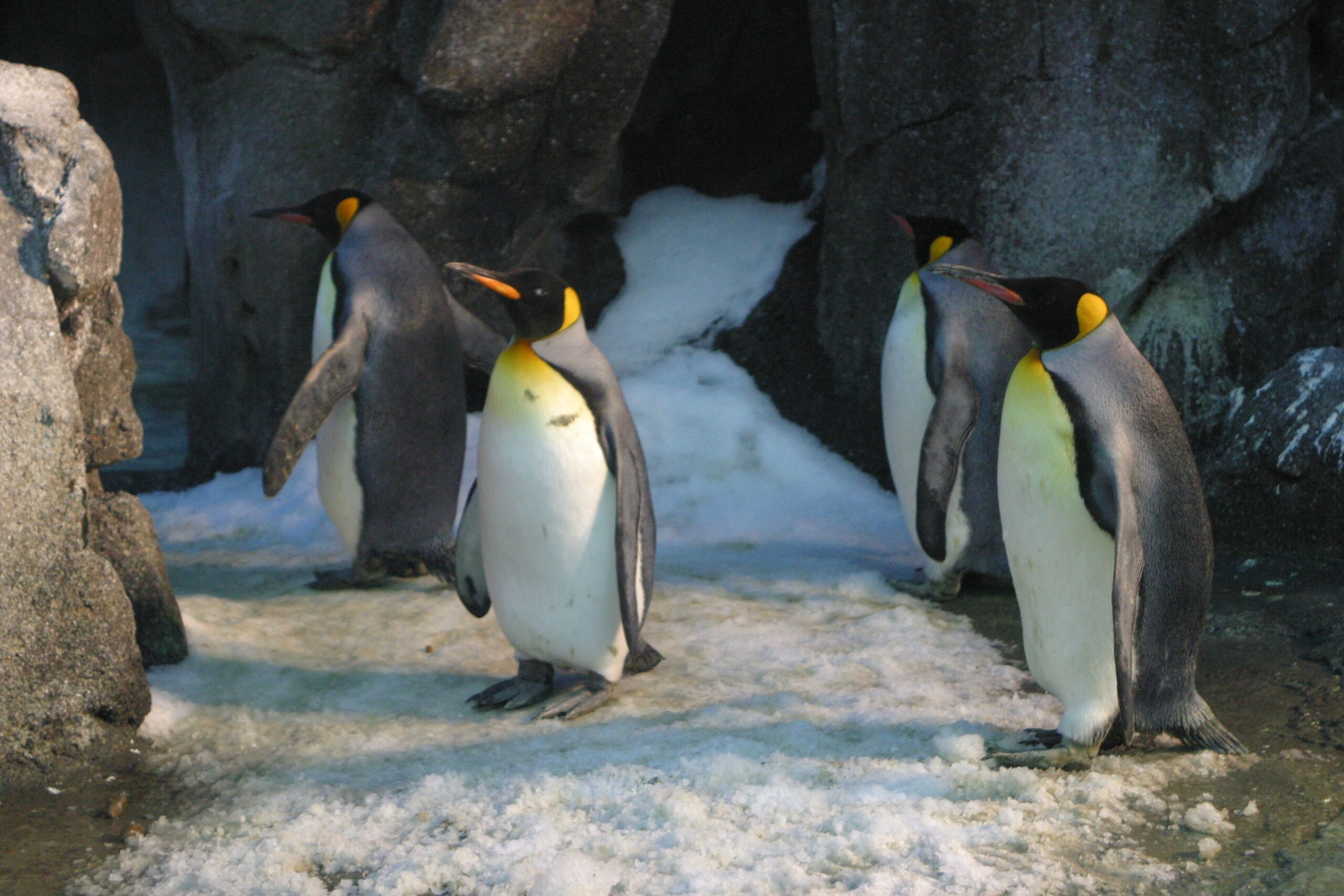
キングペンギンの特徴、生態、生息地について解説します。コウテイペンギンのつぎに大きなペンギンでサイズはとても大きく、ヒナもかなりのビッグサイズとなります。繁殖地は南極から少し離れた場所となっており、あまり人と出会う機会は多くありません。


キングペンギンの基本情報について
キングペンギンは別名、オウサマペンギンです。2番目に大きな種類のペンギンで、体長は85-95cmほどで体重は10-16kg。ペンギン目ペンギン科オウサマペンギン属に分類される鳥類でエンペラーペンギンと同種になります。
| Japanese(和名) | キングペンギン、オウサマペンギン |
| English(英名) | King Penguin |
| scientific name(学名) | Aptenodytes patagonicus |
| classification(分類) | Sphenisciformes, Spheniscidae, Aptenodytes ペンギン目ペンギン科オウサマペンギン属 |
| IUCN Status(保全状況) | LEAST CONCERN |
| Height(身長) | 85-95cm |
| Weight(体重) | 10-16kg |
キングペンギンのルーツ、起源は?
キングペンギン(キングペンギン)のルーツは、コウテイペンギンと共通する古代ペンギンにあります。
ペンギンの祖先
ペンギンの起源は約6,000万年前までさかのぼります。
最古級のペンギンとして知られる
ワイマヌ
は、約6,100万年前のニュージーランドで生息していました。
当時の祖先はすでに飛ぶ能力をほぼ失い、水中を泳ぐことに特化し始めていたと考えられています。
キングペンギンの系統
キングペンギンは、
Aptenodytes
属に分類されます。
この属には現生種が2種しかいません。
- キングペンギン
- コウテイペンギン
遺伝学的研究では、この2種は最も近縁なペンギン同士であり、数百万年前に共通祖先から分岐したと考えられています。
どこで進化した?
キングペンギンは南極大陸そのものではなく、
- サウスジョージア島
- クロゼ諸島
- ケルゲレン諸島
- マッコーリー島
などの亜南極地域で進化したと考えられています。
分類学ではどうなっているのか?
1778年、イギリスのイラストレーター、ジョン フレデリック ミラーがオウサマペンギンの手彩色版画を掲載しました。これをきっかけに注目されるようになりこの種が最大のペンギンとして知られ、名も”King”と呼ばれました。しかしさらに大きなコウテイペンギンが発見され、名に”Emperor”と冠されたのです。
| 名前 : Name | 属名 : genus name | 生息地 : Habitat |
| コウテイペンギン(Emperor Penguin) | Aptenodytes コウテイペンギン属 | 南極大陸 |
| キングペンギン(King Penguin) | Aptenodytes コウテイペンギン属 | 南大西洋、インド洋 |
キングペンギンの分類
- 界(Kingdom):動物界(Animalia)
- 門(Phylum):脊索動物門(Chordata)
- 綱(Class):鳥綱(Aves)
- 目(Order):ペンギン目(Sphenisciformes)
- 科(Family):ペンギン科(Spheniscidae)
- 属(Genus):オウサマペンギン属(Aptenodytes)
- 種(Species):キングペンギン(Aptenodytes patagonicus)
キングペンギンの生息地について
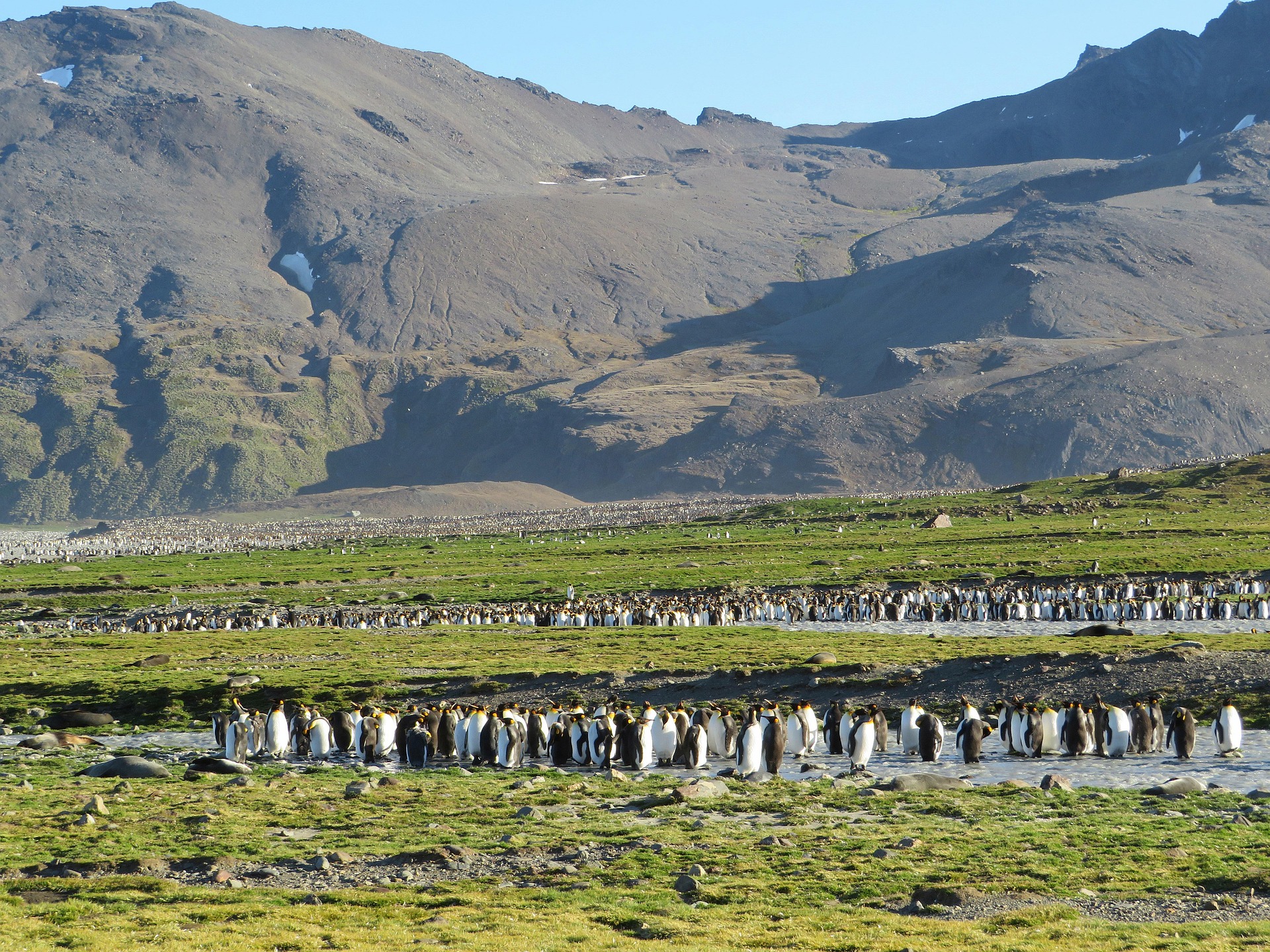
キングペンギンの生息地はサウスジョージア島とフォークランド諸島がメインですが、それ以外にもケルグレン島やハード島、マッコーリー島、クロゼ諸島、プリンス・エドワード諸島にいて、南米大陸付近で南極ではありません。記録ではジェンツーペンギンやアデリーペンギンらと生息地が近く、氷の島々で姿を見れます。陸上では黄色、オレンジ色で大きい歩く姿が写真などに納められ、ネットでも見れます。
1. 地理的分布
- 亜南極諸島中心
- サウスジョージア島、フォークランド諸島、南サンドウィッチ諸島、クローゼ諸島
- 南米・南極周辺の冷涼な島嶼地域に分布
- 南極大陸沿岸にはほとんど生息しない
2. 生息環境の特徴
- 陸上
- 岩や砂利、草地などに巣を作る
- 繁殖期にはコロニーを形成して集団生活
- 海中
- 沿岸の冷たい海域で魚、オキアミ、イカを捕食
- 海上では長距離移動して採餌することもある
3. 繁殖地
- 繁殖は主に亜南極諸島の沿岸部で行われる
- 島によって数万羽単位の大規模なコロニーを形成
- 海氷が少ない島嶼環境で巣穴や砂利の上に卵を産む
4. 環境適応
- 厚い羽毛と脂肪層で寒冷な海域や風に耐える
- 集団で体を寄せ合い、防寒と防衛行動を行う
- 海流や餌の分布に応じて長距離を泳ぐことができる
特徴は?どんな感じの生物なのか?
キングペンギンは頭部とフリッパーの外側の羽色は黒で外見はかなりエンペラーペンギンに似ています。背は灰色で側頭部の耳の周辺は橙色になります。嘴は大型で細長くやや湾曲しておりこの長さはペンギンの中では最長になります。海ではペンギンたちは体から足が伸びて舵の役割を果たします。親は巣にいるクレイシの雛のために大きい体とくちばしを活かして餌を取りに行きます。
1. 体型・大きさ
- 体長:約90〜100 cm
- 体重:11〜16 kg(個体や季節により変動)
- エンペラーペンギンほど大きくはないが、亜南極のペンギンの中では大型
- 流線型の体で泳ぎに適している
2. 羽毛の色
- 背中:青灰色
- 腹部:白色
- 首から胸にかけて鮮やかなオレンジ色の模様
- 顔の側面から胸にかけて黒色とオレンジのグラデーション
- この色彩は個体識別や求愛行動に重要
3. 行動・習性
- 泳ぎが得意:海で魚、イカ、オキアミを捕食
- 海上で長距離移動し、餌を探すことができる
- 繁殖期には集団でコロニーを形成し、社会性が高い
4. 繁殖
- 繁殖期は亜南極の夏(11〜3月)
- 岩や砂利の上に卵を産み、1個の卵を抱卵する
- 孵化まで親が交代で卵を温める
- エンペラーペンギンと比べて繁殖期は長く、卵から孵化まで約54日かかる
5. 社会性
- 大規模なコロニーで集団生活
- 親子やペアは鳴き声や色模様で互いを認識
- 協力して卵やヒナを守り、体を寄せ合って防寒
6. 生態的特徴
- 亜南極の冷涼な島々に適応
- 厚い羽毛と脂肪層で寒冷に耐える
- 餌資源に応じて長距離を泳ぎ、効率的に捕食
性格はどんな感じになるのか?
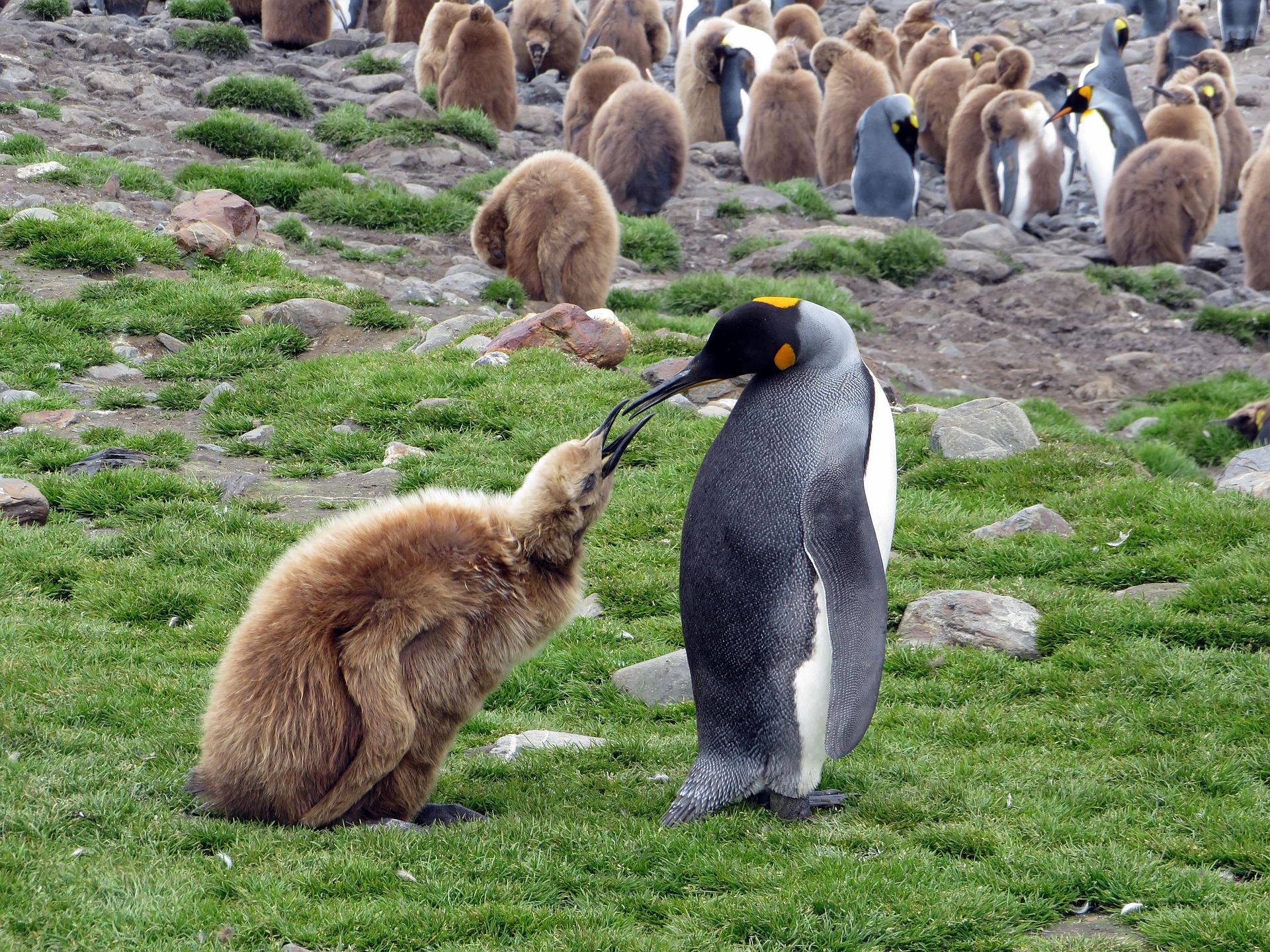
キングペンギンは落ち着いていて、攻撃性が低いと言う特徴があります。キングペンギンはみんなで団体行動するという習性を持っており、争いの起こりにくい種族と言われていて縄張り意識も薄いです。餌を取りに行くのも集団で行動しているので、協調性のある動物と言われています。また度胸もあり、人間が近づいても全く逃げることがありません。
1. 社会性が高い
- 繁殖期には数千羽〜数万羽規模のコロニーを形成
- 集団で協力して卵やヒナを守る
- ハドル行動(体を寄せ合って防寒)など、仲間との協力が必要不可欠
2. 協力的で責任感がある
- 一夫一妻制でペアの絆が強い
- 卵の抱卵やヒナの育成において、親は交代で責任を果たす
- 長期にわたりペアを維持することもある
3. 警戒心がある
- 外敵(鳥類や外来捕食者)や環境変化に対して敏感
- 繁殖期は巣やヒナを守るため、周囲の状況に注意深くなる
4. 穏やかで忍耐強い
- 過酷な環境に適応しているため、冷静で忍耐強い性格
- 飼育下では比較的落ち着いており、人間に対しても攻撃的になることは少ない
5. 好奇心
- 飼育下や観察下では、周囲の環境に興味を示すこともある
- 野生では警戒心が優先されるため、近づくと逃げることが多い
まとめると、キングペンギンは社会性・協力性が高く、忍耐強く穏やかで忠実、警戒心もあるが必要に応じて好奇心を示す生物です。
キングペンギンの生態は?
キングペンギンは縄張り意識が強くコロニーを形成します。ヒナが生まれると野生の同じ群れである「クレイシュ」を形成します。これは寒さの期間を凌ぐためや外敵から身を守るためです。研究では遊泳速度は平均時速8.4kmになり水深220メートル以上まで潜水することが可能です。食べ物はイワシやイカ、甲殻類。繁殖期には体重維持および回復・ヒナに給餌する分も含めて1日あたり3.2 – 3.6kgを腹に溜めます。産卵のピークは初夏にあたる12月半ばから1月頃。オスとメスが交代で抱卵し、卵は54日ほどで孵化します。寿命は20年程度と言われています。
1. 生態
生息地
- 亜南極諸島の沿岸部に生息
- サウスジョージア島、フォークランド諸島、サウスサンドウィッチ諸島など
- 島の岩や砂利の上で繁殖、海上で採餌
行動・採餌
- 泳ぎが得意:魚、イカ、オキアミなどを捕食
- 海上で長距離移動して餌を探すことが可能
- 採餌は沿岸の冷涼な海域が中心
繁殖
- 繁殖期は亜南極の夏(11〜3月)
- 卵は1個で、親が交代で抱卵
- 孵化まで約54日かかり、ヒナが巣立つまで親が交代で世話
- コロニー生活を行い、集団でヒナを守る
社会性
- 集団でコロニーを作る社会性の高い種
- ハドル行動で体温を保持
- 親子・ペア間で鳴き声や模様で互いを識別
2. 寿命
- 野生での平均寿命:15〜20年
- 飼育下:25年以上生きる個体も報告されている
- 個体差や繁殖成功率、餌資源の状況によって寿命に差が出る
3. 特徴的な生態ポイント
- 亜南極の冷涼環境に適応(羽毛と脂肪層で防寒)
- 長距離泳ぎで餌を効率的に捕獲
- 社会性・協力性が繁殖成功に直結
海上での天敵
- シャチ(Orcinus orca)
- 海上で泳ぐキングペンギンを襲う
- アザラシ類(特にレオパードアザラシ)
- 海中から捕食する
- 大型の海鳥(まれにヒナを襲う)
- フルマリンやスカイロックカモメなどがヒナを狙うことがある
陸上での天敵
- 外来捕食者
- ネコ、犬、ネズミなど
- 人間が持ち込んだ捕食者により卵やヒナが被害を受ける
- コロニー内の争い
- 同種間で卵やヒナを突く行動が見られることもある
キングペンギンの換羽
キングペンギン(キングペンギン)の換羽(かんう)は、古い羽毛を新しい羽毛に生え替える重要なイベントです。
換羽の特徴
キングペンギンはコウテイペンギンと同様に、全身同時換羽(catastrophic molt)を行います。
- 短期間で全身の羽毛が生え替わる
- 防水性が失われるため海に入れない
- 換羽中は餌をとれず絶食する
そのため、換羽前には海で十分に栄養を蓄えます。
いつ行うの?
キングペンギンは繁殖サイクルが長く、個体によって多少異なりますが、
- 主に夏から秋にかけて
- 子育てや繁殖活動の区切りに
換羽を行います。
亜南極の島々では気候が比較的穏やかなため、コウテイペンギンのような極端な寒さの中で換羽することはありません。
どのくらい続く?
- およそ3〜4週間
- この期間は陸上で過ごす
- 体重が大幅に減少する
場合によっては体重の3分の1近くを失うこともあります。
換羽中の見た目
換羽中のキングペンギンは、
- 羽毛がまだらになる
- 古い羽が束になって抜ける
- ボサボサの姿になる
ため、普段の美しい姿とはかなり印象が異なります。
キングペンギンの潜水
キングペンギン(キングペンギン)は、コウテイペンギンに次ぐ優れた潜水能力を持つペンギンです。
どれくらい深く潜れる?
- 通常の採餌:50~300m
- 深い潜水:500m以上
- 記録された最大潜水深度:約340m~400m超
多くの採餌は100~250m付近で行われますが、餌を追ってさらに深く潜ることもあります。
どれくらい長く潜れる?
- 通常:3~7分
- 長い潜水:10分前後
- 最長記録:約10~12分
コウテイペンギンほどではありませんが、鳥類としては非常に優れた能力です。
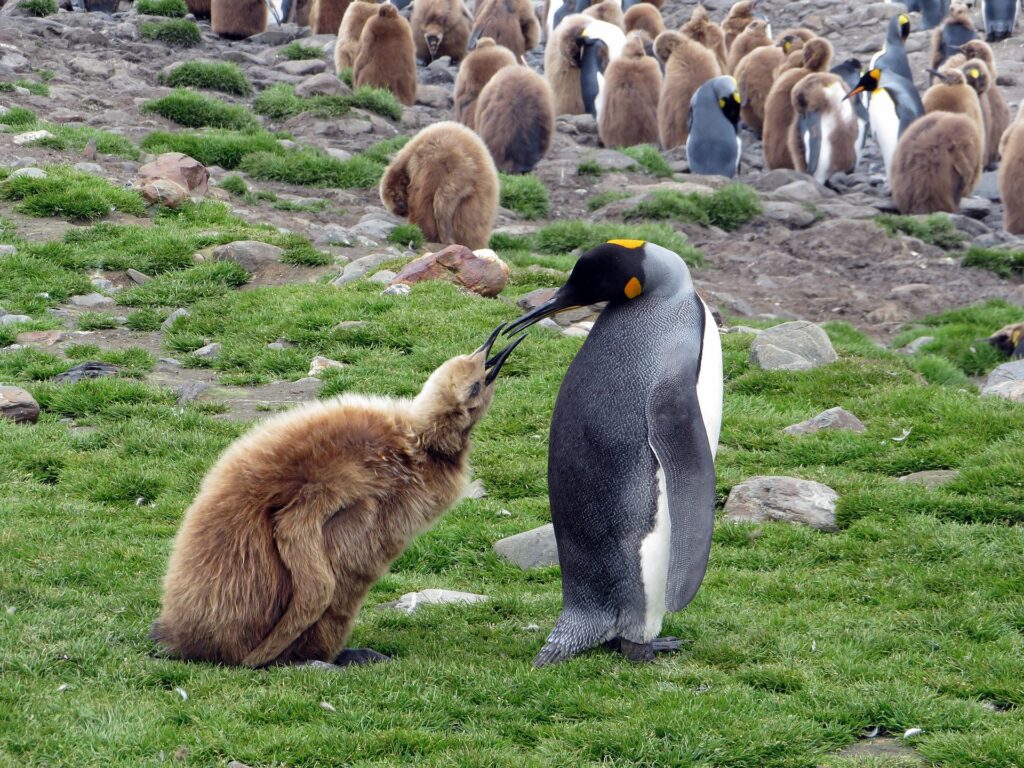
キングペンギンの鳴き声
キングペンギン(キングペンギン)の鳴き声は、ラッパやロバの鳴き声にもたとえられる、よく響く独特な声です。
どんな声?
文字で表すと、
- 「オォーアー」
- 「クォーッ、クォーッ」
- 「アーオー、アーオー」
のような低く伸びる声です。
繁殖地では数千~数十万羽ものキングペンギンが集まるため、とてもにぎやかな環境になります。
なぜ鳴くの?
① つがい相手との連絡
繁殖期にはオスとメスが鳴き交わし、
- 求愛
- ペア形成
- 再会
に利用します。
② 親子の再会
キングペンギンのヒナは大きな集団(クレイシ)で生活します。
親鳥が海から戻ると、
- 親が呼ぶ
- ヒナが応える
というやり取りでお互いを探します。
声で個体識別
キングペンギンは、コウテイペンギンと同じ Aptenodytes属 の仲間です。
そのため、
- 個体ごとに異なる声
- 周波数の組み合わせ
を利用して相手を識別します。
何万羽ものコロニーの中でも、自分の家族を見つけることができます。
「二重音声」の仕組み
キングペンギンは、
- 左右の気管支を独立して振動させる
ことで、2つの異なる周波数を同時に発することができます。
この特徴により、
- 遠距離でも聞き取りやすい
- 個体識別しやすい
- 強風下でも伝わりやすい
という利点があります。
キングペンギンの季節別の活動
キングペンギン(キングペンギン)の生活は、コウテイペンギンと異なり「2年以上かかる長い繁殖サイクル」が特徴です。
春(9~11月頃)
求愛・産卵
- つがい形成
- 求愛ディスプレイ
- 産卵
が行われます。
キングペンギンは巣を作らず、コウテイペンギンと同様に卵を足の上に乗せて温めます。
夏(12~2月頃)
ヒナの誕生と子育て
- 卵がふ化
- 親が交代で海へ採餌
- ヒナへ魚やイカを吐き戻して与える
夏は餌が豊富なため、ヒナは急速に成長します。
秋(3~5月頃)
ヒナの越冬準備
- ヒナは茶色の綿羽に包まれたまま成長
- 脂肪を蓄える
- 集団で生活する
まだ飛べず泳げないため、親から餌をもらいながら冬に備えます。
冬(6~8月頃)
厳しい越冬
- 成鳥は海で採餌
- ヒナはコロニーで待機
- 餌をもらう頻度が減る
この時期、多くのヒナは絶食に近い状態を経験します。
蓄えた脂肪を使って生き延びるため、「オークモンスター(巨大な茶色いヒナ)」と呼ばれるほど丸々としています。
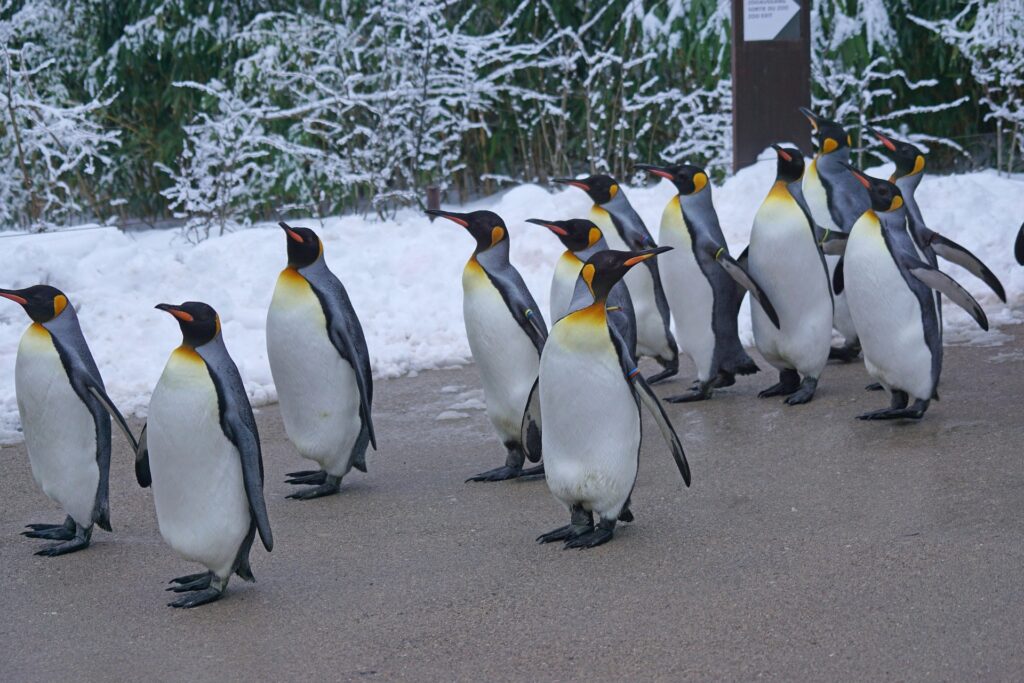
キングペンギンのヒナについて
キングペンギン(Aptenodytes patagonicus、King Penguin)のヒナについて詳しくまとめます。
1. 卵と孵化
- 卵の数:通常1個
- 卵の大きさ:約10 cm × 6.5 cm
- 孵化までの日数:約54日
- 親鳥が交代で卵を抱き、温める
- 主に親鳥の胸のポケットで卵を保温する
2. ヒナの外見
- 孵化直後は灰色または茶色のふわふわしたダウンに覆われている
- 羽毛は防水性がなく、巣の中で親鳥に守られる必要がある
- 体長:約20〜25 cm、体重:約200〜300 g
3. 成長過程
- 抱卵期の後:親が餌を運んでヒナに与える
- ヒナ期:約2〜3か月でダウンが成長し、防水羽に変わる
- 巣立ち:孵化後約10か月で自力で海に入り、採餌を始める
- ヒナは繁殖地のコロニー内で他のヒナと集団生活を行うこともある
4. 行動と社会性
- 親子の絆が非常に強く、声や模様で親鳥を認識
- 危険を感じると巣の中や親鳥の下に隠れる
- コロニー内で体を寄せ合い、防寒と防御を行う
5. 脅威
- 外来捕食者(ネズミや猫など)による卵・ヒナの捕食(島嶼部限定)
- 気候変動による餌不足
- 人間活動や観光による巣の破壊
キングペンギンは絶滅危惧種なの?
キングペンギンはIUCNによって最も懸念されていない種になっています。ただし今後はかなり悲観的にみられており、絶滅の可能性が極めて高いとされています。その理由は以下のようなことになります。推定個体数は1,638,000と安定していますが未来はかなり暗いです。
1. IUCNによる保全状況
- 評価:Least Concern(LC、低危険度)
- 個体数は比較的安定しており、世界中で約200万羽以上と推定されている
- 主なコロニーはサウスジョージア島、フォークランド諸島、サウスサンドウィッチ諸島などに存在
2. 現状の脅威
- 気候変動
- 海水温の上昇により餌資源(小魚・オキアミ)の分布が変化
- 繁殖成功率に影響を与える可能性
- 人間活動
- 漁業による餌資源の減少
- 観光や沿岸開発によるコロニーへの影響
- 外来捕食者(島嶼部限定)
- ネズミや猫などがヒナや卵を襲う
3. 保護状況
- 主な繁殖地は自然保護区に指定されており、保護活動が行われている
- 餌資源の管理や環境モニタリングが進められている
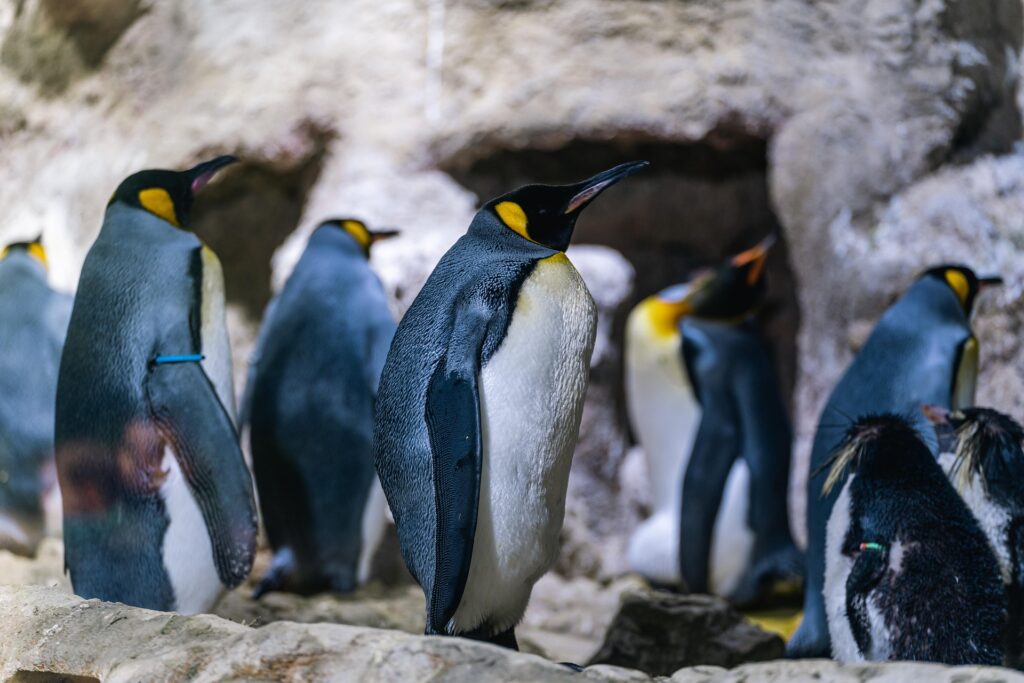
キングペンギンの飼育は可能なのか?
キングペンギン(Aptenodytes patagonicus、King Penguin)の飼育について整理します。結論から言うと、一般家庭での飼育は不可能で、飼育は動物園や水族館などの専門施設に限られます。
1. 飼育環境の条件
水と陸地
- 大型プール・水槽:泳ぐために十分な広さと深さが必要(長さ10m以上、水深3m以上が理想)
- 陸地環境:休息、繁殖、ハドル行動ができる岩や砂利の陸地を再現
- 温度管理:亜南極の冷涼環境に近い温度に保つ必要がある(空気温は0〜10℃程度、水温も低温管理)
環境設備
- 海水の塩分濃度や水質の管理
- 水質ろ過システムや湿度調整
- 繁殖期に適した巣穴や環境の提供
2. 食事
- 主食:魚(イワシ、アンチョビ、ニシン)、オキアミ、イカ
- 1日1〜2回、個体や季節に応じて量を調整
- 栄養補助としてビタミンやサプリを与えることもある
3. 繁殖管理
- 冬季や季節に合わせて繁殖行動を促す
- 卵の抱卵やヒナの育成には親鳥の補助や人工餌の提供が必要
- 繁殖成功率を維持するため、親鳥やヒナの健康管理が必須
4. 健康管理
- 定期的な体重、羽毛、採食状況、消化器系のチェック
- 感染症や寄生虫の予防
- 環境ストレスを受けやすいため、適切な環境調整が重要
5. 法律・倫理
- 絶滅危惧種ではないものの、飼育には専門施設と経験豊富な飼育員が必要
- 世界的にも飼育している施設は非常に限られている
飼育されている動物園(日本・世界)
キングペンギン(キングペンギン)は、コウテイペンギンよりも飼育しやすいため、日本や世界の多くの動物園・水族館で見ることができます。
日本でキングペンギンが見られる主な施設
名古屋港水族館
- 国内有数のペンギン展示施設
- キングペンギンやコウテイペンギンを飼育
- 繁殖実績も豊富
アドベンチャーワールド
- 日本最大級のペンギン飼育数
- 複数種のペンギンを展示
- ペンギンパレードなどで有名
旭川市旭山動物園
- 「行動展示」で世界的に有名
- 水中を飛ぶように泳ぐ姿を観察可能
葛西臨海水族園
- 国内最大級のペンギン展示エリア
- 群れで生活する様子を観察できる
長崎ペンギン水族館
- ペンギン専門水族館
- 世界有数のペンギン飼育種数を誇る
世界で有名な飼育施設
Edinburgh Zoo
- 欧州を代表するペンギン飼育施設
- キングペンギンの繁殖実績が豊富
Detroit Zoo
- 世界最大級の極地展示施設の一つ
- 大規模なペンギン生息環境を再現
SeaWorld San Diego
- 南極・亜南極ペンギン展示で有名
- キングペンギンの群れを観察できる
Antarctica Experience at Sea World Gold Coast
- 南半球有数のペンギン展示施設
- 低温環境を再現

同じ仲間
コメント