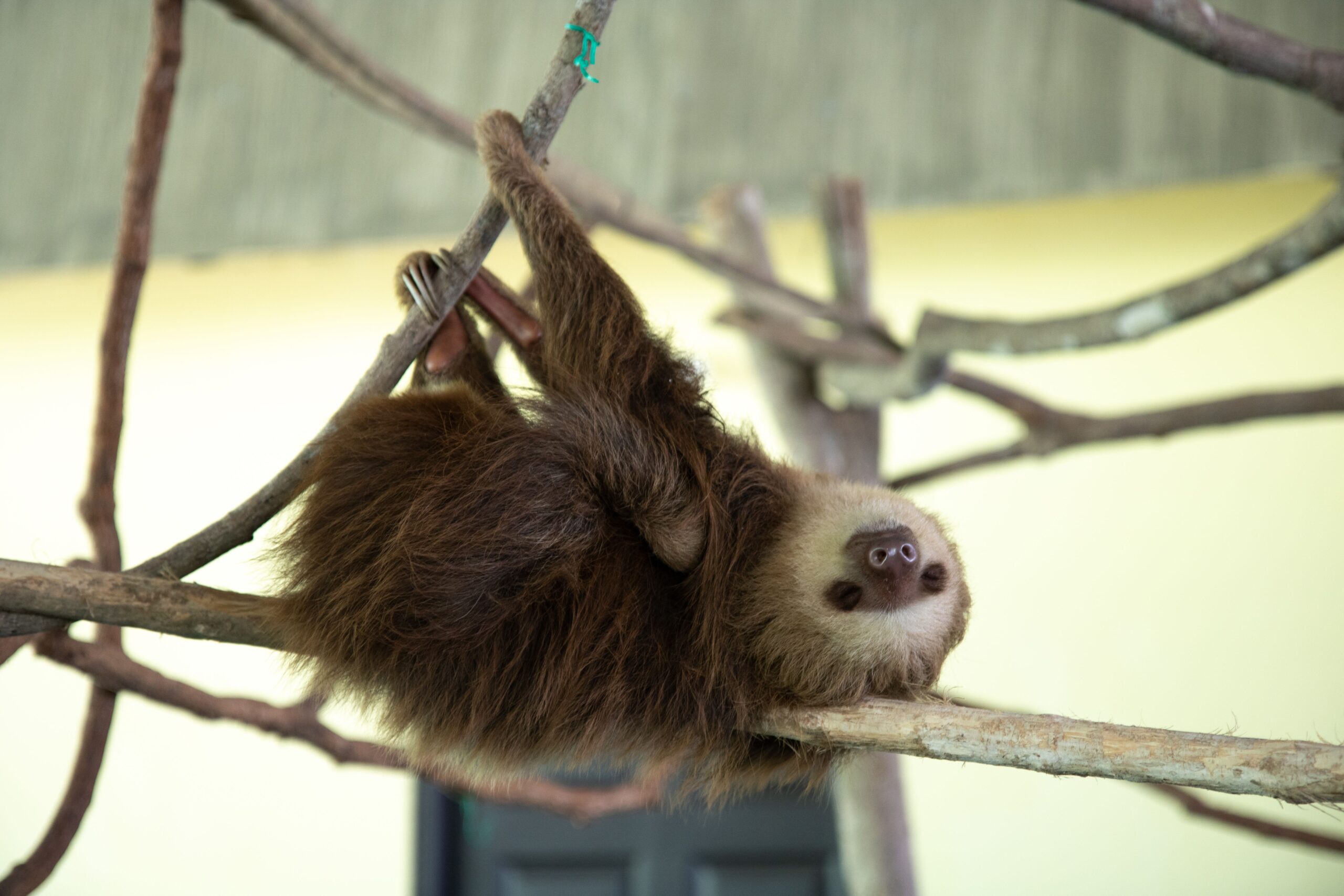
ナマケモノはどんな動物?特徴、生態、生息地について解説をします。ナマケモノは中南米に住んでいる動物で動物園ではよく見られます。ゆっくりした動作で見ているだ毛でもとても癒される可愛い動物なのですが、実は亜種の中には絶滅危惧種に分類されている者も存在します。


ナマケモノとは? 基本ステータスについて
ナマケモノは哺乳綱有毛目ナマケモノ亜目に分類される動物です。学名はFolivora、体長は60~70cmで体重は4~8kgあります。情報の一覧は以下の通り。動きはとてものろく、指から前足、体まで筋肉がないため、とても遅いです。野生は枝でぶら下がってエネルギーの消費を抑えます。
| Japanese(和名) | ナマケモノ |
| English(英名) | Sloth |
| scientific name(学名) | Folivora |
| classification(分類) | Mammalia、Pilosa、 Folivora 哺乳綱、有毛目、ナマケモノ亜目 |
| IUCN Status(保全状況) | LEAST CONCERN |
| Length(体長) | 60~70cm |
| Weight(体重) | 4~8kg |
ナマケモノのルーツ、起源は?
ナマケモノ(sloth)のルーツは、約5,000万年前の南アメリカで誕生した古代の哺乳類グループ「異節類(いせつるい・Xenarthra)」にあります。
1. 起源:南アメリカの古代哺乳類
ナマケモノは、
古代の有胎盤哺乳類
↓
異節類(Xenarthra)
↓
├── アリクイ
├── アルマジロ
└── ナマケモノ
という系統です。
異節類は現在では南米を代表する古い哺乳類グループで、
- 背骨に特殊な関節(異節)
- 低い代謝
- 独特な骨格
を持っています。
2. ナマケモノの祖先は「巨大だった」
現在のナマケモノは、
- 体長50〜80cm程度
- 体重4〜10kg程度
ですが、古代には全く違う姿でした。
代表例:
メガテリウム(Megatherium)
約500万年前〜1万年前に生息。
大きさ:
- 体長:約6m
- 体重:数トン
特徴:
- ゾウに匹敵するサイズ
- 地上生活
- 太い後ろ脚
- 巨大な爪
立ち上がって木の葉を食べていたと考えられています。
3. なぜ小型化して木に登ったのか?
現在のナマケモノの祖先は、進化の過程で方向転換しました。
古代:
- 大型
- 地上生活
- 力で生存
↓
現在:
- 小型化
- 樹上生活
- 省エネルギー型
理由として考えられるのは、
① 捕食者から逃れるため
地上には、
- サーベルタイガー類
- 大型猛禽類
- 肉食哺乳類
などがいました。
木の上は安全な生活場所になりました。
② 食料競争を避けるため
地上では大型草食動物との競争が激しかったため、
「誰も大量利用しない葉を食べる」
方向へ進化しました。
③ 低エネルギー生活への適応
葉は栄養価が低いため、
- ゆっくり動く
- 消化に時間をかける
- 筋肉量を抑える
という独特の進化をしました。
4. ナマケモノの進化系統
大まかな流れ:
約5000万年前
南米の異節類
      ↓
古代ナマケモノ
      ↓
大型地上性ナマケモノ
      ↓
約1000万年前
小型樹上性ナマケモノ
      ↓
現在のナマケモノ
分類について
ナマケモノは以下の種類に分類されています。現生ナマケモノはミユビナマケモノ科とフタユビナマケモノ科の2科に分類されます。以下のような亜種が存在します。タテガミナマケモノはすでに絶滅危惧種に分類されています。
- Bradypus pygmaeus ヒメミユビナマケモノ Pygmy three-toed sloth
- Bradypus torquatus タテガミナマケモノ Maned sloth
- Bradypus tridactylus ノドジロミユビナマケモノ Pale-throated sloth
- Bradypus variegatus ノドチャミユビナマケモノ Brown-throated sloth
- Choloepus didactylus フタユビナマケモノ Linnaeus’s two-toed sloth
- Choloepus hoffmanni ホフマンナマケモノ Hoffmann’s two-toed sloth
Bradypus pygmaeus
ピグミースリーユビナマケモノは、モンクナマケモノまたはドワーフナマケモノとしても知られパナマのカリブ海沿岸沖にある小さな島、エスクード デ ベラグアス島の固有種です。 頭胴の長さは48〜53cm、体重は2.5〜3.5kgで総個体数は79頭しかいないため、絶滅危惧種に分類されています。
Bradypus torquatus
タテガミナマケモノは、南米のナマケモノで、エスピリトサント州、リオデジャネイロ州、バイーア州の固有種です。 タテガミナマケモノは、IUCN レッドリストによると絶滅危惧Ⅱ類 に指定されており、個体数は減少傾向にあります。
Bradypus tridactylus
アオアオナマケモノは、南アメリカ北部の熱帯雨林に生息するミツユビナマケモノの一種です。オスの頭胴長は 45~55cmで、 尾は短く、4~6 cm、体重は 3.2 ~ 6kgです。 しかし、メスの方が著しく大きく、体長は50~75cm、体重は3.8~6.5kg
Bradypus variegatus
ノドグロナマケモノは、中南米の新熱帯地域で見られるミツユビナマケモノの一種です。他のほとんどの種のミツユビナマケモノと同様の大きさと体格を持ち、頭は丸く、尖っていない鼻と目立たない耳が付いています。
Choloepus didactylus
ミナミフタユビナマケモノ、ウナウ、またはリンネのフタユビナマケモノとしても知られるナマケモノはベネズエラ、スリナム、ガイアナ、仏領ギアナ、コロンビア、 アマゾン川以北のエクアドル、ペルー、ブラジルに分布しています。
Choloepus hoffmanni
ホフマンフタユビナマケモノは、キタフタユビナマケモノとしても知られ、中南米に生息するナマケモノの一種。単独で行動し、主に夜行性で樹上性の動物であり、成熟した熱帯雨林や二次的な熱帯雨林や落葉樹林で見られます。生息数は安定しています。
生息地について
ナマケモノは中央アメリカから南米に広く分布しております。
1. 基本情報
- ナマケモノは 中南米の熱帯雨林 に生息
- 木の上でほとんどの時間を過ごす 樹上性 の哺乳類
2. 地域別の分布
| ナマケモノの種類 | 生息地域 |
|---|---|
| ナマケモノ科(ブラジル・コスタリカなど) | メキシコ南部、中央アメリカ(コスタリカ、パナマ) |
| 南米の3本指ナマケモノ | アマゾン川流域(ブラジル、ペルー、ボリビア、エクアドル、コロンビア) |
| 南米の2本指ナマケモノ | アマゾン川流域およびガイアナ、ベネズエラ、コロンビア |
3. 生息環境の特徴
- 熱帯雨林
- 樹木が密集している環境
- 樹上で食べ物(葉、果実、花)を確保
- 川沿いや湿地帯近く
- 樹冠から水面に降りることもある
- 高度: 平地〜低山帯(おおむね0〜1500 m)
4. 行動と生態との関係
- 樹上生活に適応
- ほとんどの時間を木の枝でぶら下がって過ごす
- 捕食者(ジャガー、ワシなど)から身を守る
- 移動速度が遅い
- 生息地では移動距離が短くても食料が確保できる
特徴は?どんな感じの生物なのか?
ナマケモノは哺乳類なのに変温動物と言う変わった特徴を持ってます。体温は低めで24~33℃の間を行き来しています。ナマケモノはさらに変な特徴を持っており筋肉がほとんどありません。あまり動かないナマケモノは熱を生み出すことができません。ナマケモノの毛は緑色になっています。これは毛に藻が生えているためです。一生のほとんどを木の上で過ごし、眠ることも食べることも木でやります。ただしトイレだけは木からおります。
1. 外見の特徴
- 体の大きさ:
- 2本指ナマケモノ:50〜60 cm、体重約4〜9 kg
- 3本指ナマケモノ:50〜70 cm、体重約4〜8 kg
- 毛:
- 長くて粗い毛で覆われ、体に緑藻が生えることもある → 森の中でのカモフラージュ
- 手足:
- 長くて曲がった爪(7〜10 cm)が特徴
- 木の枝にぶら下がるのに最適
- 顔:
- 小さな丸い頭、丸い目
- 穏やかでぼんやりした表情に見える
- 尾:
- 短いかほとんどない
2. 行動・生活様式
- 樹上生活(樹上性)
- ほとんどの時間を木にぶら下がって過ごす
- 木から木への移動もゆっくり
- 運動速度が非常に遅い
- 1分間に数メートルしか進まないことも
- 睡眠時間が長い
- 1日15〜20時間ほど寝る
3. 食性(何を食べるか)
- 主に植物性
- 葉、果実、花、芽
- 消化が遅い
- 食べた葉は胃でゆっくり分解され、栄養吸収に1週間ほどかかる
4. 防御・性格
- 天敵回避
- 動きが遅い代わりに、緑藻のカモフラージュで隠れる
- 捕食者(ジャガー、ワシ、ワニなど)から身を守る
- 性格: 穏やかで争いを避ける
- 水泳能力: 意外と泳ぐのが得意
性格はどんな感じ?
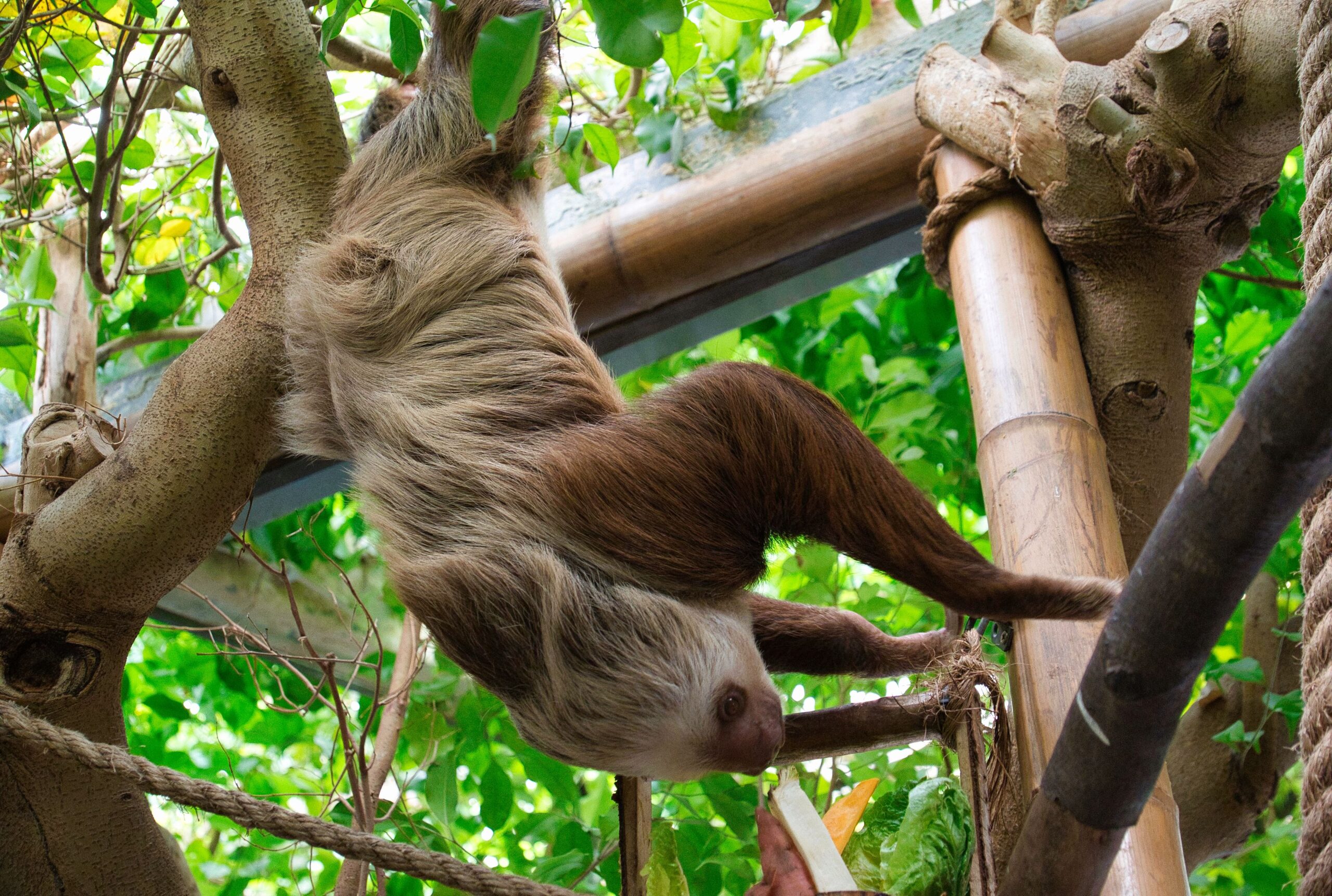
ナマケモノは見た通りでとても大人しくて静かな動物です。しかし外敵が迫ると爪を出して抵抗してきます。傷を負っても傷口が感染することは少なく自然に回復ため、かなり治癒能力が高いことも分かっています。
ナマケモノの性格の特徴
- 非常におとなしい
- 攻撃性はほとんどなく、争いを避ける
- 他の動物や人間に対しても攻撃することはほとんどない
- 移動もゆっくりなので、周囲に対して威圧感がない
- のんびり屋
- 1日の大半(15〜20時間)を寝て過ごす
- 食べる・寝る・移動するのサイクルが非常にゆったりしている
- 焦ることがなく、急ぐ必要がない生活様式に適応
- 警戒心はあるが控えめ
- 動きが遅いため、天敵から逃げることはできない
- 身を隠す(緑藻によるカモフラージュや木の上でじっとする)ことで危険を避ける
- 必要な時以外はあまり反応しない
- 孤独を好む
- 基本的に単独で生活する
- 繁殖期以外は他の個体と接触することは少ない
- 好奇心はあるが控えめ
- 周囲をゆっくり観察する
- 移動する時も慎重で、枝から落ちないように行動する
生態はどんな感じ?
ナマケモノの食事は1日に10gほどの植物、木の葉、昆虫、爬虫類を摂取して生活をしてます。基礎代謝量が非常に低く、ごく少量の食物摂取でも生命活動が可能な動物です。繁殖期は3~4月、妊娠期間は5~10.5か月程度で通常1回の出産で1頭産みます。ナマケモノの寿命は飼育下で約30年。
1. 生活様式
- 樹上生活(樹上性)
- ほとんどの時間を木の枝にぶら下がって過ごす
- 移動はゆっくりで、1日に数メートルしか動かないことも
- 枝から枝への移動は、爪を使って慎重に行う
- 睡眠時間が長い
- 1日15〜20時間ほど寝る
- 夜行性ではなく、昼間も多くを休息に費やす
2. 食性
- 主食は植物
- 葉、芽、果実、花などを食べる
- 消化が非常に遅く、1週間ほどかけてゆっくり栄養を吸収
- 捕食者への対策として低カロリー生活
- 動きが遅いため消費エネルギーを抑え、食べ物が少なくても生きられる
3. 移動・行動
- 低速で慎重な移動
- 動きが遅いことで天敵に目立たず身を守る
- 水泳が得意
- 森の中の川を泳いで渡ることができる
- 縄張り意識は低い
- 同種間で大きな縄張り争いはせず、主に個体ごとに生活空間を持つ
4. 繁殖
- 繁殖期: 年1回程度(地域による差あり)
- 妊娠期間: 約6か月
- 子育て:
- 通常1頭を出産
- 母親が抱えて育てる
- 父親は間接的にサポートする場合もある
- 独立: 子どもは1〜2年で独立し、自分の樹上生活を始める
天敵はいるのか?
オウギワシはナマケモノの天敵です。ナマケモノは基本的に木の上にいますので地上にトイレで降りる時以外は地上の動物に襲われることが少ないですが、逆に言えば地上に降りた時が最大のピンチで、死因の半数がトイレに行くときに襲われると言うパターン。移動して動くときはとても生き物のなかでものろいので体が遅いため、場所をすぐに特定され、食べられてしまいます。
換毛について
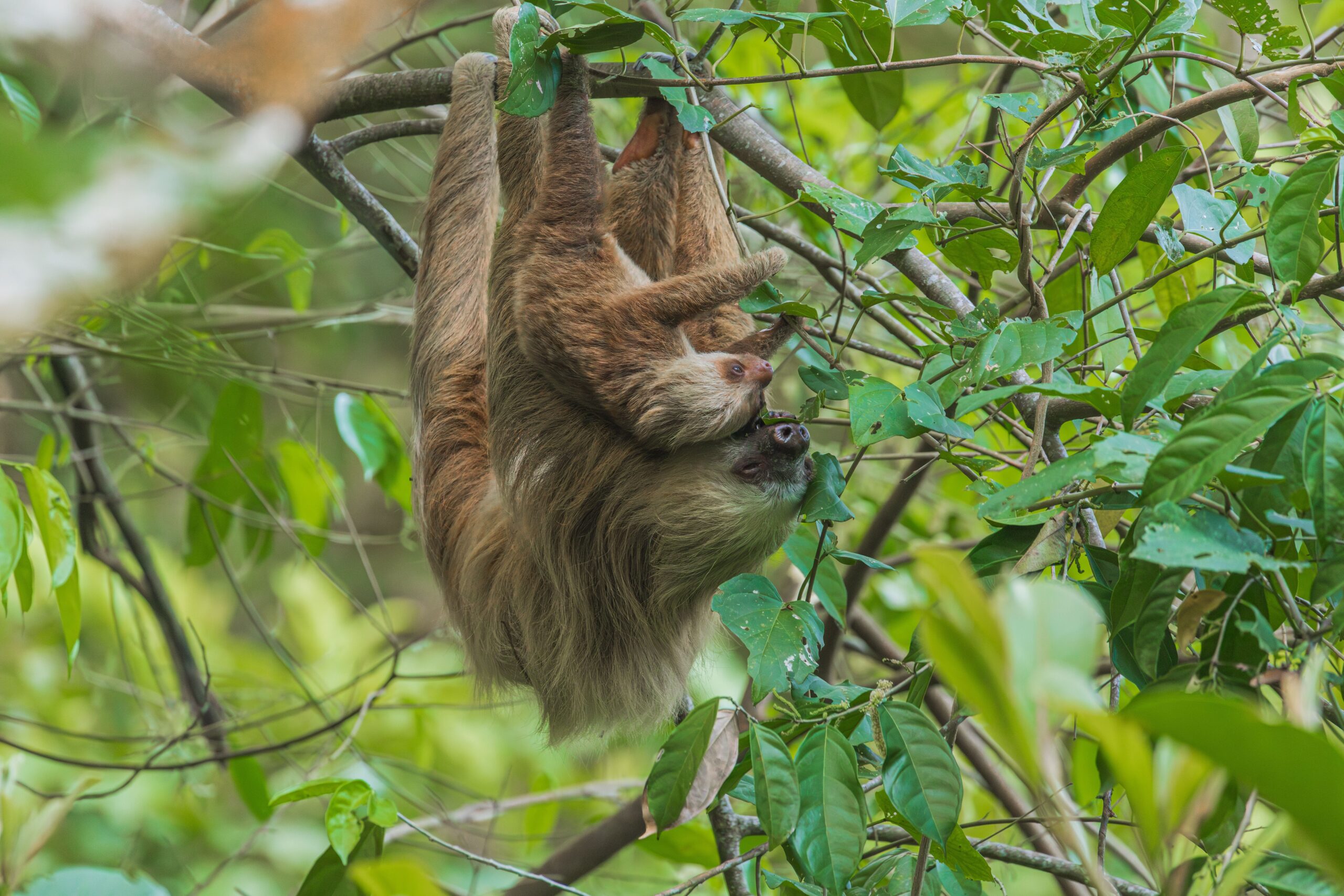
ナマケモノの換毛(毛の生え変わり)は、一般的な哺乳類とは少し異なります。犬や猫のように季節ごとに大量の毛が抜け替わるというより、ゆっくり時間をかけて少しずつ古い毛が更新されるタイプです。
1. 換毛の頻度
ナマケモノには、はっきりした「春の換毛」「秋の換毛」のような季節性はあまりありません。
理由:
- 熱帯雨林に暮らしている
- 気温変化が小さい
- 省エネルギー型の体質
そのため、年間を通して少しずつ毛が抜け、新しい毛に入れ替わります。
2. 毛の構造が特殊
ナマケモノの毛は、普通の哺乳類とは向きが逆です。
一般的な哺乳類:
- 背中 → 下方向へ毛が流れる
ナマケモノ:
- 腹側 → 背中方向へ毛が流れる
これは、木に逆さまにぶら下がった時に、
雨水を体から効率よく流すため
です。
雨は背中側から腹側へ流れ、毛の流れに沿って落ちます。
3. 毛の中に「藻」が暮らす
ナマケモノの毛は、単なる防寒具ではありません。
毛の表面には、
- 藻類
- 菌類
- 微生物
が共生しています。
特にミツユビナマケモノでは、毛に緑色の藻が繁殖しやすく、
- 森の葉に溶け込むカモフラージュ
- 紫外線からの保護
- 微生物との共生
に役立っています。
つまり毛は、
「防寒具+迷彩服+小さな生態系」
のような役割を持っています。
4. 換毛と藻の関係
古い毛が抜けると、そこに新しい毛が生えます。
新しい毛:
- 表面がまだ滑らか
- 藻が少ない
- 色が比較的薄い
時間が経つと:
- 毛に微細な溝が形成される
- 水分が残る
- 藻や微生物が定着する
ことで、徐々に緑がかった色になります。
鳴き声について
ナマケモノの鳴き声は、普段は非常に静かですが、必要な時だけ小さな声を出すタイプです。動きが遅いだけでなく、音による自己主張も少ない動物です。
1. 成体の鳴き声:「小さな口笛のような声」
主にミツユビナマケモノで聞かれる代表的な声は、
「キー」「キュー」「フィー」
のような高く細い声です。
用途:
- 仲間を探す
- 繁殖相手への呼びかけ
- 不安やストレスの表現
熱帯雨林では音が遠くまで届きにくいため、大きな鳴き声よりも近距離の合図として使われます。
2. 子どもの鳴き声:「母親を呼ぶ声」
ナマケモノで最も有名な鳴き声は、子どもの声です。
子どもは母親とはぐれると、
「キュー、キュー」
「キーッ、キーッ」
という高い声で呼びます。
母親は視覚よりも、この声や触覚を頼りに子どもの位置を確認します。
3. 繁殖期の鳴き声
特にミツユビナマケモノのメスは、繁殖可能な時期になると、
高く長い「キー」という呼び声
を出すことがあります。
目的:
- オスを呼ぶ
- 自分の位置を知らせる
ナマケモノは普段単独生活をしているため、繁殖時の音声コミュニケーションは重要です。
4. 威嚇・防御時の声
普段は温厚ですが、危険を感じると、
- シューッという息音
- 低いうなり声
- 歯を鳴らす音
などを出します。
また、前足の長い爪を使って防御姿勢を取ります。
5. フタユビナマケモノの鳴き声
フタユビナマケモノは比較的声が少なく、
- 低いうなり
- 鼻息
- 短い鳴き声
程度が中心です。
ミツユビナマケモノほど「呼び声」が目立ちません。
季節別の活動
ナマケモノの季節別の活動は、モウコノウマのような大きな季節移動とは異なり、熱帯雨林の環境変化に合わせた「省エネルギー型の生活リズム」が中心です。
🌱 雨季(おおむね5〜11月)
「食料が豊富な活動期」
主な活動
- 新しい葉を食べる
- 樹冠(木の上部)を移動
- 体力を回復
- 繁殖活動
雨季は植物がよく成長する時期です。
ナマケモノの主食である、
- 木の葉
- 若葉
- 新芽
が増えるため、食料条件が良くなります。
ただし、食べる量は少なく、1日に数時間程度しか採食しません。
雨季の特徴
① 樹上移動が増える
葉が多い木を探して、ゆっくり移動します。
移動速度:
- 樹上:約数m〜数十mを時間単位で移動
非常にゆっくりですが、エネルギー消費を抑えています。
② 出産・子育て
多くの地域では、食料が豊富な時期に合わせて繁殖します。
子どもは:
- 生まれてすぐ母親の腹にしがみつく
- 数か月間母親と行動
- 葉の食べ方を学ぶ
という生活をします。
☀️ 乾季(おおむね12〜4月)
「省エネルギーと節約の季節」
主な活動
- 移動を減らす
- 休息時間を増やす
- 食べられる木を選ぶ
乾季は、
- 葉が硬くなる
- 食料が減る
- 水分が不足する
ため、活動量をさらに落とします。
乾季の特徴
① 睡眠・休息時間が増える
ナマケモノは通常、
- 1日10〜15時間程度休む
とされます。
乾季にはさらに活動を抑えます。
② 体温調節
ナマケモノは哺乳類としては珍しく、
- 体温変化が大きい
- 代謝が低い
動物です。
暑い時:
- 日陰へ移動
寒い時:
- 日光浴
を行います。
歩行速度について
ナマケモノの歩行速度は、哺乳類の中でも最も遅い部類に入ります。ただし「歩けない」のではなく、エネルギーを極限まで節約するために遅く進むよう進化した動物です。
1. 地上での歩行速度
🦥 約0.1〜0.3km/h(時速100〜300m程度)
一般的なミツユビナマケモノの場合、地面では非常にゆっくり移動します。
比較すると:
| 動物 | 歩行速度 |
|---|---|
| ナマケモノ | 約0.1〜0.3km/h |
| 人間(普通歩行) | 約4〜5km/h |
| カメ | 約0.3〜1km/h |
| ゾウ | 約4〜6km/h |
人間の歩く速度の10分の1以下です。
2. 樹上での移動速度
🌳 約0.2〜0.5km/h程度
木の上では地上より少し効率的に移動します。
方法:
- 長い爪で枝をつかむ
- 腕の力で体を引き寄せる
- ゆっくり枝から枝へ移る
ナマケモノにとって木登りは「移動」ではなく、ほぼ生活そのものです。
3. 危険時の速度
普段は極端に遅いですが、危険を感じると少し速くなります。
例:
- 捕食者に襲われた時
- 地上で危険を感じた時
速度:
最大でも約1〜2km/h程度
程度とされます。
ただし、ナマケモノは逃げ足で勝負する動物ではありません。
4. なぜここまで遅いのか?
① 食べ物が低カロリーだから
主食:
- 木の葉
- 新芽
葉は、
- 消化しにくい
- エネルギー量が少ない
ため、高速運動に必要なエネルギーを得られません。
② 筋肉量が少ない
ナマケモノは、
- 体重に対する筋肉割合が低い
- 瞬発力より持久的なぶら下がり能力を重視
しています。
③ 体温と代謝が低い
ナマケモノは哺乳類ですが、
- 低い代謝
- 変動しやすい体温
を持っています。
少ないエネルギーで生きるため、動きを制限しています。
ナマケモノの幼獣について
ナマケモノの 幼獣(赤ちゃん・子ども)の生態や成長過程 を詳しくまとめます。
1. 出生
- 妊娠期間: 約6か月
- 出産数: 1頭が基本
- 出産場所: 母親がぶら下がっている木の上で出産
- 新生児の特徴:
- 体重は約300〜500 g(種類や個体による)
- 毛は短く柔らかい
- 爪はまだ小さく、母親の毛にしっかり掴まる
2. 成長と行動
- 生後すぐ:
- 母親の腹部や胸にしっかり掴まり、ほとんど自力で移動できない
- 母乳を飲みながら、母親の毛にしがみつく
- 1〜3か月:
- 爪が発達し、枝にぶら下がる練習を開始
- 徐々に葉をかじり始めるが、母乳が主食
- 3〜6か月:
- 自分で枝を掴んで少しずつ移動できる
- 食べる量が増え、葉や果実を食べる練習
- 6か月〜1年:
- ほとんど独立して木を移動できる
- 母親から離れて森の中で自分の縄張りを探す
3. 特徴
- 毛の色: 成獣より少し明るめで、緑藻はまだ生えない
- 動き: とても慎重でゆっくり
- 性格: 好奇心が強く、母親の行動を観察して学習する
- 保護: 母親が常に抱えて守るため、天敵からの被害は少ない
4. 成獣になるまで
- 完全に独立するのは 生後1〜2年
- 成長過程で爪や筋肉、消化器官が発達し、樹上生活と葉食生活に完全に適応
- 母親との時間が長く、行動パターンや樹上での移動方法を学ぶ
ナマケモノは絶滅危惧種なのか?
ナマケモノはタテガミナマケモノが絶滅危惧種に分類されています。森林伐採などによる生息地の破壊が大きなリスク、脅威になっていますので良くも悪くも人間の活動次第で彼らの個体数は大きく変動するでしょう。ピグミースリーユビナマケモノはカリブ海でしか見られないうえに生息数が極端に少ないのでとても危険です。
1. 世界的な保護状況(IUCNレッドリスト)
| 種類 | 分類(絶滅危惧度) | コメント |
|---|---|---|
| ナマケモノ(3本指、ブラジルなど) | LC(Least Concern) | 世界的には個体数安定。広く熱帯雨林に分布 |
| ナマケモノ(2本指、南米の一部) | LC(Least Concern) | 個体数は安定しているが、生息地減少で局所的に減少 |
| ピグミーナマケモノ(希少種) | NT(Near Threatened) | 森林伐採で生息地が減少中 |
ポイント:世界的には絶滅危惧ではない種が多いですが、局所的には個体数減少の地域がある。
2. 生息地・人間活動との関係
- 熱帯雨林の伐採 → 生息地が減少
- 道路建設や農地拡大 → 森の断片化
- ペット目的の捕獲 → 一部で脅威
- 結果、個体数は安定していても局所的に絶滅危惧に近い状況がある
3. 日本での保護状況
- 日本にはナマケモノは自然分布していない
- 動物園や研究施設で飼育されることはあるが、野生個体はいない
- 法律上は ワシントン条約(CITES)付属書I・II により輸入・輸出は規制
ナマケモノはペットとして飼育可能?
非常にストレスに弱い上に変温動物であることを踏まえると、一般家庭で飼育することは困難です。まず不可能だと思ってください。
1. 法律上の規制
- ナマケモノは ワシントン条約(CITES)で規制対象
- 輸出入には許可が必要
- 日本国内では野生動物保護法で保護されており、 個人での飼育は原則不可
- 飼育できるのは動物園や研究施設など、特別な許可を持つ施設のみ
2. 生態的な理由
- 樹上生活に完全適応
- 一日15〜20時間ほとんど動かず、木の上でぶら下がる生活
- 家庭環境では飼育スペースが確保できない
- 低速で省エネの生活
- 移動も非常に遅く、通常のペットのように散歩や運動をさせられない
- 食事が特殊
- 葉、芽、果実などを主食とし、消化が非常に遅い
- 栄養管理が難しく、人工飼料での長期飼育はほぼ不可能
3. 健康・安全面
- 長時間ぶら下がる生活に適した体で、地上での生活には不向き
- 飼育環境が不適切だとストレスや病気のリスクが高い
- 野生の本能が強く、人間との生活にはなじみにくい
飼育されている動物園(日本・世界)
ナマケモノは現在、世界中の動物園で飼育されている人気の熱帯動物です。特に日本では多くの動物園で見ることができ、繁殖にも成功しています。
🇯🇵 日本でナマケモノを飼育している主な動物園
上野動物園
日本を代表する動物園の一つです。
特徴:
- フタユビナマケモノを飼育
- 熱帯雨林環境を再現した展示
- 樹上でゆっくり過ごす姿を見ることができる
上野動物園では、ナマケモノの生態や熱帯雨林の環境保護について紹介しています。
多摩動物公園
特徴:
- 熱帯系動物の飼育経験が豊富
- 広い展示環境
- 自然に近い行動観察ができる
東山動植物園
特徴:
- フタユビナマケモノを飼育
- 人気の熱帯動物展示の一つ
神戸どうぶつ王国
特徴:
- 動物との距離が近い展示
- ナマケモノが木の上で生活する様子を観察しやすい
那須どうぶつ王国
特徴:
- 熱帯系動物の展示が充実
- 樹上性動物の行動展示に力を入れている
伊豆シャボテン動物公園
特徴:
- ナマケモノを含む南米系動物を展示
- 温暖な環境を活かした飼育
🌎 世界の代表的なナマケモノ飼育施設
🇺🇸 サンディエゴ動物園
世界有数の動物保全施設です。
特徴:
- フタユビナマケモノなどを飼育
- 熱帯雨林環境を再現
- 繁殖・研究活動を実施
🇺🇸 スミソニアン国立動物園
特徴:
- 熱帯動物保全研究
- ナマケモノの生態展示
- 教育活動
🇬🇧 チェスター動物園
特徴:
- 世界的な動物保護施設
- 熱帯種の繁殖研究
- 自然に近い展示
🇸🇬 シンガポール動物園
特徴:
- 熱帯気候を活かした展示
- 熱帯雨林動物の飼育に強い
- ナマケモノが暮らしやすい環境

他の動物を紹介

コメント