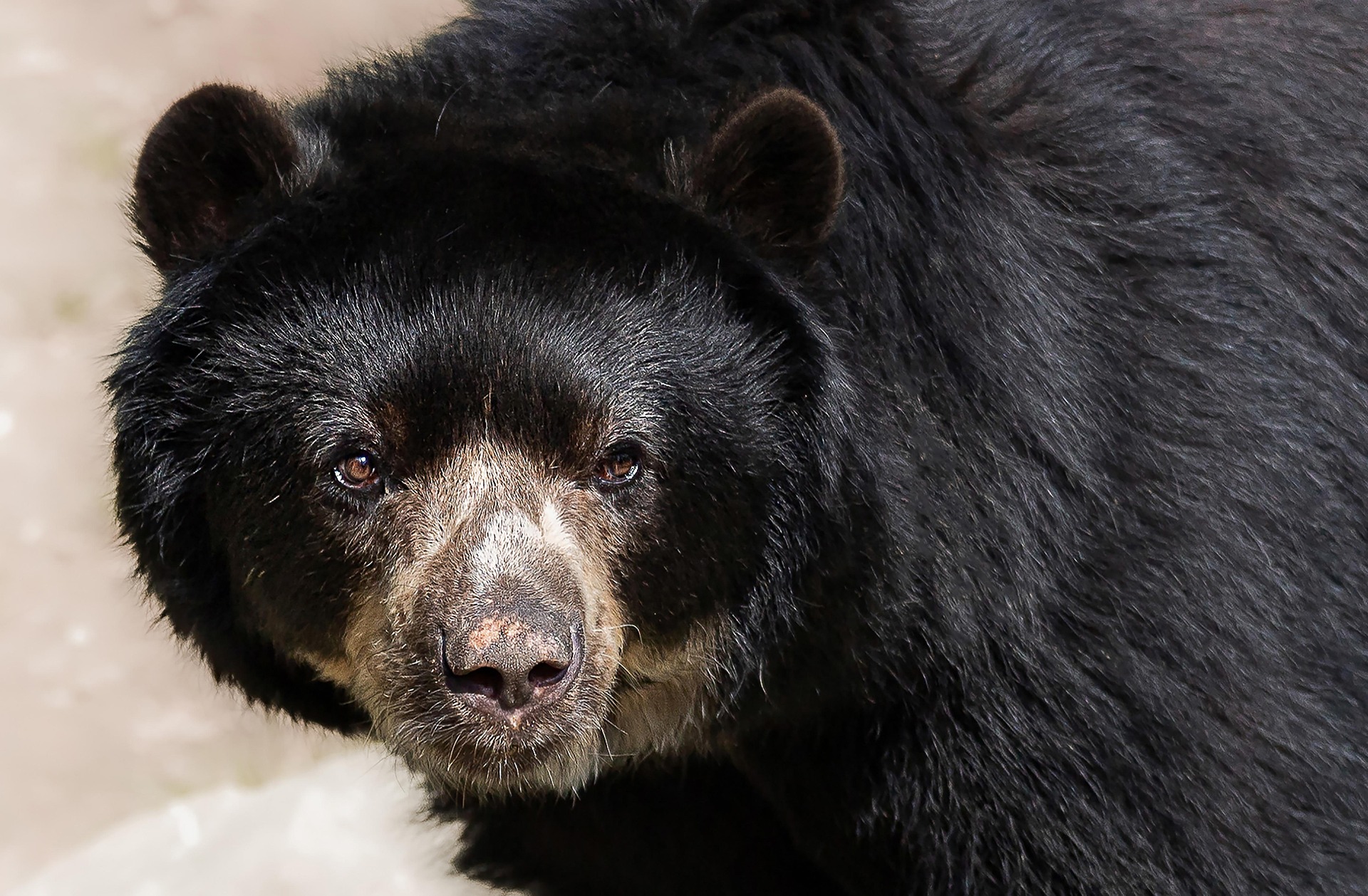
メガネグマはどんな動物?特徴、生態、生息地について解説します。南米だけの固有種のクマはこれだけです。ベネズエラ西部から、コロンビア、エクアドル、ペルー、ボリビアなどに分布しておりますが、絶滅危惧種に指定されている動物でもあります。


メガネグマとは? 基本ステータスについて
メガネグマは、哺乳綱ネコ目クマ科メガネグマ属に分類されるクマ。学名はTremarctos ornatus、英語名はAndean bear、Spectacled bear、漢字は眼鏡熊。体長は120-200cm、体重は130-200kg。情報の一覧は以下の通り。
| Japanese(和名) | メガネグマ |
| English(英名) | Andean bear Spectacled bear |
| scientific name(学名) | Tremarctos ornatus |
| classification(分類) | Mammalia、Carnivora、 Ursidae、Tremarctos 哺乳綱、ネコ目、クマ科、メガネグマ属 |
| IUCN Status(保全状況) | VULNERABLE |
| Length(体長) | 120-200cm |
| Weight(体重) | 130-200kg |
メガネグマ(Spectacled bear)の分類学
- 界 (Kingdom): 動物界 (Animalia)
- 門 (Phylum): 脊索動物門 (Chordata)
- 綱 (Class): 哺乳綱 (Mammalia)
- 目 (Order): 食肉目 (Carnivora)
- 科 (Family): クマ科 (Ursidae)
- 属 (Genus): メガネグマ属 (Tremarctos)
- 種 (Species): メガネグマ(Tremarctos ornatus)
メガネグマのルーツ、起源は?
メガネグマ(アンデスグマ)の学名は Tremarctos ornatus。現在、南米に生息する唯一のクマ類です。
🌎 どこから来た?
メガネグマの祖先は、もともと南米にいたクマではありません。
祖先をたどると、**北米で進化した「Tremarctinae(メガネグマ亜科)」**につながります。
大まかな流れは、
北米の古いクマ類
↓
メガネグマ亜科が進化
↓
パナマ地峡の成立
↓
北米から南米へ進出
↓
南米で独自に進化
↓
🐻 現在のメガネグマ
というルートです。
🧬 最大のポイントは「パナマ地峡」
約300万年前、北アメリカと南アメリカを陸続きにしたパナマ地峡が成立すると、動物たちが大規模に南北を移動できるようになりました。
これが有名な**「アメリカ大陸間大交差(Great American Biotic Interchange)」**です。
メガネグマの祖先もこの南下ルートを利用したと考えられています。
🦴 実は昔の仲間はもっと多かった
現在はメガネグマ1種だけですが、メガネグマ亜科には過去に複数の系統が存在しました。
特に有名なのがArctodus(アークトドゥス)などの巨大なクマ類。
北米では巨大なショートフェイスベア(短顔グマ)が繁栄していました。
つまり、
巨大な古代クマの仲間がいた時代を経て、現在まで生き残った南米の系統がメガネグマ
というイメージです。
🏔️ なぜアンデスに適応した?
南米へ進出した系統の一部は、アンデス山脈の環境に適応しました。
現在のメガネグマは、
- アンデスの高地
- 雲霧林
- 山地森林
- 草原
など、標高差の大きい環境に暮らします。
そして非常に特徴的なのが植物食への強い適応。
生息地について
メガネグマは南米大陸に分布(ベネズエラ、コロンビア、エクアドル、ペルー、ボリビアなど)していてます。
1. 主な分布地域
- アンデス山脈地域(南米)
- 国別:ベネズエラ、コロンビア、エクアドル、ペルー、ボリビア、アルゼンチン北部
- 標高は 約900〜4,000m の幅広い山岳地帯に生息
2. 生息環境
- 森林性が強い
- 亜高山林、雲霧林、乾燥林、竹林など多様
- 樹上の活動が多く、木登りも得意
- 水源の近くを好む
- 小川や湿地帯近くで水分補給
- 開けた草地や岩場も利用
- 食物採取や移動、日光浴など
3. 生息状況
- 森林伐採や農地拡大によって 生息地は断片化
- 生息地の断片化は個体群の孤立化につながる
- 一部の国では 国立公園や保護区で保護
特徴は?どんな感じの生物なのか?
メガネグマは毛衣は黒や暗褐色で目の周囲や喉に白や黄白色の斑紋が入り、メガネのように見えます。標高3,000mの高山地帯の森林から草原、雑木林、低地のサバンナまで色々な環境に適応できるクマです。四肢は短く、蹠行性で、歩く時は足の裏をかかとまで地面につけて歩き、木登りが大変うまく、爪は鋭く鉤状になっています。
1. 外見
- 体格:中型〜大型のクマ
- 体長:1.2〜1.8m
- 体重:オス 100〜200kg、メス 35〜82kg
- 毛色:主に黒色または暗褐色
- 顔の模様:
- 個体ごとに異なる白や黄色の模様があり、メガネをかけているように見える
- 顔や胸に模様が入ることが多い
- 尾:短い
2. 性格・行動
- 臆病で単独行動が多い
- 人間や他の捕食者には警戒心が強い
- 知能が高く、好奇心旺盛
- 木登りが得意で、果実や葉を採る際に工夫する
- 昼行性〜薄明性
- 日中に活動することが多く、夜間は休息
3. 食性
- 主に草食性だが雑食性
- 果実、樹皮、葉、花、サボテンの実など
- 昆虫や小動物も食べることがある
- 樹上・地上の両方で食物を採取
4. 生態的特徴
- 樹上生活にも適応
- 木登りが得意で果実を取ったり休息
- 繁殖
- 妊娠期間:約5〜8か月
- 1回に1頭の子どもを出産
- 幼獣は母親に依存して成長
- 寿命:野生で約20〜25年

性格はどんな感じなのか?
メガネグマは夜行性で、昼間は巣の中で休んでいます。社会説は弱く単独で行動する傾向が見られます。
1. 臆病で警戒心が強い
- 人間や捕食者に遭遇すると すぐ逃げるか隠れる
- 単独行動を好むため、群れのような社会的支援は少ない
- 森林や岩場の隠れ場所をよく利用
2. 知能が高く好奇心旺盛
- 食べ物や環境に対して観察力が高く、採食の際に工夫する
- 木登りや岩場を使った探索行動が得意
- 自然環境の変化や新しい食物に適応する能力がある
3. 単独性が強い
- 他のクマと接触するのは繁殖期のみ
- 普段は孤独でのんびり行動することが多い
- 警戒心が強く、他の動物と距離を置く
4. 穏やかだが活動的
- 攻撃性は低く、危険を避ける方を優先
- 活動的で木登りや食物探索に時間を費やす
- 果物や葉を採るために樹上を行き来する姿がよく見られる
生態はどうなっているのか?
メガネグマは果実のほか昆虫、木の葉や球根、サボテンなどの植物を食べて生活します。繁殖形態は胎生。妊娠期間は160-225日で1頭産むことができます。オスは平均で生後5年、メスは生後4-7年で性成熟します。寿命は30から40年となります。
1. 生息環境
- 地域:南米アンデス山脈(ベネズエラ、コロンビア、エクアドル、ペルー、ボリビア、アルゼンチン北部)
- 標高:約900〜4,000m
- 環境:雲霧林、亜高山林、竹林、乾燥林など
- 樹上・地上両方で活動
- 樹上で休息・採食
- 地上で移動や食物採取
2. 活動パターン
- 昼行性(Diurnal)
- 日中に活動し、夜間は休息
- 単独行動が中心
- 食物を探す際は探索行動が活発で、木登りも多い
3. 食性
- 雑食性だが植物中心
- 果実、葉、花、樹皮、サボテンの実
- 昆虫や小動物も摂取することがある
- 樹上と地上で採食
4. 繁殖
- 妊娠期間:5〜8か月
- 出産:1回に1頭
- 幼獣は母親に依存し、1年以上かけて成長
- 性成熟:メスは4〜5歳、オスは5〜6歳
5. 行動と適応
- 警戒心が強く臆病
- 捕食者や人間には隠れて逃げる
- 知能が高く、環境や食物に適応
- 食物の採取や移動経路に工夫
- 樹上・地上を使い分け、生活圏を広く利用
天敵はいるのか?
メガネグマは子どもがジャガーやピューマに襲われることがあります。

換毛について
メガネグマ(アンデスグマ)も換毛します。ただし、ホッキョクグマやヒグマのように「冬毛→夏毛」で劇的に姿が変わるタイプではありません。
🧥 1年を通して毛が入れ替わる
メガネグマは熱帯~高山という比較的温暖な地域にも生息するため、明確な冬毛・夏毛の切り替えは弱いと考えられます。
基本的には、
古い毛が抜ける
↓
新しい毛が伸びる
↓
徐々に毛が入れ替わる
という形の換毛です。
🌡️ 季節より「生息環境」の影響が大きい
アンデス山脈は標高によって気温が大きく変わります。
特に高地では低温になりますが、メガネグマは熱帯地域に生息するため、日本のクマのような強烈な季節性はありません。
そのため、
- 気温
- 雨季・乾季
- 標高
- 食料状況
- 個体の年齢・健康状態
などが毛の状態に影響します。
🐻 毛はかなり長く密生
メガネグマの体毛は黒~濃褐色で、顔には白~黄褐色の模様があります。
この顔の模様は個体差が非常に大きく、
「メガネ」のように目の周囲を囲む個体
もいれば、
胸まで大きく白い模様が伸びる個体
もいます。
換毛によって、この特徴的な模様そのものが変化するわけではありません。
鳴き声について
メガネグマは、見た目の印象とは違って、かなり多様な音声コミュニケーションをするクマです。
🔊 代表的な鳴き声
1. 「フンフン」「鼻を鳴らすような音」
近距離で相手と接触するときなどに、鼻から出すような低い音を発することがあります。
特に親子間など、比較的穏やかな状況で見られます。
2. 「ウーッ」「唸り声」
警戒したり、相手に距離を取らせようとするときには、低い唸り声を出します。
威嚇の意味を持つ場合があり、これに加えて姿勢や口の動きなど、体のサインと組み合わせて意思表示します。
3. 幼獣の声
子どもは成獣よりも高い声を出し、
「クンクン」「ピーピー」
のような声で母親とコミュニケーションを取ることがあります。
親を呼んだり、注意を引いたりするための重要な手段です。
🐻 意外と「大声で吠える」動物ではない
メガネグマは、ライオンのように遠くまで響く大きな声を頻繁に出す動物ではありません。
むしろ、
小さな声・鼻音・唸り声などを使った近距離のコミュニケーション
が重要です。
また、メガネグマは単独で行動することが多いため、群れで生活する動物ほど頻繁な音声コミュニケーションを必要としません。
季節別の活動
メガネグマはアンデスの熱帯〜亜熱帯地域に暮らすため、日本のヒグマのような「冬眠→春に活動再開」という生活ではありません。
1年を通して活動し、季節による変化は主に雨季・乾季と食物の変化によって生じます。
🌧️ 春ごろ:活動を維持しながら食物を探す
地域によって雨季に入る時期が異なりますが、雨が増えると森林の植物が活発になります。
- 果実や植物を探す
- 樹上に登って採食する
- 森林内を移動する
- 水分を多く含む植物を利用する
メガネグマは樹上生活にもかなり適応したクマで、木に登って果実などを食べることがあります。
☀️ 夏ごろ:果実を積極的に利用
食物が豊富になる地域では、果実などを利用する機会が増えます。
特に、
果実を探す → 移動する → 採食する → 休む
という行動を繰り返します。
暑い時間帯には森林の中で休み、比較的涼しい時間に活動することもあります。
🍂 秋ごろ:食物の変化に合わせて移動
乾季へ向かう地域では、植物や果実の availability が変化します。
そのためメガネグマは、
- 食物の多い場所を探す
- 標高を変える
- 森林と高地草原の間を移動する
- 木の実や植物など別の食物を利用する
といった柔軟な行動を取ります。
❄️ 冬:冬眠しない
ここがヒグマなどとの大きな違いです。
メガネグマは通常、冬眠しません。
アンデスは赤道に近いため、温帯地域のクマほど「冬に食物がなくなる」という状況になりにくいからです。
そのため冬も、
採食 → 移動 → 休息
という通常の生活を続けます。
メガネグマの幼獣について
では メガネグマ(Tremarctos ornatus)の幼獣 について詳しく整理します。
1. 外見
- 生まれた直後は 体重約1〜2kg、体長は約30〜40cmほど
- 毛色は母熊より明るめの 茶色〜黄褐色
- 顔にはまだ模様がはっきりせず、成長とともに個体特有の「メガネ模様」が現れる
- 尾は短く、成獣同様ほとんど目立たない
2. 行動
- 母親に密着して過ごす
- 生後数か月はほとんど母親の背中や腹に抱かれて行動
- 遊びや探索が活発
- 木登りや追いかけっこなどで運動能力や社会性を学ぶ
- 危険を感じると 母親や隠れ場所に素早く避難
3. 食性
- 生まれてから数か月間は 母乳に完全依存
- 生後3〜6か月頃から、少しずつ 果実や葉、昆虫などを口にする練習
- 離乳はおよそ 1年程度で完了
4. 社会性
- 幼獣期は母親と群れの他のメガネグマから学ぶ
- 採食方法や木登り、危険回避など
- 幼獣同士の遊びは 運動能力・社会性・知能の発達 に直結
5. 成長
- 1年で体格はほぼ半分程度まで成長
- 幼獣期(0〜2歳)は母親の行動を学ぶ時期
- 性成熟:メスは4〜5歳、オスは5〜6歳
メガネグマは絶滅危惧種なのか?
メガネグマは絶滅危惧種に指定されている動物です。ワシントン条約附属書Iに掲載されていますので国際取引が厳しく制限されています。森林伐採や開発による生息地の破壊、害獣としての駆除など、さらには食用にもなるため乱獲が進んでいる状態です。生息地では法的に保護の対象とされており保護区なども設けられていて活動が進められています。
1. IUCNの評価
- 絶滅危惧種(Endangered, EN) に分類
- 野生個体数は減少傾向にあり、保護が必要とされています
2. 絶滅の主な原因
- 森林伐採・生息地破壊
- アンデス山脈の森林開発や農地拡大により生息地が断片化
- 狩猟・人間活動
- 食用や伝統医療目的での捕獲
- 人間との接触によるストレス
- 生息域の限定
- 南米アンデス山脈の特定地域にしか生息していないため、環境変化に弱い
3. 保護活動
- 国立公園や保護区での生息地保護
- 捕獲や狩猟の規制
- 森林再生や生息環境の保全
メガネグマはペットとして飼育可能?
メガネグマは以上のように絶滅危惧種に指定されているうえにワシントン条約にも掲載されているため国際取引が厳しく制限されています。そのため、飼育することは極めて難しいです。動物園やイベントで案内してもらい鑑賞することをおすすめします。開園してから入園して内容を確認し、園内で個体を見てみましょう。
1. 絶滅危惧種である
- メガネグマは IUCN絶滅危惧種(Endangered, EN)
- 野生個体の捕獲・輸出は 法律で禁止
- 個人がペットとして入手することは 違法
2. 生態・性格的に飼育が困難
- 単独行動が中心で警戒心が強い
- 群れで生活する動物ではないが、自然環境での自由が必要
- 知能が高く、好奇心旺盛
- 飼育環境が単調だと、ストレスや問題行動が生じやすい
- 樹上・地上で広く活動
- 飼育下では運動不足になりやすく、健康や精神に悪影響
3. 飼育環境の問題
- 食事は果実、葉、樹皮、昆虫など多様で、自然環境に近い食事を再現するのが難しい
- 木登りや探索行動が多く、広い空間が必須
- 飼育下で寿命は延びるが、精神的ストレスや攻撃行動のリスクが高い
4. 現実的な飼育例
- 動物園や保護施設でのみ飼育可能
- 専門家が管理し、環境を再現した施設で飼育する
- 個人宅での飼育は違法で危険
飼育されている動物園(日本・世界)
メガネグマ(アンデスグマ)は、世界の動物園で飼育されています。IUCN Bear Specialist Groupによると、2018年時点で世界の動物園に約250頭が飼育され、その56%が中南米、25%が欧州、16%が北米、3%がアジアの動物園でした。
🇯🇵 日本
日本で現在確認できる代表的な飼育施設は、
よこはま動物園ズーラシア(神奈川県)
です。世界の動物園データベースにも、ズーラシアがメガネグマの飼育施設として掲載されています。
日本ではかなり珍しいクマで、**「日本でメガネグマを見るならズーラシア」**という位置づけです。
🌎 海外の主な飼育動物園
🇺🇸 アメリカ
- サンディエゴ動物園
- スミソニアン国立動物園
- フィラデルフィア動物園
- シンシナティ動物園
- ヒューストン動物園
- セントルイス動物園
これらは世界の飼育施設データにも掲載されています。
🇩🇪 ドイツ
- ティアパーク・ベルリン
- ベルリン動物園
- ドルトムント動物園
- ヴィルヘルマ動植物園
- フランクフルト動物園
特にドイツはメガネグマの飼育・繁殖で重要な地域です。2026年にはティアパーク・ベルリンで幼獣の誕生も報告されています。
🇨🇭 スイス
- チューリッヒ動物園
チューリッヒでは複数個体を飼育し、繁殖にも成功しています。
🇬🇧 イギリス
- チェスター動物園
- ベルファスト動物園
- ノアズ・アーク・ファーム
- ノーズリー・サファリ
などで飼育記録があります。
🇳🇱 オランダ
- アメルスフォールト動物園
などでも飼育されています。
🇵🇪🇨🇴🇪🇨🇧🇴 南米
メガネグマの本来の生息地域なので、南米の動物園・保護施設は特に重要です。
- ペルー:Parque de las Leyendas
- コロンビア:Cali Zoo
- コロンビア:Bioparque Ukumarí
- コロンビア:Bioparque Los Ocarros
- コロンビア:Zoológico Santacruz
- ブラジル:BioParque do Rio
などが飼育施設として記録されています。

他の記事もおすすめ
コメント