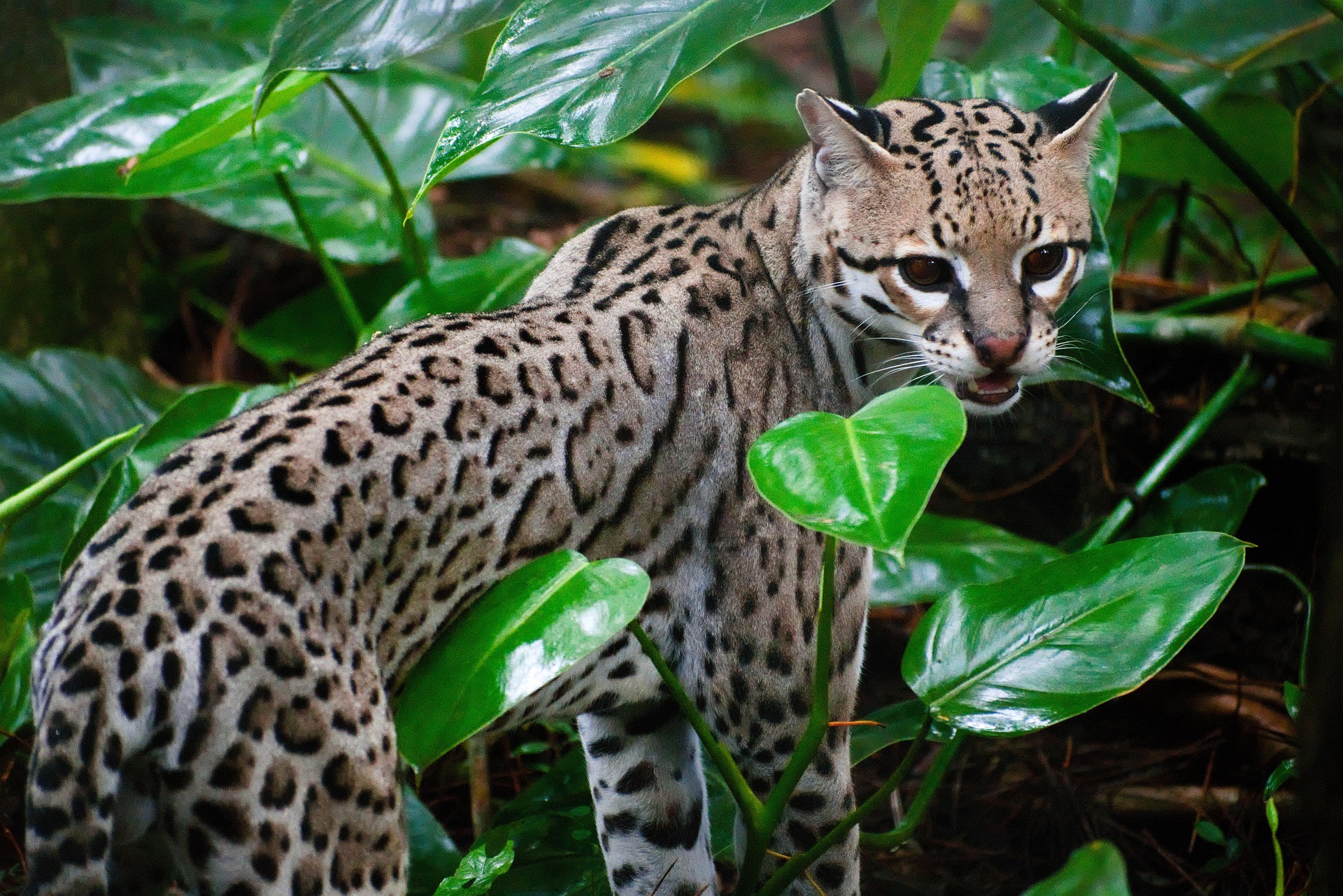
ネコ科の大きなオセロットはどんな動物?特徴、生態、生息地について解説します。この猫は北アメリカから中南米に分布しており、肉食動物です。メキシコやアメリカ・テキサス州の一部にも分布しており、草原や人間の集落近くに姿を現すこともあります。


オセロットとは? 基本ステータスについて
オセロットは哺乳綱食肉目ネコ科オセロット属に分類される食肉類。学名はLeopardus pardalisで英語名はOcelot。イエネコよりも体が大きく体長は65-120cmで体重は9-16kg、尾長は28~45cm です。情報の一覧は以下の通り。
| Japanese(和名) | オセロット |
| English(英名) | Ocelot |
| scientific name(学名) | Leopardus pardalis |
| classification(分類) | Mammalia、Artiodactyl、 Bovidae、Oryx 哺乳綱、食肉目、ネコ科、オセロット属 |
| IUCN Status(保全状況) | LEAST CONCERN |
| Length(体長) | 65-120cm |
| Weight(体重) | 9-16kg |
分類
- 界 (Kingdom): Animalia(動物界)
- 門 (Phylum): Chordata(脊索動物門)
- 綱 (Class): Mammalia(哺乳類)
- 目 (Order): Carnivora(食肉目)
- 科 (Family): Felidae(ネコ科)
- 属 (Genus): Leopardus
- 種 (Species): L. pardalis(オセロット)
オセロットのルーツ、起源は?
オセロット(Leopardus pardalis)は、ネコ科の中でも特に南北アメリカに適応した「Leopardus属」のネコです。
進化の大まかな流れは、
ネコ科の共通祖先
↓
ネコ亜科(小型~中型ネコ類)
↓
南北アメリカへ進出したネコ類
↓
Leopardus属
↓
オセロット(Leopardus pardalis)
となります。
🌎 どこが起源?
現在のオセロットの祖先につながる系統は、南米を中心とする新世界のネコ類から進化したと考えられています。
特に重要なのがパナマ地峡の形成です。
約300万年前、北米と南米が陸続きになると、北米と南米の動物が大規模に行き来するようになりました。これを**「アメリカ大陸間大交換」**と呼びます。
ネコ科では北米側から南米へ入った系統もあり、その後南米で多様化しました。現在のLeopardus属も、この新世界ネコ類の進化史の中で成立したグループです。
🧬 オセロットは「ヒョウの仲間」ではない
名前や模様から、
「小型のヒョウ?」
と思われがちですが、ヒョウ(Panthera pardus)とはかなり遠い親戚です。
オセロットは、
- オセロット
- マーゲイ
- コロコロ
- パンパスネコ
- ジョフロイネコ
- アンデスネコ
などにつながるLeopardus系統の一員です。
そして面白いことに、分子系統研究ではオセロットとマーゲイなどのLeopardus属の分岐は比較的新しい時代に起こったと考えられています。
🐾 なぜあんな模様になった?
オセロットの最大の特徴である斑紋も、森林生活と関係しています。
オセロットは夜行性・薄明薄暮性が強く、森林や藪の中を移動します。木漏れ日や植物の影が複雑に入り組んだ環境では、斑紋によって**輪郭が分かりにくくなる(カモフラージュ)**と考えられます。
つまり現在のオセロットは、
南米を中心とした森林環境 → 小型ネコ類の多様化 → Leopardus系統の成立 → オセロットへ
という進化史を持つネコです。
生息地について
オセロットのいる場所は北アメリカからアルゼンチンなど南アメリカの北部までに分布してます。
1. 地理的分布
- 北限: メキシコ南部
- 中央アメリカ: ベリーズ、グアテマラ、ホンジュラス、ニカラグア、コスタリカ、パナマ
- 南アメリカ: コロンビア、ベネズエラ、エクアドル、ペルー、ブラジル、ボリビア、パラグアイ、アルゼンチン北部
→ 熱帯から亜熱帯の幅広い地域に分布しています。
2. 生息環境
オセロットは環境適応力が高く、多様な生息地に暮らせます。主な環境は以下の通りです:
- 熱帯雨林
- 最も典型的な生息地
- 樹木が密集しており、隠れる場所が多い
- 樹上での移動や狩りに適応
- 乾燥林・半乾燥林
- 熱帯乾燥林やサバンナに生息
- 樹木は少ないが、茂みや岩場を利用して隠れる
- 低地や河川沿いの森林
- 水源近くの森を好む傾向がある
- 水辺には小型哺乳類や鳥類が豊富
- 山地林
- 標高1,500~2,000 m付近まで確認
- 人里に近い二次林にも適応可能
3. 生息地の特徴
- 隠れ家が豊富: 樹木、茂み、岩陰など
- 獲物が豊富: 小型哺乳類(ネズミ、ウサギ)、鳥類、爬虫類、魚など
- 水源の近く: 狩りや水飲みのため川や湖の近くを好む
4. 生息地の脅威
- 森林伐採による生息地の破壊
- 農地開発や道路建設による生息地の分断
- 密猟や毛皮目的の捕獲
→ これらの影響で、オセロットの個体数は局所的に減少していることがあります。
特徴は?どんな感じの生物なのか?
オセロットは中型の猫で、体毛は短く、毛色は灰色から黄白色、淡褐色。足の内側や腹部は白い。四肢は頑丈で黒い斑紋で縁取られたオレンジ色の斑紋があります。頭部や四肢にも小さな黒い斑点があります。昼間も活動しますがオセロットは夜行性で日中は樹洞、木の上などで休んでいることが多いです。彼らは熱帯雨林や深い森林地帯に生息しています。
1. 外見・体格
- 体長: 約55~100 cm
- 尾長: 約40~50 cm
- 体重: 約8~15 kg(オスがやや大きい)
- 被毛: 黄褐色~赤褐色を基調に、黒い斑点やロゼット模様が美しい
- 模様は個体ごとに異なり、指紋のようにユニーク
- 顔にも細かい斑点があり、目の周りには特徴的な線がある
- 耳: 丸くて小さめ、後ろは黒く中央に白い斑点
2. 感覚・能力
- 視覚: 夜行性で暗い中でもよく見える
- 聴覚: 猫科らしく非常に鋭く、獲物の動きを正確に察知
- 嗅覚: 獲物や縄張りの確認に活用
3. 行動・性格
- 夜行性: 主に夜に活動、昼は休息
- 単独行動: 縄張り意識が強く、他個体と接触は基本的に少ない
- 狩猟能力:
- 高いジャンプ力と俊敏さで樹上・地上の獲物を捕まえる
- 木に登れるので、鳥類や小型哺乳類の捕獲が得意

性格はどんな感じ?
オセロットは典型的な猫のような性格で、単独を好みます。行動範囲は1~3kmで縄張り意識を持っております。メスよりもオスのほうが行動範囲が広いです。
1. 基本性格
- 警戒心が強い
- 他の動物や人間に対して敏感で、接近されるとすぐ隠れる
- 安全な隠れ場所を確保することを常に優先
- 単独行動を好む孤独派
- 縄張り意識が強く、オス同士やメス同士で争うこともある
- 縄張りは尿や爪跡でマーキングして明示
- 俊敏で敏感
- 捕食者・被捕食者両方の立場で敏感さが求められる
- 動きが素早く、静かに忍び寄る能力が高い
2. 狩猟時の性格
- 慎重で計画的
- 獲物をじっくり観察し、最適なタイミングで捕らえる
- 柔軟性がある
- 樹上も地上も狩りができ、環境に合わせて戦略を変える
3. 社会性
- 基本的には孤独だが、繁殖期にはオスとメスが接触
- 母性が強い
- 子ネコは数か月間母親に守られ、狩りや隠れ方を学ぶ
4. 人間との関係
- 野生個体は非常に警戒心が強く、容易に近づけない
- 飼育下でも完全に懐くことは稀で、基本的には「観察する対象」としての付き合い
生態はどんな感じ?
オセロットはネズミなど小動物や魚の種など捕食して食べて生活をしています。オセロットは地上性の動物ですが木登りもうまくリスやサルなどをとらえることもあります。妊娠期間は70日程度あり、1回につき1頭産むことができます。育児は雌が行うことが多く数か月すると子供は親と一緒に狩りをするようになります。寿命は20年くらいになります。
1. 生活リズム
- 夜行性: 主に夜間に活動
- 昼間は茂みや樹上の安全な場所で休む
- 夜になると狩りや移動を開始
- 単独生活:
- 縄張りを持ち、他個体とは基本的に接触しない
- オスとメスは繁殖期のみ接触
2. 狩猟と食性
- 肉食性: 小型~中型の獲物を捕食
- 主な獲物: ネズミ、ウサギ、鳥類、爬虫類、魚
- 狩りの方法:
- 静かに獲物に忍び寄り、短距離で素早く飛びかかる
- 樹上や地上の両方で狩ることが可能
- 食事の頻度:
- 1日の大半を狩猟や休息に費やす
- 獲物が豊富な環境では効率的に捕食
3. 繁殖と子育て
- 繁殖期: 特に明確な季節はない(地域差あり)
- 妊娠期間: 約79~85日
- 出産: 1回に1~3匹
- 子育て:
- 母親が数か月間子ネコを保護
- 隠れ方や狩猟技術を教える
4. 移動・縄張り
- 縄張り: オスは広い縄張りを持ち、複数のメスの領域を含むことも
- マーキング: 尿や爪跡で縄張りを主張
- 移動範囲: 食物や安全確保のため、広範囲を移動
5. 生態的役割
- 捕食者としての位置: 小型哺乳類や鳥類の個体数を調整
- 生態系のバランス: 森林やサバンナの食物連鎖で重要
- 樹上・地上両方の生活: 他の捕食者が届かないニッチを利用
天敵はいるのか?
オセロットはこれといった天敵がいません。

オセロットの幼獣について
オセロットの幼獣(子ネコ)の生態について詳しく解説します。生まれてから独立するまでの過程を追うと、オセロットの性格や生態がより理解できます。
1. 誕生
- 妊娠期間: 約79~85日
- 出産数: 1回に1~3匹
- 出生時の体重: 約200~400g
- 外見:
- 生まれたばかりは斑点がはっきりしていない場合もある
- 毛は柔らかく、目は閉じている
2. 成長の初期
- 目の開眼: 生後約1~2週間で開く
- 母乳: 生後約2~3か月は母乳中心
- 体温調節: 母親の体温や巣穴で守られる
- 隠れる: 危険から身を守るため、巣穴や茂みでほとんど動かない
3. 遊びと狩猟訓練
- 遊び: 生後1~2か月で兄弟同士で遊び始める
- じゃれ合いや軽い追いかけっこで運動能力を養う
- 狩猟の練習:
- 母親が捕った小動物を見せ、狩猟の基本を学ぶ
- 木登りや隠れる練習も始める
4. 独立までの過程
- 母親との同行: 生後3~6か月は母親と行動を共にする
- 食事: 3か月前後で捕獲した獲物も食べるようになる
- 独立: 生後約6~12か月で徐々に母親から離れ、独立
- オスは母親の縄張りを離れ、新しい縄張りを探す
- メスは母親の縄張り近くに留まることもある
5. 幼獣の性格
- 好奇心旺盛: 周囲の環境をよく観察する
- 遊び好き: 狩猟スキルを遊びを通じて習得
- 警戒心: 母親の保護下でも危険には敏感
オセロットは絶滅危惧種なのか?
オセロットはワシントン条約附属書Iに掲載されており、国際取引に制限があります。オセロットの毛皮は非常に高価なものでさらに人間にも懐くため、乱獲されており、中南米では多くの国で絶滅危惧種に指定されている動物です。主に現在は保護されている動物たちです。
1. 国際的な評価(IUCN)
- 分類: Near Threatened(準絶滅危惧種)
- つまり「現時点では絶滅の危険は高くないが、将来的な減少が懸念される」状態
- 理由:
- 森林伐採や農地開発による生息地の減少
- 毛皮目的の密猟(かつては大きな脅威)
- 人間活動による道路・インフラ整備で個体群が分断
2. 地域ごとの状況
- 北部(メキシコ): 個体数は局所的に減少
- 中央アメリカ: 森林破壊で生息地が断片化
- 南アメリカ(ブラジル・アルゼンチンなど): 熱帯雨林にまだ安定した個体群が存在するが、農地拡大で減少傾向
3. 保護措置
- 国際法: CITES(絶滅のおそれのある野生動植物の国際取引に関する条約)で取引規制
- 保護区域: 国立公園や自然保護区で個体群保護
- 生息地回復活動: 森林再生や生息地の連結を目指すプロジェクトも存在
オセロットは飼育できる?
オセロットはネコで人間にも懐いてくれるのでとてもおすすめしたいところですが、中南米では厳重に管理されており、入手は決して容易ではありません。動物園などで鑑賞することをおすすめします。小型のヒョウなどのように美しい体をしておりネットのページで詳細の写真や画像も見れます。ヤマネコの撮影された動画なども見つかります。
1. 野生動物としての性質
- オセロットは中型の野生ネコ科動物で、性格や習性は野生に適応しています。
- 特徴:
- 強い縄張り意識と警戒心
- 高い運動能力(ジャンプ・木登り・俊敏な動き)
- 捕食本能が強く、小動物を狩る行動が残る
- → このため、家庭内で安全に管理するのは非常に難しい
2. 飼育の法律・規制
- 多くの国でオセロットは特別動物に指定され、飼育には許可が必要
- 日本でも、特定動物や希少動物の規制の対象になり得る
- 許可なしで飼育すると法的に罰せられることがある
3. 飼育の現実
- 飼育できる場合は、動物園や専門施設が中心
- 必要条件:
- 十分な広さの運動スペース(樹上活動や走り回るスペース)
- 高度な安全対策(脱走防止・人間への攻撃対策)
- 適切な食事(生肉や獣医管理)
- 長期的な管理能力(寿命は野生で10~12年、飼育下では15年程度)
- 家庭で飼育している例は非常に稀で、野生動物としての習性からトラブルが多い
飼育されている動物園(日本・世界)
🇯🇵 日本
現在
飼育・展示施設:なし
日本動物園水族館協会(JAZA)の飼育動物検索でも、現在の飼育施設は確認できません。
過去にはよこはま動物園ズーラシアで飼育されていましたが、最後の個体「メロディ」は2020年9月に死亡しており、現在は展示されていません。
したがって、
「日本でオセロットを見たい」→ 現在は海外へ行く必要があります。
🌎 世界
海外では現在も複数の動物園で飼育されています。飼育施設データベースで確認できる代表例は以下です。
🇺🇸 アメリカ
- San Diego Zoo / San Diego Zoo Safari Park
- Houston Zoo
- Pittsburgh Zoo & PPG Aquarium
- ZooAmerica
- Montgomery Zoo
- Orange County Zoo
- Bergen County Zoo
- Wildlife World Zoo, Aquarium & Safari Park
- Zoo Miami
- Cincinnati Zoo & Botanical Garden
- Cleveland Metroparks Zoo
- Los Angeles Zoo
- Audubon Zoo
- Oklahoma City Zoo
特にアメリカでは飼育施設が多く、南米系亜種を含めた飼育記録もあります。
🇩🇪 ドイツ
- Zoo Dortmund
- Tierpark Hellabrunn(ミュンヘン)
- Zoo Berlin
- Zoo Leipzig
🇫🇷 フランス
- Parc Zoologique de Lunaret
- その他の動物園でも飼育記録あり
🇵🇱 ポーランド
- Krakow Zoo
🇪🇸 スペイン
- Faunia(マドリード)
🇮🇹 イタリア
- Parco Natura Viva
- Oasi di Sant’Alessio
🇨🇿 チェコ
- Zoo Liberec
- その他の施設
🇧🇷 ブラジル
- São Paulo Zoo
- Zooparque Itatiba
🇵🇪 ペルー
- Parque de las Leyendas
- Rainforest Awareness Rescue Centre
- Zoológico Quistococha
- Pilpintuwasi
南米では、オセロットの生息地域にある保護・救護施設でも飼育個体を見ることがあります。

他の記事もおすすめ


コメント