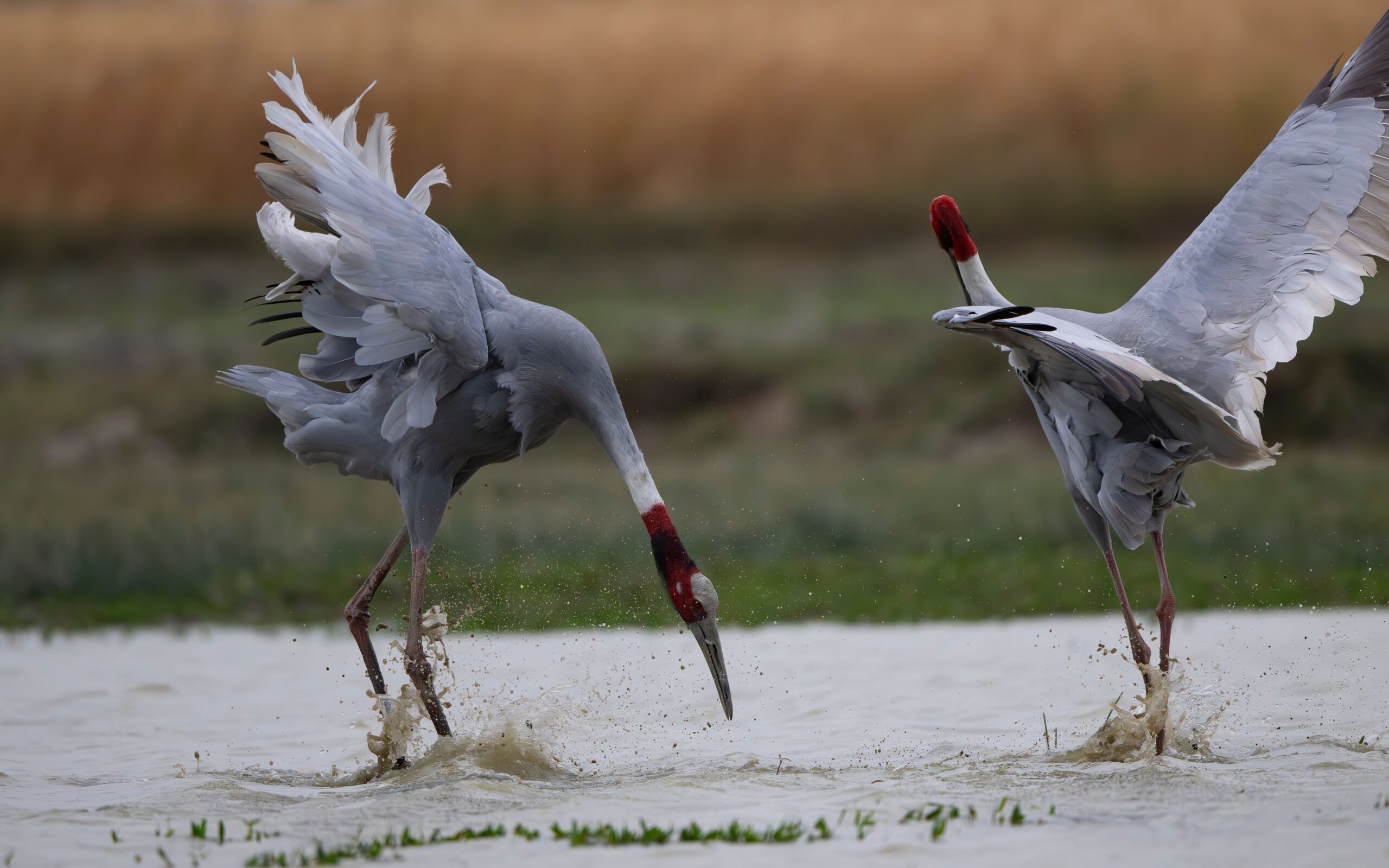
オオヅルはどんな鳥(動物)?特徴、生態、生息地について解説します。ツル科最大種でとても大柄の鳥になります。この鳥はインドから東南アジア、さらにはオーストラリアにまでかなり広く分布しているのですが、実は絶滅危惧種に指定されている動物でもあるのです。


オオヅルとは? 基本ステータスについて
オオヅルはツル目ツル科ツル属に分類される鳥類。漢字では大鶴、学名はGrus antigone。情報の一覧は以下の通り。
| Japanese(和名) | オオヅル |
| English(英名) | Sarus crane |
| scientific name(学名) | Grus antigone |
| classification(分類) | Ave、 Gruiformes、Gruidae、Grus 鳥綱、ツル目、ツル科、ツル属 |
| IUCN Status(保全状況) | CRITICALLY ENDANGERED |
| Length(全長) | 140-156cm |
| Weight(体重) | 3-4kg |
オオヅルのルーツ、起源は?
オオヅル(学名:Antigone antigone ※旧学名 Grus antigone)は、世界最大級のツル類で、インド亜大陸から東南アジア、オーストラリア北部にかけて進化した大型の湿地性鳥類です。
1. 祖先は「古代の大型ツル類」
進化の流れは大きく見ると:
原始的な鳥類
 ↓
ツル目(Gruiformes)の祖先
 ↓
ツル科(Gruidae)
 ↓
大型ツル類の系統
 ↓
オオヅル(Antigone antigone)
となります。
ツル類は非常に古い鳥のグループで、化石記録からも新生代(約数千万年前)には現在のツルに近い仲間が存在していました。
2. 起源はインド〜東南アジア周辺
オオヅルの祖先は、現在の:
- インド北部
- ガンジス川流域
- 東南アジア
- オーストラリア北部
につながる温暖な湿地環境で進化したと考えられます。
現在の分布:
- インド
- ネパール
- パキスタン
- ミャンマー周辺
- 東南アジア
- オーストラリア北部
に広がっています。
3. なぜ巨大化したのか?
オオヅルが世界最大級まで大型化した理由は、湿地環境への適応です。
長い脚
湿地では:
- 深い水辺を歩く
- 水草の間を移動する
- 泥地を越える
必要があります。
そのため、
- 長い脚
- 長い首
- 大きな体
が有利でした。
分類について
オオヅルは以下のような亜種が存在します。
- Grus antigone antigone (Linnaeus, 1758)
- Grus antigone sharpei (Blanford, 1895)
- Grus antigone gilliae (Schodde, 1988)
- Grus antigone luzonica (Hachisuka, 1941)
分類学(タクソノミー)
- 界 (Kingdom): Animalia(動物界)
- 門 (Phylum): Chordata(脊索動物門)
- 綱 (Class): Aves(鳥綱)
- 目 (Order): Gruiformes(クイ目・ツル目)
- 科 (Family): Gruidae(ツル科)
- 属 (Genus): Antigone
- 種 (Species): Antigone antigone(オオヅル)
生息地について
オオヅルはインド、フィリピン、マレーシア、オーストラリア、に分布しています。
1. 自然分布(原産地)
- インド亜大陸
- インド、パキスタン、バングラデシュ、ネパール
- 東南アジア
- カンボジア、ベトナム、タイ、ラオス
- オーストラリア北部
- 一部地域に野生個体が確認される
2. 生息環境
- 湿地・沼地・浅い水田を好む
- 開けた草地や湿原でも見られる
- 水辺が必須
- 繁殖や餌場として浅い水域が必要
- 農地との共存
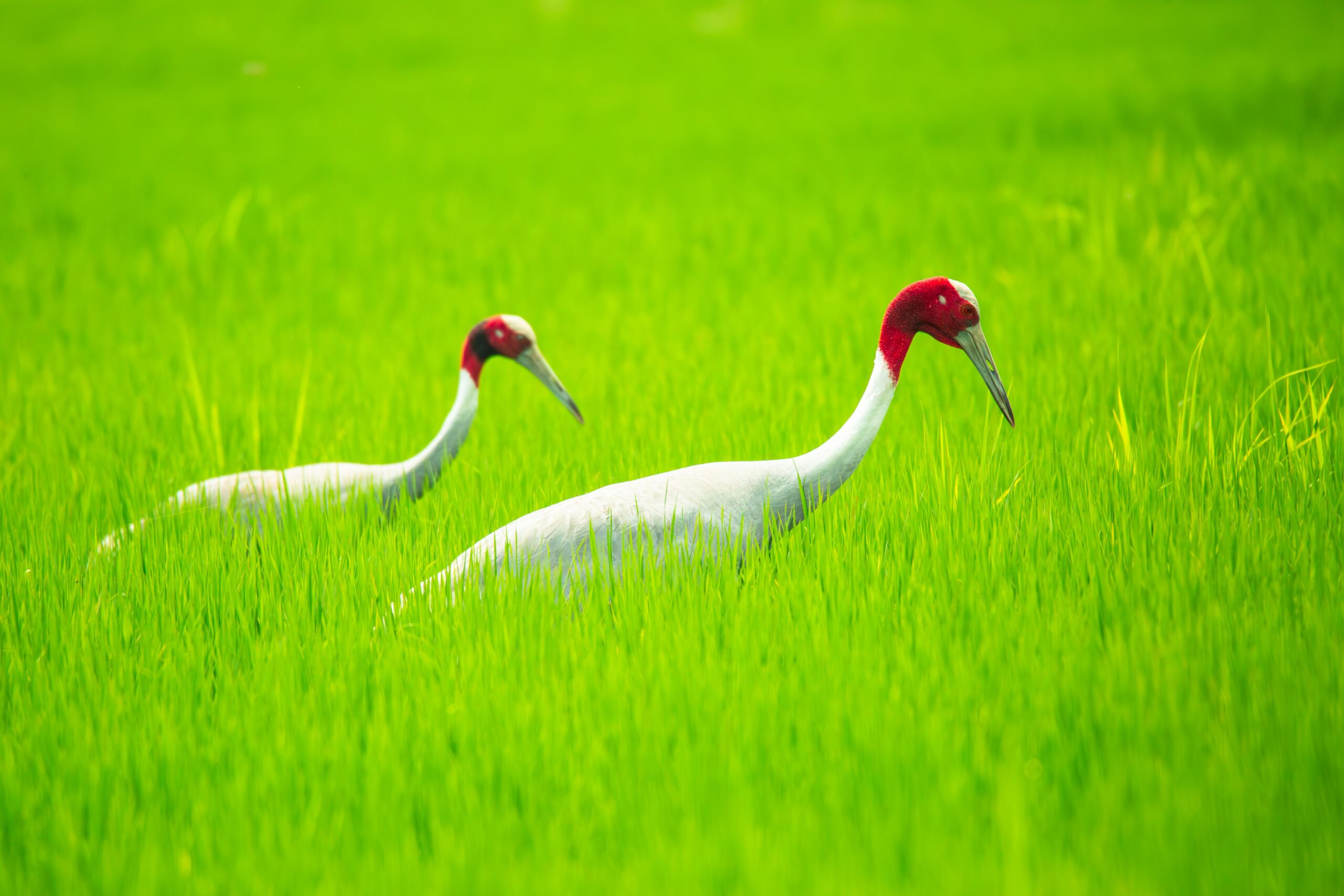
- 稲作地域では、水田で餌を採ることも多い
3. 標高・範囲
- 主に平地〜低山地(標高0〜500 m程度)
- 高地の森林よりも、開けた湿地や農耕地が生息適地
4. 移動・渡り
- 定住型の個体が多い
- 雨季や乾季で餌や水場を求めて局所的に移動することはある
- 長距離渡りはほとんど行わない
特徴は?どんな感じの生物なのか?
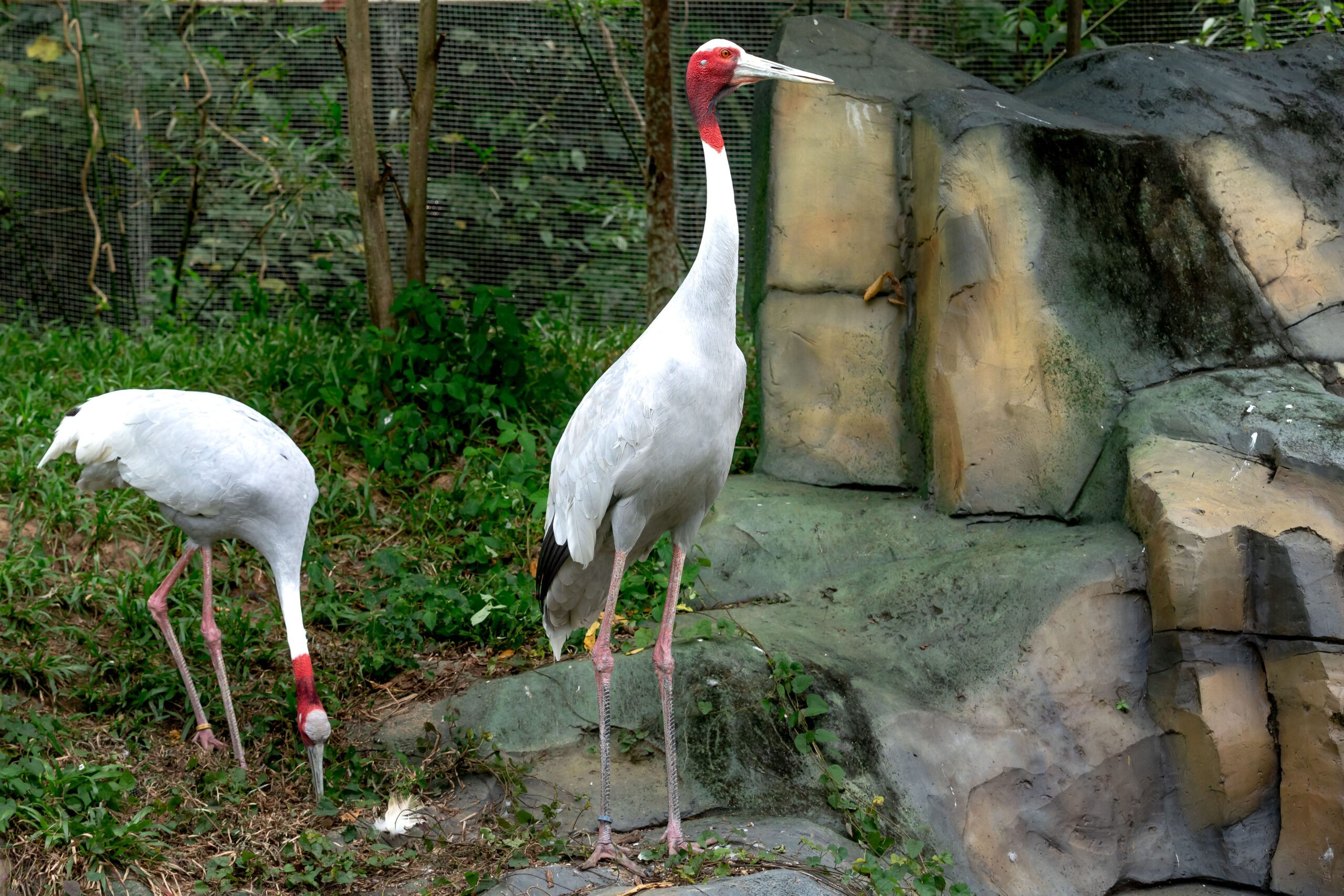
オオヅルはツル科最大種で全身は淡灰色の羽毛で被われています。頭頂や眼先は灰緑色で頭から首の上部にかけて皮膚が裸出していて赤色をしています。留鳥で東南アジアから南アジア、オーストラリアに定住します。頸部は首輪状に白い羽毛で被われ、草原、湿原、河川、農耕地に生息しております。
1. 外見・体の特徴
- 体の大きさ
- 体長:約1.5 m
- 翼開長:約2.2 m
- 体重:約6〜8 kg
- 体色
- 全体は灰白色〜淡い灰色
- 頭部と首は赤く羽毛がなく、肌が露出
- 尾羽は黒色
- 脚とくちばし
- 長い脚で水辺や草原を歩く
- くちばしはやや長く、餌を突くのに適している
- 鳴き声
- 遠くまで響く「クルルル…」という独特の鳴き声
- 群れの存在や縄張りを知らせる
見た目の印象:大きく堂々としていて、水辺の開けた場所で目立つ「威厳のある鳥」です。
2. 行動・性格
- 性格
- 臆病で警戒心が強い
- 危険を感じると大きな声で鳴き、群れで飛び逃げる
- 社会性
- 単独よりもカップルや小さな群れで生活
- 餌場では数十羽の群れになることもある
- 飛翔能力
- 大きな翼で力強く飛ぶ
- 長距離渡りはあまりせず、局所的な移動が多い
3. 食性
- 雑食性だが植物性が中心
- 水草、種子、穀物、稲の若芽など
- 時々動物性も摂取
- 小型の昆虫や軟体動物も食べる
生態はどんな感じなのか?
オオヅルは食性は動物食傾向の強い雑食。この鳥は広い湿地や湖沼、湿原にすみ、繁殖する雨季には湿地の中で巣をつくります。インドでは7-10月に2個の卵を産みます。抱卵はオスとメスが交代で行います。抱卵期間は1か月。オオヅルの寿命は、はっきりとわかっていないようです。
1. 生活環境
- 湿地・浅い水田・沼地を中心に生活
- 開けた草地や水田で餌を探すことが多い
- 水辺の存在が必須で、巣作りや餌採取に利用
2. 食性
- 雑食性だが植物性が中心
- 水草、種子、穀物(稲など)
- 芽や若い草も食べる
- 動物性は補助的
- 昆虫や軟体動物、小さな魚を食べることもある
- 餌の探し方はついばみ・突き・引き寄せが中心
3. 社会性
- 単独よりもカップルや小群で行動
- 繁殖期はペアで協力
- 餌場では群れを作ることもある(数十羽程度)
- 群れの中で縄張りや存在を声で知らせる
4. 繁殖行動
- 巣作り:湿地や水田の草地に小さな地上巣を作る
- 繁殖期:地域により異なるが主に雨季にあたる時期
- 卵の数:通常2個
- 親鳥の役割:両親で交代して抱卵し、ヒナが巣立つまで世話
5. 移動・行動パターン
- 基本的には定住型
- 水や食料の状況に応じて局所的に移動
- 長距離渡りはほとんど行わない
- 日中は餌を探し、休息や巣立ちの練習を行う
天敵はいるのか?
オオヅルはこれと言った天敵はいません。
換羽について
オオヅル(Antigone antigone)は、ツル類の中でも非常に大型の鳥で、**成長段階と季節に合わせて羽を更新する換羽(かんう)**を行います。
ツル類は飛行能力を維持する必要があるため、一度にすべての羽を失うのではなく、時間をかけて少しずつ交換する換羽方式を取ります。
1. 換羽の時期
オオヅルの換羽は主に:
繁殖後〜雨季後(夏〜秋)
に行われます。
地域によって異なりますが、
- インド北部:6〜10月頃
- 東南アジア:雨季後
- オーストラリア北部:繁殖後
に羽の更新が活発になります。
流れ:
春〜夏
↓
繁殖・子育て
↓
夏〜秋
↓
換羽
↓
新しい羽で乾季・冬へ
2. 成鳥の換羽
① 体羽の換羽
まず交換されるのは、
- 首周辺
- 胸
- 背中
- 腹部
などの体の羽です。
古い羽が抜け、新しい羽に変わることで:
- 保温能力
- 防水性
- 羽毛の整列
が回復します。
② 翼の換羽
重要なのが風切羽です。
交換される羽:
- 初列風切羽(翼の先端)
- 次列風切羽(翼の内側)
飛行に直結するため、順番に抜け替わります。
オオヅルは大型で体重が重いため、翼の状態は特に重要です。
3. 幼鳥の換羽
オオヅルの幼鳥は成鳥とは大きく姿が違います。
生まれた直後
特徴:
- 茶色〜黄褐色の羽毛
- 首の赤色がない
- 体全体が柔らかい羽
成長過程
第1段階
幼羽:
- 茶色系
- 保護色が強い
↓
若鳥羽
- 徐々に灰色化
- 首の赤色が発達
↓
成鳥羽
- 白〜灰色の体
- 赤い裸出した頭部
- 黒い首
になります。
鳴き声について
オオヅル(Antigone antigone)は、ツル類の中でも特に大きく、遠くまで響く鳴き声を持つ鳥です。
その声は湿地や草原に響き渡り、数百メートル以上離れた場所からでも聞こえることがあります。
1. 代表的な鳴き声
オオヅルの声は一般的に、
「クルルルー」
「ガー、ガー」
「コォー、コォー」
のような低く太い声として表現されます。
ツル特有の、
- よく通る金属的な声
- 低音の響き
- 連続する叫び声
が特徴です。
2. なぜ大きな声が出せるのか?
オオヅルは非常に長い気管を持っています。
ツル類は:
- 気管が胸の中で折り曲げられている
- 音を共鳴させる構造を持つ
ため、体の大きさ以上に大きな声を出せます。
これは楽器でいうと、
長い管を持つトランペットやホルン
のような仕組みです。
3. 鳴き声の目的
① つがいのコミュニケーション
最も有名なのが、
デュエット(つがい鳴き)
です。
オスとメスが向かい合い、
- 首を伸ばす
- 翼を広げる
- 交互に鳴く
行動をします。
目的:
- ペアの結束確認
- 縄張り宣言
- 繁殖相手との連携
です。
② 縄張り防衛
オオヅルは繁殖期には強い縄張り意識を持ちます。
鳴き声で、
「ここは自分たちの場所」
と周囲のツルへ知らせます。
③ 仲間との連絡
群れでは:
- 移動開始の合図
- 危険警戒
- 仲間の位置確認
にも鳴き声を使います。
季節別の活動
オオヅル(Antigone antigone)は、インド亜大陸・東南アジア・オーストラリア北部の湿地、水田、草原に適応した大型の留鳥性ツルです。
🌱 春(3月〜5月)
繁殖準備・縄張り形成の季節
春はオオヅルにとって繁殖活動が活発になる時期です。
主な活動
- ペアの結束強化
- 求愛ダンス
- 縄張り確保
- 巣作り準備
を行います。
求愛行動
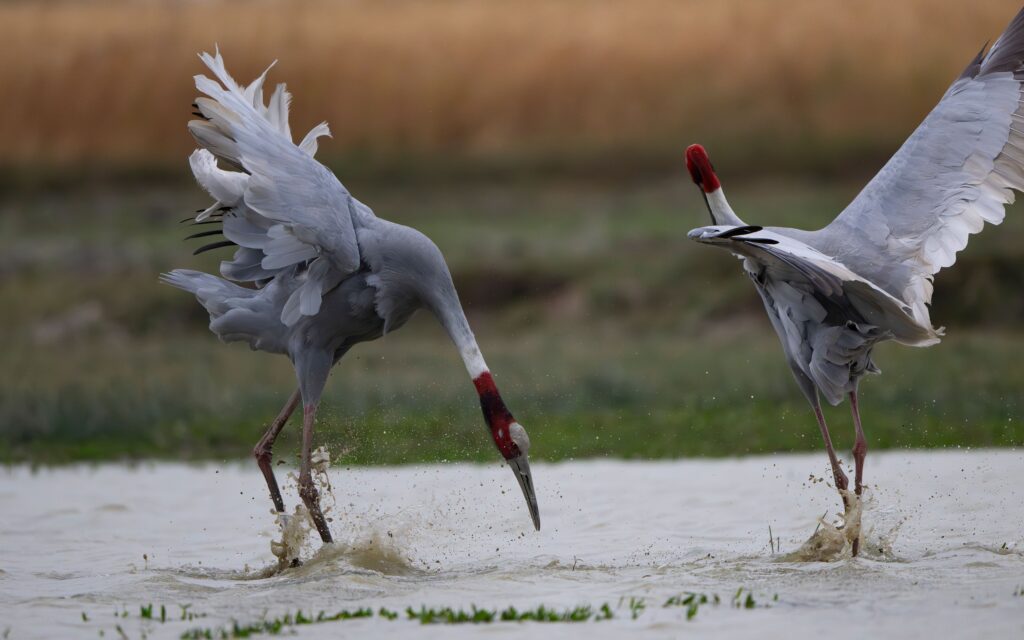
オオヅルは一夫一婦制で、同じ相手と長期間ペアを維持します。
ペアでは:
- 向かい合う
- 首を伸ばす
- 翼を広げる
- 大声で鳴き合う
「つがい鳴き」を行います。
これは、
- ペア確認
- 繁殖準備
- 他個体への縄張り主張
の意味があります。
☀ 夏(6月〜8月)
繁殖・子育てのピーク
地域によって雨季と重なる時期です。
主な活動
- 巣作り
- 産卵
- 抱卵
- 雛の育成
を行います。
巣の特徴
オオヅルは湿地に、
- 水草
- 枯れ草
- 泥
を積み上げて大きな巣を作ります。
巣は水上に作られることもあります。
雛の成長
孵化した雛は、
- 親について歩く
- 水辺で餌を探す
- 危険を学ぶ
ことで成長します。
親鳥は外敵から雛を守るため、非常に警戒心が強くなります。
🍂 秋(9月〜11月)
子育て終了・餌場移動の季節
繁殖が終わると、活動範囲が広がります。
主な活動
- 雛の飛行練習
- 餌場探索
- 群れ形成
- 栄養補給
を行います。
食生活の変化
秋は餌が豊富になるため、
- 昆虫
- カエル
- 魚
- 小型爬虫類
- 穀物
- 植物の種
などを幅広く利用します。
農地では収穫後の水田を利用することもあります。
❄ 冬(12月〜2月)
越冬・採食中心の生活
オオヅルは基本的に留鳥ですが、寒冷地では季節移動を行う個体もいます。
主な活動
- 餌探し
- ペア維持
- 群れでの休息
- 湿地利用
冬の行動
朝:
- ねぐらから採食地へ移動
昼:
- 水田・湿地で採食
夕方:
- 安全な水辺へ戻る
という生活リズムになります。
飛行速度について
オオヅル(Antigone antigone)は、世界最大級のツル類ですが、その巨大な体を支えるために大きな翼と優れた滑空能力を持っています。
1. 通常飛行速度
約40〜60km/h
オオヅルの通常の移動飛行は、
時速40〜60km程度
と考えられます。
特徴:
- ゆっくりした大きな羽ばたき
- 首と脚を伸ばした姿勢
- 直線的な飛行
を行います。
巨大な体の割には安定した飛行をします。
2. 長距離移動時の速度
約50〜70km/h
餌場への移動や地域間移動では、
50〜70km/h前後
になることがあります。
オオヅルは:
- 湿地
- 水田
- 草原
- 河川
の間を移動します。
広い視界を利用して、上昇気流に乗りながら滑空することもあります。
3. 風を利用した滑空速度
大型ツル類は羽ばたきだけでなく、気流を利用します。
追い風や上昇気流では、
70km/h以上
になる可能性があります。
特に:
- 渡り時
- 長距離移動時
- 高空飛行時
では効率的な飛行を行います。
オオヅルのヒナについて
オオヅル(Antigone antigone)のヒナについて詳しく整理します。オオヅルは大型ツルで、ヒナの成長は親鳥の協力と湿地環境に大きく依存します。
1. 誕生と孵化
- 卵の数:通常2個
- 孵化期間:約28〜30日
- 孵化直後の特徴
- 羽毛は淡い灰色や淡褐色
- くちばしは小さく柔らかい
- 完全には飛べない
2. 巣での生活
- 巣の場所:湿地や草地に作った小さな地上巣
- 親鳥の世話
- 両親で交代して卵を温め、孵化後は餌を与える
- ヒナが小さい間は親鳥がヒナを守りながら周囲を警戒
3. 成長過程
- 初期(孵化後〜数週間)
- 羽毛は柔らかく、飛べない
- 水辺や草地で親に付き添い、餌をもらう
- 中期(数週間〜2か月)
- 羽毛が成長し、体がしっかりしてくる
- 親鳥の真似をして餌を突く練習を始める
- 後期(2〜3か月)
- 羽が十分に成長し、短距離飛行が可能になる
- 徐々に親鳥から独立
4. 飛翔・巣立ち
- 飛べるようになる時期:生後約2〜3か月
- 巣立ち
- 最初は親鳥の近くで飛翔
- 安全が確保できると完全に独立
5. 特徴・生態
- 羽毛は成鳥よりも淡く、灰色〜淡褐色
- 親鳥の指導の下で餌の採り方を学ぶ
- 卵やヒナの生存率は環境次第で変動する
オオヅルは絶滅危惧種なのか?
オオヅルはワシントン条約附属書II類に掲載されており、国際取引に制限がかかっています。さらに絶滅危惧種にも指定されています。2009年の調査では、推定個体数が15,000~20,000羽と言われています。生息地の破壊、狩猟や採集が大きな脅威となっており、早急な保護活動を必要としている鳥です。フィリピンの個体群は1960年代後半に絶滅しました。
1. IUCNレッドリストでの評価
- 分類:Vulnerable(VU:絶滅危惧種)
- 理由:生息地の破壊や農地・湿地の減少による個体数減少
2. 絶滅危惧の原因
- 湿地や水田の減少
- 開発や干拓で生息地が縮小
- 水位管理の変化により巣作りや餌場が失われる
- 農薬や汚染
- 農薬で餌の昆虫や水草が減少
- 水質汚染がヒナの生存に影響
- 人間による捕獲や狩猟
- 食用や装飾品目的での捕獲が一部地域で報告される
- 繁殖率の低さ
- 卵は通常2個しか産まれず、ヒナの生存率も環境によって変動
3. 保護状況
- インド、ネパール、バングラデシュなどでは 保護区や湿地保護活動が行われている
- 野生での保護に加え、動物園での 人工繁殖プログラム も実施されている
オオヅルはペットとして飼育可能?
オオヅルは以上のように絶滅危惧種に指定されていますので飼育は極めて困難です。
1. 飼育の難しさ
- 体が大きい
- 成鳥で体長約1.5 m、翼開長約2.2 m
- 家庭のケージや庭ではとても収まらない
- 行動範囲が広い
- 湿地や水田のような開けた場所を好む
- 長時間歩き回るので広大な空間が必要
- 鳴き声が大きい
- 遠くまで響く「クルルル…」という鳴き声
- 住宅地では騒音になる
2. 性格・行動
- 臆病で警戒心が強い
- 危険を感じると飛び立つ
- 群れで生活する性格
- 単独飼育はストレスになる可能性が高い
3. 法律・許可
- オオヅルは 絶滅危惧種(VU) であり、野生動物保護法の対象
- 日本国内で飼育する場合は 特別な許可が必要
- 無許可での飼育や販売は違法
4. 飼育例
- 動物園や保護施設での飼育が現実的
- 必要条件:
- 広い屋外スペースや湿地に似た環境
- 餌:穀物・水草・野菜・昆虫などを管理
- 繁殖期の管理とヒナの保護
- 獣医による健康管理
飼育されている動物園(日本・世界)
オオヅル(学名:Antigone antigone、旧学名 Grus antigone)は、ツル科最大級の種類で、野生ではインド・東南アジア・オーストラリア北部に分布します。飼育下でも比較的よく維持されている大型ツルの一種ですが、日本では展示施設は多くありません。
🇯🇵 日本の動物園
天王寺動物園
飼育種
- オオヅル(Sarus Crane)
- 学名:Antigone antigone(旧 Grus antigone)
天王寺動物園ではオオヅルを飼育展示しています。ツル舎で観察でき、大型ツルならではの体格や長い脚、赤い頭部を見ることができます。
特徴:
- 日本国内でも大型ツルを観察できる代表的施設
- 鳴き声や求愛ダンスなどツル類特有の行動が見られる可能性がある
- 湿地性鳥類としての生態解説も行われている
京都市動物園
飼育種
- シロエリオオヅル(Sarus Crane亜種)
- 学名:Antigone antigone antigone(旧 Grus antigone antigone)
京都市動物園ではシロエリオオヅルを飼育しています。インド北中部、ネパール、パキスタン、バングラデシュ、オーストラリア北部などに分布する大型ツルとして紹介されています
🌏 世界の動物園
海外ではオオヅルの飼育例は日本より多く、特に大型鳥類園・保全施設で飼育されています。
🇺🇸 アメリカ
Cougar Mountain Zoo
オオヅル(Sarus Crane)を飼育しています。
展示では、
- つがいのディスプレイ
- 鳴き声
- ダンス行動
など、ツル類特有の行動が紹介されています。
🇺🇸 Disney’s Animal Kingdom
オオヅルの展示記録があります。
広い自然環境を再現した大型施設で、鳥類展示の一環として観察できます。
🇩🇪 ヨーロッパ
ヨーロッパでも複数の動物園で飼育歴があります。
例:
- Frankfurt Zoo
- Krefeld Zoo
- Erfurt Zoopark
などで飼育記録があります。

他の動物を紹介


コメント