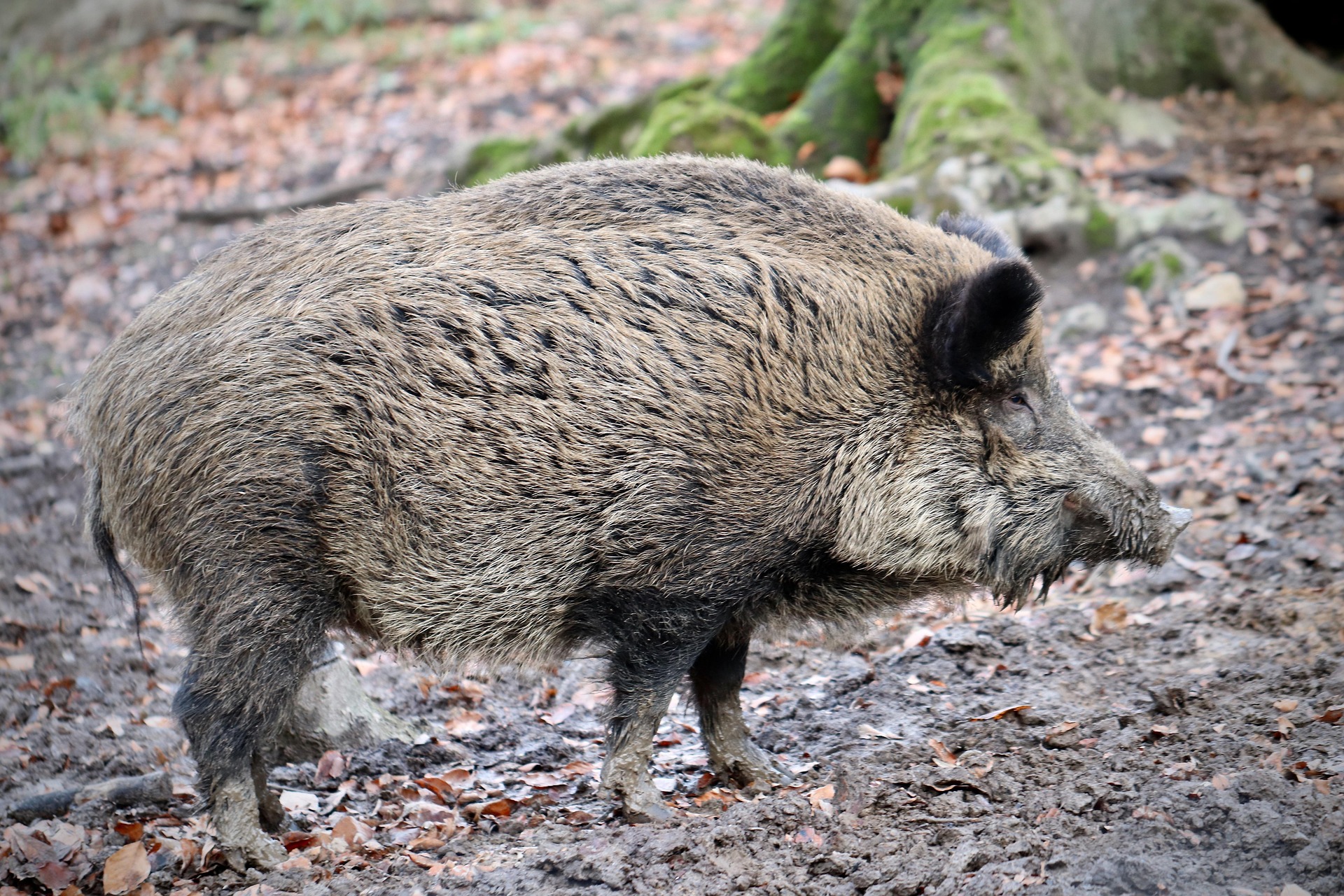
イノシシはどんな動物?特徴、生態、生息地について解説します。イノシシはアジアやヨーロッパなどのユーラシア大陸南部に広く分布し誰もが知っている動物の一つ。イノシシを改良した大切な家畜がブタであり、かなり関連性が深い動物になります。


イノシシとは? 基本ステータスについて
イノシシは鯨偶蹄目イノシシ科の動物の一種。学名はSus scrofa、英語名はWild boar、漢字は猪・豬。野生動物のサイズは体長は90~180cm、体重は50~200kg、尾長は30~40cmです。情報の一覧は以下の通り。地域ではたくさん見ることができます。
| Japanese(和名) | イノシシ |
| English(英名) | Wild boar |
| scientific name(学名) | Sus scrofa |
| classification(分類) | Mammalia、Cetartiodactyla、Suidae、Sus 哺乳綱、鯨偶蹄目、イノシシ科、イノシシ属 |
| IUCN Status(保全状況) | LEAST CONCERN |
| Length(体長) | 90~180cm |
| Weight(体重) | 50~200kg |
豚とイノシシの違い
豚とイノシシの違いは?以下に説明していきます。ブタについては以下の記事も参考にしてみてください。人間はもともと狩猟・採集を通じて、野生のイノシシを食料にしていました。ですが、人間は、人為的にイノシシ同士を交配させ安定した食料の供給を目指したのです。そこで生まれたのがブタ。イノシシはとても凶暴な性格をしているのですがおとなしいイノシシ同士を交配させて、温厚なブタと言う動物が誕生しました。
イノシシの特徴
毛が黒や褐色、胴体が短めで鼻は大きいです。ネットのページでも画像はたくさん見れます。日本の本州、四国、九州ではニホンイノシシが時間によっては多くみられます。
ブタの特徴
毛が個体によって異なり、白やピンクなどがいます。胴体が長めで鼻は大きいが短いと言う特徴を持っています。
基本的な分類
イノシシは哺乳類・偶蹄目・イノシシ科に属します。
- 界:動物界 Animalia
- 門:脊索動物門 Chordata
- 綱:哺乳綱 Mammalia
- 目:偶蹄目 Artiodactyla
- 科:イノシシ科 Suidae
- 属:イノシシ属 Sus
- 種:イノシシ Sus scrofa
イノシシのルーツ、起源は?
イノシシ(イノシシ)のルーツをたどると、かなり古い時代のユーラシア大陸に行き着きます。
🐗 イノシシの起源
現在のイノシシ Sus scrofa は、約500万〜700万年前に現れたスイ科(Suidae)の系統から進化したと考えられています。
大まかにいうと、
古代のスイ科動物
↓
イノシシ属(Sus)
↓
Sus scrofa
↓
現代のイノシシ・家畜化されたブタ
という流れです。
🌏 どこが発祥?
Sus scrofaの初期の進化は、ヨーロッパから西アジアにかけてのユーラシア地域と深く関係しています。
その後、非常に広い範囲へ拡散し、
- ヨーロッパ
- 中東
- 中央アジア
- 中国
- 東南アジア
- 日本列島
などに分布を広げました。
🇯🇵 日本のイノシシは?
ここが面白いところです。
日本のイノシシは大きく見ると大陸のイノシシ系統から日本列島へ渡ってきたものですが、日本列島では長期間隔離されたため、独自の進化をしています。
特に、
ニホンイノシシ(本州・四国・九州など)
リュウキュウイノシシ(南西諸島)
など、地域によって遺伝的な違いがあります。
そしてイノシシは、人間によって約9,000年前〜1万年前に西アジアなどで家畜化され、これが現在のブタにつながります。
生息地について
イノシシは世界中で分布しています。主にユーラシア大陸で野生を見ることができます。
1. 世界的な生息地
イノシシ(Sus scrofa)は、陸上哺乳類の中でも最も分布域が広い種の一つです。
主な分布域
- ヨーロッパ:地中海沿岸〜東欧・ロシア西部
- アジア:
- 東アジア(中国・朝鮮半島・日本)
- 東南アジア
- 南アジア(インド周辺)
- 中央アジア
- 北アフリカ:一部地域
また、家畜ブタの野生化により、
- 北米
- 南米
- オーストラリア
- ニュージーランド
など、本来の分布域外にも定着しています。
2. 日本における生息地
日本では、主に**ニホンイノシシ(Sus scrofa leucomystax)**が生息します。
分布
- 本州・四国・九州
- ほぼ全国だが、北海道には自然分布しない
- 近年の目撃例は人為的移入や逸出が原因
環境条件
イノシシは環境適応力が非常に高く、以下のような場所に生息します。
- 落葉広葉樹林・常緑広葉樹林
- 里山(森林+農地+集落の境界)
- 竹林
- 耕作放棄地
- 河川敷・湿地周辺
3. 生息地の特徴
① 食物資源が豊富
- 木の実(ドングリ、クリ)
- 地下茎・根
- ミミズ・昆虫
- 農作物(イネ、サツマイモなど)
② 隠れ場所がある
- 笹薮・竹林
- 下層植生が密な森林
③ 水場が近い
- 沼・沢・小川
- **泥浴び(ヌタ場)**ができる環境
4. 季節による生息地の変化
- 春〜夏:高標高・森林内部へ移動
- 秋:ドングリなどを求めて広葉樹林
- 冬:積雪を避け、低地や里山へ
→ このため、冬に農地被害が増加しやすい。
特徴は?どんな感じの生物なのか?
イノシシは大きいものでは体長が180cmを超え、体重も300kg近くになるものもいます。毛色は茶色や茶褐色、黒褐色などで、力が強く、特に突進力はかなりの威力があります。イノシシは泳ぎも巧みで、思っている以上に運動能力は優れています。上顎の犬歯は大きく、強力な牙を持っています。イノシシは水場が近いところを好み、水浴びや泥浴びが大好き。昼間に活動することが多いです。主に安全な森や山で見られ、行動の範囲は狭いです。
1. 見た目の特徴
体格
- 体長:100〜170cm
- 体重:50〜150kg(大型のオスは200kg近く)
- 胴が太く、首と肩が特に発達
- 体の前半に重心がある
毛と皮膚
- **剛毛(ごうもう)**と呼ばれる硬い毛に覆われる
- 冬は下毛が増え、防寒性が高い
- 皮膚が厚く、多少のケガでは致命傷になりにくい
牙(きば)
- オスは上下の犬歯が発達し、鎌状に湾曲
- 主に防御・威嚇・闘争用
- 年齢とともに伸び続ける
2. 感覚・能力
嗅覚
- 非常に優れている(主な探索手段)
- 地中の根や昆虫も嗅ぎ分ける
聴覚
- 良好
- わずかな物音にも敏感
視覚
- あまり良くない
- 動体視力はそこそこ
3. 行動の特徴
活動時間
- 主に夜行性〜薄明薄暮性
- 人の少ない時間帯に活動
移動能力
- 走るのが速い(時速40〜50km)
- 急斜面・ぬかるみ・藪でも平気
- 泳ぎも得意
採食行動
- 鼻で地面を掘り返す(ラッティング)
- 地表〜地下の食物を幅広く利用

性格はどんな感じ?
イノシシは非常に神経質な動物で、見慣れないものなどを見かけると避けようとする習性があります。しかし近づくと人に突進をして攻撃をしてきます。強力な牙を持っているので、人間でもけがをしてしまう可能性があります。
1. 基本的な性格
■ 臆病・慎重
- 物音・匂いに非常に敏感
- 人の気配を感じると、まず逃げる
- 同じ危険な場所を記憶し、避ける
→ むやみに突っ込んでくる動物ではありません。
2. 警戒心と学習能力
■ とても賢い
- 罠や電気柵の危険を学習する
- 人の生活リズムを把握する(夜間に活動)
- 餌場の「安全・危険」を判断できる
■ 慣れると大胆
- 人に慣れた個体は警戒心が低下
- 住宅地や市街地にも出没
- 逃げない=危険度が高い
3. 攻撃的になる条件
イノシシが攻撃的になるのは例外的状況です。
危険なケース
- 子連れの母親
- 逃げ場がない(崖・袋小路)
- ケガ・衰弱・追い回された後
- 人に慣れすぎた個体
この場合、防衛行動として突進します。
4. オスとメスの違い
オス
- 単独行動が多い
- 繁殖期は気が荒い
- 突然攻撃に出ることがある
メス
- 群れで行動
- 子を守る意識が非常に強い
- 判断が速く、統率的
5. 好奇心もある
- 新しい匂い・物に興味を示す
- ただし「安全確認」が最優先
- 危険と判断すれば即撤退
生態はどんな感じ?
イノシシは雑食性でミミズやカエル、植物、農作物、トカゲ、昆虫などを食べて生活をしています。繁殖の時期は12月頃から約2か月間続くことが多いです。野生下での寿命は長くて10年。1年ほどで性成熟をします。大きな成獣はよく食べるので農家は作物の管理や警戒が必要。
1. 1日の生活リズム
■ 活動時間
- 夜行性〜薄明薄暮性
- 夕方〜夜〜明け方に活発
- 人の少ない時間帯を選ぶ
■ 昼間
- 森林や藪で休息
- 窪地・倒木の陰・竹林など
- 夏は涼しい場所、冬は風の当たらない場所
2. 食性(何を食べるか)
■ 雑食性
植物質・動物質を幅広く食べる
植物
- ドングリ、クリ
- 草・葉・根・地下茎
- タケノコ
- 農作物(イネ、サツマイモ、トウモロコシ)
動物
- ミミズ
- 昆虫・幼虫
- カエル・ヘビ
- 小型哺乳類・死肉
→ 季節ごとに最も効率の良い餌を選択
3. 採食行動の特徴
■ 掘り返し行動(ラッティング)
- 鼻先で地面を掘る
- 土壌を大きくかき乱す
- 植生や農地への影響が大きい
■ 行動範囲
- 数km〜十数km
- 餌が少ないと拡大
4. 季節ごとの生態
春
- 新芽・根・昆虫が中心
- 出産期(メス)
夏
- 夜間活動が増加
- 水場・ヌタ場を頻繁に利用
秋
- ドングリ・木の実を大量摂取
- 脂肪を蓄える重要な時期
冬
- 低地・里山へ移動
- 積雪を避ける
- 農地被害が増加
5. ヌタ場(泥浴び)
目的
- 体温調節
- 寄生虫対策
- 皮膚保護
→ 水場や湿地に作られる
→ 同じ場所を繰り返し利用
6. 社会構造
- 母系集団で生活
- メス+子ども
- 成熟オスは単独行動
- 群れ内の結束は強い
7. 繁殖生態
- 繁殖期:主に晩秋〜冬
- 妊娠期間:約115日
- 出産数:4〜8頭
- 子は縞模様(ウリ坊)
天敵はいるのか?
イノシシは外敵はトラやヒョウ、オオカミ、クマです。

歩行速度は?
イノシシの通常の歩行速度なら、おおむね 時速2〜5km程度と考えてよいです。
ただし、状況によってかなり変わります。
- 🚶 ゆっくり歩く:約2〜3 km/h
- 🐗 普通に移動:約3〜5 km/h
- 🏃 走る・逃げる:約30〜40 km/h
- ⚡ 短距離での突進:かなり高速で、約40km/h前後に達することがあります
つまり、歩いているイノシシは人間の速歩き程度、走り出すと一気に速くなる動物です。
換毛はいつ?
イノシシの換毛(毛の生え替わり)は、主に春と秋に起こります。
- 🌸 春(3〜5月頃):冬毛が抜け、夏向けの短く薄い毛になる
- 🍂 秋(9〜11月頃):夏毛から冬毛へ変わり、毛が長く密になる
- ❄️ 冬:長く密な冬毛で寒さに対応
- ☀️ 夏:短く比較的薄い毛になる
特に春の換毛はかなり目立ち、冬毛が大量に抜けて、体に毛がまとまって残っているように見えることがあります。
なお、日本では地域によって時期が少しずれ、暖かい地域ほど春の換毛が早くなる傾向があります。
季節ごとの行動パターン
日本のイノシシは、季節によって「食べ物・活動時間・行動範囲・繁殖行動」がかなり変わります。 おおまかには以下のパターンです。
| 季節 | 主な行動 | 食べ物・特徴 |
|---|---|---|
| 🌸 春 | 活動が活発化 | タケノコ、草、根、昆虫などを探して地面を掘る |
| ☀️ 夏 | 暑さを避けて活動時間を調整 | 夜間・早朝の活動が増える。水場や泥浴び場を利用 |
| 🍂 秋 | 採食が非常に活発 | ドングリ、木の実、農作物など。冬に備えて栄養を蓄える |
| ❄️ 冬 | 食料を探しながら活動 | 木の根、地下茎、落ちた木の実など。積雪地域では活動量が低下 |
🌸 春
冬を越えた後なので、食べ物を探す行動が増えます。
タケノコや新芽、草、昆虫などを求めて、鼻で地面を掘り返す「鼻掘り」が目立ちます。
また、春は出産期にあたり、子どもを連れた母イノシシが見られることもあります。
☀️ 夏
イノシシは暑さが苦手なので、日中の暑い時間帯を避ける傾向があります。
そのため、
夕方 → 夜 → 早朝
に活動する個体が目立ちます。
水場や「ぬた場」と呼ばれる泥のある場所で、泥浴びをして体温調節や寄生虫対策をすることもあります。
🍂 秋
年間でも特に重要な季節です。
ドングリなどの木の実が豊富になるため、採食活動が盛んになります。
農作物がある地域では、イネ、サツマイモ、果実などを求めて人里に接近することもあります。
❄️ 冬
冬は食料が少なくなるため、食べられるものを探して行動します。
ただし、クマのように冬眠することはありません。
雪が少ない地域なら普通に活動します。
イノシシの幼獣について
イノシシの幼獣(ウリ坊)について、見た目・行動・成長・注意点まで分かりやすくまとめます。
1. 呼び名
- 一般名:ウリ坊(うりぼう)
- 学術的には:イノシシの幼獣
- 英語:piglet(野生個体でもこう呼ばれる)
2. 見た目の特徴
■ 縞模様
- 体側に白〜薄黄色の縦縞
- 瓜に似ていることから「ウリ坊」
- 保護色として機能(草地・林床で目立たない)
■ 体サイズ
- 出生時:約0.8〜1.2kg
- 生後数週間で急成長
■ 体つき
- 丸くて足が短い
- 毛は柔らかい
3. 行動の特徴
■ 非常に活発
- 走り回る、跳ねる
- 遊ぶような行動が多い
■ 母親への依存
- 授乳期間は母親に密着
- 危険を感じると即座に母親の後ろへ
4. 成長過程
■ 縞模様の変化
- 生後3〜4か月:縞が薄れる
- 生後6か月前後:成獣と同じ褐色に
■ 離乳
- 生後2〜3か月で徐々に固形食
- 母親と一緒に採食を学ぶ
5. 社会性
- 兄弟姉妹と常に行動
- 遊び=狩猟・回避行動の練習
- 群れのルールを学習
6. 生存率と危険
自然界での危険
- 寒さ・飢え
- 病気
- 事故
人との関係
- 単独で見かけても近づかない
- 近くに必ず母親がいる
- 母親は非常に攻撃的になる
7. 母親の行動
- 子育て中は警戒心が極端に高い
- 人や犬に対しても突進することがある
- 子を守るためなら逃げない
イノシシは絶滅危惧種なのか?
イノシシは個体数はとても安定しており絶滅危惧種ではありません。作物への被害のほか、都市部でも攻撃される人がいるため、害獣として駆除されることも多い動物です。
1. 世界的な評価(IUCN)
国際的な基準である IUCNレッドリストでは、
- イノシシ(Sus scrofa)
- Least Concern(低懸念)
絶滅の心配がほとんどない種、という評価です。
理由:
- 分布域が非常に広い
- 繁殖力が高い
- 環境適応力が極めて強い
2. 日本での扱い
■ 日本全体
- 絶滅危惧種ではない
- むしろ
- 農業被害
- 人身事故
- 生態系への影響
が問題になっています。
そのため、
- 有害鳥獣
- 管理対象種
として、狩猟・捕獲の対象です。
3. 例外:地域個体群レベル
■ 地域によっては減少例もある
- 離島
- 強い捕獲圧がかかった地域
- 生息環境が急激に変化した場所
こうした場合、
- 都道府県レベルのレッドリスト
で「準絶滅危惧」などに指定されることがあります。
ただしこれは
種全体が危機という意味ではありません。
イノシシは飼育できる?
イノシシはペットとしてはおすすめできません。凶暴な性格をしているため、動物園で鑑賞することをおすすめします。現在はHPなどでアクセスすれば展示の案内を見れます。
1. 法律的に飼育できるのか(日本)
■ 完全に禁止ではない
- イノシシは家畜ではなく野生動物
- そのため、
捕獲・譲受・飼育には各種法令の制約があります
関係する主な制度:
- 鳥獣保護管理法
- 野生個体の捕獲・飼育には許可が必要
- 自治体条例
- 飼育そのものを制限・禁止している地域もある
勝手に捕まえて飼うのは違法
2. 例外的に飼育されるケース
■ 飼育が認められる主な例
- 動物園・研究施設
- 教育・展示目的
- 養豚施設での「イノブタ」飼育
- 許可を得た個人・団体(非常に稀)
※ ウリ坊を拾って育てる → 原則NG
3. 実際の飼育難易度(ここが最大の問題)
■ 成長すると「別物」になる
- 子どもの頃は可愛い
- 成獣になると
- 体重100kg以上
- 牙が発達
- 力が非常に強い
■ 性格面
- なつきにくい
- 発情期のオスは特に危険
- 驚くと突進することがある
■ 施設面
- 頑丈な柵・檻が必須
- 普通のフェンスは破壊する
- 脱走=重大事故の可能性
飼育されている動物園(日本・世界)
🇯🇵 日本
ニホンイノシシ(Sus scrofa leucomystax)は、日本の複数の動物園で飼育展示されています。JAZAにも飼育動物検索があります。
代表的な施設は:
- 旭川市旭山動物園(北海道)
- 盛岡市動物公園ZOOMO(岩手)
- 八木山動物公園(宮城)
- 多摩動物公園(東京)
- 井の頭自然文化園(東京)
- 羽村市動物公園(東京)
- 富山市ファミリーパーク(富山)
- 浜松市動物園(静岡)
- 広島市安佐動物公園(広島)
- 福岡市動物園(福岡)
- 海の中道海浜公園 動物の森(福岡)
- 宮崎市フェニックス自然動物園(宮崎)
- 鹿児島市平川動物公園(鹿児島)
などがあります。飼育状況は入れ替わるため、訪問前には各園の最新情報を確認するのが確実です。
特に井の頭自然文化園では、現在もイノシシが展示されており、公式サイトでも展示エリアと生態が紹介されています。
🌍 世界
海外でも Wild Boar(Sus scrofa) は比較的多く飼育されています。
例えば、
- タリン動物園(エストニア)
- アルペン動物園(オーストリア)
- デチーン動物園(チェコ)
- ブラチスラバ動物園(スロバキア)
- ミネソタ動物園(アメリカ)
- マドリード動物園(スペイン)
- ヘルシンキ動物園(フィンランド)
- ソフィア動物園(ブルガリア)
- リュブリャナ動物園(スロベニア)
などが飼育例として確認できます。
また、タイイノシシ(Sus scrofa jubatus)など、地域ごとの亜種を飼育している施設もあります。
他の記事もおすすめ
コメント