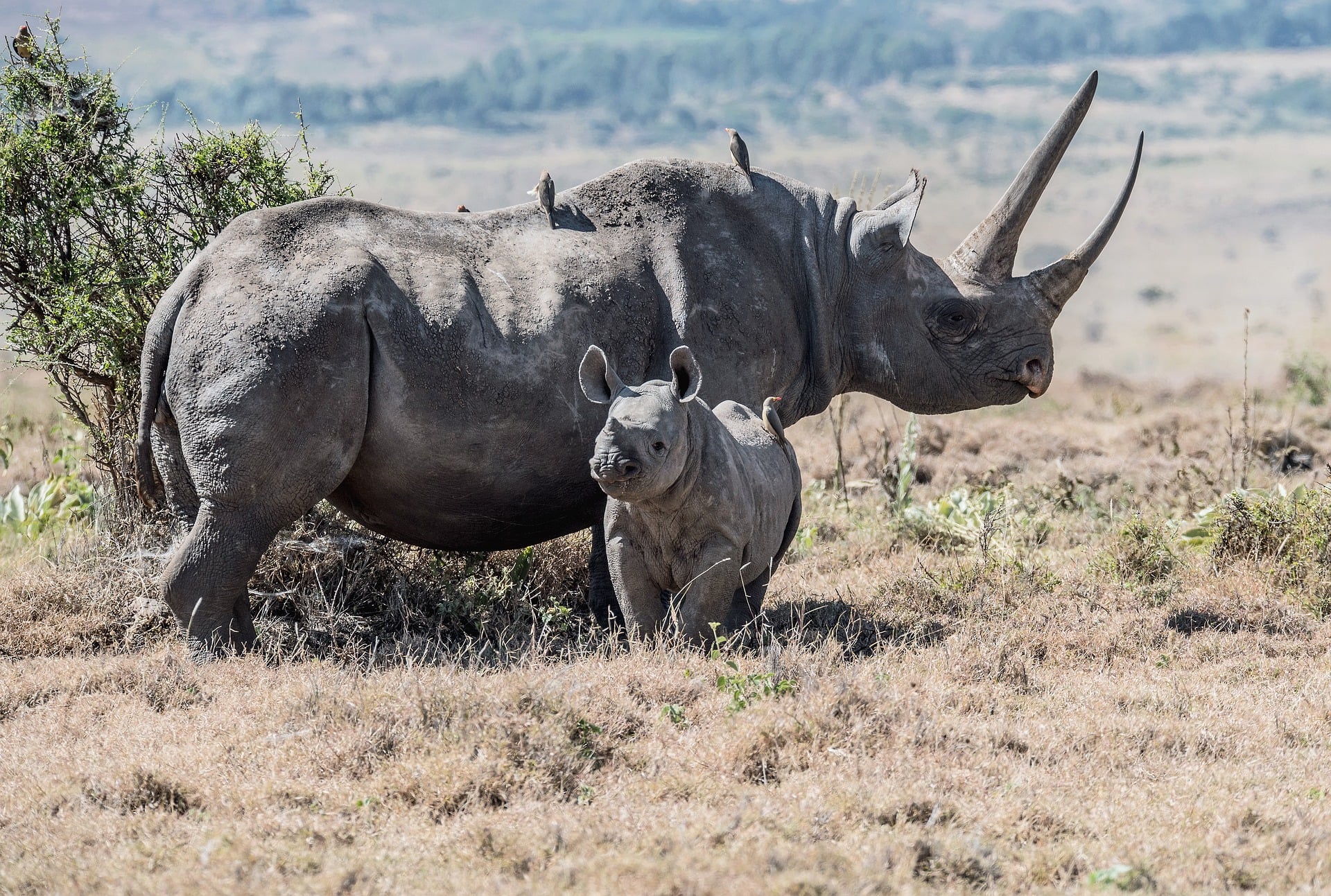
クロサイはどんな動物?特徴、生態、生息地を解説します。クロサイはケニアからタンザニア、ザンビアなどアフリカでかなり広く見ることができるサイのなかまになります。とても大きな体をしていますが実は絶滅危惧種に指定されている動物なのです。


クロサイとは? 基本ステータスについて
クロサイは哺乳綱奇蹄目サイ科の動物です。英語はBlack rhinoceros、学名はDiceros bicornis。体長は2.5~3.5mで尾長は60cm~70㎝、体重は800~1,400kg。アフリカと南アジアのほうに多くが生息しています。大きな動物で、現在、アフリカで活動しています。とてもメジャーな動物で動物占いやイラストの絵に出てきたり、縁起の良い動物と言われています。以下の記事でも紹介しています。
| Japanese(和名) | クロサイ |
| English(英名) | Black rhinoceros |
| scientific name(学名) | Diceros bicornis |
| classification(分類) | Mammalia、 Perissodactyla、Rhinocerotidae 哺乳綱、奇蹄目、サイ科 |
| IUCN Status(保全状況) | CRITICALLY ENDANGERED |
| Length(体長) | 2.5~3.5m |
| Weight(体重) | 800~1,400kg |
分類学的位置
| 階級 | 分類 |
|---|---|
| 界 | 動物界(Animalia) |
| 門 | 脊索動物門(Chordata) |
| 綱 | 哺乳綱(Mammalia) |
| 目 | 奇蹄目(Perissodactyla) |
| 科 | サイ科(Rhinocerotidae) |
| 属 | サイ属 (Diceros) |
| 種 | クロサイ (Diceros bicornis) |
クロサイのルーツ、起源は?
クロサイ(Diceros bicornis)は、現在アフリカに生息する2種類のサイのうちの一つです。シロサイと同じくサイ科ですが、別の属・別の進化系統に属しています。
🌍 どこから来た?
サイ科そのものの起源は、約5,000万年前の始新世まで遡ります。
初期のサイ類は現在のサイよりずっと小型・多様で、ユーラシアを中心に進化・分化しました。その後、サイ類の一部がアフリカへ進出し、アフリカ独自の系統が発展していきます。
大まかには、
約5,000万年前
古い奇蹄類から初期のサイ類が登場
↓
サイ科がユーラシア各地で多様化
↓
アフリカへ進出したサイ類が分化
↓
Diceros属の系統が成立
↓
🦏 現在のクロサイ(Diceros bicornis)
という進化の流れです。
🧬 シロサイとの関係
ここが重要です。
クロサイとシロサイは、どちらもアフリカに生息していますが、
- クロサイ → Diceros属
- シロサイ → Ceratotherium属
と、別々の属です。
つまり、
「シロサイが進化してクロサイになった」
という関係ではありません。
共通の古いサイ類の祖先から、それぞれ別方向に進化したと考えるのが正確です。
🌿 なぜクロサイは口が尖っている?
クロサイの最大の特徴の一つが、先端が尖った上唇です。
これは森林やサバンナの低木から、
- 木の葉
- 小枝
- 新芽
- 低木の葉
などをつまみ取るのに適しています。
一方、前に説明したシロサイは幅広い口で地面の草を食べるグレーザーです。
そのため、
🌿 クロサイ → 木の葉・枝を食べる
🌱 シロサイ → 地面の草を食べる
という食性の違いがあります。
この違いは、同じアフリカに大型サイが2系統共存できた理由の一つと考えられます。
🦏 「黒い」わけではない
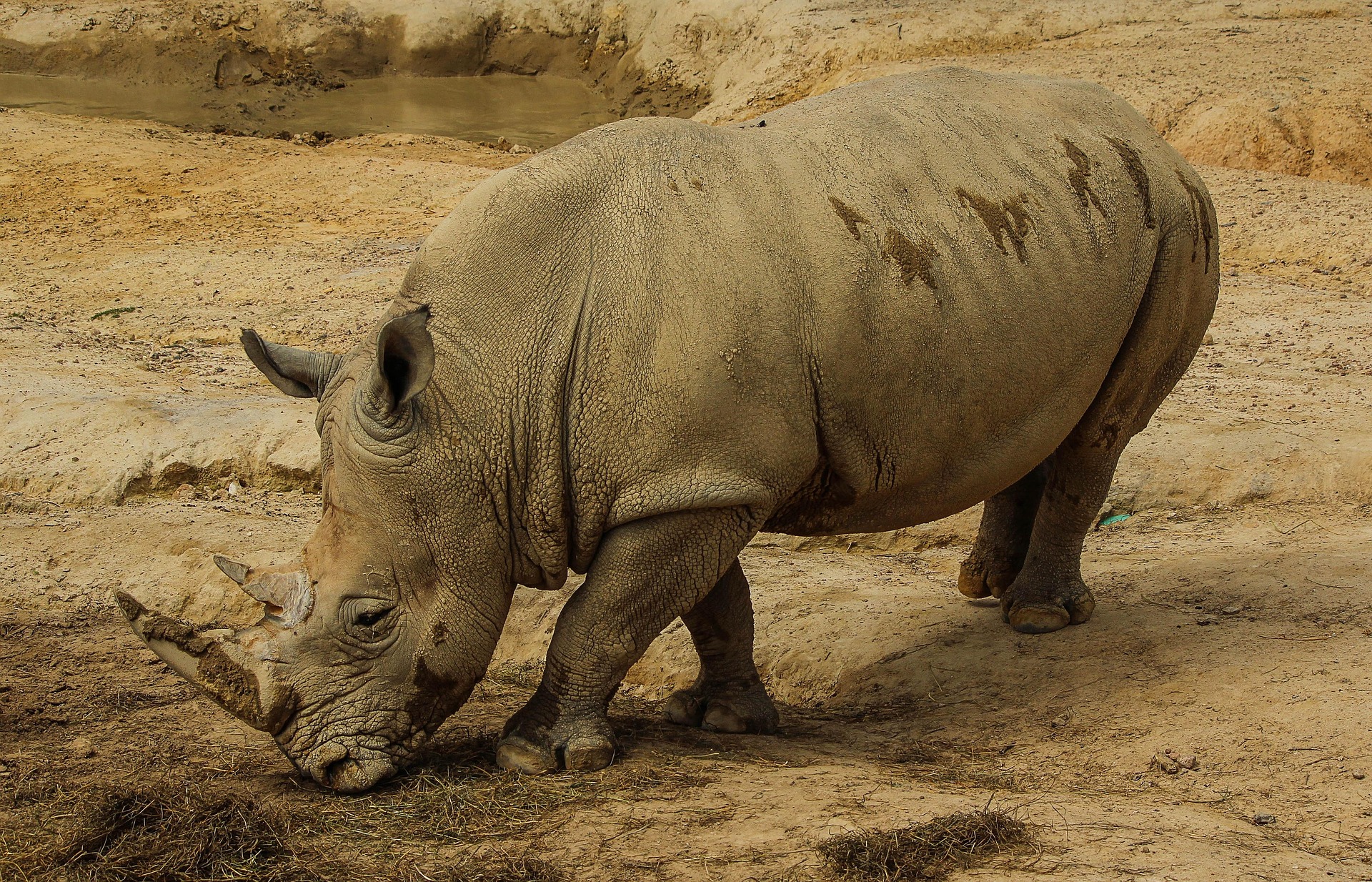
名前はクロサイですが、実際の体色は灰色~灰褐色です。
シロサイも白くないので、
クロサイ=黒いサイ
シロサイ=白いサイ
という単純な色分けではありません。
両者の名前は、体色よりも口の形や名称の由来に関係しています。
サイの生息地について
クロサイはアフリカ大陸の東部と南部(アンゴラ、ケニア、ジンバブエ、タンザニア、ナミビア、南アフリカ共和国、モザンビークなど)に分布しております。
1. 地理的分布
クロサイはアフリカ大陸のサバンナや乾燥林に生息しています。現在の分布は以下の通りです:
- 南部アフリカ:ナミビア、ジンバブエ、南アフリカ、ボツワナ
- 東部アフリカ:ケニア、タンザニア
- 過去の分布:コンゴ、アンゴラ、ザンビアなど広範囲に生息していたが、密猟や生息地破壊で減少
生息地は地域ごとに亜種によって分布が異なる
2. 生息環境の特徴
- 地形・植生:
- サバンナ(草原と低木地の混在地)
- 乾燥林や低木林、岩場のある地域
- 水源:水飲み場の近くを拠点にすることが多い
- 気候:乾燥〜半乾燥地帯に適応
- 食物資源の豊富さ:葉や低木の枝が豊富な地域を好む
3. 生態との関係
- 単独行動が基本:広い縄張りを持つ
- 日中は木陰や低木で休息
- 夜間や朝夕に食物探し
- 密猟や人間活動の少ない地域に集中
特徴は?どんな感じの生物なのか?
サイは大型でとがった角があり鎧のように厚くて硬い皮膚に覆われています。体には体毛がなく、短い尾の先にわずかな毛があります。体色は灰色や褐色などをしていてしばしば泥遊びなどをしてます。サイは頭部に2本の太い角をもっていてこの角は一生伸び続け、ふつう前角は40~50cmになります。普段は単独行動をしており、サバンナ、森林や草原、藪地や湿地帯などに生息しています。
1. 外見的特徴
| 特徴 | 詳細 |
|---|---|
| 体型 | 頑丈でずんぐりとした体、太い四肢と大きな頭部 |
| 体長 | 約3〜3.8 m |
| 体高 | 約1.4〜1.8 m |
| 体重 | 約800〜1,400 kg |
| 毛色 | 濃い灰黒色で体毛は少ない |
| 角 | 前角が長く、後角は短い。角質でできており、防御や闘争、採食に使用 |
| 顔 | 頑丈で角張った鼻先、口は葉を摘むのに適した形状 |
| 尾 | 短く、体毛で覆われている |
| 特徴 | 草食性で力強い体を持つ。単独性が強く、縄張り意識が高い |
見た目は「灰黒色の頑丈な大型草食哺乳類で、前角が長く、単独で行動するサバンナの巨体」といったイメージです。
2. 行動・生態的特徴
- 食性:低木や葉を主に食べるブラシング型草食
- 行動パターン:
- 基本的に昼行性(乾燥地では朝夕や夜間に活動することも)
- 単独で広い縄張りを持ち行動
- 社会性:群れは形成せず、繁殖期の雄だけが母親や雌と接触
- 防御能力:角で捕食者(ライオンなど)や他のサイと闘う
3. 性格・行動特性
- 攻撃性が強い:縄張りに侵入者が来ると角や体当たりで防御
- 臆病と攻撃性のバランス:危険を察知すると逃げるが、追い詰められると戦う
- 環境適応力:乾燥地やサバンナ低木地に適応、広大な範囲で生活

性格はどんな感じになるのか?
サイは獰猛な性格をしています。クロサイは縄張り意識が強く、侵入者には見境なく突進することもあるようです。 一度暴走し始めると誰も手に負えなくなる傾向があります。今は単独や群れで生活する野生がよく見られますが数が減少しております。
1. 縄張り意識が非常に強い
- クロサイは基本的に単独行動
- 縄張りを持ち、侵入者や他の雄に対して攻撃的になる
- 尿や糞で縄張りをマーキングして、自分の存在を知らせる
2. 攻撃性と臆病さのバランス
- 攻撃的な性格:
- 侵入者や危険を感じた場合、角や体当たりで防御
- 他のサイや大型捕食者(ライオンなど)に対しても攻撃することがある
- 臆病な面:
- 危険を察知するとまず逃げる
- 安全な距離を保ちながら周囲を確認する
3. 繁殖期の行動
- 雄は繁殖期にだけ積極的に行動
- 繁殖のために雌を探す際には、縄張りや他の雄と争うことがある
- 雌は比較的穏やかだが、子どもを守る際は非常に攻撃的
4. 社会性
- 基本的に単独行動だが、水場や餌場では他個体と接触する
- 群れを形成せず、社会的関係はほとんど持たない
- 繁殖以外では孤独で、自分の縄張りで生活
サイの生態は?
サイは草食で草類や木の葉、果実などを食べることで生活をしています。繁殖は1年中行われており、一夫多妻で、繁殖期は場所によって異なり妊娠期間が1年はあります。授乳期間は18ヵ月でメスは1回につき1頭産むことが可能。雌は5~7年、雄は7~8年で性成熟、寿命は45~50年程度と言われています。
1. 生息環境
- 地域:南部アフリカ(ナミビア、ジンバブエ、南アフリカ、ボツワナ)、東部アフリカ(ケニア、タンザニア)
- 環境:サバンナ、乾燥林、低木林、岩場
- 水源の近くを好む:乾燥地帯でも水飲み場の周辺に生息
2. 食性
- 草食性(ブラシング型食性)
- 低木、葉、枝、木の芽を主に食べる
- 草も食べるが、クロサイは葉や低木の葉を選んで食べることが多い
- 採食方法
- 唇がとても器用で、枝や葉をつかんで食べることができる
3. 行動パターン
- 単独行動が基本
- 縄張りを持ち、他の個体が侵入すると攻撃する
- 活動時間
- 主に昼行性だが、乾燥地帯では朝夕や夜間に活動することもある
- 休息
- 木陰や低木林の中で休息、体温調節も兼ねる
- 水浴び・泥浴び
- 体温調節や寄生虫防除のために水や泥を利用
4. 繁殖と子育て
- 繁殖期:年間を通して可能だが、乾季後に多い
- 妊娠期間:約15〜16か月
- 出産:通常1頭
- 子育て
- 母親が約2〜3年子どもを守る
- 幼獣は母親の縄張り内で安全に成長
- 成長
- 約4〜5歳で独立
- 成熟雄は繁殖期にのみ積極的行動をとる
サイは天敵はいる?
サイは強大な動物であると言うことから天敵はいません。しかし、小さいサイや病弱なサイは、ライオンやヒョウなどの捕食者に狙われてしまいます。サイは時速45km/hくらいで逃げられるので、簡単にはつかまりません。

クロサイの幼獣について
クロサイ (Diceros bicornis) の幼獣(子ども)の特徴や成長、生態について詳しく整理します。
1. 出生
- 妊娠期間:約15〜16か月
- 出産時期:乾季後(食物が豊富になる時期に合わせることが多い)
- 出産頭数:通常1頭
- 誕生時の体長・体重:体長約1 m、体重約40〜65 kg
- 外見:
- 毛色は淡灰色〜茶色
- 角は小さく柔らかい(角質でまだ成長途中)
- 頭や体は丸みを帯び、母親に密着して生活
2. 幼獣の成長
| 年齢 | 成長の特徴 |
|---|---|
| 生後0〜6か月 | 母親に密着し、母乳中心。葉や枝を少し口にすることもある |
| 生後6か月〜1年 | 母乳から徐々に離乳し、葉や枝を自力で食べ始める |
| 1〜2歳 | 母親の縄張り内で遊びながら採食技術や水浴び・泥浴びを学ぶ |
| 3〜4歳 | 体重や角が成長し、徐々に独立の準備 |
| 4〜5歳 | 独立し、自分の縄張りを持つようになる(雄は特に繁殖期に縄張り形成) |
3. 幼獣の行動
- 母親に守られて生活:母親が外敵や他のサイから幼獣を守る
- 学習行動:葉や枝の採食方法、泥浴び・水浴び、警戒行動を母親から学ぶ
- 遊び:角や体を使った軽い衝突遊びで力やバランスを鍛える
- 危険回避:母親の背後や側面に隠れることで安全を確保
4. 外見的特徴
- 体は小さく丸みを帯びている
- 毛色は母体より明るく柔らかい
- 角は小さく、まだ防御能力は十分ではない
- 目は大きく、周囲の警戒に適応している
サイは絶滅危惧種なのか?
上記でも説明した通り、絶滅危惧種に指定されております。またワシントン条約でも掲載されており取引が区別されており厳しく制限されています。その理由は以下のようなことが挙げられます。危機的な状況にあります。
違法な狩猟
サイという生き物は国際的に守られていますが、角を狙った違法な狩猟がアジアでもアフリカでも続いています。これにより個体数は全然回復していません。サイの角は、コカイン、ヘロイン、金よりも高値で取引され儲かるのです。密猟などで食べられることも多く、行動も密猟者に監視されています。以上のこともあり、特に子どものオスやメスは狙われやすいです。
生息地の破壊
生息地の破壊も問題になっています。特に東南アジアでは急激な土地開発が進んでおり、とても厳しい環境になっています。動物園や国立公園で限定で保護されるようになっています。世界で保護のためのイベントも開催されています。
サイは飼育できるのか?
サイは巨大な動物であることや、絶滅危惧種に指定されており制限がかなり多いですので飼育にはあまり向いていません。保護が他の同じ動物よりも必要な状況で、早急な活動が必要でしょう。現地で実際のサイを見学するのが無難です。
1. 飼育の難しさ
| ポイント | 詳細 |
|---|---|
| サイズ | 成体で体長約3〜3.8 m、体重約800〜1,400 kg。非常に大きく力も強い |
| 生活環境 | サバンナや乾燥林、広大な縄張りでの単独生活に適応。家庭や小規模施設では再現不可能 |
| 運動量 | 広大な縄張りを移動して生活するため、十分なスペースがないと健康を損なう |
| 食性 | 低木や葉、枝を主に食べる草食性。食物の量や質を人工的に維持するのは困難 |
| 攻撃性 | 縄張り意識が強く、人間に対しても攻撃することがある |
| 法律 | 多くの国で野生動物保護法により、捕獲・飼育は厳しく規制されている |
2. 飼育可能な例
- 動物園・サファリパークでの飼育
- 広大な敷地や専用柵で飼育
- 飼育員による食事管理(低木・葉・枝)、医療管理が必要
- 繁殖や保護、教育目的で管理される
- 家庭や個人での飼育は現実的に不可能
- 環境・食事・安全管理・法律のすべてで不可能に近い
3. 飼育に必要な理想環境
- 広大な敷地:最低でも数ヘクタール規模のサバンナ再現
- 食物の確保:低木や枝、葉を毎日大量に提供
- 水源・泥浴び場:体温調節や皮膚ケアに必須
- 安全管理:人間や他の動物との接触を制御
- 獣医管理:大動物の健康管理が常時必要
飼育されている動物園(日本・世界)
🇯🇵 日本
| 動物園 | 種・亜種 |
|---|---|
| 横浜市立金沢動物園 | ヒガシクロサイ |
| よこはま動物園ズーラシア | ヒガシクロサイ |
| 仙台市八木山動物公園 | ヒガシクロサイ |
| 日立市かみね動物園 | ヒガシクロサイ |
| 恩賜上野動物園 | ヒガシクロサイ |
| 天王寺動物園 | ヒガシクロサイ |
| 広島市安佐動物公園 | ヒガシクロサイ |
| 東山動植物園 | ヒガシクロサイ |
| 愛媛県立とべ動物園 | ヒガシクロサイ |
| 盛岡市動物公園 | クロサイ |
| 熊本市動植物園 | クロサイ |
JAZAの登録情報では、**クロサイ(Diceros bicornis)とヒガシクロサイ(Diceros bicornis michaeli)**が区別されています。
⭐ 上野動物園は現在も飼育中
上野動物園では2026年3月時点でオス1頭・メス1頭のヒガシクロサイを飼育していました。
ただし重要な変更があります。
メスの「アルゴ」は2026年秋ごろに横浜市立金沢動物園へ返還予定です。そのため、今後の上野動物園はクロサイの飼育展示を段階的に終了する方針です。
🦏 熊本市動植物園
熊本市動植物園ではクロサイの繁殖に向けた取り組みが行われています。2026年4月にも繁殖準備に関する公式発表があり、同園では24歳のオスのクロサイを飼育しています。
🌍 世界
海外ではクロサイは日本より飼育例が多く、特にヨーロッパ・北米・アフリカの動物園や保全施設で飼育されています。
代表的な施設としては、
- 🇺🇸 サンディエゴ動物園
- 🇺🇸 シンシナティ動物園
- 🇺🇸 セントルイス動物園
- 🇺🇸 ブロンクス動物園
- 🇬🇧 チェスター動物園
- 🇬🇧 ロンドン動物園
- 🇩🇪 ベルリン動物園
- 🇩🇪 ライプツィヒ動物園
- 🇨🇿 プラハ動物園
- 🇿🇦 南アフリカの各種保全・繁殖施設
などがあります。
他の記事もおすすめ
コメント